How to resign from a job in a professional way.
Create a professional resignation email with Adobe Express and end things on a positive note with your employer.





Whether you’re resigning from your current job for personal reasons, relocating, or searching for greener pastures, it’s always good to leave things on a positive note with your employer.
But how do you go about resigning gracefully and professionally? In this Adobe Express guide, we’ll look at how you can break ties with your current employer without impacting your connections, and share some useful resignation resources to help you with the process.
Job resignations: things to consider before you resign.
Resigning professionally from your job is important, especially if you want to uphold a good reputation in your industry. Handing in a respectful resignation can help you:
- Preserve the goodwill and camaraderie that you’ve built with your colleagues over the years.
- Focus on starting a new role in a positive way.
- Keep in touch with sponsors and mentors that continue to support you.
- Ease the workload for staff and team members handling your departure.
- Safeguard your reputation knowing you’ve left things as smooth as possible.
recipe
How to resign from a job.
While resigning from your job can feel uncomfortable at first, there are ways to end things professionally. Here are few steps that can help ease you into the process.
1. Prepare.
Before you start handing in your notice, it’s important to prepare yourself. First things first, you’ll need to make sure any job offers you’re expecting have been received and confirmed – preferably in writing.
You might also want to create a list of reasons why you’re leaving your job before handing in your resignation. This can be a useful reminder that you’re confident about moving on from your current position.
For example, if it’s an issue of pay and your company is willing to renegotiate terms, you might consider staying. However, if you’re relocating for personal reasons, then you can remind yourself exactly why your existing role is no longer suitable.
2. Follow the process.
Once you’re sure that resigning from your job is the best decision, it’s time to narrow down your next steps. Realistically, a resignation isn’t as simple as saying “I resign”.
The process can vary from workplace to workplace, so you might want to check your company policy to confirm the requirements before you reach out to anyone. For instance, some roles will only require you to email your resignation to a manager, while others may require a formal resignation letter to HR.
You should also check your contract for any details about your notice period, so you have a better idea of how long you’ll be asked to stay before you can officially leave.
3. Let your manager know.
Many people choose to contact their manager directly first before handing in an official resignation. This is often an informal heads-up, so they don’t feel blindsided about losing a member of their team and can prepare for the resignation accordingly.
When informing your line manager of your resignation, keep the conversation as professional and polite as possible. You can also take this chance to thank them for the experiences and opportunities provided while working with them.
If you’re unsure about next steps, you can ask your manager at this stage – and potentially open a discussion about your notice period, if needed.
4. Craft and send a resignation letter.
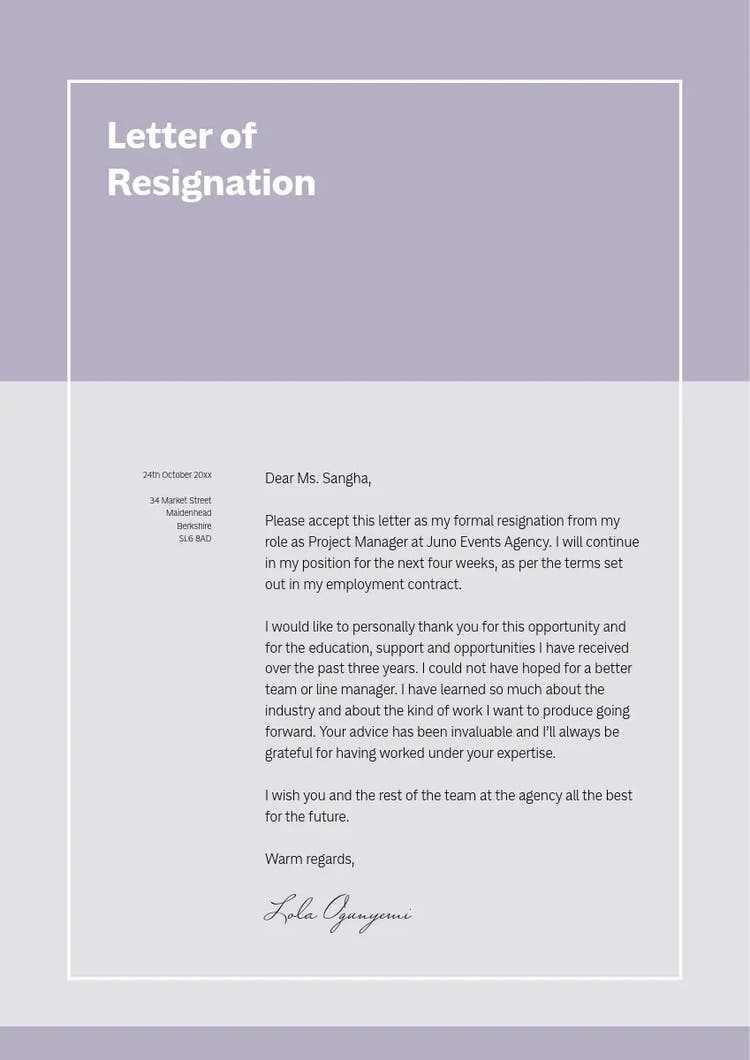
Before you resign from your job, it’s good practice to provide your employer with a resignation letter as a formal intent of leaving. In the letter, you can state the date of your resignation, the notice period, and the reasons why you’re leaving. Be sure to write your letter with a positive tone and express your gratitude for the support you’ve received from the company.
5. Working through notice periods and handovers.
Being proactive as you work through your notice period can help leave a good impression with your employer. For example, if the business has already found a replacement for your role, you can offer to train them on your day-to-day tasks or update them on any unfinished projects. You can even help with the interview process if your position is still vacant.
6. Keep in touch for future references or recommendations.
Resigning from your job also means that you can now add colleagues and managers as your references for future applications. A recommendation letter from your previous manager can give you a much needed advantage if you’re currently looking for a new role. So, make sure to maintain those positive relationships and try to stay in touch with people you worked closely with.
Editable examples of how to resign from a job via email.
recipe
How Adobe Express can help you prepare to resign from a job.
Looking to resign from your job soon? Let Adobe Express help you plan your departure. Here are a few tips to help you get started.

You might also like...