Creación de una fusión con trazos en Adobe Illustrator
con Alex Trochut
El consejo de Alex para crear un efecto de sombra sofisticado de forma sencilla en Adobe Illustrator
Elementos que necesitarás
Practicar en la aplicación
Creo que lo principal es emocionarse con algo que desconoces, y solo eso ya es algo poderoso.
Sabes que está listo cuando una vocecita interior te dice que ya está bien, que ya lo has conseguido.
Que has llegado a tu destino imaginario.
Y sí, creo que ya está. -
Establecer los trazados
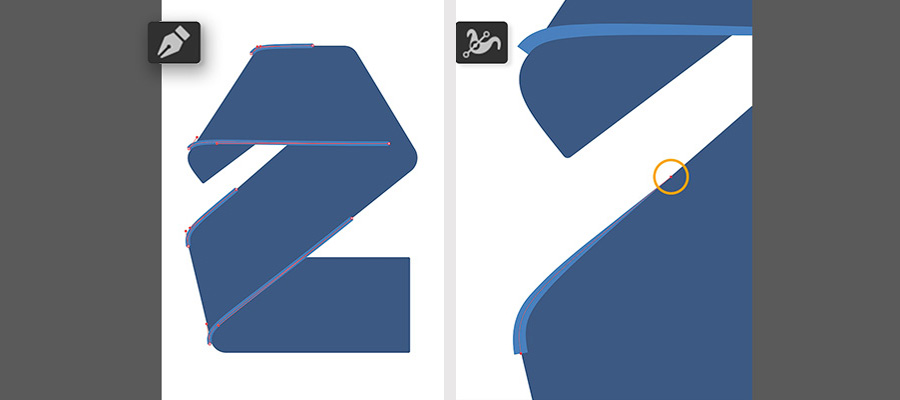
Dibuja dos conjuntos de líneas en las partes superior e izquierda de la forma como se muestra aquí. Para empezar, selecciona la herramienta Pluma, quita el color de relleno, elige un color de trazo y ajusta el ancho de este en la barra de opciones de la parte superior. Después, haz clic para empezar a trazar la línea, pincha y arrastra para crear una curva y vuelve a hacer clic donde deba acabar la línea. Pulsa la tecla Esc para finalizar la línea.
Para estrechar los extremos de cada línea, elige la herramienta Anchura, selecciona el punto al final de una línea y arrastra hacia abajo para reducir el ancho del trazo.
Hacer la gradación
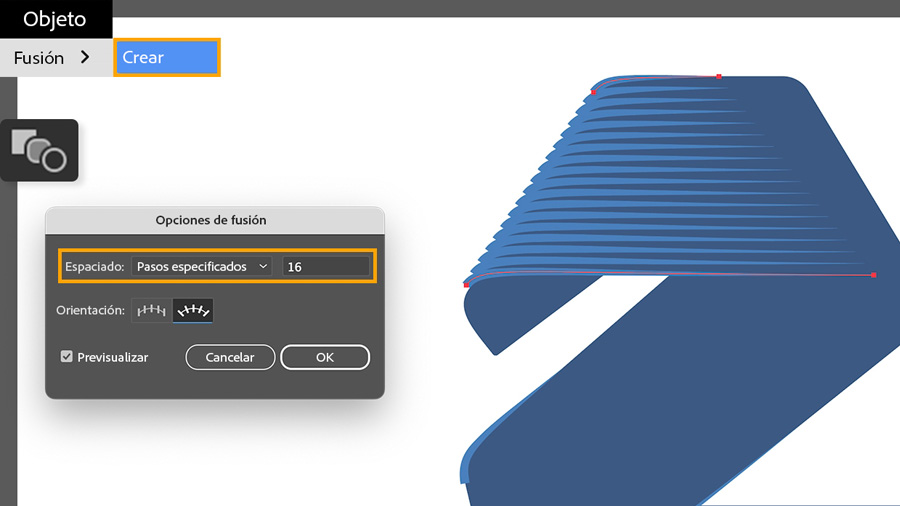
Crea un diseño artístico lineal y repetitivo como un acento en el gráfico. Para hacer esto, mantén pulsado Máyus. para seleccionar la primera y segunda línea con la herramienta de selección.
Selecciona Objeto > Fusión > Crear, para crear el patrón. Después, haz doble clic en la herramienta Fusión para hacer que las Opciones de fusión coincidan con la configuración de la imagen.
Repetir la fusión
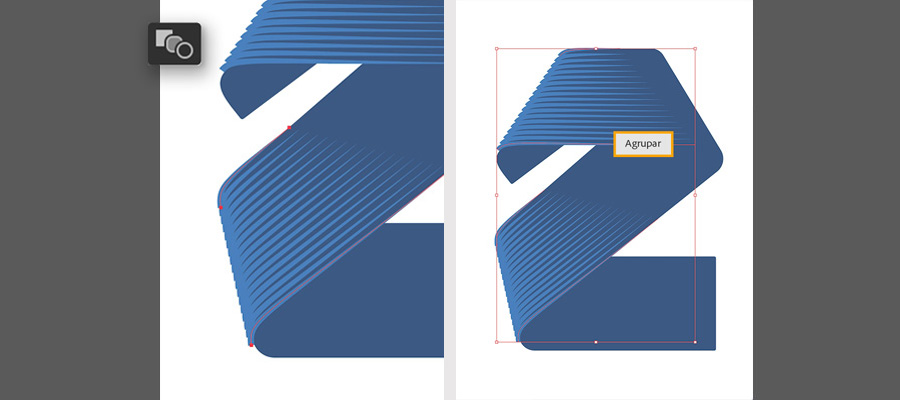
Fusiona el segundo conjunto de líneas con los pasos anteriores. A continuación, utiliza la herramienta Selección para elegir ambos patrones y agruparlos (Objeto > Grupo).
Mantenerse dentro de las líneas
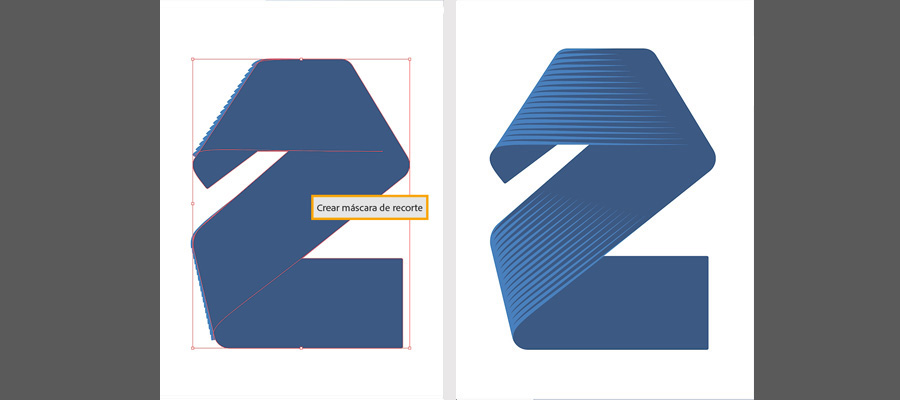
Limita los patrones a la forma. Para ello, selecciona la forma azul con la herramienta de selección, pulsa en Control+C (Windows) o Comando+C (macOS) para copiarlo y pegarlo donde corresponda (Mayus.+Control/Comando+V). A continuación, arrastra la herramienta de selección para escoger los patrones de forma y línea, haz clic con el botón derecho y elige Crear máscara de recorte.
You can control how Adobe websites use cookies and similar technologies by making choices below. But note that if you disable cookies and similar technologies entirely, Adobe websites may not function properly.
Cookies are small text files stored by your web browser when you use websites. There are also other technologies that can be used for similar purposes like HTML5 Local Storage and local shared objects, web beacons, and embedded scripts. These technologies help us do things like remembering you and your preferences when you return to our sites, measure how you use the website, conduct market research, and gather information about the ads you see and interact with.
You can make choices in the menu below about what cookies and other technologies you want us to use on Adobe sites when you visit them from this browser. You can always change those choices later by clicking on the Cookie Preferences link at the bottom of the page.
If enabled:
We can improve your experience by tailoring the site and the content to things we think might be of interest
We can better keep track of your preferences — like what language you prefer to use
We will better understand your likely interests so we can provide you more relevant Adobe ads and content on non-Adobe websites and in non-Adobe apps
It will help us improve the performance of our website and those of our partners who use the Adobe Experience Cloud
If disabled:
We won’t be able to remember you from session to session so the experience may not be tailored to your interests
You’ll still have access to the content of the site but certain features that depend on cookies may not function
You’ll still see ads, they just may not be as relevant to you
General information
You can control how Adobe websites use cookies and similar technologies by making choices below. But note that if you disable cookies and similar technologies entirely, Adobe websites may not function properly.
Cookies are small text files stored by your web browser when you use websites. There are also other technologies that can be used for similar purposes like HTML5 Local Storage, web beacons, and embedded scripts. These technologies help us do things like remembering you and your preferences when you return to our sites, measure how you use the website, conduct market research, and gather information about the ads you see and interact with.
You can make choices in the menu below about what cookies and other technologies you want us to use on Adobe sites when you visit them from this browser. You can always change those choices later by clicking on the Cookie Preferences link at the bottom of the page.
If enabled:
We can improve your experience by tailoring the site and the content to things we think might be of interest
We can better keep track of your preferences — like what language you prefer to use
We will better understand your likely interests so we can provide you more relevant Adobe ads and content on non-Adobe websites and in non-Adobe apps
It will help us improve the performance of our website and those of our partners who use the Adobe Experience Cloud
If disabled:
We won’t be able to remember you from session to session so the experience may not be tailored to your interests
We’ll still count your use of our site and services
You’ll still have access to the content of the site but certain features that depend on cookies may not function
You’ll still see ads, they just may not be as relevant to you
Operate the site and core servicesOperate site and measure engagement
Always active
These cookies are required, and they are used to enable the site and related services core functionality. Without them the site could not operate, so they cannot be disabled.
These cookies enable the site and related services’ core functionality and collect statistics about user engagement, such as counting active use to help us understand trends. These cookies cannot be disabled.
Measure performance
These cookies are used to analyze site usage to measure and improve performance. Without them Adobe cannot know what content is most valued and how often unique visitors return to the site, making it hard to improve information we offer to you.
These cookies are used to analyze site usage to measure and improve performance. Without them Adobe cannot know what content is most valued, making it hard to improve information we offer to you.
Extend functionality
These cookies are used to enhance the functionality of Adobe sites such as remembering your settings and preferences to deliver a personalized experience; for example, your username, your repeated visits, preferred language, your country, or any other saved preference.
Personalize advertising
These cookies are used to enable Adobe and our partners to serve ads more relevant to your interests. Without them you will still see ads, but they might not be as relevant to you.
Personalize advertising
These cookies are used to enable Adobe and our partners to serve ads more relevant to your interests. Without them you will still see ads, but they might not be as relevant to you.