Transforma una foto aérea en una portada musical con luz, color y relleno generativo en Photoshop.
Have you ever imagined what a song cover would look like before hearing it?
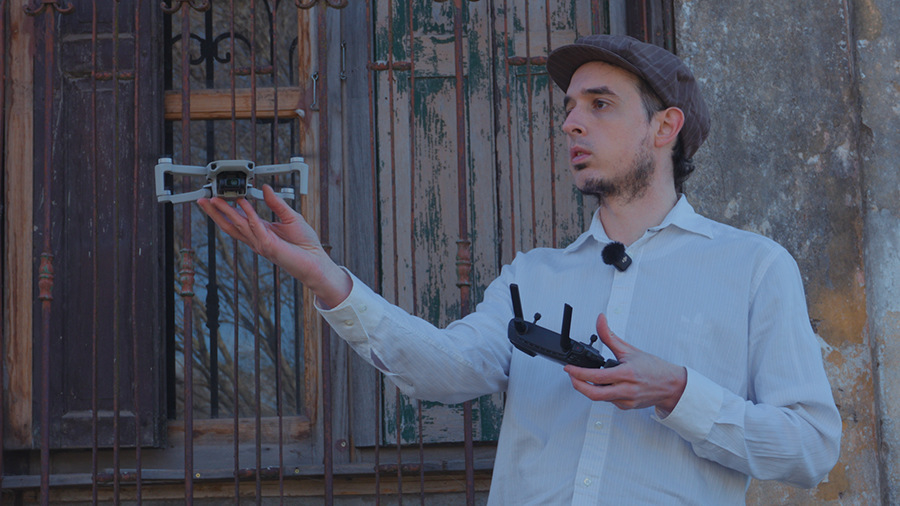
Hi, I'm Agustin Devani, a landscape photographer.
In collaboration with Adobe, I want to show you how to turn a drone photo into a song cover for digital platforms.
A while back I took several photos with a rented drone, to see the landscape from a different perspective.
Later, one of those photos became the cover of a song.
This tutorial was born from that idea.
We're going to use different Photoshop tools to enhance the image, add new elements, and work on the lighting until we achieve a cinematic composition ready to accompany a song.
Photography and music have something in common.
Both can tell a story and convey emotions.
In this tutorial, we'll combine those two worlds to create a cover with its own identity.
Elementos que necesitarás
Practicar en la aplicación
Lo que vas a aprender: Identidad visual con estética de cine
En esta experiencia, Agustín Devani te invita a transformar la perspectiva técnica en una mirada puramente fotográfica, donde el verdadero motor del diseño es el arte de la observación. Aprenderás a analizar una captura aérea no solo como un paisaje estático, sino como un lienzo narrativo con un enorme potencial cinematográfico listo para subir a tus plataformas digitales.
El viaje comienza revelando la fuerza oculta de la toma con drone a través del Filtro de Camera Raw, donde al calibrar la temperatura y la intensidad cromática establecerás una base con una atmósfera climática, profunda y lista para contar una historia.
La propuesta se vuelve verdaderamente creativa al integrar la Inteligencia Artificial desde un enfoque artístico y conceptual. Agustín te guiará para pensar de manera estratégica y diseñar un buen prompt, logrando que el Relleno Generativo incorpore una embarcación de madera que respete la escala y la luz natural del río.
Con el elemento narrativo en su lugar, aprenderás la importancia de definir los puntos focales y esculpir la imagen controlando la iluminación. Mediante el uso sutil de una capa de ajuste de Niveles y un pincel circular difuso
descubrirás cómo acentuar las luces y profundizar las sombras para dirigir la mirada del espectador exactamente hacia donde deseas. Finalmente, coronarás la composición entendiendo cómo la tipografía se integra de forma equilibrada con el paisaje, seleccionando el peso y la ubicación perfecta en las zonas más limpias para garantizar una legibilidad impecable que conviva en armonía con la fotografía.
Herramientas clave para el diseño de portada:
Filtro de Camera Raw: La herramienta esencial para rescatar texturas, contraste y volumen en fotografías de paisajes.
Relleno Generativo: Integración de elementos fotorrealistas mediante IA que respetan la luz y la escala natural de la toma.
Capas de ajuste y Máscaras: El método profesional no destructivo para ajustar la imagen y dirigir la mirada del espectador.
Herramienta Texto horizontal: Control y distribución de elementos tipográficos para lograr un acabado limpio y comercial.
El proceso creativo: Contar historias desde el cielo
Para Agustín Devani, la fotografía aérea abre un abanico de posibilidades creativas que van mucho más allá del registro documental. En este tutorial, te enseña cómo un paisaje puede convertirse en el lienzo perfecto para un proyecto musical, manipulando la luz para evocar emociones y utilizando la inteligencia artificial como una aliada para añadir narrativa.
Es la guía ideal si buscas expandir tus habilidades de diseño, dominar la dirección lumínica selectiva y aprender a integrar tipografía con imágenes complejas de forma profesional.
Sobre el artista
Agustín Devani es un fotógrafo argentino especializado en astrofotografía, fotografía aérea y paisajes de naturaleza. Su trabajo se caracteriza por una mirada amplia, serena y contemplativa, ya sea capturando la inmensidad del cosmos o la geometría de la tierra desde el cielo, donde la presencia humana es mínima y el entorno se vuelve protagonista. Inspirado por los viajes y la exploración directa, busca transmitir el equilibrio y la belleza cruda de los espacios naturales. Su obra ha sido publicada por National Geographic Latinoamérica y reconocida en certámenes como los Premios Yaguareté 2021 y el Concurso ArteSOSlidario en España, acumulando más de quince distinciones a nivel local, nacional e internacional.
You can control how Adobe websites use cookies and similar technologies by making choices below. But note that if you disable cookies and similar technologies entirely, Adobe websites may not function properly.
Cookies are small text files stored by your web browser when you use websites. There are also other technologies that can be used for similar purposes like HTML5 Local Storage and local shared objects, web beacons, and embedded scripts. These technologies help us do things like remembering you and your preferences when you return to our sites, measure how you use the website, conduct market research, and gather information about the ads you see and interact with.
You can make choices in the menu below about what cookies and other technologies you want us to use on Adobe sites when you visit them from this browser. You can always change those choices later by clicking on the Cookie Preferences link at the bottom of the page.
If enabled:
We can improve your experience by tailoring the site and the content to things we think might be of interest
We can better keep track of your preferences — like what language you prefer to use
We will better understand your likely interests so we can provide you more relevant Adobe ads and content on non-Adobe websites and in non-Adobe apps
It will help us improve the performance of our website and those of our partners who use the Adobe Experience Cloud
If disabled:
We won’t be able to remember you from session to session so the experience may not be tailored to your interests
You’ll still have access to the content of the site but certain features that depend on cookies may not function
You’ll still see ads, they just may not be as relevant to you
General information
You can control how Adobe websites use cookies and similar technologies by making choices below. But note that if you disable cookies and similar technologies entirely, Adobe websites may not function properly.
Cookies are small text files stored by your web browser when you use websites. There are also other technologies that can be used for similar purposes like HTML5 Local Storage, web beacons, and embedded scripts. These technologies help us do things like remembering you and your preferences when you return to our sites, measure how you use the website, conduct market research, and gather information about the ads you see and interact with.
You can make choices in the menu below about what cookies and other technologies you want us to use on Adobe sites when you visit them from this browser. You can always change those choices later by clicking on the Cookie Preferences link at the bottom of the page.
If enabled:
We can improve your experience by tailoring the site and the content to things we think might be of interest
We can better keep track of your preferences — like what language you prefer to use
We will better understand your likely interests so we can provide you more relevant Adobe ads and content on non-Adobe websites and in non-Adobe apps
It will help us improve the performance of our website and those of our partners who use the Adobe Experience Cloud
If disabled:
We won’t be able to remember you from session to session so the experience may not be tailored to your interests
We’ll still count your use of our site and services
You’ll still have access to the content of the site but certain features that depend on cookies may not function
You’ll still see ads, they just may not be as relevant to you
Operate the site and core servicesOperate site and measure engagement
Always active
These cookies are required, and they are used to enable the site and related services core functionality. Without them the site could not operate, so they cannot be disabled.
These cookies enable the site and related services’ core functionality and collect statistics about user engagement, such as counting active use to help us understand trends. These cookies cannot be disabled.
Measure performance
These cookies are used to analyze site usage to measure and improve performance. Without them Adobe cannot know what content is most valued and how often unique visitors return to the site, making it hard to improve information we offer to you.
These cookies are used to analyze site usage to measure and improve performance. Without them Adobe cannot know what content is most valued, making it hard to improve information we offer to you.
Extend functionality
These cookies are used to enhance the functionality of Adobe sites such as remembering your settings and preferences to deliver a personalized experience; for example, your username, your repeated visits, preferred language, your country, or any other saved preference.
Personalize advertising
These cookies are used to enable Adobe and our partners to serve ads more relevant to your interests. Without them you will still see ads, but they might not be as relevant to you.
Personalize advertising
These cookies are used to enable Adobe and our partners to serve ads more relevant to your interests. Without them you will still see ads, but they might not be as relevant to you.