Créer un effet de flou de mouvement dans Adobe Photoshop
En photographie, le flou de mouvement, c’est-à-dire les traînées apparentes sur des objets provoquées par un mouvement rapide ou un temps d’exposition long, permet de dynamiser un sujet. Découvrez la technique de Kathleen Martin, directrice de la création chez Adobe, pour créer un effet de flou de mouvement dans Adobe Photoshop.
L’illustratrice et designer Kathleen Martin travaille pour Adobe Studio. Toujours à la recherche de nouvelles idées créatives, elle explore le paysage digital en s’appuyant sur des workflows en constante évolution. Kathleen anime aussi des évènements Adobe Live sur Behance.
Ce fichier d’exemple contient des images Adobe Stock que vous pouvez utiliser pour mettre en pratique les méthodes abordées dans ce tutoriel. Si vous souhaitez utiliser ce fichier d’exemple en dehors de ce tutoriel, il vous suffit d’acheter une licence sur Adobe Stock. Consultez le fichier Lisez-moi figurant dans le dossier pour connaître les conditions régissant l’utilisation de ce fichier d’exemple.
Transcription non disponible
1 Préparer les images
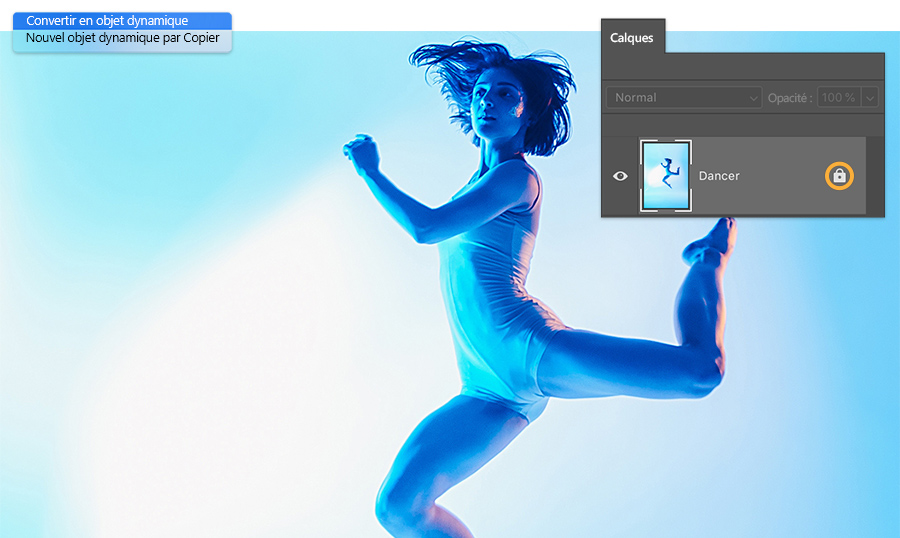
Tout d’abord, ouvrez la photo de la danseuse dans Photoshop, puis cliquez sur l’icône de verrou du calque pour le déverrouiller. Kathleen Martin a ensuite choisi Calque > Objets dynamiques > Convertir en objet dynamique pour protéger la photo de la danseuse.
2
Créer un effet de mouvement
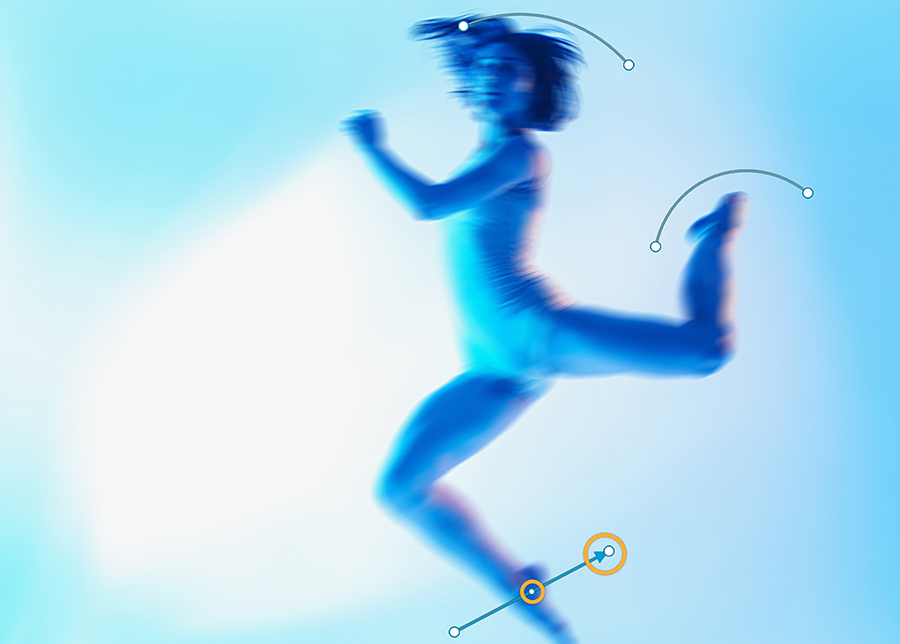
Kathleen Martin a appliqué un flou à l’ensemble de l’image en choisissant Filtre > Galerie d’effets de flou > Flou de tracé. Pour créer l’impression de mouvement sur certaines parties de la danseuse, Kathleen Martin a modifié la marque par défaut ajoutée par Photoshop en faisant glisser la flèche pour contrôler la direction du mouvement. Elle a déplacé les points pour peaufiner le mouvement, puis ajouté d’autres marques en cliquant sur l’image avec l’outil Plume.
3 Accélérer
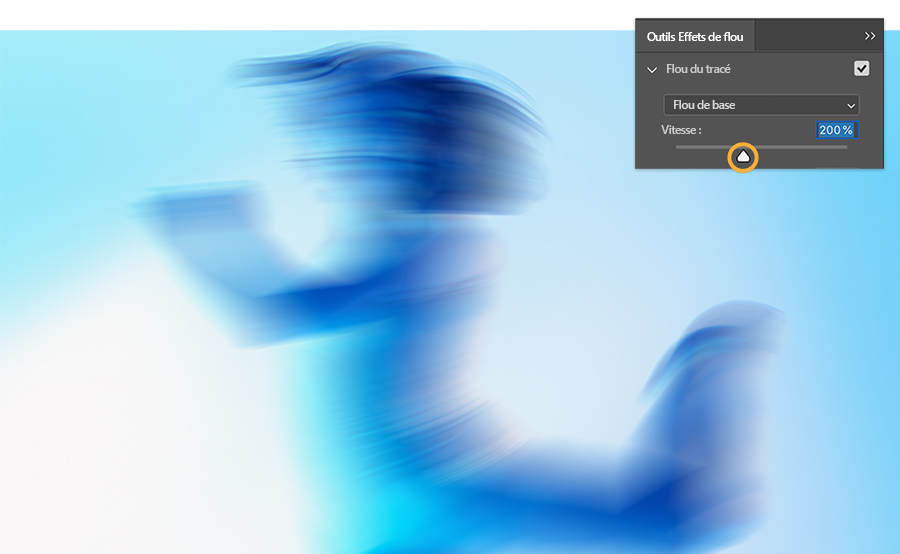
Utilisez le curseur Vitesse pour ajuster l’apparence du mouvement, puis cliquez sur OK.
4 Exclure du flou dans certaines zones
Kathleen Martin voulait que certaines parties de la danseuse retrouvent de la netteté. Elle a cliqué sur la vignette du masque Filtres dynamiques pour spécifier ces parties. Elle a ensuite sélectionné l’outil Pinceau, ajusté son épaisseur, puis peint sur les zones à exclure du flou.
Rester sur son élan
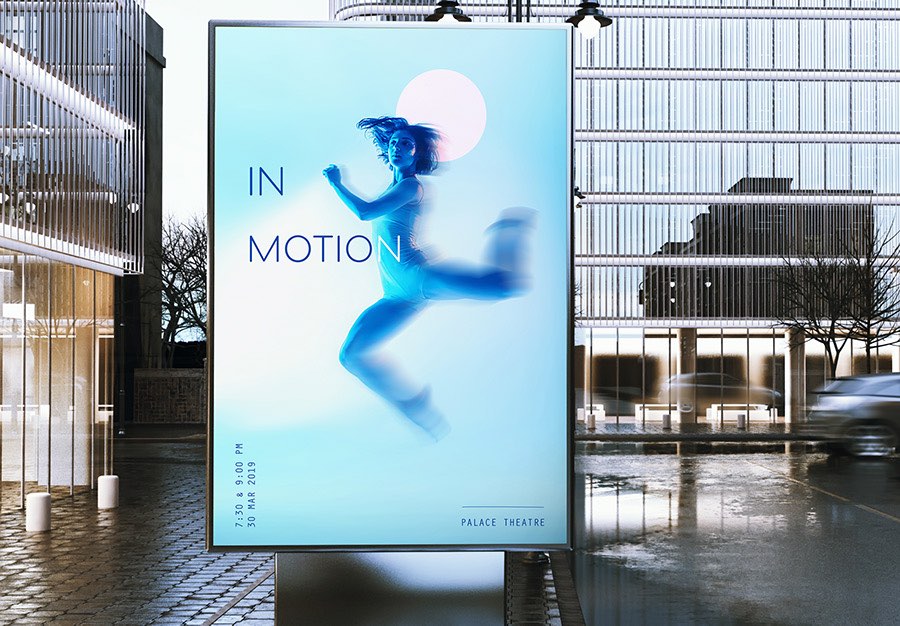
Essayez d’ajouter du mouvement sur vos propres images pour leur donner un nouveau souffle.
Remarque : les fichiers de projet inclus dans ce tutoriel sont fournis uniquement à des fins d’entraînement.
You can control how Adobe websites use cookies and similar technologies by making choices below. But note that if you disable cookies and similar technologies entirely, Adobe websites may not function properly.
Cookies are small text files stored by your web browser when you use websites. There are also other technologies that can be used for similar purposes like HTML5 Local Storage and local shared objects, web beacons, and embedded scripts. These technologies help us do things like remembering you and your preferences when you return to our sites, measure how you use the website, conduct market research, and gather information about the ads you see and interact with.
You can make choices in the menu below about what cookies and other technologies you want us to use on Adobe sites when you visit them from this browser. You can always change those choices later by clicking on the Cookie Preferences link at the bottom of the page.
If enabled:
We can improve your experience by tailoring the site and the content to things we think might be of interest
We can better keep track of your preferences — like what language you prefer to use
We will better understand your likely interests so we can provide you more relevant Adobe ads and content on non-Adobe websites and in non-Adobe apps
It will help us improve the performance of our website and those of our partners who use the Adobe Experience Cloud
If disabled:
We won’t be able to remember you from session to session so the experience may not be tailored to your interests
You’ll still have access to the content of the site but certain features that depend on cookies may not function
You’ll still see ads, they just may not be as relevant to you
General information
You can control how Adobe websites use cookies and similar technologies by making choices below. But note that if you disable cookies and similar technologies entirely, Adobe websites may not function properly.
Cookies are small text files stored by your web browser when you use websites. There are also other technologies that can be used for similar purposes like HTML5 Local Storage, web beacons, and embedded scripts. These technologies help us do things like remembering you and your preferences when you return to our sites, measure how you use the website, conduct market research, and gather information about the ads you see and interact with.
You can make choices in the menu below about what cookies and other technologies you want us to use on Adobe sites when you visit them from this browser. You can always change those choices later by clicking on the Cookie Preferences link at the bottom of the page.
If enabled:
We can improve your experience by tailoring the site and the content to things we think might be of interest
We can better keep track of your preferences — like what language you prefer to use
We will better understand your likely interests so we can provide you more relevant Adobe ads and content on non-Adobe websites and in non-Adobe apps
It will help us improve the performance of our website and those of our partners who use the Adobe Experience Cloud
If disabled:
We won’t be able to remember you from session to session so the experience may not be tailored to your interests
We’ll still count your use of our site and services
You’ll still have access to the content of the site but certain features that depend on cookies may not function
You’ll still see ads, they just may not be as relevant to you
Operate the site and core servicesOperate site and measure engagement
Always active
These cookies are required, and they are used to enable the site and related services core functionality. Without them the site could not operate, so they cannot be disabled.
These cookies enable the site and related services’ core functionality and collect statistics about user engagement, such as counting active use to help us understand trends. These cookies cannot be disabled.
Measure performance
These cookies are used to analyze site usage to measure and improve performance. Without them Adobe cannot know what content is most valued and how often unique visitors return to the site, making it hard to improve information we offer to you.
These cookies are used to analyze site usage to measure and improve performance. Without them Adobe cannot know what content is most valued, making it hard to improve information we offer to you.
Extend functionality
These cookies are used to enhance the functionality of Adobe sites such as remembering your settings and preferences to deliver a personalized experience; for example, your username, your repeated visits, preferred language, your country, or any other saved preference.
Personalize advertising
These cookies are used to enable Adobe and our partners to serve ads more relevant to your interests. Without them you will still see ads, but they might not be as relevant to you.
Personalize advertising
These cookies are used to enable Adobe and our partners to serve ads more relevant to your interests. Without them you will still see ads, but they might not be as relevant to you.