.

How to do a SWOT analysis.

Discover how to create a SWOT analysis to transform your business strategy today.

Start designing with Adobe Express

Free to useNo credit card required

How to do a SWOT analysis
Easy all-in-one editor
One-click edits from any device
Fast creation with generative AI
Thousands of professionally designed templates
Summary

When it comes to reviewing your business performance, it helps to lean on strategic frameworks that help break down and highlight essential details.

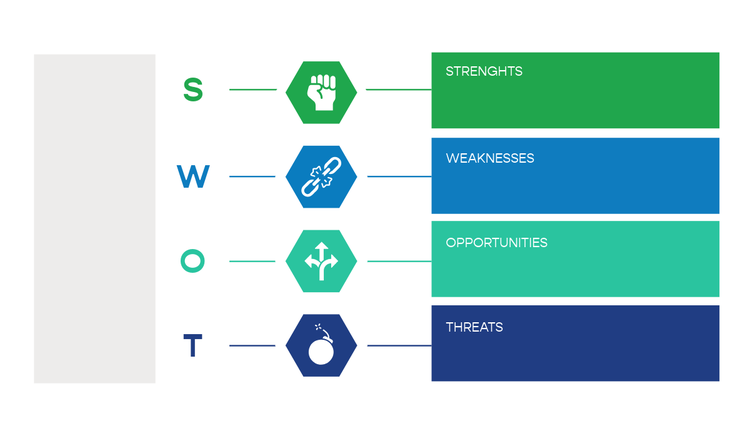
A SWOT analysis can evaluate growth, success and potential risks across four key categories—Strengths, Weaknesses, Opportunities and Threats. They can be used to identify and implement long-term strategies or help inform smaller projects and timelines.

Read on to learn how to do a SWOT analysis and create a strategic plan of action with Adobe Express.

What is a SWOT analysis?

A SWOT analysis is an acronym for Strengths, Weaknesses, Opportunities and Threats. Essentially, it’s a strategy planning technique designed to break down and understand the factors that may impact the performance of a business or project.

The SWOT framework can be used in various circumstances. You can analyse a business as a whole or identify the strengths and weaknesses of a certain department or product line.

SWOT analysis focuses on a combination of internal and external factors that could impact a project or business.

  • Strengths. Successful attributes that set your business apart from the competition – such as unique or proprietary resources, the strength of your brand, or talented team members.
  • Weaknesses. Areas of improvement – whether it’s high turnover, outdated processes or low brand visibility.
  • Opportunities. These are external factors that could give your business an advantage, such as emerging technologies or potential trends.
  • Threats. Factors that could harm your business or project, including new competition in the market or economic downturns, for example.
Purple Finance SWOT Analysis Infographic
Edit this template
Yellow and Black Finance SWOT Analysis Infographic
Edit this template
Multicoloured Tech Start-up SWOT Analysis Infographic
Edit this template
Multicolored Tech Start-up SWOT Analysis Infographic
Edit this template

How to do a SWOT analysis on your business in 7 simple steps.

From casual ideation exercises to thorough business audits, conducting a SWOT analysis can help highlight key factors that shape the success of your business.

Learn the basics of how to do a good SWOT analysis with our step-by-step guide.

Step 1. Choose your objective.

Before you put pen to paper and begin your analysis, it’s important to set your sights on an objective. This can help keep your SWOT analysis focused and achievable. For example, you can use SWOT analysis to help inform a new content campaign or a brand redesign.

Setting an objective can help you pinpoint realistic goals and gain a better understanding of what you can achieve.

Step 2. Decide who you want to feed into the SWOT analysis.

Leading an effective SWOT analysis is all about collaboration. People are your resource. Enlisting a diverse team of representatives is the best way to understand all possible strengths and weaknesses.

Gather a range of insights from different departments and levels within the business for a 360-view on the objective.

Step 3. Select a template for your analysis.

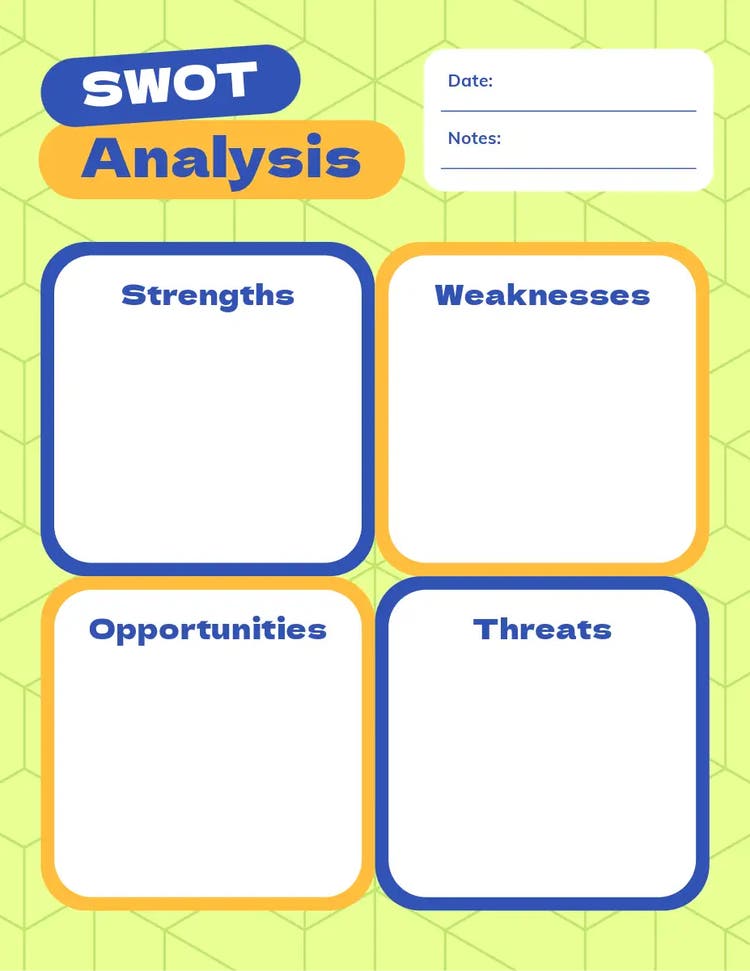
The SWOT framework is often laid out in a grid made up of the four target categories. This makes it easy to read and compare all internal, external, positive and negative factors side-by-side.

SWOT tables typically display internal factors on the top row and external factors on the row below. You can also place positive items on the left side and potentially negative items on the right side to consider advantages and disadvantages at a glance.

SWOT table templates are an effective way to get the ball rolling. Whether you prefer to use standalone analysis infographics, presentation decks or create video slideshows, you can save time and keep designs consistent.

With Adobe Express for Business, you can also create and save company-branded templates with custom fonts and colour schemes, ready to share your analysis with relevant stakeholders.

Step 4. Start your SWOT analysis.

Let the brainstorming begin. Get your team to list items in bullet points under each category. The key is to be specific. Compare hard facts and insights that relate to your objective. For example, you could secure data using surveys and interviews.

Some items may not be of equal importance, though you should prioritise the most urgent strengths, weaknesses, opportunities and threats.

If priorities vary across the board, perhaps use a system to highlight their significance, such as ranking items in a numbered list or ascending order. Once you’ve gathered an initial set of ideas, you can always refine the first draft to focus on key items and urgent risks.

Step 5. Assess and strategize.

Bring your ideas to the fore and create a strategic plan based on your list of priorities. Draw conclusions from your analysis and consider any patterns. Do the positives outweigh the negatives? Can you utilise your strengths to target threats and weaknesses? How does each factor affect your objective?

By assessing combined results, your team can develop an appropriate strategy that carefully considers potential gains and risks, rather than acting without a plan.

Step 6. Take action.

Turn your plan into action and make your strategy a reality. It’s important to share your insights with wider teams in the business and use them to guide your future strategy. Then, you can set actions and timelines to make it happen.

There are plenty of methods to target weak spots, such as leaning on expert consultants and seeking guidance from agencies in your industry. Shout up about your plans and targets and set out to find the best possible team to help implement them.

Step 7. Schedule your next SWOT analysis.

Tides change and new opportunities and risks can emerge. Make sure you’re ready for what could be waiting around the corner by making SWOT analyses part of your regular strategy. Revisit your existing SWOT analysis and consider areas that could need updating for fresh trends.

Free SWOT analysis examples for small businesses from Adobe Express.

Brown SWOT Analysis Planner
Edit this template
Colorful SWOT Analysis
Edit this template
Gradient SWOT Analysis Letter
Edit this template
Green SWOT Analysis Graphic Organizer Planner
Edit this template

How to bring your SWOT analysis to life.

  1. 1. Start with a template.

    Choose a template from this page or open Adobe Express and start from scratch.

How to do a SWOT analysis on yourself.

SWOT analysis is built on a simple yet robust framework. This versatility is one of the reasons why it’s such a popular method of analysing challenges and goals. And you can even apply it to yourself.

When it comes to evaluating your own personal skills and development, it’s easy to get overwhelmed by the big picture. But breaking it down into digestible categories and bullet points can help you organise your goals and aspirations, ready to welcome personal growth.

You can ask yourself questions such as:

  • What skills do you have that others might not?
  • What would your friends or colleagues say your strengths are?
  • What is your proudest achievement?
  • Are there any areas you think you could improve on?
  • Are there tasks you try to avoid doing?
  • Do you have any bad habits?
  • Are there any new opportunities in your work or industry?
  • What trends are happening that could impact you?
  • Are you facing any obstacles in your line of work?

Tips for your personal SWOT analysis.

Your personal SWOT analysis can help you evaluate skills and opportunities in your professional career, or your personal life. Here are our tips for success when learning how to do a personal SWOT analysis:

  • Be detailed. Accuracy is the key to shaping valuable targets, so be sure to list strengths, weaknesses, opportunities and threats in detail. Paint an authentic picture of your assets and ambitions. This may also involve being honest with yourself about areas of personal improvement.
  • Reflect on your achievements. Think back on your accomplishments and what helped you reach them. Acknowledge your efforts and make note of your valuable traits and skills.
  • Turn weaknesses into opportunities. Everyone has challenges and milestones to overcome. Potential weaknesses can become opportunities for self-development, giving you new targets for progress and growth.
  • Ask for feedback. Sometimes, the people around you can read your qualities better than you can. Ask trusted friends, loved ones and colleagues for constructive advice when looking for internal factors.
  • Revisit your goals. Track your progress by returning to your goals and measuring your accomplishments. Remind yourself of how far you’ve come and what you want to target next. Over time, if you find the SWOT method effective, you could have various sets of goals and challenges to reflect on.

Examples of how to do a personal SWOT analysis.

Brown SWOT Analysis Planner
Edit this template
Green SWOT Analysis Graphic Organizer Planner
Edit this template
Colored SWOT Analysis Planner
Edit this template
SWOT Analysis Blotches Planner
Edit this template

You might also like...

Good to know