ACROBAT | 11-MINUTE READ
How to write a cover letter for a job in 5 steps.
Discover the best practices for writing a strong cover letter.


ACROBAT | 11-MINUTE READ
Discover the best practices for writing a strong cover letter.

Standing out from the crowd of job applicants can be difficult — especially if you only submit a resume. A strong cover letter can set you apart from other candidates and help you land an interview and a job offer.
The job search process can be stressful, whether you’re entering the workforce for the first time, pivoting careers, or simply looking for a change. Hiring is competitive, and your application needs to clearly demonstrate why you’re an ideal candidate and distinguish you from other applicants.
A cover letter is a writing sample that accompanies your application. It serves as an introduction, allowing you to explain why you’re a good fit for the position, demonstrate your knowledge and experience, and share more personal details outside of your resume.
Even if a cover letter is optional, you can significantly increase the probability of scoring an interview by providing one. According to a recent survey of 200 hiring decision-makers, 83% of respondents said that a well-written cover letter would persuade them to schedule an interview — even if the applicant didn’t have a strong resume.
First impressions are foundational to influencing your prospective employer’s expectations and perceptions of you. When you learn how to write a cover letter for a job, think of it as your chance to shape people’s idea of you and show off your accomplishments and distinct voice.
Your cover letter can add a personal touch to your application, giving the reader a better sense of who you are and why you would be successful in the position. It also demonstrates your interest in the job, your writing abilities, and your willingness to go beyond what’s required — especially if a cover letter isn’t specifically requested.
Job application forms often involve pre-assigned questions and information, with limited character counts or space to fill out your answers. A cover letter allows you to share additional details that don’t fit on your application, like personal connections to the company, previous internships or roles with the organization, and special circumstances that explain gaps in your resume.
Before you begin writing the actual letter, choose a compelling design that matches your personality and the tone you’d like to set. Many free templates are available online, so get creative about which cover letter approach will let your individual experience and character shine.
Now that you’ve chosen your canvas, you’re ready to start crafting a standout letter.

Ahead of delving into the actual body copy, you’ll need to research the company and gather relevant contact information for the header. Depending on the template you select, your header can include the following:
After creating the header, write a salutation addressing the recipient. Be as specific as possible, greeting the person reviewing your application by name if you can. This information is not always readily available in a job posting, so you may need to peruse the company’s website or explore social media pages and profiles.
If you can’t determine who will read your letter, you can reference the company or department name, or simply use Hiring Manager. You might also include honorific titles, like Dr. or Prof., before someone’s name if relevant.
Here are a few greeting ideas to get you started:
Including a specific name or a more personalized greeting will show that you took the time to learn more about the company, naturally helping the reader feel more inclined to review your letter. Avoid using a general greeting such as “To whom it may concern.”
In the opening paragraph, you should introduce yourself, express your interest in the position, and hook the hiring manager’s interest. These first few sentences set the stage for their impression of you and influence their decision to continue reading.
To create a strong opening, stay away from generic statements and prioritize highlighting concrete details and relevant experience. Remember to name the specific position for which you’re applying and outline how you will provide value to the company.
Like a persuasive essay, your goal is to convince the reader and provide evidence for your claims. Include a thesis statement summarizing the top reasons you would be successful if selected for the opportunity.
Example:
As a marketing professional with five years of experience in digital strategy and brand management, I was excited to discover the Marketing Manager position at XYZ Company. Your company’s innovative approach to consumer engagement and recent success in launching data-driven campaigns align perfectly with my passion for crafting compelling marketing strategies. With a proven track record of increasing brand awareness by 40% through targeted social media campaigns, I am eager to bring my expertise to your team and contribute to XYZ Company’s continued growth.
The next paragraphs should describe your previous experience, accomplishments, and skills. This is your chance to fill in details that didn’t fit on your resume or application and spell out how your career history or goals connect to the position. Be sure to add numbers or a measurable impact to strengthen your case.
Steer clear of simply recapping your resume. Your cover letter should supplement your resume, encouraging the hiring manager to refer to it for more information.
Now is not the time to be shy — but don’t go over the top, either. Focus on using a confident tone and displaying your competence without exaggerating or using overly bold claims.
Remember to tie your career history and specialties to the company’s needs and position. A good practice is to include keywords from the job description. You can also study the organization’s website and posts to get a sense of their culture and writing style to match their tone.
Like a sales pitch, you want to show how you can solve the company’s pain points or contribute to their goals through your strengths and previous job experience.
In your conclusion paragraph, you should reiterate why the hiring manager should consider you for the position and how you would bring value to their organization if chosen. Assert why you’re an ideal candidate and leave them with a positive impression.
It’s also a good idea to thank the hiring manager for their time. Inform them of the best way to reach you and indicate that you look forward to discussing your application and learning more about the opportunity.
Finally, select a professional closing to wrap up your cover letter. These are a few tried and tested options:
Write your full name after the closing, including a signature below if desired.
The average cover letter length is three to four paragraphs. In general, it should be no more than one page.
Your goal should be to create a concise letter that captures the most important details about your previous experience and skills, your interest in the job, and how you can contribute to the company or organization.
Since a cover letter is a quick read, you’ll need to make each sentence count. Be creative about demonstrating your unique personality and qualifications by sharing short stories and relevant details about your work experience and approach.

Sharing your letter in a compact, secure format — like a PDF — will help create a professional look and feel, ensuring your document functions and appears the same across devices. While you can be creative about the content of your cover letter, you should follow a standard structure of one page with three to four paragraphs.
Since hiring managers skim many applications and are often short on time, this framework is the most effective way to quickly summarize your relevant experience, express your enthusiasm, and persuade the reader to consider you for the position.
You should include specific contact information for yourself and the company and clearly express a few main ideas in each paragraph.
The ideal cover letter format is one page and consists of the following sections:
The body is typically one to two paragraphs, while the closing paragraph is only a couple of sentences, including a call to action (such as requesting an interview). A well-structured cover letter is concise, tailored to the role, and formatted with a clear, professional font and spacing.
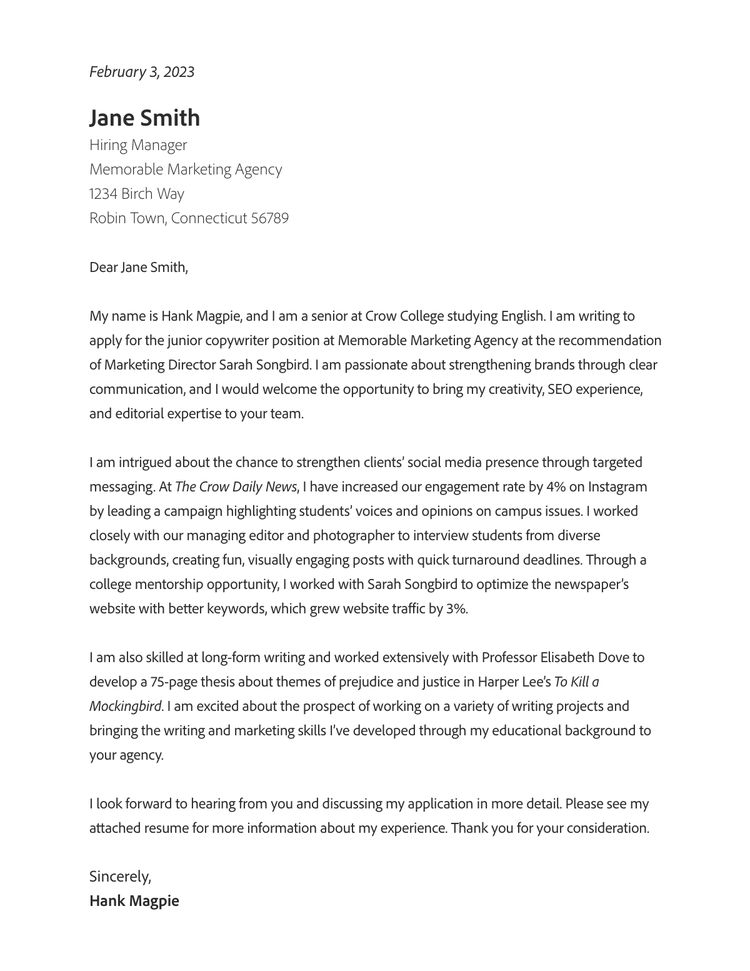
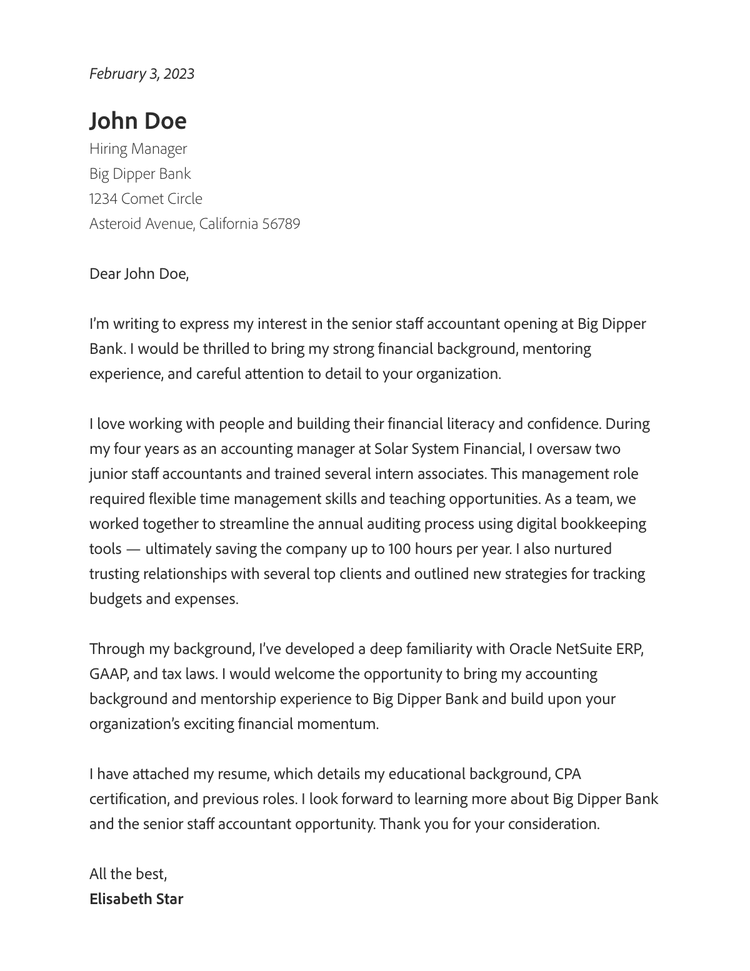
Check out these cover letter samples to spark your creativity. Note how each letter pulls keywords from the job descriptions and tailors the tone and content to the specific position.
Memorable Marketing Agency is seeking a part-time junior copywriter to join our team. If you have a knack for creative writing and a way with words, we want to hear from you. You’ll work closely with our senior editor to craft copy across a variety of media, from social media platforms to websites. A successful applicant will have a sharp eye for detail, an appreciation for clear messaging, and the ability to adapt their writing to different voices and tones.
Responsibilities
Qualifications
Big Dipper Bank is looking to add a full-time senior staff accountant to the team. This role will take the lead on preparing financial statements, completing in-depth research analysis, and completing annual audits. To be successful, you should use a detail-oriented approach, possess strong organizational skills, and have the ability to manage and train junior staff members.
Job summary
Knowledge, skills, and abilities
Many people send generic letters with different job applications, and the lack of specificity shows. Universal cover letters can undermine otherwise strong applications and reduce your chances of landing an interview. Here are a few tips on how to write a good cover letter that stands out.
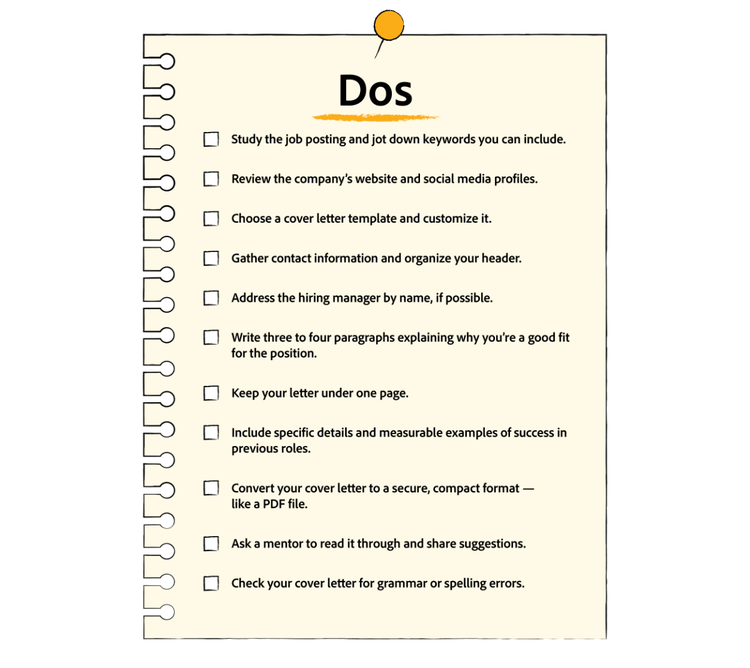
Your letter should reveal your knowledge of the company and relate directly to the job position. Mirror the language of the job posting and the company’s website to capture the right tone and ensure your interest in the position is apparent. If you’re applying for many positions and want to save time by repurposing your work, make sure to customize each cover letter by honing in on specific details that apply to individual positions.
These references help establish trust and set you apart from other qualified candidates.
It’s also advisable to proofread and edit your cover letter. For a polished final product, ask a mentor or trusted friend to read through your letter and provide feedback. It can be helpful to get a second opinion about whether your message is clear and anything that needs to be refined.
Using a collaborative digital document tool like Adobe Acrobat can make getting feedback a breeze, with editing tools like annotating, commenting, and drawing on a PDF.
Acrobat also has tools to spell-check your document — highlighting typos and grammar errors directly within the file and freeing your energy to focus on the content of your letter.
Fit in specific examples of how you’ve brought value to other companies, proving your points with numbers or anecdotes about how you addressed challenges in previous roles.
Convert your cover letter to a PDF — a versatile format that is sleek and easy to save and share, no matter the operating system. Adobe offers free online services to meet all your cover letter needs, like updating a Microsoft Word document to a PDF.
Here are some quick-hit answers to common questions about creating cover letters.
In your cover letter, you should discuss your skills and experience and share why the hiring manager should consider you for the position. This is your chance to distinguish yourself from other candidates and provide a more qualitative and holistic picture of who you are outside of your resume.
You should include details like connections to the company, why you’re interested in the role, how you would contribute, metrics and specific benchmarks of previous success, and keywords from the job description. Most templates include a header with the hiring manager’s name, title, and contact information, as well as space for your name, contact information, and signature.
Since hiring managers have to sift through lots of applications, a cover letter can help you get noticed and shape the employer’s perception of you as a candidate.
Strong cover letters should be specific, concise, professional, and enthusiastic. They should mirror the language and tone of the company’s website and job description and capture your unique personality and strengths.
After spending time researching and creating your cover letter, don’t diminish your hard work with an unprofessional format or lopsided design. Ensure your cover letter functions and looks great on any screen by saving it as a PDF file.
Keep your document to one page and include three to four paragraphs spotlighting the most important information the prospective employer should know about you and your application.