.

Master graphic design and launch your design career today.

Graphic design is everywhere—from the logos on your favourite brands to the websites you visit daily. If you're interested in graphic design, the different types of specialisations available, or how to become a graphic designer, this comprehensive guide covers everything you need to know.

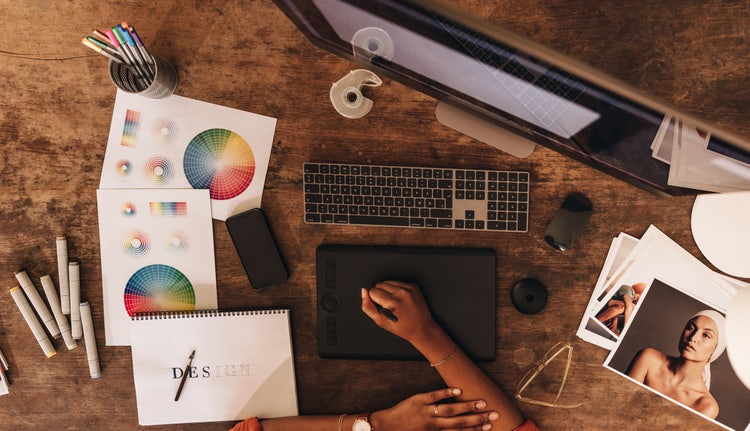
Overhead photo of a desk with a computer, images and colour wheels

What is graphic design?

Graphic design is the art of combining and organising visual elements—such as pictures, text, shapes and colours—to create imagery that communicates a message or evokes emotion. Graphic design is everywhere throughout our daily lives, from shopfronts and websites to product packaging, posters and advertising campaigns.

The basics of graphic design include:

  • Brand identities: Logos, colour palettes, typography and consistent visual patterns
  • Advertising materials: Campaign visuals for print, digital and outdoor media
  • Editorial designs: Layouts for books, magazines and newspapers
  • Web and digital interfaces: Websites, apps and user experiences
  • Packaging: Product designs and brand labels
  • Environmental graphics: Signage, wayfinding and public installations.

Essential graphic design skills.

If you’re interested in how to learn and do graphic design, you should note that successful graphic designers will understand:

  • Composition principles: Balance, hierarchy, contrast and alignment
  • Colour theory: How colours interact, convey emotion and communicate meaning
  • Typography: Font selection, readability and visual communication through text
  • Audience psychology: How particular design choices influence perception and behaviour
  • Digital and print media: Working across different formats and platforms
  • User experience: Creating intuitive, accessible designs
  • Software proficiency: The utilisation of industry-standard design tools.

Graphic design vs. illustration.

These two forms of visual communication are often confused but serve distinct purposes:

Graphic design: Combines text and images strategically to create effective visual messages. Professional work in this field usually requires typography, colour, layout and composition knowledge. Common uses include logos, posters, brochures, websites, packaging and advertising.

Illustration: Artistic expression using drawing tools to represent objects, people, scenes or ideas. Illustrations can represent reality realistically or in a more stylised format. Common uses include art, character design, comics, technical drawings and conceptual sketches. Tools include pencils, pens, brushes and digital tablets.

Whilst these forms interconnect and often work together, they're differentiated by tools, methods and objectives.

Types of graphic design.

Graphic design can cover numerous types of specialisation. Here are some of the most common.

Branding and identity.

This area focuses on creating visual identities for brands and companies. Designers create logos, select appropriate colours and fonts, and establish guidelines for consistent usage. This specialisation aims to ensure brands remain recognisable and consistent across all visual touchpoints.

Advertising design.

Here, graphic designers collaborate with marketing and advertising teams to create eye-catching visuals for campaigns. These may appear in magazines/newspapers, or on billboards, websites, social media, television and across other media channels.

Editorial design.

Some designers plan the layout and visual appearance of printed and digital publications, including books, magazines and newspapers. They work with typography, images, illustrations and colour to create engaging, readable content.

Packaging design.

One commercial specialisation takes the form of designs for product packaging—including overall appearance, logos, illustrations and product information layout. Packaging design can directly influence consumer purchasing decisions.

User interface (UI) design.

This area focuses on the visual design of digital interfaces, especially with websites and mobile apps. The aim is to ensure that interfaces are attractive, consistent and easy to navigate. Buttons, icons, menus and colour systems all form a key part of this.

User experience (UX) design.

This extends beyond visual design to focus on overall user experience when interacting with products or services. UX designers create user journeys, wireframes, prototypes and conduct user testing to make things as user-friendly as possible.

Environmental graphics.

This involves creating signage and visuals for physical spaces. Environmental designers may design wayfinding signage for buildings, museum exhibitions or public murals—enhancing physical environments and making them easier to navigate.

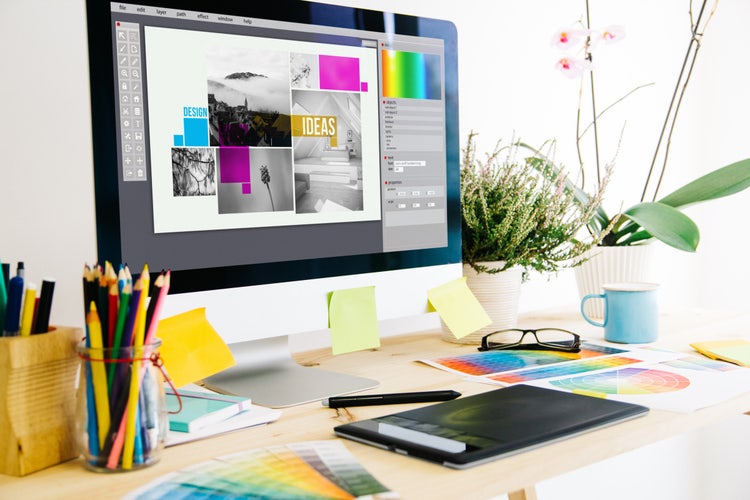
A computer with graphic design on the screen

The graphic design profession.

Being a graphic designer is all about combining technology, art and creativity to communicate ideas and concepts. Whether you are working across digital or print media, the aim is to create designs that capture attention and influence behaviour.

What you do in graphic design:

  • Create visual identities (logos, colour systems, typography).
  • Design advertising materials and marketing collateral.
  • Develop magazine and editorial layouts.
  • Create packaging designs.
  • Design websites and digital interfaces.
  • Develop brand guidelines and identity systems.
  • Conduct design research and competitor analysis.
  • Collaborate with marketing, development and strategic teams.

What skills you need for graphic design:

  • Marketing and communication principles.
  • Psychology and consumer behaviour.
  • Design thinking and problem-solving.
  • Project management.
  • Client communication.
  • Trend awareness and industry knowledge.

Graphic designers work in diverse settings: from creative agencies to in-house design teams, freelance, tech start-ups, corporate environments and entertainment industries.

The role has evolved significantly with digital transformation, too—modern graphic designers must often understand digital design, animation, interactive design and emerging technologies.

Essential tools for learning graphic design.

Three software tools form the foundation of professional graphic design practice: Adobe Photoshop, Illustrator and InDesign. These Creative Cloud applications are taught in design schools worldwide and used as standards across the industry.

Adobe Photoshop.

Image and photo editing software used for retouching, digital art creation, web design and more.

Graphic designers use Photoshop for:

  • Cropping, resizing and colour correction
  • Removing imperfections and retouching
  • Creating digital illustrations and artwork
  • Compositing multiple images
  • Web and interface design
  • Photo manipulation and artistic effects.

It’s essential for any work involving photo editing or digital image creation.

Adobe Illustrator.

Vector drawing software used for illustrations, logos, icons, typography and complex drawings requiring frequent resizing.

Key advantage: Uses vectors (not pixels), meaning designs scale infinitely without quality loss.

Graphic designers use Illustrator for:

  • Logo and icon creation
  • Typography and custom lettering
  • Illustrations and artwork
  • Charts and infographics
  • Print-ready graphics
  • Brand element design.

It is the preferred tool for vector-based design work.

Adobe InDesign.

Layout software for designing multi-page publications such as books, magazines, brochures, posters and printed materials.

Graphic designers use InDesign for:

  • Page layout and composition
  • Typography control and management
  • Multi-page document organisation
  • Print preparation and file export
  • Brochures and marketing collateral
  • Books and editorial publications.

Perfect for precise control over typography, columns, margins and overall page design.

Mastering these three tools enables graphic designers to handle diverse tasks—from image creation to illustration to multi-page layout—expressing full creative potential while ensuring high-quality, professionally tailored designs across a range of formats.

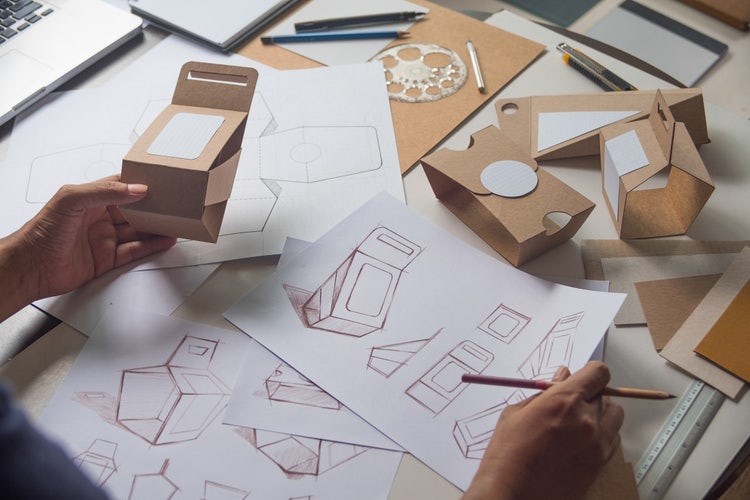
Creative packaging designs

Frequently asked questions.