The Unlock : apprenez à créer un dégradé à l’aide de contours dans Illustrator.
Alex vous explique comment créer facilement un effet d’ombre sophistiqué dans Adobe Illustrator.
Publié le
avec Alex Trochut
L'essentiel, c'est d'aborder avec enthousiasme quelque chose que vous ne connaissez pas.
Rien que cela, c'est magique.
Vous savez que vous avez terminé lorsqu'une petite voix intérieure vous dit que vous avez atteint votre but, votre destination imaginaire.
Voilà.
J'ai fini. -
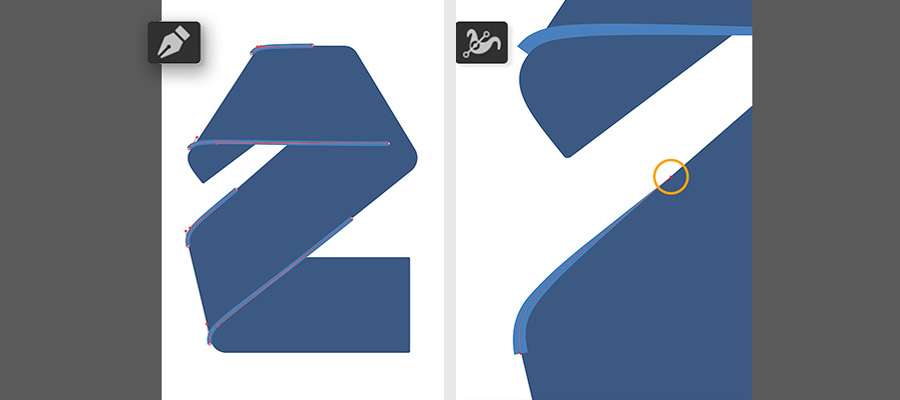
Créez les tracés de départ.
Tracez deux séries de lignes le long des côtés supérieur et gauche de la forme, comme illustré ci-contre. Pour commencer, choisissez l’outil Plume, attribuez la valeur Aucune à l’option Couleur de fond, sélectionnez une couleur de contour puis, dans la barre d’options en haut, réglez l’épaisseur du contour. Cliquez ensuite pour commencer à tracer le trait, cliquez et faites glisser pour créer une courbe, puis cliquez à l’emplacement souhaité pour marquer l’extrémité. Appuyez sur la touche Échap pour finir le trait.
Pour biseauter l’extrémité de chaque trait, choisissez l’outil Largeur, cliquez sur l’extrémité d’un trait, puis faites glisser vers le bas pour diminuer l’épaisseur du contour.
Ajoutez le dégradé.
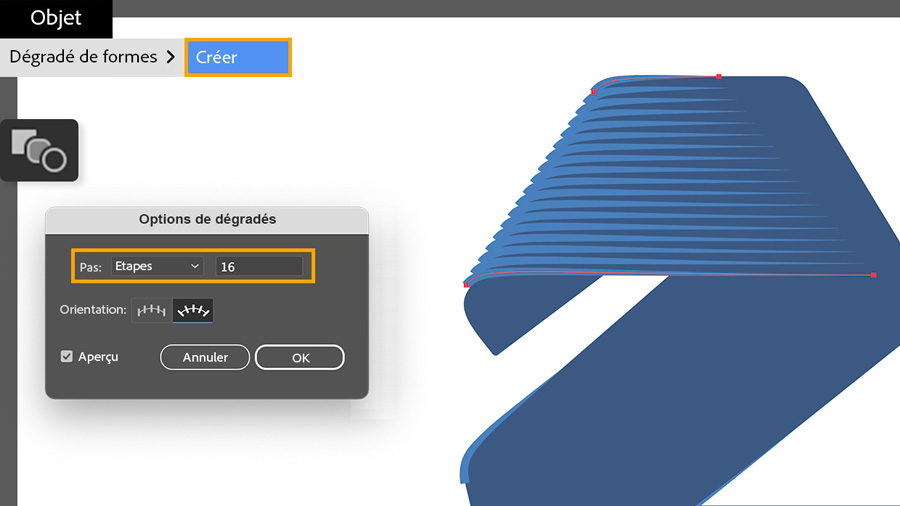
Créez un design de dessin au trait répétitif pour mettre l’accent sur l’illustration. Pour ce faire, activez l’outil Sélection, cliquez sur le premier trait puis, tout en maintenant la touche Maj enfoncée, cliquez sur le second trait.
Choisissez Objet > Dégradé de formes > Créer. Ensuite, double-cliquez sur l’outil Dégradé de formes pour accéder à ses options, puis choisissez les paramètres ci-contre.
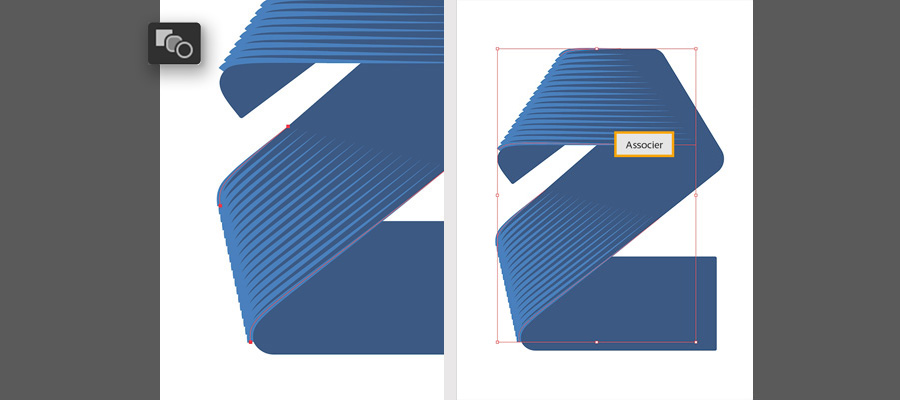
Répétez le motif.
Appliquez le même dégradé à la deuxième série de lignes en suivant les étapes précédentes. Activez l’outil Sélection, puis sélectionnez les deux motifs et regroupez-les (Objet > Associer).
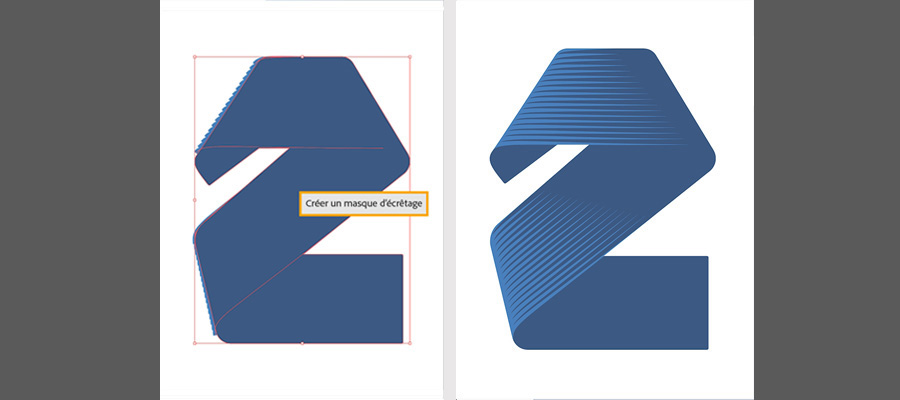
Délimitez les traits.
Confinez les motifs à l’intérieur de la forme. Pour ce faire, activez l’outil Sélection, cliquez sur la forme bleue, appuyez sur Ctrl/Cmd+C pour la copier, puis appuyez sur Ctrl/Cmd+Maj+V pour coller sur place. Ensuite, tracez un rectangle de sélection sur la forme et les motifs à base de traits, cliquez sur le bouton droit, puis choisissez Créer un masque d’écrêtage.
Essayez ces tutoriels avec Illustrator
Créez des illustrations et d’autres graphiques avec des vecteurs.
You can control how Adobe websites use cookies and similar technologies by making choices below. But note that if you disable cookies and similar technologies entirely, Adobe websites may not function properly.
Cookies are small text files stored by your web browser when you use websites. There are also other technologies that can be used for similar purposes like HTML5 Local Storage and local shared objects, web beacons, and embedded scripts. These technologies help us do things like remembering you and your preferences when you return to our sites, measure how you use the website, conduct market research, and gather information about the ads you see and interact with.
You can make choices in the menu below about what cookies and other technologies you want us to use on Adobe sites when you visit them from this browser. You can always change those choices later by clicking on the Cookie Preferences link at the bottom of the page.
If enabled:
We can improve your experience by tailoring the site and the content to things we think might be of interest
We can better keep track of your preferences — like what language you prefer to use
We will better understand your likely interests so we can provide you more relevant Adobe ads and content on non-Adobe websites and in non-Adobe apps
It will help us improve the performance of our website and those of our partners who use the Adobe Experience Cloud
If disabled:
We won’t be able to remember you from session to session so the experience may not be tailored to your interests
You’ll still have access to the content of the site but certain features that depend on cookies may not function
You’ll still see ads, they just may not be as relevant to you
General information
You can control how Adobe websites use cookies and similar technologies by making choices below. But note that if you disable cookies and similar technologies entirely, Adobe websites may not function properly.
Cookies are small text files stored by your web browser when you use websites. There are also other technologies that can be used for similar purposes like HTML5 Local Storage, web beacons, and embedded scripts. These technologies help us do things like remembering you and your preferences when you return to our sites, measure how you use the website, conduct market research, and gather information about the ads you see and interact with.
You can make choices in the menu below about what cookies and other technologies you want us to use on Adobe sites when you visit them from this browser. You can always change those choices later by clicking on the Cookie Preferences link at the bottom of the page.
If enabled:
We can improve your experience by tailoring the site and the content to things we think might be of interest
We can better keep track of your preferences — like what language you prefer to use
We will better understand your likely interests so we can provide you more relevant Adobe ads and content on non-Adobe websites and in non-Adobe apps
It will help us improve the performance of our website and those of our partners who use the Adobe Experience Cloud
If disabled:
We won’t be able to remember you from session to session so the experience may not be tailored to your interests
We’ll still count your use of our site and services
You’ll still have access to the content of the site but certain features that depend on cookies may not function
You’ll still see ads, they just may not be as relevant to you
Operate the site and core servicesOperate site and measure engagement
Always active
These cookies are required, and they are used to enable the site and related services core functionality. Without them the site could not operate, so they cannot be disabled.
These cookies enable the site and related services’ core functionality and collect statistics about user engagement, such as counting active use to help us understand trends. These cookies cannot be disabled.
Measure performance
These cookies are used to analyze site usage to measure and improve performance. Without them Adobe cannot know what content is most valued and how often unique visitors return to the site, making it hard to improve information we offer to you.
These cookies are used to analyze site usage to measure and improve performance. Without them Adobe cannot know what content is most valued, making it hard to improve information we offer to you.
Extend functionality
These cookies are used to enhance the functionality of Adobe sites such as remembering your settings and preferences to deliver a personalized experience; for example, your username, your repeated visits, preferred language, your country, or any other saved preference.
Personalize advertising
These cookies are used to enable Adobe and our partners to serve ads more relevant to your interests. Without them you will still see ads, but they might not be as relevant to you.
Personalize advertising
These cookies are used to enable Adobe and our partners to serve ads more relevant to your interests. Without them you will still see ads, but they might not be as relevant to you.