#1e1e1e

DESIGN

A beginner's guide to primary, secondary, and tertiary colours.

Understand primary, secondary, and tertiary colours to create harmonious colour schemes and bring your designs to life with confidence.

Explore Photoshop

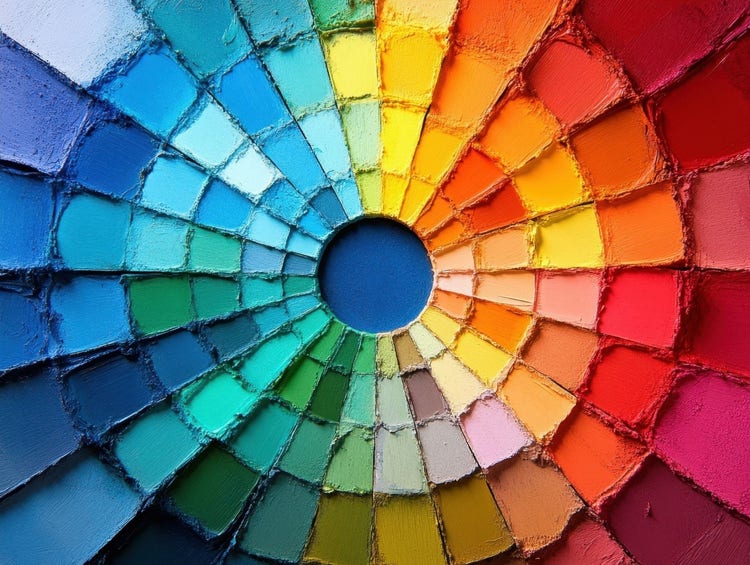
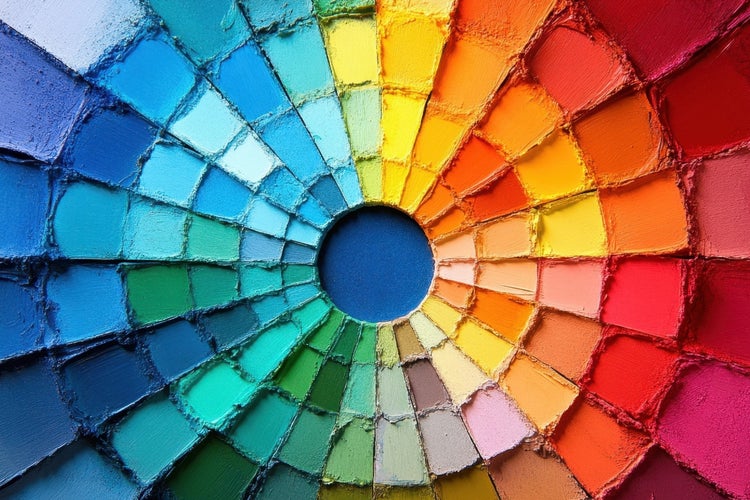
Color wheel with vibrant hues arranged in circular pattern, showcasing spectrum from blue to red, emphasising artistic creativity and color theory.

The basics of colour theory.

Understanding colour is fundamental to creating compelling designs, artwork, and visual content. Colours influence how people perceive and respond to visual information, making them a powerful tool in both artistic expression and professional design. Knowing how primary colours, secondary colours, and tertiary colours work together allows designers and artists to build harmonious and visually engaging colour schemes that enhance their message and evoke the right emotions.

Whether you're choosing colours for a brand, developing a website, or painting a canvas, having a grasp of primary and secondary colours, as well as tertiary colours, can help you make confident colour choices. This beginner’s guide explains the types of colour, the relationships between primary, secondary, and tertiary colours, and how to apply this knowledge in creative projects to achieve balance, contrast, and visual interest.

What are primary colours?

Primary colours are the foundation of all colour types. They cannot be created by mixing other colours. The three primary colours are:

  • Red
  • Blue
  • Yellow

These colours serve as the base for creating secondary colours and tertiary colours. They form the starting point on the primary secondary colour wheel.
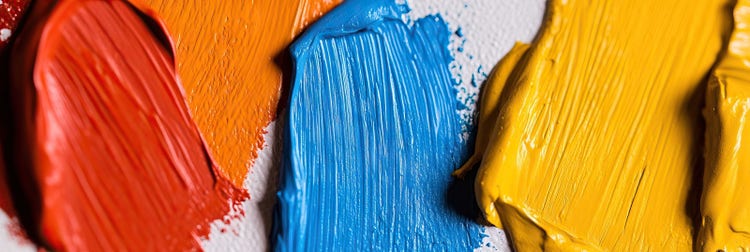
Close-up of paint strokes Red, Blue, and Yellow - primary colours.

What are secondary colours?

Secondary colours are created by mixing two primary colours. There are three secondary colours, which are:

  • Orange (Red + Yellow)
  • Green (Blue + Yellow)
  • Purple (Blue + Red)

When asking, “How many secondary colours are there?” the answer is three. These secondary colours occupy a key position on the secondary colour wheel, sitting between the primary colours they are derived from.

Secondary colours definition: Secondary colours result from mixing two primary colours in equal parts.

Secondary colours examples:

  • Orange: Often used to evoke warmth and energy.
  • Green: Symbolises nature, growth, and balance.
  • Purple: Represents creativity, luxury, and sophistication.

What are tertiary colours?

Tertiary colours are created by mixing a primary colour with a secondary colour.

There are six tertiary colours, which are:

  • Red-orange
  • Yellow-orange
  • Yellow-green
  • Blue-green
  • Blue-purple
  • Red-purple

These tertiary colours fill in the gaps on the tertiary colour wheel, bridging the spaces between primary and secondary colours.

What are Tertiary colours? Tertiary colours result from combining a primary colour and a secondary colour in equal parts.

Tertiary colours examples:
  • Red-orange: Adds vibrancy and warmth.
  • Yellow-green: Suggests freshness and vitality.
  • Blue-purple: Conveys depth and creativity.

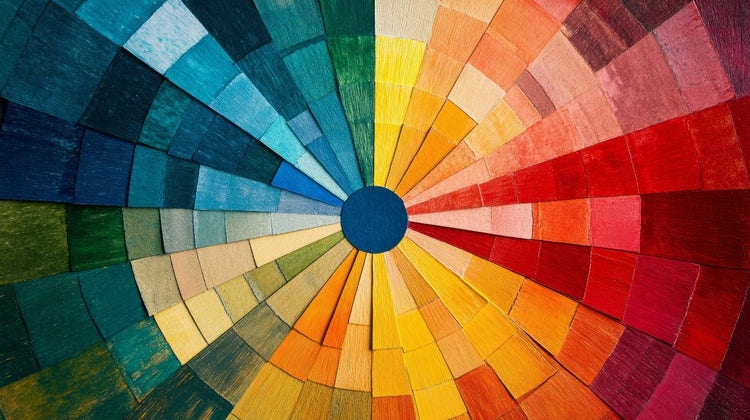
Show a color wheel palette with primary, secondary, and tertiary colors arranged in a circular format.

The colour wheel: Primary, secondary, and tertiary.

The colour wheel is a visual representation of the relationships between primary colours, secondary colours, and tertiary colours. It illustrates how primary and secondary colours combine and how tertiary colours fill the spaces between them.

Primary Secondary Tertiary colours on the colour wheel:

  • Primary colours: Red, blue, yellow (equally spaced on the wheel)
  • Secondary colours: Orange, green, purple (between the primary colours)
  • Tertiary colours: Red-orange, yellow-orange, yellow-green, blue-green, blue-purple, red-purple (between primary and secondary colours)

Practical applications of primary, secondary, and tertiary colours.

Understanding primary colours and secondary colours, along with tertiary colours, allows designers and artists to create effective visual communication.

Here are some ways to apply this knowledge:
  • Complementary colour schemes: Colours opposite each other on the colour wheel (e.g., blue and orange) create contrast and visual interest.
  • Analogous colour schemes: Colours next to each other on the wheel (e.g., yellow, yellow-green, and green) offer harmony and cohesion.
  • Triadic colour schemes: Using three colours evenly spaced around the wheel (e.g., red, blue, and yellow) creates vibrant and balanced designs.

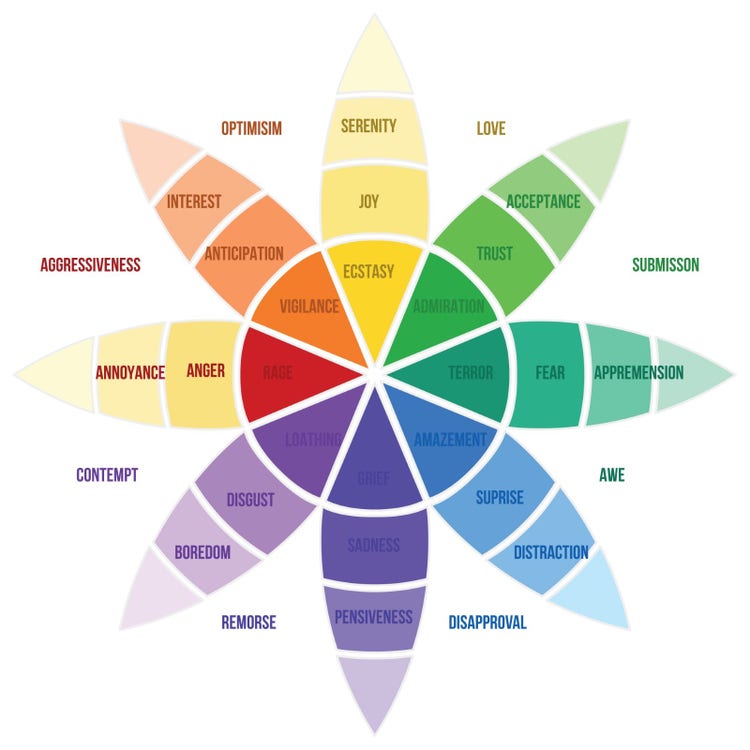
Colour wheel in colour with emotion breakdown on the different elements of the wheel.

How to use primary and secondary colours effectively.

Understanding how to work with primary and secondary colours is a key starting point for creating bold, balanced designs that capture attention and evoke emotion.

  • Primary colours (red, blue, yellow) are naturally striking and can create high-impact visuals. They are often used in branding, logos, and advertisements to grab attention and communicate simplicity and strength. For example, red conveys energy and urgency, blue suggests trust and stability, and yellow evokes positivity and warmth.
  • Secondary colours (green, orange, purple) offer a balance between vibrancy and meaning. Green is commonly associated with nature and freshness, orange brings a sense of warmth and creativity, while purple conveys luxury and imagination. Combining primary and secondary colours can enhance contrast and create dynamic, visually engaging designs.

Pro tip: Start by pairing a bold primary colour with a softer secondary colour to balance attention and meaning - for example, pairing blue with orange for contrast or yellow with green for a fresh, natural palette.

How to use tertiary colours for subtlety and sophistication.

Tertiary colours (such as red-orange, yellow-green, and blue-purple) blend primary and secondary hues, allowing designers to create more nuanced and refined palettes. These colours are particularly valuable when you want to soften the intensity of primaries or add richness beyond basic combinations.

  • Tertiary colours work well in backgrounds, gradients, and detailed designs where softer, more blended tones can elevate the overall visual harmony.
  • They are often used in branding for industries that prioritise sophistication and style, such as fashion, beauty, and interior design. A yellow-green can bring a fresh, calming quality, while blue-purple introduces depth and elegance.

Pro tip: Use tertiary colours alongside their primary base to create a cohesive, layered look - like pairing blue with blue-purple for a gradient effect, or combining red with red-orange for a warm, energetic feel.
Frequently asked questions.

How do I know which primary, secondary, and tertiary colours work well together?

Understanding the colour wheel primary secondary tertiary structure is a helpful starting point. colours that sit next to each other, like yellow, yellow-green, and green, create a harmonious look. Opposite colours, such as red and green or blue and orange, offer contrast and can make your design stand out. Tertiary colours help bridge gaps, softening harsh contrasts.

What is the difference between warm and cool colours, and how do they relate to primary, secondary, and tertiary colours?

Warm colours, such as red, orange, and yellow, create energy and excitement. Cool colours, like blue, green, and purple, tend to be calming and soothing. Secondary colours like green can lean cool, while orange is warm. Tertiary colours, like red-orange or blue-green, offer subtle shifts between warm and cool tones, giving you more flexibility in your design.

How can I use tertiary colours to avoid making my design look too bright or overwhelming?

Tertiary colours examples like blue-green or red-purple are often less intense than primary colours and secondary colours. Using tertiary colours helps tone down the boldness of primary and secondary colours, creating a more sophisticated, balanced palette. These colours are useful in backgrounds, text accents, or when blending different elements seamlessly.

Can I create secondary colours and tertiary colours with digital tools instead of paint?

Yes, digital design software like Adobe Photoshop and Illustrator allows you to mix primary colours digitally to produce secondary colours and tertiary colours. The colour wheel primary secondary tertiary system is built into most design programs, enabling you to experiment with different colour combinations quickly and easily.

How do primary and secondary colours affect readability in design?

Primary colours like red and blue can be eye-catching but may be difficult to read if used as background colours. Secondary colours like green and orange can offer better readability when balanced with neutral tones. Tertiary colours can be particularly effective for subtle contrasts, helping text stand out without overwhelming the viewer. Understanding primary secondary tertiary colours is a foundational skill for any creative professional. Knowing what is secondary colours and what is tertiary colours helps unlock the full potential of the colour wheel primary secondary tertiary. By mastering these colour types and practicing with the primary secondary colour wheel and tertiary colour wheel, designers can confidently create colour schemes that are both harmonious and impactful.

https://main--cc--adobecom.aem.page/in/cc-shared/fragments/roc/creativecloud/blog/design/design-caas-collection

https://main--cc--adobecom.hlx.page/cc-shared/fragments/seo-articles/do-more-photoshop-color-blade