How to become a brand ambassador – and why is it worth it?
Want to turn your passion into influence? Learn what it means to be a brand ambassador, explore the different types, and discover the real benefits of representing a brand you love. Plus, get practical tips on how to kick-start your journey - and see how Adobe Express can help you stand out.





When you look for a new product or service that meets your needs, you probably rely on feedback from friends and family members who already have experience with a particular brand or company – we certainly do! This is exactly where brand ambassadors come in: personal brand experiences. Studies show that 92% of consumers trust recommendations from people more than advertising, even if they don't know them. This underscores the power of personal recommendations and their influence on consumer behaviour.
Brands have also recognised that by leveraging the influence of ambassadors, they can reach a wider audience and drive higher levels of engagement and conversion. Whether brand ambassadors post on social media or organise local events, they represent brands in a personal, engaging way. They don’t make pre-formulated recommendations – they create authentic connections that increase visibility, build loyalty, and spread word of mouth.
In this article, you'll learn what a brand ambassador really is, the different types of brand ambassadors, and the benefits of working with brand ambassadors for businesses. But that's not all. You'll also get valuable tips on how to become a brand ambassador yourself, what you need to keep in mind on your journey as a brand ambassador, and how to use Adobe Express to create a powerful brand ambassador portfolio.
Let's dive in!
What is a brand ambassador?
Brand ambassadors are individuals who actively represent and promote a brand online and offline – often based on personal conviction or an official partnership. Unlike one-off influencers, brand ambassadors often enter into long-term partnerships with the brand. This increases the credibility and trustworthiness of their recommendations. As the human face of a brand, they help build trust with potential customers. This can strengthen a company's reputation, increase its reach, and boost sales.
Brand ambassadors use various channels to convey their messages. In addition to their presence on social media or blogs, they also participate in events, product launches, or marketing campaigns. They may even organise their own workshops to represent the brand in person.
Are you wondering who can become a brand ambassador? The answer is simple: anyone – including you. However, there are different types of brand ambassadors, for example:
Influencers and content creators as brand ambassadors:
These are people who already have a large following on social media. When a brand chooses an influencer as a brand ambassador, it is not just selecting an individual. Rather, it is also choosing the associated reach, i.e. the trust that this person enjoys among their audience.
Employees as brand ambassadors:
When an employee promotes their employer's products or services, their familiarity and knowledge of their company naturally increases its credibility. In addition, a committed employee signals that they stand behind their company's values, which in turn strengthens trust in the company outside the workforce as well.
Another important point: according to LinkedIn's Employee Advocacy Guide, employees' follower bases are ten times larger than those of their companies. So when an employee shares a post, it is perceived as three times more authentic than if the company shared the same content. Companies launching their own ambassador programmes should consider these interesting facts.
Customers as brand ambassadors:
By customer brand ambassadors, we mean passionate supporters of the brand who promote the product or service out of conviction. After all, satisfied customers are particularly keen to share their positive experiences. When officially appointed as brand ambassadors by companies, one of their tasks may also be to actively seek feedback on what is going wrong, what can be improved, and much more. This helps to demonstrate genuine interest in the needs of customers as a brand and at the same time, conveys an impression of approachability and reliability.
Celebrities as brand ambassadors:
Celebrities are often used as the official faces of advertising campaigns. Here, too, companies benefit from the person's level of recognition and reach. Whether they are public figures, actors, models or entrepreneurs, if the celebrity's personality fits the brand they represent, this can have a strong pull on potential customers. However, in terms of the cost-benefit ratio, such brand ambassadors are likely to expect more than just a discount code for their next purchase in most cases.
Industry experts as brand ambassadors:
As the name suggests, expert brand ambassadors are known for sharing their extensive knowledge with the public, for example by talking about specific products or brands in specialist articles or lectures. But brands need to be careful. Choosing an industry expert as a brand ambassador means selecting someone who not only has in-depth knowledge of the product or service, but is also a credible representative of the brand. If all of this applies, an expert brand ambassador can provide credibility as well as enhance the brand's reputation.
Some companies have built entire communities around passionate supporters. These brand ambassadors weren’t necessarily celebrities or full-time influencers – just people who loved the product and shared their experiences. The result? Word-of-mouth momentum and loyal, long-term customers.
However, brand ambassadorship is not a sure-fire success, but rather a mutual commitment that should be based on previously agreed terms. Only this way can brands achieve long-term benefit from brand ambassadors. For this reason, it makes perfect sense to set up professional brand ambassador programmes. Such strategically designed programmes not only enable the targeted recruitment of brand ambassadors but also provide new brand ambassadors with guidance and incentives to share brand content – without infringing on brand rights or publishing unwanted content.
The key is and always will be authenticity. The best ambassadors are genuinely excited about the brand – and their audiences can tell.
Now, let’s look at the advantages that working with brand ambassadors can have for companies.
recipe
Benefits of working with brand ambassadors as a business.
Setting up an ambassador programme isn’t just a nice marketing extra – it can have a real impact on a company’s bottom line. Let’s look at the benefits of working with brand ambassadors as a business:
Cost-effective marketing:
In business, striking a good balance between costs and benefits is the ultimate goal. Compared to traditional ad campaigns, ambassador programmes can offer better ROI – sometimes for the cost of a few products or vouchers. Still, companies should never underestimate the true value of brand ambassadors and should thus treat them with the respect and appreciation they deserve.
Authentic trust-building:
We already know that audiences trust real people more than advertising. Therefore, ambassadors not only offer organic visibility, but also build brand loyalty and trust through genuine recommendations. After all, user-generated content often appears more natural than glossy advertising. Are you looking for a tool to create your own content? Adobe Express offers a wide range of tools and features to create unique content that sticks out – online and offline.
Wider reach through communities:
Ambassadors bring your brand into personal conversations and niche communities that traditional marketing cannot access. Their diverse backgrounds and unique perspectives enable them to connect with different demographics, which can open doors to new target groups you may not have even considered.
Long-term engagement:
While influencer campaigns may be short-term, ambassador relationships can grow over time, providing ongoing exposure and customer insights. This is especially true if the brand ambassador creates tutorials or original content that the community keeps coming back to.
Valuable feedback:
Ambassadors often share unfiltered insights from the field that help companies improve their offerings – insights that companies would otherwise never get. Such feedback can help pinpoint areas for improvement and ensure that products and services effectively meet consumer needs.
Crisis management and reputation protection:
In the event of crises or negative incidents, brand ambassadors can be an invaluable asset, acting as mediators to help limit damage to the brand and restore customer confidence.
Employee engagement:
If done right, using company employees as brand ambassadors can boost staff morale and create a sense of pride and belonging.
This shows the many benefits of working with brand ambassadors for businesses. Nevertheless, companies should watch out for some pitfalls.
Common mistakes when working with brand ambassadors.
While brand ambassador programmes can be very powerful, they’re not without risk. Common mistakes include:
- Lack of training or brand guidance for ambassadors.
- No clear incentive or reward system.
- Ignoring smaller creators with engaged niche audiences.
- Failing to provide consistent branding tools.
The more structure and support you provide, the more successful your programme will be.
Tips for becoming a successful brand ambassador.
We've talked a lot about the benefits of brand ambassadorship for businesses. But let's get down to brass tacks: What's in it for you?
The rewards for being a brand ambassador can be as varied as the brands you choose to represent: gift vouchers, exclusive discounts, free products, sales commissions, exclusive events, exclusive merchandise, early access to new products or cash. But no reward comes without hard work. Before you become a successful brand ambassador, you need to do some groundwork.
Here are some tips for becoming a successful brand ambassador.
1. Look for suitable opportunities as a brand ambassador:
If you are already a die-hard fan of a particular brand, perfect. Check whether this brand currently offers a brand ambassador programme.
If you want to find companies that offer such programmes, take a look at their websites, LinkedIn pages, and professional job portals. Also, keep an eye on PR agency posts. These days, brand ambassadors are most likely to be hired by PR agencies. Don’t underestimate the power of cold outreach either: a well-crafted DM or email can go a long way.
2. Get to know the brand you want to represent:
As an ambassador, your primary responsibility is to thoroughly understand the brand you represent. Take the time to familiarise yourself with the products, services, goals, and values of the company. Only if you can identify with them can you be an authentic brand ambassador.
3. Build an online presence:
Nowadays, a strong online presence is a plus, because as a brand ambassador, you want to reach as many people as possible. Conversely, companies naturally want to cooperate with partners who have a large number of active followers and thus a wide reach.
To build reach, you should use your social media accounts and post high-quality content to attract attention. With Adobe Express, you can easily create unique content for different channels. With the Content Planner, you can even plan and post content with just one tool – it's easy and intuitive to use, even without prior knowledge.
4. Engage consistently:
Respond to comments, participate in conversations and maintain a regular presence – on your own posts and those of others that are related to your topic. For example, you can also organise Q&A sessions, feedback forums, and much more to find out how your audience views the company you want to work for.
5. Present yourself professionally:
If you’re serious about joining an ambassador programme, prepare a concise portfolio. The portfolio should include a short personal intro (who you are and what you stand for), links to your social channels or blog, stats about your audience (location, age, interests), why you love the brand, what value you bring, and examples of similar collaborations (if applicable).
Could you use a little help to make your portfolio shine as brightly as the brand you want to represent? We’ve got your back! In the next section, you’ll learn how to create a portfolio that sets you apart from others.
6. Reach out:
Now is the time to contact the brand you would like to represent. Good luck!
recipe
How to create a brand ambassador portfolio with Adobe Express.
Creativity and visual consistency are crucial if you want to introduce yourself as a brand ambassador to a company. That's where Adobe Express comes in. With the free online portfolio maker, you can present yourself professionally and distinctively. We'll walk you through the steps:
- Open Adobe Express.
- Pick a template for your brand ambassador portfolio – you can customise the template in the next steps.
- Add your personal style. Select a colour palette and font style that reflects your personality as a brand ambassador. Ensure that your style matches that of the company you wish to represent.
- If you have already worked as a brand ambassador, you should definitely add examples of similar collaborations. You can easily upload your own images. Or add suitable images from the Adobe Stock library.
- You can also save your portfolio and continue working on it later.
- Once you are happy with your brand ambassador portfolio, you can either send it digitally or have it professionally printed.
How to bring your brand ambassador portfolio to life.

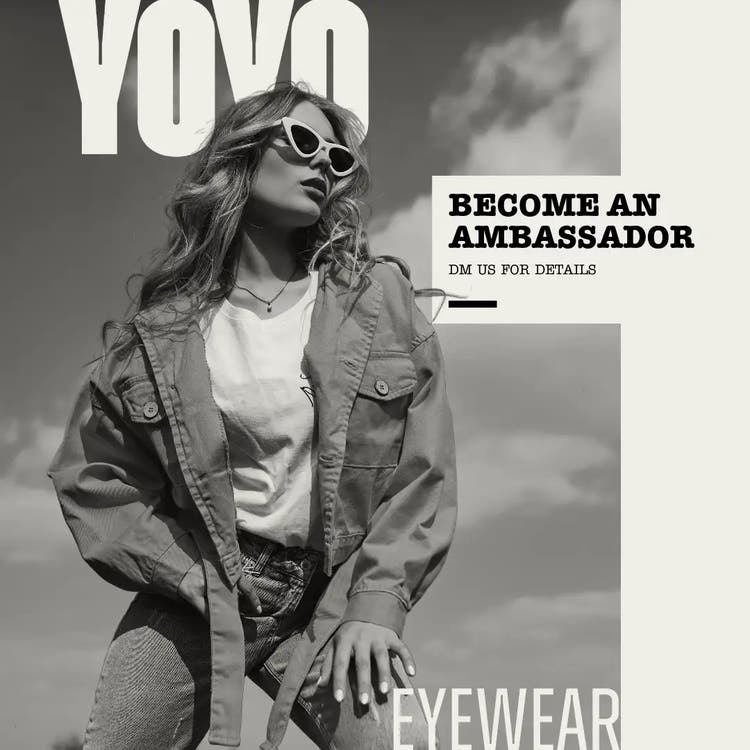
How Adobe Express can further assist you as a brand ambassador.
When you start your actual work as a brand ambassador, Adobe Express offers many useful tools and features to create unique content for your channels. From social media posts to video content, (digital) flyers, posters, or your own website: Adobe Express helps you maintain a consistent online and offline presence and, thanks to its ease of use, saves you time for the things that really matter: interacting with your community.
You might also like...