Examples of good customer service that you can easily adopt for your business.
Discover what good customer service looks like and learn how to turn everyday customer interactions into memorable moments with Adobe Express.




A thank-you card included with an order, a small gift for a birthday, a lovely and straightforward exchange after a problem with a product – in customer service, it’s often supposedly small things that leave a lasting impression.
Precisely for this reason, good customer service is the heart of every successful business interaction. Done well, it builds trust, turns ordinary exchanges into memorable moments and, subsequently, customers into loyal fans of a business. And this not only applies to large companies: small businesses should equally ensure that they don’t neglect customer service and use it as a valuable tool to strengthen customer relationships.
Based on real-world examples of good customer service, this guide explores what good customer service looks like, how to make your own customer service stand out, and how small touches – from reviews to thank-you cards – can strengthen your business. You’ll also discover how Adobe Express can support your efforts with easy-to-use tools to help you design meaningful and memorable customer experiences.
What is customer service, and what makes it good (or bad)?
Customer service is the support and assistance a business, small or big, provides to its customers. This can be before, during, or after a purchase or interaction. Customer service can take many forms: it can mean answering questions, solving problems, offering advice, handling complaints, simply ensuring a smooth, positive experience, or adding little details that make customers feel valued. Hereby, it shapes how people perceive a business – and often determines whether customers and clients return and become loyal fans.
Good customer service is characterised by fast response times, clear communication, empathy, the ability to help, and a willingness to take responsibility. However, excellent customer service is not only about fixing issues; it’s also about making customers feel valued, often by small details.
Bad customer service, on the other hand, is often characterised by slow replies (no replies are even worse), unhelpful or even unreasonable responses, poor listening, and a lack of action. In result, bad customer service makes customers feel like an inconvenience, leading to frustration and even damaging your business’s reputation.
Examples of customer reviews and testimonials.
recipe
What makes customer service stand out?
Exceptional customer service isn’t just about solving problems and getting behind issues but about creating an experience that people remember (positively, of course). What really makes customer service stand out are a personal touch, availability, speed of response, empathy, consistency and overall a holistic approach:
- At its core, standout customer service feels human. This often involves adding a touch of personality: In a world and time where many interactions feel automated or simply transactional, what truly makes customer service stand out is showing that you care. This can show in small gestures and moments: a friendly tone, a personalised message, or a follow-up that comes before the customer even has to ask.
- Speed and availability are essential in good customer service. However, make sure your answers are also useful. Customers want to feel like they’re speaking to someone who understands their issue, cares about solving it, and is able to help.
- Empathy plays a significant role in good customer service, too. Make sure your customers feel heard and respected. The tone of voice and choice of words really matter here. A clear explanation, a sincere apology, or a proactive solution can almost always turn a negative experience into a positive memory.
- Good customer service is not a one-time thing. Through consistency, good customer service can be turned into a good reputation. That reliability builds loyalty, referrals, and long-term relationships.
- Ultimately, excellent customer service stands out because it’s holistic. That means that good customer service doesn’t just do the obvious (solving problems, answering questions), but goes the extra mile and continually does little things to show customers they’re valued. And that’s something even the smallest business can achieve.
How to make the most out of these customer service examples.

6 real-life customer service scenarios.
Are you asking yourself how you can improve your own customer service? We’ve gathered six real-world examples of good customer service to provide you with ideas and inspiration for your own (small) business. Each of these examples shows how going one step further (often even only with minimal effort) can turn a customer contact into something worth remembering.
Customer service example 1: the local florist who follows up:
After delivering an anniversary bouquet, a small flower shop sends a quick thank-you email, including a 10% voucher for the next order and a reminder to order a gift for the upcoming Mother’s Day. This customer service example is personal, proactive, and keeps the relationship going.
Customer service example 2: the jewellery shop that apologises well:
When a customer’s parcel is delayed, a jewellery business sends a sincere apology email, tracks the issue without making up excuses, and includes a small bonus item in the order to say sorry. With this, the business makes sure the customer feels valued, heard, and doesn’t need to take care of the problem themselves.
Customer service example 3: the freelancer who makes it easy:
A freelance designer notices that a client struggles to understand the file handover. Without being asked, she creates a short PDF walkthrough to send to the client. This shows that businesses can also learn from their customers: others might have similar problems, so it’s a good idea always to add a handover to a hand-off. And in the end, this will probably cost less time than answering the same questions over and over again.
Customer service example 4: the hairdresser who checks in post-appointment:
A few days after a customer gets a haircut, a hairdressing business sends a short message asking if the customer is happy and how they’re liking their new hairstyle. Additionally, the hairdresser shares a link to a tutorial for at-home styling and some matching products the customer might want to buy. It’s a small, unexpected touch that shows genuine care.
Customer service example 5: the bakery that remembers birthdays:
When someone signs up for a mailing list, a small bakery notes their birthday. Each birthday, they email a voucher for a free pastry. This turns a simple transaction into a tradition that customers look forward to.
Customer service example 6: the Etsy shop that adds a personal thank-you note:
With every order, a small Etsy print shop sends a personalised thank-you note for supporting their small business. This makes the company more human – customers acknowledge that there is a real person just like themselves behind the online storefront and feel even better about their purchase and support.
Example of thank-you notes for customers.
recipe
5 ways to bring your customer service to the next level with Adobe Express.
Based on the examples of good customer service, you now have plenty of ideas for your own business? If so, your ideas don’t have to be just ideas; they can immediately become reality – with Adobe Express. With our tools and templates, you can create simple, thoughtful materials that show appreciation, build trust, and make your business feel human. Here are five ways to elevate your customer service that are easy to create and deliver.
- Customer thank-you cards: A handwritten thank-you card is lovely, but a digital one can be reused, personalised and printed in just a few clicks. Use Adobe Express to create custom thank-you cards for first-time buyers, loyal clients, or special dates such as birthdays. It’s a small gesture that leaves a strong impression and sets your business apart.
- Customer service emails: Whether you’re responding to a question or following up after a sale, your emails are a key part of the customer experience. Thanks to our adjustable and professionally designed email templates, Adobe Express lets you easily design custom emails for every customer interaction.
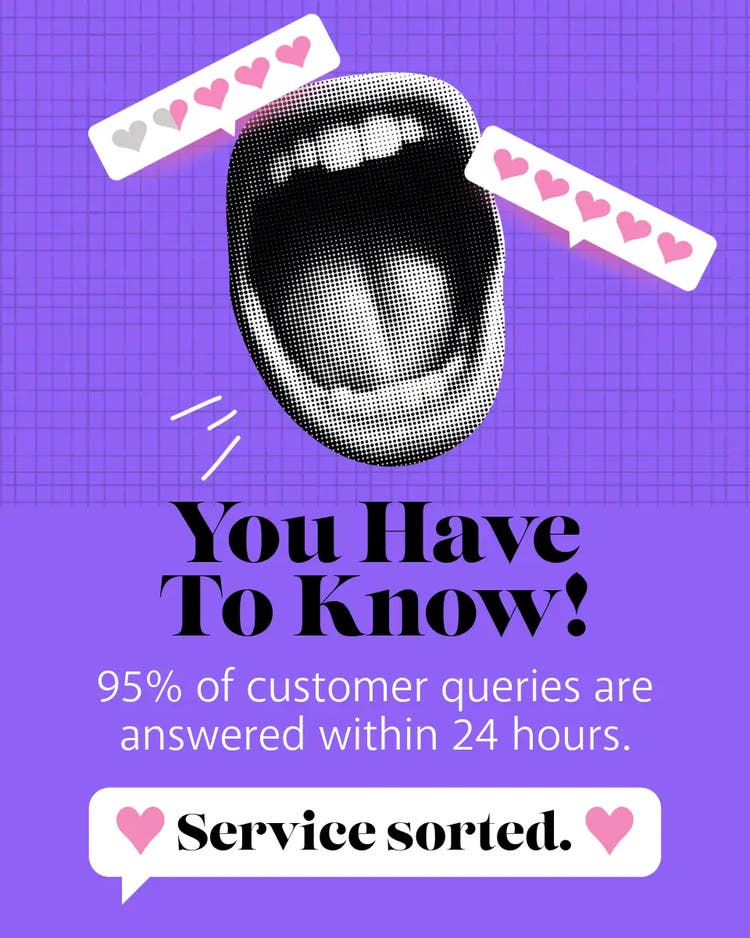
- Social media graphics: Nothing is worse than having a problem and needing to go on an endless search for a business’s customer service touchpoints. Avoid putting your customers in this situation by making it easy for them to contact you. Use Adobe Express to turn your customer service touchpoints into a clear, eye-catching visual that’s easy to share on your social media channels (you can even pin it to make it more visible). It shows you are responsive and proactive – qualities that make customers more likely to return.
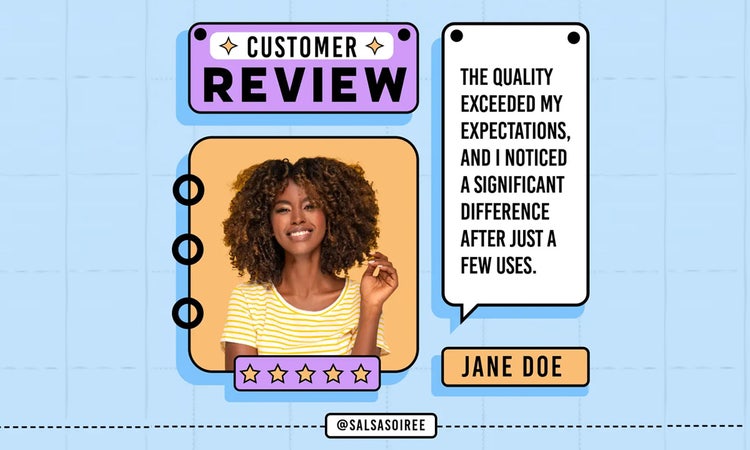
- Customer reviews: You are already making an effort in customer service, which is reflected in your customers’ feedback? Then you can use this to promote your business. Showcasing honest feedback helps future customers to build trust and shows them what to expect. With Adobe Express, you can turn positive reviews into shareable testimonial graphics for your website, newsletters, or social media.
- AI-generated templates: Adobe Express’ AI Template Generator makes it easy to create anything, even if you can’t find the right template for your use case. Use the tool to describe what you need – whether it’s a thank-you card, a feedback request, a service update, or a customer FAQ flyer – and it will generate custom, professionally designed templates in seconds. The results are safe to use commercially and ready to personalise.
Discover more you might like.
You might also like...