Créer un planificateur personnalisé avec Photoshop
Apprenez à concevoir un planificateur unique et imprimable avec Photoshop grâce à ce tutoriel simple et créatif.
Publié le
Organisez vos repas, tâches et projets avec un planificateur fait maison qui vous ressemble.
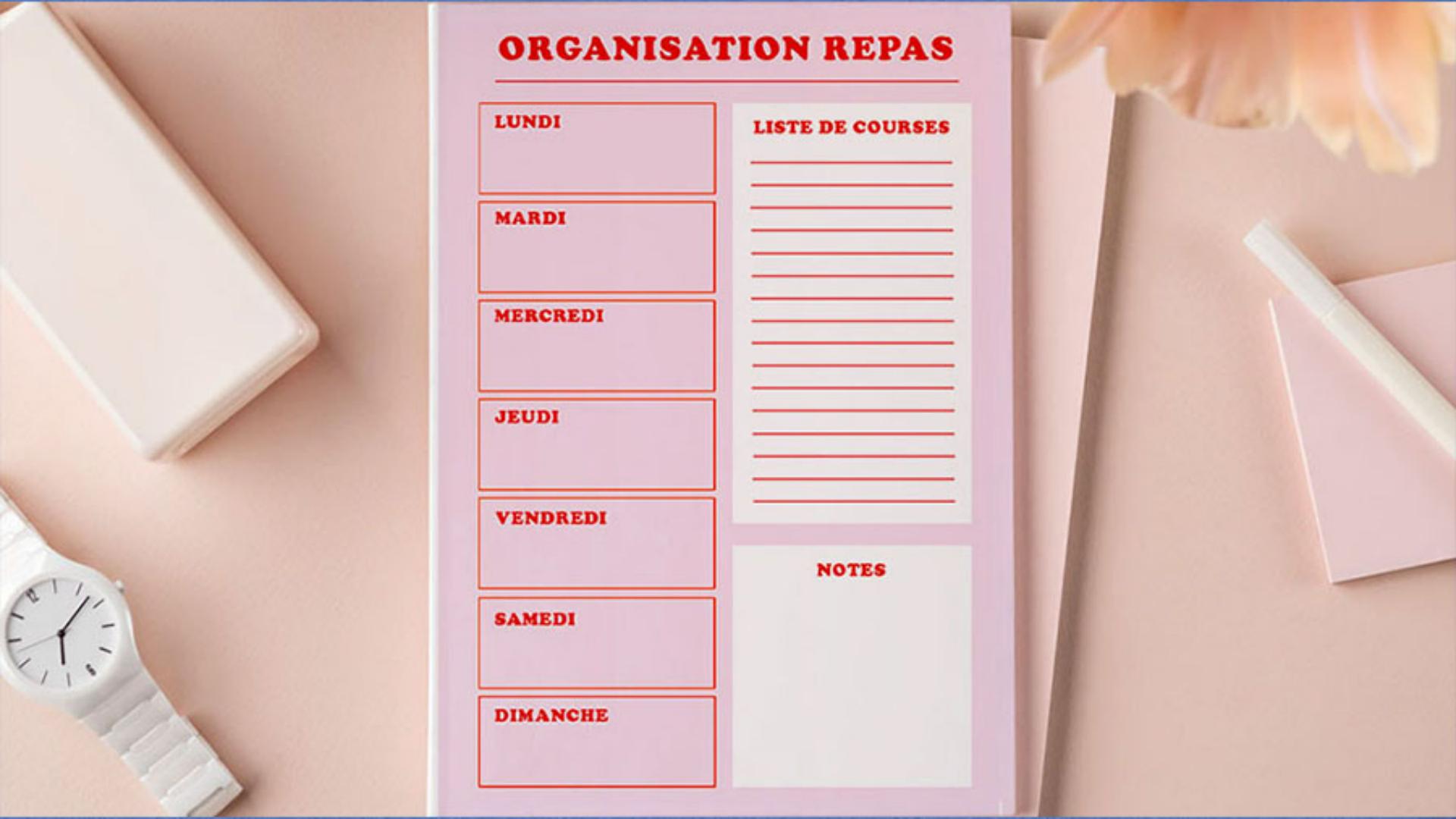
Bonjour à tous, dans ce tutoriel sur Adobe Photoshop je vais vous montrer comment personnaliser et créer votre propre planificateur.
Pour cela on va commencer par coloriser l'arrière-plan grâce à l'outil pot de peinture.
Nous allons également voir comment utiliser l'outil texte pour créer des titres, aussi comment découvrir de nouvelles polices grâce à Adobe Font et enfin comment utiliser l'outil forme pour créer des traits mais aussi des rectangles afin de délimiter les différentes zones.
Grâce à ces outils vous pourrez personnaliser vos planificateurs selon vos envies.
Vous avez déjà cherché un agenda ou un planning en ligne sans jamais trouver celui qui vous convenait vraiment ? Trop simple, trop chargé, pas au bon format…
Créer son propre planificateur est une alternative pratique. Vous obtenez un support unique, parfaitement adapté à vos besoins, et surtout agréable à utiliser au quotidien.
Dans ce tutoriel, vous allez réaliser un planificateur hebdomadaire pensé pour organiser les repas, prévoir une liste de courses et garder une zone de notes.
Vous pourrez ensuite décider de chaque détail : la mise en page, les couleurs, les polices, les espaces d’écriture pour en faire un planificateur qui vous ressemble.
Et une fois le modèle créé, il suffit de quelques minutes pour générer des versions différentes : un planning repas, un agenda professionnel, ou même un planificateur familial pour toute la maison.
Ce que vous allez apprendre
Structurer un agenda / planning clair à l’aide des outils Texte et Forme,
Utiliser les outils essentiels (Pipette, Pot de peinture, Rectangle, Trait),
Incruster une photo dans vos lettres avec le masque d'écrêtage,
Organiser efficacement la mise en page grâce à la gestion des calques,
Concevoir un modèle réutilisable et adaptable à différents usages.
À propos de l’auteur
Je m’appelle Louisa, je suis illustratrice freelance et créatrice de contenus, basée à Berlin. Je partage les coulisses de mon métier, mes conseils, ma passion et des tutoriels, principalement sur YouTube, mais aussi sur Instagram, à travers des contenus dédiés à la création et à la vie d’indépendante.
En parallèle, j’ai eu la chance de collaborer avec de nombreux clients en illustration, pour qui j’ai réalisé des compositions pleines de couleurs.
You can control how Adobe websites use cookies and similar technologies by making choices below. But note that if you disable cookies and similar technologies entirely, Adobe websites may not function properly.
Cookies are small text files stored by your web browser when you use websites. There are also other technologies that can be used for similar purposes like HTML5 Local Storage and local shared objects, web beacons, and embedded scripts. These technologies help us do things like remembering you and your preferences when you return to our sites, measure how you use the website, conduct market research, and gather information about the ads you see and interact with.
You can make choices in the menu below about what cookies and other technologies you want us to use on Adobe sites when you visit them from this browser. You can always change those choices later by clicking on the Cookie Preferences link at the bottom of the page.
If enabled:
We can improve your experience by tailoring the site and the content to things we think might be of interest
We can better keep track of your preferences — like what language you prefer to use
We will better understand your likely interests so we can provide you more relevant Adobe ads and content on non-Adobe websites and in non-Adobe apps
It will help us improve the performance of our website and those of our partners who use the Adobe Experience Cloud
If disabled:
We won’t be able to remember you from session to session so the experience may not be tailored to your interests
You’ll still have access to the content of the site but certain features that depend on cookies may not function
You’ll still see ads, they just may not be as relevant to you
General information
You can control how Adobe websites use cookies and similar technologies by making choices below. But note that if you disable cookies and similar technologies entirely, Adobe websites may not function properly.
Cookies are small text files stored by your web browser when you use websites. There are also other technologies that can be used for similar purposes like HTML5 Local Storage, web beacons, and embedded scripts. These technologies help us do things like remembering you and your preferences when you return to our sites, measure how you use the website, conduct market research, and gather information about the ads you see and interact with.
You can make choices in the menu below about what cookies and other technologies you want us to use on Adobe sites when you visit them from this browser. You can always change those choices later by clicking on the Cookie Preferences link at the bottom of the page.
If enabled:
We can improve your experience by tailoring the site and the content to things we think might be of interest
We can better keep track of your preferences — like what language you prefer to use
We will better understand your likely interests so we can provide you more relevant Adobe ads and content on non-Adobe websites and in non-Adobe apps
It will help us improve the performance of our website and those of our partners who use the Adobe Experience Cloud
If disabled:
We won’t be able to remember you from session to session so the experience may not be tailored to your interests
We’ll still count your use of our site and services
You’ll still have access to the content of the site but certain features that depend on cookies may not function
You’ll still see ads, they just may not be as relevant to you
Operate the site and core servicesOperate site and measure engagement
Always active
These cookies are required, and they are used to enable the site and related services core functionality. Without them the site could not operate, so they cannot be disabled.
These cookies enable the site and related services’ core functionality and collect statistics about user engagement, such as counting active use to help us understand trends. These cookies cannot be disabled.
Measure performance
These cookies are used to analyze site usage to measure and improve performance. Without them Adobe cannot know what content is most valued and how often unique visitors return to the site, making it hard to improve information we offer to you.
These cookies are used to analyze site usage to measure and improve performance. Without them Adobe cannot know what content is most valued, making it hard to improve information we offer to you.
Extend functionality
These cookies are used to enhance the functionality of Adobe sites such as remembering your settings and preferences to deliver a personalized experience; for example, your username, your repeated visits, preferred language, your country, or any other saved preference.
Personalize advertising
These cookies are used to enable Adobe and our partners to serve ads more relevant to your interests. Without them you will still see ads, but they might not be as relevant to you.
Personalize advertising
These cookies are used to enable Adobe and our partners to serve ads more relevant to your interests. Without them you will still see ads, but they might not be as relevant to you.