
ACROBAT | 6-MINUTE READ
How to write the date.
Learn how to write the date in various situations and writing formats.
ACROBAT | 6-MINUTE READ
Learn how to write the date in various situations and writing formats.

Writing the date correctly has more rules than one may expect. The standards vary depending on your country, including whether you’re writing for school or your personal affairs. Additionally, writing the MLA date format accurately can make everything more complex.
Learning how to write the date can set you up for success in all different areas of your life, whether in the classroom or the office. Avoid confusion caused by the various standards and review the various ways to write the date below.
Writing the date in American English calls for a different standard from other countries. The most notable difference is that Americans write the date with the month first. So, place the month first, then the day and finally, the year. If you plan to include the day of the week, then use the weekday, followed by the month, day and then the year. Here are some examples of how to write the date in American English:
American English requires writers to separate the day and the year with a comma. You should also place a comma after the weekday.
If you’re learning how to write the date in MLA format, which is a specific citation style, then write the date in the day-month-year order. Do not include any commas. Here is an example of the MLA date format: 15 March 2025
Writing the date in British English means starting with the day first, then the month, followed by the year. This format is followed by many countries worldwide, including the UK, Australia and most European countries. Here are some examples:
In British English, use both the and of to precede the day and month, respectively.
Writing the date accurately varies depending on your location and context. If you’re not sure if your date format is correct, then write out the date in its entirety: 15 March 2025. Writing the date in full prevents confusion across regions and dialects. However, becoming familiar with all the different date formats and standards can help you to learn how to write a date for every situation.
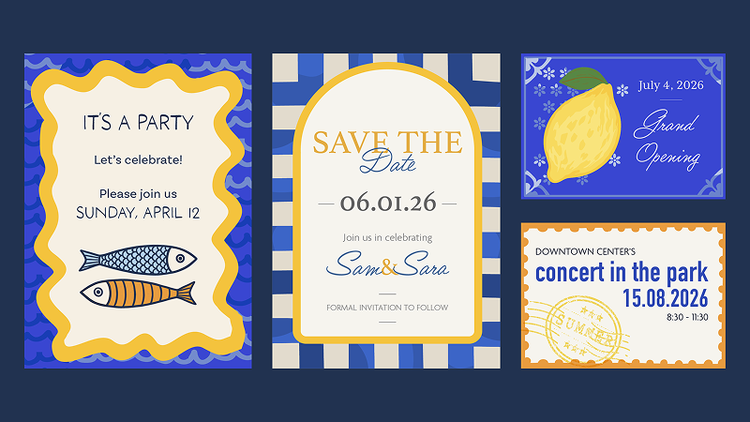
In the United States, dates are typically written in the format of month and day and require cardinal numbers or sequential numbers, like one, two, three and four. This style may be a tad confusing since we speak dates out loud in ordinal numbers.
Ordinal numbers indicate position, like first, second, third and fourth. For example, even though we may say “January first, two thousand twenty-five,” we write “1 January 2025.” Remember to place the comma after the day and before the year in the month-date format.
However, if you include of in the sentence, then write out the date with an ordinal number. For example, “James was born on the 1st of January.” You can also use an ordinal number for more informal writing, such as “James was born on 1st January.”
Also, don’t forget that the month and day format varies across the world. The United Kingdom and most of Europe use the day/month/year format, meanwhile many Asian countries use the year/month/day format.
Whether in the office or at home, you’re likely to encounter many different date formats. Less common is the long-form date format: days of the week.
Learning to write this format requires placing the comma correctly in a sentence. Place the comma directly after the weekday before writing out the date. For example, “My research paper is due on Friday, 11 April 2025.”
Overall, when choosing a date format, use the one that makes the most sense for your audience. The correct date format depends on location and purpose. Sometimes, you need the MLA date format and sometimes, you’re writing to a friend in another country. When in doubt, spell out the entire date with the day, month, date and year to provide clarity to your audience.
Also, never start a sentence with numerals, which many style guides consider to be poor grammar. If you do need to place a year at the beginning of a sentence, then spell out the number.
If you need to make changes to a document that’s saved as a PDF, then you can use the free PDF editor or convert a PDF to Word to alter the date as needed.
Learn how to write dates in decades and centuries for your next history paper.
Here are some examples of how to write the date in centuries:
Remember that you can write the 1700s to describe the one hundred years between 1700 and 1799. The 18th century also refers to the 1700s. However, centuries are written in the plural form and are not possessive. So, do not use an apostrophe before the s.
You can also write decades using a few different methods. Writing out the word in full, like the nineties, is perfectly acceptable. Or, you can shorten it to a two-digit number. So, place an apostrophe before the two digits and add an s after them, like the ’90s.
Here are some examples of how to write the date in decades:
The best way to think through writing decades is to know they are both abbreviations and plurals. In the abbreviation format, the apostrophe indicates where the two century digits would be. However, placing an apostrophe between the zero and the s is incorrect, since that shows a possessive.
The 'best' format for writing the date will vary depending on culture, region, and personal preference. It’ll also change depending on the situation – for example, when you’re writing the date on a cheque versus a birthday invitation.
A good rule of thumb is to write the full date to avoid any confusion between cultures or regions. So, write out 15th March 2025, rather than use numerals to abbreviate the date. For example, 3/15/25 is the abbreviated version of the date in American English, but 15/3/25 is the abbreviated version of the date in British English.
When writing the date formally, you should avoid abbreviations. For example, spell out the entire date – 15th March 2025 – rather than 15/03/25 (UK) or 03/15/25 (US). Also, don’t omit the year from your date, which may confuse your audience.
Using a formal date is the most appropriate format for legal documents, like court-approved letters or contracts. In formal British English, ordinal numbers (1st, 2nd, 3rd, etc.) are standard and appropriate in dates. You can also use "the" and "of" for additional formality, such as "the 15th of March 2025".
You can use different formats when writing the day and date in a sentence. In British English, you can write, “We got married on Tuesday, the 8th of April 2025”. It’s common to include "the" and an ordinal number (8th) in the sentence. Also, in British English, you shouldn’t place a comma after the day and before the year.
In American English, you can write the weekday, month, date, and then end with the year. For example, “We got married on Tuesday, April 8, 2025”.
Some global date formats include:
• American English: Month/Day/Year (e.g. 3/15/2025)
• British English: Day/Month/Year (e.g. 15/3/2025)
• Some East Asian countries (China, Japan, South Korea): Year/Month/Day (e.g. 2025/3/15).
For casual communication, you can write the date in a natural way, such as:
• 15th March 2025 (British English)
• March 15, 2025 (American English).
As usual, how you format the date depends on the situation and your recipient.


