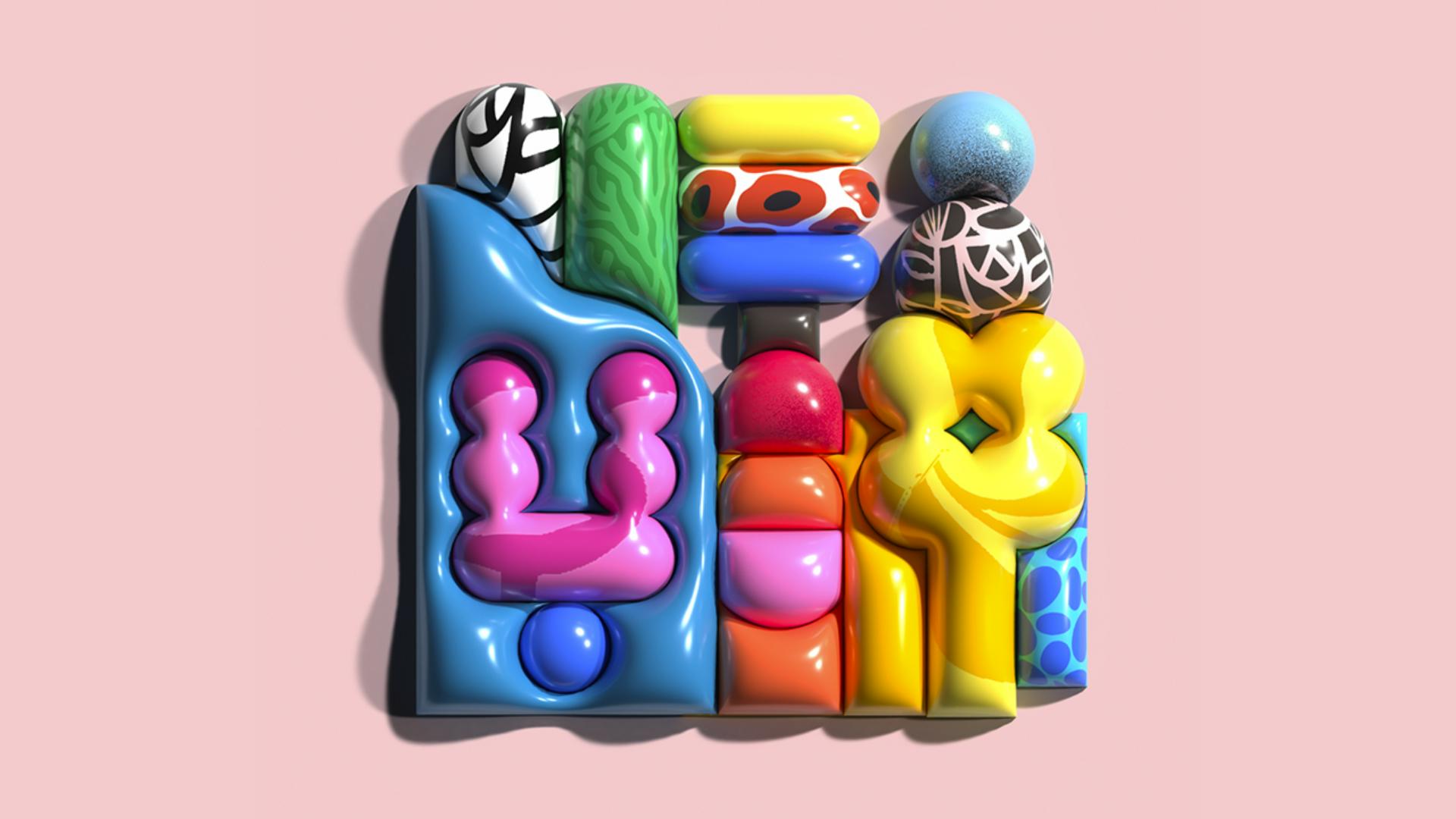
Découvrez comment ajouter des motifs personnalisables sur des objets en 3D après les avoir créés.
Publié le
Lancez-vous dans la conception de motifs personnalisés pour habiller et enrichir des formes 3D que vous modéliserez vous-même de A à Z.
Salut, moi c'est Florimond Mochel, je suis artiste et designer graphique depuis 16 ans.
Dans ce tutoriel, j'ai voulu partager une approche précise.
Comment créer une oeuvre en 3D directement dans Illustrator, en jouant avec les outils, les perspectives et les effets de profondeur.
Je t'y montre pas à pas comment construire une composition en volume, comment penser une oeuvre en trois dimensions et comment transformer des formes vectorielles en un visuel fort, structuré, et expressif.
Mon travail d'artiste est souvent à la frontière entre le graphisme et la sculpture visuelle.
Ce tutoriel, c'est exactement ça.
Une manière de transmettre ma façon de penser l'image, le volume et la composition.
Que tu sois designer, illustrateur ou simplement curieux, l'objectif est de te donner des clés concrètes pour créer ta propre oeuvre en 3D sur Illustrator.
Maintenant, on passe à la pratique.
Je te montre comment tout commence, étape par étape.
La répétition maîtrisée est souvent ce qui distingue un rendu amateur d'un résultat soigné. Que ce soit pour habiller une surface, enrichir une composition ou donner du caractère à un objet, rien n'est plus puissant qu'un motif bien construit pour transformer une forme ordinaire en quelque chose de mémorable.
Avec ce tutoriel, vous apprendrez à concevoir des motifs réutilisables pensés dès le départ pour s'adapter à des surfaces tridimensionnelles. Vous découvrirez comment construire un motif modulable, puis l'appliquer proprement sur des formes 3D que vous aurez vous-même modélisées. Il ne vous restera plus qu'à laisser parler votre créativité pour les personnaliser à votre image.
Ce que vous allez apprendre
Dans ce tutoriel pratique, vous découvrirez comment :
Concevoir vos propres motifs personnalisés et les enregistrer en tant que symboles réutilisables grâce au panneau Symboles,
Modéliser des objets 3D depuis zéro et les agencer dans votre composition,
Sculpter et affiner vos formes 3D à l'aide du panneau 3D et Matières pour leur donner volume et réalisme,
Appliquer vos symboles sur vos créations 3D pour enrichir la texture et apporter profondeur et caractère à l'ensemble de l'œuvre.
À propos de l’artiste
Je suis Florimond Mochel, illustrateur et directeur artistique français. Mon travail se caractérise par un style moderne, coloré et épuré, où je cherche à aller à l’essentiel.
J’utilise principalement des aplats de couleurs vives et des formes simples pour créer des compositions lisibles, dynamiques, accessibles et surtout impactantes.
J’accorde une grande importance au rythme visuel, à la composition et à l’équilibre entre les masses et les couleurs.
Je collabore avec des marques, des agences et des médias sur des projets variés et mon objectif est de raconter une histoire de manière simple et graphique tout en apportant ma touche de sensibilité.
You can control how Adobe websites use cookies and similar technologies by making choices below. But note that if you disable cookies and similar technologies entirely, Adobe websites may not function properly.
Cookies are small text files stored by your web browser when you use websites. There are also other technologies that can be used for similar purposes like HTML5 Local Storage and local shared objects, web beacons, and embedded scripts. These technologies help us do things like remembering you and your preferences when you return to our sites, measure how you use the website, conduct market research, and gather information about the ads you see and interact with.
You can make choices in the menu below about what cookies and other technologies you want us to use on Adobe sites when you visit them from this browser. You can always change those choices later by clicking on the Cookie Preferences link at the bottom of the page.
If enabled:
We can improve your experience by tailoring the site and the content to things we think might be of interest
We can better keep track of your preferences — like what language you prefer to use
We will better understand your likely interests so we can provide you more relevant Adobe ads and content on non-Adobe websites and in non-Adobe apps
It will help us improve the performance of our website and those of our partners who use the Adobe Experience Cloud
If disabled:
We won’t be able to remember you from session to session so the experience may not be tailored to your interests
You’ll still have access to the content of the site but certain features that depend on cookies may not function
You’ll still see ads, they just may not be as relevant to you
General information
You can control how Adobe websites use cookies and similar technologies by making choices below. But note that if you disable cookies and similar technologies entirely, Adobe websites may not function properly.
Cookies are small text files stored by your web browser when you use websites. There are also other technologies that can be used for similar purposes like HTML5 Local Storage, web beacons, and embedded scripts. These technologies help us do things like remembering you and your preferences when you return to our sites, measure how you use the website, conduct market research, and gather information about the ads you see and interact with.
You can make choices in the menu below about what cookies and other technologies you want us to use on Adobe sites when you visit them from this browser. You can always change those choices later by clicking on the Cookie Preferences link at the bottom of the page.
If enabled:
We can improve your experience by tailoring the site and the content to things we think might be of interest
We can better keep track of your preferences — like what language you prefer to use
We will better understand your likely interests so we can provide you more relevant Adobe ads and content on non-Adobe websites and in non-Adobe apps
It will help us improve the performance of our website and those of our partners who use the Adobe Experience Cloud
If disabled:
We won’t be able to remember you from session to session so the experience may not be tailored to your interests
We’ll still count your use of our site and services
You’ll still have access to the content of the site but certain features that depend on cookies may not function
You’ll still see ads, they just may not be as relevant to you
Operate the site and core servicesOperate site and measure engagement
Always active
These cookies are required, and they are used to enable the site and related services core functionality. Without them the site could not operate, so they cannot be disabled.
These cookies enable the site and related services’ core functionality and collect statistics about user engagement, such as counting active use to help us understand trends. These cookies cannot be disabled.
Measure performance
These cookies are used to analyze site usage to measure and improve performance. Without them Adobe cannot know what content is most valued and how often unique visitors return to the site, making it hard to improve information we offer to you.
These cookies are used to analyze site usage to measure and improve performance. Without them Adobe cannot know what content is most valued, making it hard to improve information we offer to you.
Extend functionality
These cookies are used to enhance the functionality of Adobe sites such as remembering your settings and preferences to deliver a personalized experience; for example, your username, your repeated visits, preferred language, your country, or any other saved preference.
Personalize advertising
These cookies are used to enable Adobe and our partners to serve ads more relevant to your interests. Without them you will still see ads, but they might not be as relevant to you.
Personalize advertising
These cookies are used to enable Adobe and our partners to serve ads more relevant to your interests. Without them you will still see ads, but they might not be as relevant to you.