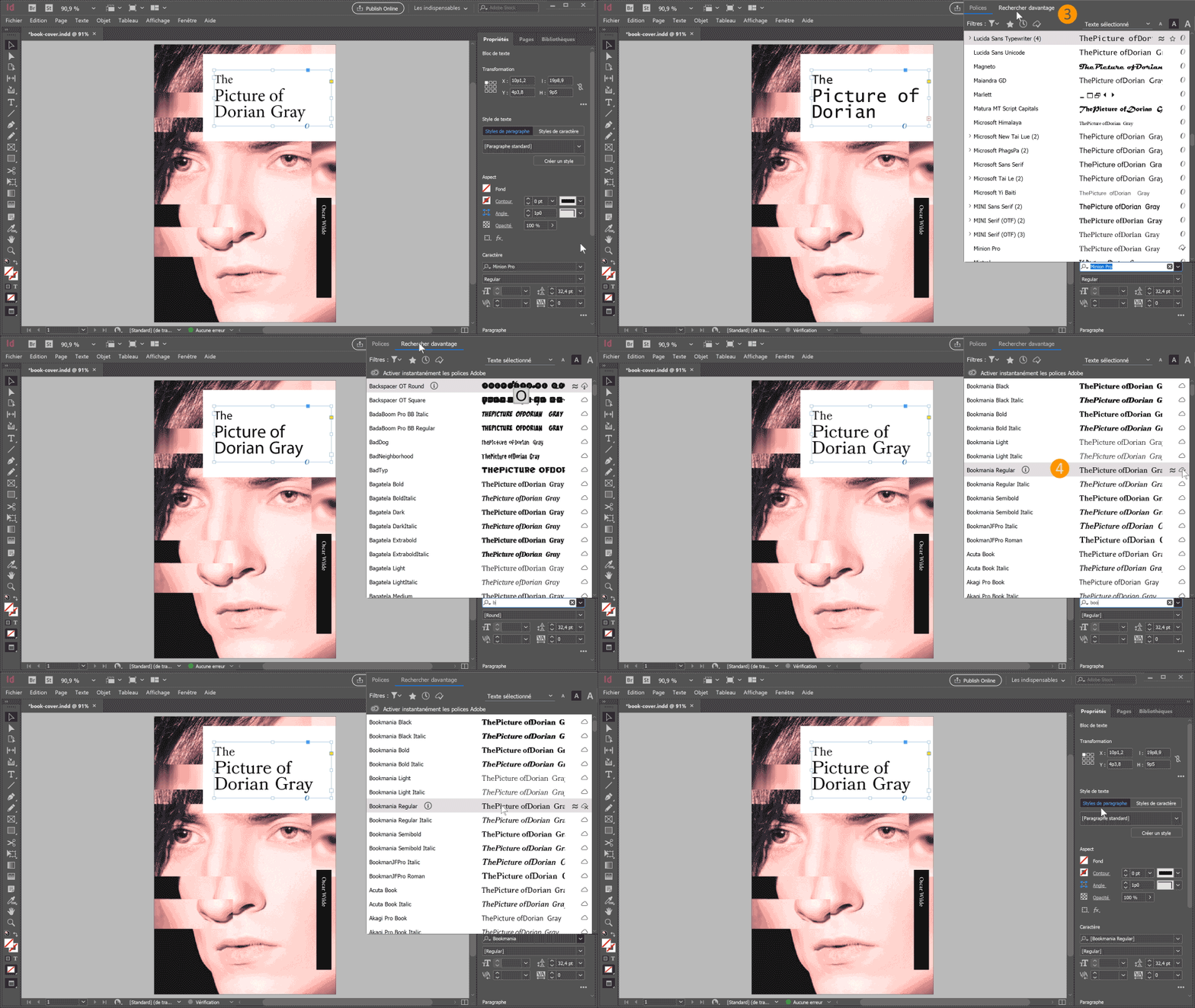
1. Téléchargez les fichiers d’exemple et ouvrez le fichier book-cover.indd.
2. Choisissez l'outil Sélection, puis cliquez sur le texte. Dans le panneau Propriétés, repérez la section Caractère et cliquez sur la flèche vers le bas à droite du nom de police.
3. Faites défiler la liste vers le haut et sélectionnez Rechercher davantage pour accéder aux polices Adobe Fonts disponibles. Sur votre clavier, appuyez sur la touche B, puis deux fois sur la touche O pour trouver la famille de police Adobe FontsBoo kmania.
4. Sélectionnez Bookmania Regular, puis cliquez sur le petit nuage à droite pour l'activer. Cliquez sur OK.
Conseil : utilisez les filtres pour parcourir les polices par catégories et propriétés.
Variantes de glyphes
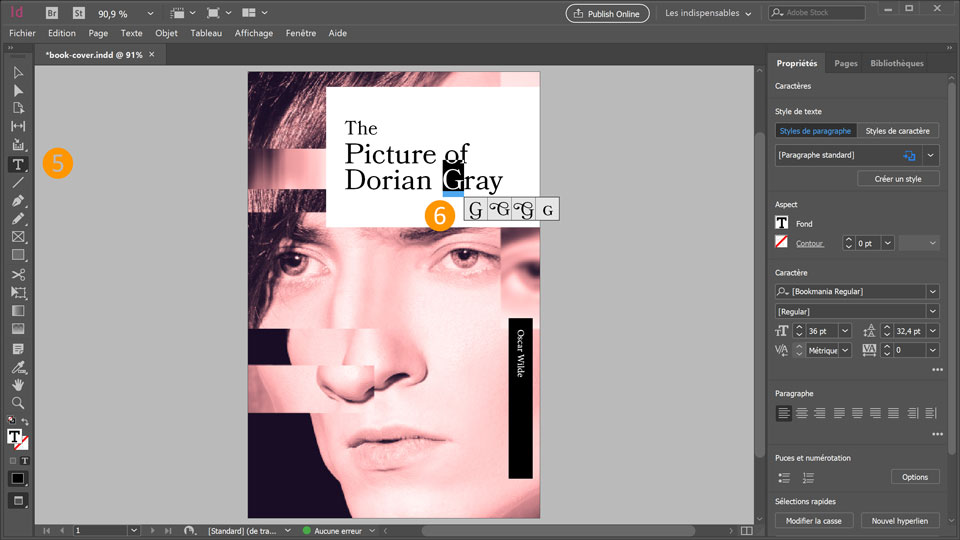
5. Revenez dans InDesign, choisissez l'outil Texte, puis sélectionnez la première lettre, G.
6. Nombre de polices Adobe Fonts proposent des glyphes supplémentaires que vous pouvez utiliser pour enjoliver ou personnaliser l’aspect du texte. Si des variantes de glyphes sont disponibles, un trait de soulignement bleu couplé à un menu contextuel s’affiche. Cliquez sur une variante pour l'appliquer.
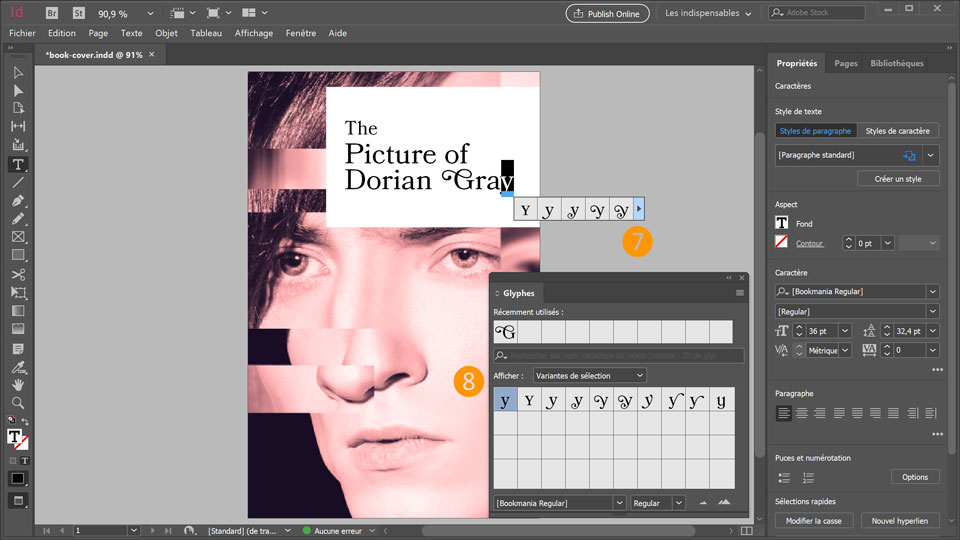
7. Pour accéder à la totalité des glyphes proposés pour une sélection, cliquez sur la flèche dans le menu contextuel pour ouvrir le panneau Glyphes. Double-cliquez sur un glyphe pour l’utiliser.
8. Conseil : choisissez Police entière dans le menu Afficher pour accéder à tous les glyphes disponibles pour la police sélectionnée.
Ajustement du crénage
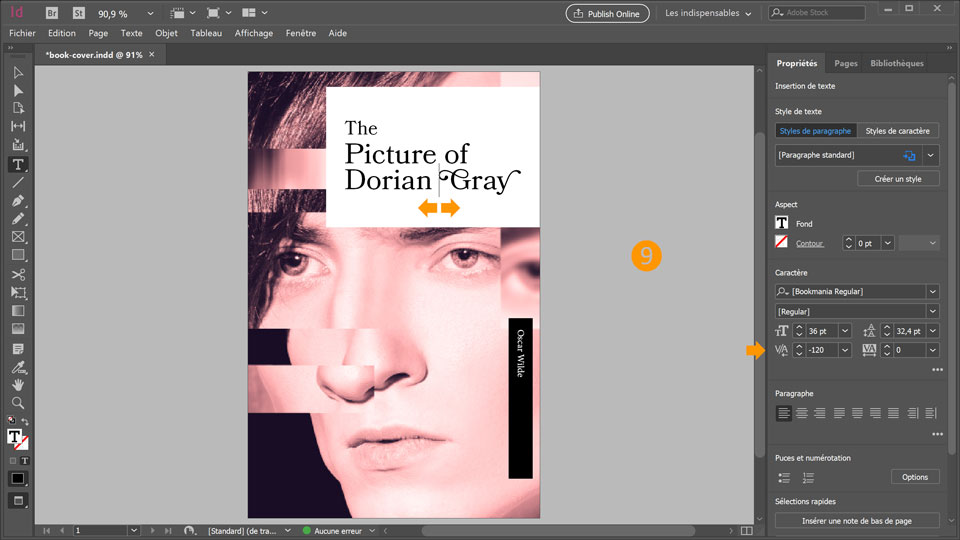
9. Pour ne pas perdre de temps, sélectionnez l'outil Texte
et positionnez votre curseur entre les caractères auxquels doit s’appliquer le crénage, puis maintenez la touche Option/Alt enfoncée et jouez avec les touches fléchées Gauche et Droite pour augmenter ou réduire l’espacement. Vous pouvez aussi saisir une valeur numérique ou utiliser les flèches Haut et Bas du menu Caractère - Crénage du panneau Propriétés.
Et voilà, le tour est joué ! Utilisez vos propres ressources ou celles proposées en téléchargement, puis partagez votre image sur Facebook, Twitter et Instagram avec le hashtag #MadewithInDesign pour recueillir des commentaires et échanger avec d'autres créatifs.
Behance: https://www.behance.net/live Retrouvez-nous régulièrement en direct avec de vrais professionnels, autour de projets en temps réel qui seront une véritable source d’inspiration.
Essayez ces tutoriels avec InDesign
Créez des mises en page pour l’impression et la publication numérique.
You can control how Adobe websites use cookies and similar technologies by making choices below. But note that if you disable cookies and similar technologies entirely, Adobe websites may not function properly.
Cookies are small text files stored by your web browser when you use websites. There are also other technologies that can be used for similar purposes like HTML5 Local Storage and local shared objects, web beacons, and embedded scripts. These technologies help us do things like remembering you and your preferences when you return to our sites, measure how you use the website, conduct market research, and gather information about the ads you see and interact with.
You can make choices in the menu below about what cookies and other technologies you want us to use on Adobe sites when you visit them from this browser. You can always change those choices later by clicking on the Cookie Preferences link at the bottom of the page.
If enabled:
We can improve your experience by tailoring the site and the content to things we think might be of interest
We can better keep track of your preferences — like what language you prefer to use
We will better understand your likely interests so we can provide you more relevant Adobe ads and content on non-Adobe websites and in non-Adobe apps
It will help us improve the performance of our website and those of our partners who use the Adobe Experience Cloud
If disabled:
We won’t be able to remember you from session to session so the experience may not be tailored to your interests
You’ll still have access to the content of the site but certain features that depend on cookies may not function
You’ll still see ads, they just may not be as relevant to you
General information
You can control how Adobe websites use cookies and similar technologies by making choices below. But note that if you disable cookies and similar technologies entirely, Adobe websites may not function properly.
Cookies are small text files stored by your web browser when you use websites. There are also other technologies that can be used for similar purposes like HTML5 Local Storage, web beacons, and embedded scripts. These technologies help us do things like remembering you and your preferences when you return to our sites, measure how you use the website, conduct market research, and gather information about the ads you see and interact with.
You can make choices in the menu below about what cookies and other technologies you want us to use on Adobe sites when you visit them from this browser. You can always change those choices later by clicking on the Cookie Preferences link at the bottom of the page.
If enabled:
We can improve your experience by tailoring the site and the content to things we think might be of interest
We can better keep track of your preferences — like what language you prefer to use
We will better understand your likely interests so we can provide you more relevant Adobe ads and content on non-Adobe websites and in non-Adobe apps
It will help us improve the performance of our website and those of our partners who use the Adobe Experience Cloud
If disabled:
We won’t be able to remember you from session to session so the experience may not be tailored to your interests
We’ll still count your use of our site and services
You’ll still have access to the content of the site but certain features that depend on cookies may not function
You’ll still see ads, they just may not be as relevant to you
Operate the site and core servicesOperate site and measure engagement
Always active
These cookies are required, and they are used to enable the site and related services core functionality. Without them the site could not operate, so they cannot be disabled.
These cookies enable the site and related services’ core functionality and collect statistics about user engagement, such as counting active use to help us understand trends. These cookies cannot be disabled.
Measure performance
These cookies are used to analyze site usage to measure and improve performance. Without them Adobe cannot know what content is most valued and how often unique visitors return to the site, making it hard to improve information we offer to you.
These cookies are used to analyze site usage to measure and improve performance. Without them Adobe cannot know what content is most valued, making it hard to improve information we offer to you.
Extend functionality
These cookies are used to enhance the functionality of Adobe sites such as remembering your settings and preferences to deliver a personalized experience; for example, your username, your repeated visits, preferred language, your country, or any other saved preference.
Personalize advertising
These cookies are used to enable Adobe and our partners to serve ads more relevant to your interests. Without them you will still see ads, but they might not be as relevant to you.
Personalize advertising
These cookies are used to enable Adobe and our partners to serve ads more relevant to your interests. Without them you will still see ads, but they might not be as relevant to you.