
Acrobat
How to make a freelance contract.
Learn how to draft clear freelance contracts, protect your work, and get paid securely. Leverage templates, PDF tools, and AI capabilities to make the process easier.


Acrobat
Learn how to draft clear freelance contracts, protect your work, and get paid securely. Leverage templates, PDF tools, and AI capabilities to make the process easier.

Published by Adobe Acrobat India on 14 January 2026
No matter your profession, be it in graphic design, content writing, web development, virtual assistance, or other areas, having a solid freelance contract in place is crucial. It protects your rights, defines the scope of your work, and ensures both parties understand what’s expected. More importantly, a well-drafted agreement helps you avoid misunderstandings and payment delays while strengthening your professional image.
In this guide, we’ll dive into what a freelance contract is, why it’s important, what its key elements are, and how to create one, so you can draft one with confidence and ease.
Freelancers are self-employed individuals who offer their services to clients on a project-by-project or casual basis. They may work remotely or on-site, depending on the nature of the work and the preferences of the client. Freelancers are typically responsible for managing all aspects of their businesses, including finding clients, negotiating contracts and delivering projects.
Freelancer contracts are common in creative, technical or knowledge-based industries, providing services such as writing, graphic design, web development, photography, consulting or marketing.
A freelance contract is a legally binding agreement between a freelancer and a client. It outlines what work will be delivered, payment terms, timelines, ownership rights, and other key details. As a written record of what was promised and agreed upon, a freelance contract sets expectations for both sides and provides legal protection if issues arise.
A written freelance contract template gives you several key benefits:
In essence, a freelance contract protects both you and your client and forms the foundation of a healthy, transparent working relationship.
When drafting a freelance contract agreement, include the following essential clauses to make it valid, fair, and enforceable.
A definition of the scope of the services to be provided should be detailed in the contract. Include specific deliverables, milestones, timelines, delivery schedules, and any other specific requirements.
Outline the duration of the contract, including expected start and finish dates. State the conditions under which either party can terminate the agreement. Include notice periods and any penalties for early termination.
Specify the charges you are agreeing to for the provision of your services. Include the total amount and whether your work is based on a fixed price basis or an hourly rate. Detail any additional fees or costs that may be chargeable, as well as any applicable taxes, such as GST. Specify your payment terms and conditions. For example, invoicing procedures, due dates for payment, payment methods accepted, penalties for late payment, discounts for early payment, and so on.
Define the ownership rights to any intellectual property created or used during the provision of services. Include any licensing requirements, restrictions, and confidentiality obligations.
Include clauses to protect sensitive and confidential information exchanged during the contract term. Outline any obligations of both parties regarding confidentiality and non-disclosure of information to third parties. State any data protection requirements.
Define any warranties or guarantees regarding the quality of services, performance standards, or specific outcomes. Include procedures for addressing guarantee or warranty claims.
Specify compliance requirements for regulations, industry standards, and legislation throughout the term of the contract.
If applicable, include clauses where certain types of insurance coverage are required of one or both parties, such as liability or professional indemnity insurance.
Specify whether either party can assign or subcontract any of their obligations under the contract and under what conditions any subcontracting is permitted.
Consider whether you need to include non-compete, exclusivity, and restraint of trade clauses in your contract as an independent contractor. These clauses are also often included in other contracts, such as employee contracts and contracts for the sale of a business. They are included to prevent a party from working or collaborating with any competitors after the contract ends for a specified period.
Establish methods and procedures for resolving any disputes, such as negation, mediation, or arbitration. State clearly who is responsible for covering legal costs in the event of any disputes.
Specify each party's liability limitations and indemnification obligations should there be any breaches, damages, or legal claims arising from the services provided.
Outline the process for making changes or amendments to the contract and any requirements for written consent from both parties.
Include a severability clause that states if any other clause in the contract is found to be invalid or unenforceable, the remaining clauses in the contract will still be valid. A severability clause eliminates the need to create, agree to, and sign an entirely new contract should this happen.
1. Start with a template.
Instead of starting from scratch, you can download a contract template and adapt it to your services. Choose one that suits your line of work. For example, creative freelancers might need sections for design revisions or content ownership, while those in IT might include clauses for software deliverables and technical support.
2. Edit and personalise.
Customise your contract to reflect the exact nature of your services. Update client names, project details, payment terms, deliverables, and timelines.
3. Convert to PDF.
Once your draft is ready, convert it to a PDF format. PDFs preserve the layout, fonts, and formatting of your contract and ensure that your client sees it exactly as you intended. This step also prevents accidental or unauthorised edits.
3. Sign digitally.
Digital signatures are legally recognised under the Information Technology Act, 2000, which means contracts signed electronically hold the same legal validity in India as those signed on paper.
4. Store securely.
After both parties have signed, keep your contracts safe and organised, preferably on a cloud document system. This way, all your freelance-related resources are accessible anytime, anywhere. This is especially useful for freelancers who juggle multiple clients or projects who might need to view or edit their contracts, invoices, and supporting files at a moment’s notice.

Easily update text, images, and links in your PDF.

Quickly fill forms and add your signature online.

Add new pages anywhere in your PDF with ease.

Add passwords and permissions to secure your PDFs.
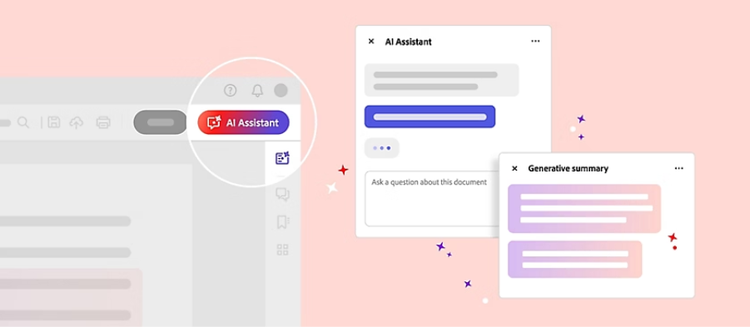
Today, freelancers can leverage AI to speed up freelance contract drafting. AI can help you generate professional contracts, suggest clauses, and even detect missing or ambiguous terms, saving time and reducing legal risks in the process. Here’s how you can do this with Adobe Acrobat:
By combining the power of AI with Adobe Acrobat’s document tools, freelancers can draft clear, professional contracts in just minutes and with no legal background required. Try it yourself for free for 7 days and see how effortless contract creation can be.
Write in plain, understandable language that both parties can easily comprehend. Avoid using overly complex terminology. While some legal terms may be necessary, try to avoid using unnecessary and dense legal terminology. Use plain language equivalents whenever possible.
Long, complicated, and rambling sentences can be difficult to read and follow. Keep sentences and paragraphs short and to the point.
Clearly define terms and concepts to prevent uncertainty. Ambiguous language can lead to misunderstandings and disputes.
If your contract involves technical or specialised terms, provide definitions or explanations to ensure your clients understand what they mean. If you do use acronyms, explain what they stand for the first time you use them. For example, Portable Document Format (PDF).
Clearly outline the rights, responsibilities, and expectations of both parties. Use clear and concrete terms and provide specific examples when necessary.
Structure and organise your contracts using headings, bullet points, numbered lists, and bookmarks. This makes them easier to navigate and understand.
In some situations, visual aids such as tables, diagrams, or flowcharts can help to clarify processes, timelines, and deliverables. These can be incorporated within a contract or attached as appendices, if appropriate.
Before finalising your contract, always check that both parties understand the terms and conditions. Consider getting another neutral person to read your contract to test whether it is written in a way that is easily understood. Seek feedback from legal experts if you have any doubts about the wording before you present it to a client or sign a contract yourself.