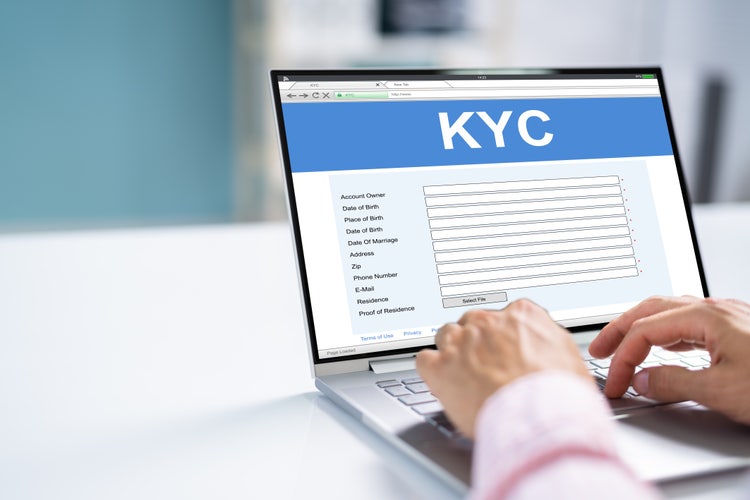
KYC is compulsory for opening bank accounts and conducting financial transactions as per
RBI guidelines.
Your account may be restricted, frozen, or even closed until KYC is updated. Institutions may also face regulatory action for serving non-KYC customers.
KYC involves verifying customer identity, while AML (Anti-Money Laundering) refers to broader laws and processes to detect and prevent illegal financial activity. KYC is a core part of AML compliance.
Most institutions require individuals to be at least 18 years old for independent verification of KYC. For minors under the age of 18, KYC must be completed by a parent or guardian, who must provide their own documents and proof of relationship.
The documents required for KYC verification will differ from bank to bank but you will typically need:
- Proof of identity (e.g. Aadhaar, PAN, Passport)
- Proof of address (e.g. utility bill, bank statement)
- A passport-sized photograph
Please check with your respective banks for a complete list of documents required for KYC verification.
It is a paperless process where Aadhaar details are authenticated using OTP or biometrics, allowing institutions to verify identity directly through
UIDAI.
PAN 2.0 is an upgraded digital system that links PAN with advanced identity verification tools, providing real-time, secure, and fraud-resistant checks.
The time varies depending on the method. Aadhaar OTP-based e-KYC can be completed instantly, while in-person verification may take a few working days.
Yes. If your address, contact number, or identity details change, you need to update your KYC with the latest information to keep accounts active and compliant.
You can check this on the
CKYC portal or via your bank or service provider’s website or app.
Yes, many institutions offer online KYC services where you will need to submit documents and verify your identity.
Yes, many institutions allow home-based KYC through mobile apps, secure web portals, or video verification calls.
e-KYC (electronic Know Your Customer) is a digital process that uses Aadhaar OTP or biometric authentication to verify your identity without physical documents.
You can link your Aadhaar during the KYC process either online (using OTP) or in person. Most platforms allow this linking on their website, app, or in-branch.
No, KYC must be done with the specific bank or institution where you hold or are opening an account.
Yes, if you already have an account, you can usually complete or update KYC at any branch of the same bank.