How to write a resignation letter – with downloadable templates.
Write a resignation letter to let your employers know you’re leaving. Get started with free templates from Adobe Acrobat.


Write a resignation letter to let your employers know you’re leaving. Get started with free templates from Adobe Acrobat.
JUMP TO SECTION
What should be included in a resignation letter?
Why are resignation letters important?
Reasons behind letters of resignation
How to write a resignation letter
When should I write a resignation letter?
Download a resignation letter template (+ 2 examples)
When it's time to move on from your current role, a resignation letter provides a clear, professional way to notify your employer. It formally outlines your decision to leave, includes key details like your final working day, and helps ensure a smooth and respectful transition—leaving the door open for future references and maintaining positive relationships.
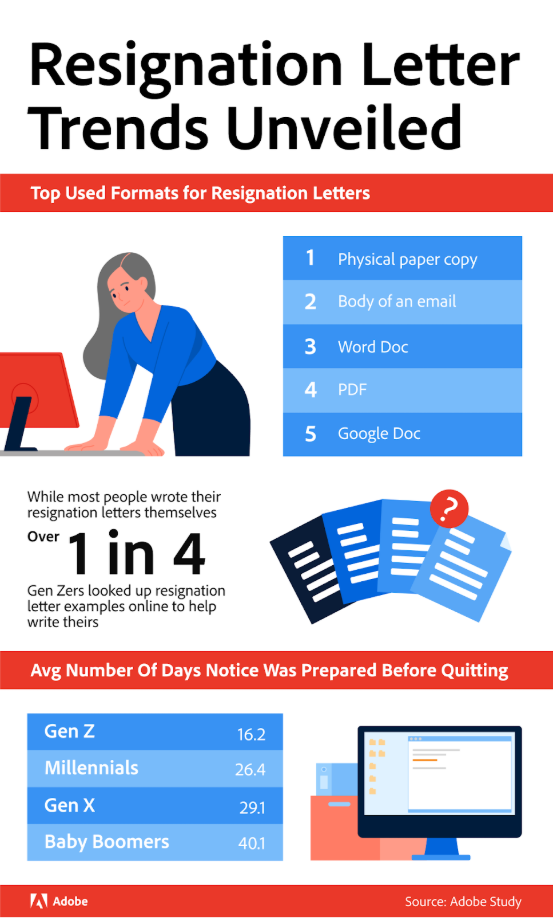
We surveyed 1,002 employees who have left or are planning to leave their jobs to reveal insight into resignation letter trends.
This article offers all the information you need to write a resignation letter that will help you make the transition straightforward for you and your company. We’ve also provided a template you can use to make your letter look as polished and professional as possible.
A resignation letter is a written piece of communication that lets your employer know you’re leaving their organisation. It establishes a formal departure in writing and shares details about your departure and the end date of your employment.
It’s best to write a letter of resignation to maintain a good relationship with your employer — it shows that you understand how your leave may impact the company. Leaving on good terms also increases your chances of securing a positive reference—and keeps the door open should you ever wish to return.
While your resignation letter should reflect your specific circumstances, there are a few key elements that should be included in any formal resignation letter. These details help your employer plan for your departure and ensure a smooth handover.
At the top of your employee resignation letter, examples include the following:
The body of your letter of resignation should include this content:
Close out your letter with the following:
Writing a letter of resignation is important when leaving a job. It helps you exit on a positive, professional note, maintaining a good relationship with your employer. It also ensures clear, direct communication—so your employer hears about your departure from you, not second-hand.
Why it’s important:
Employees leave their jobs for many reasons. In today's rapidly evolving job market, understanding the reasons behind employee resignations is crucial for employers who strive to retain their talent. We all know that people write resignation letters, but what are the top reasons people leave?
To find out more, we surveyed employed people who have left or are planning to quit their jobs soon.
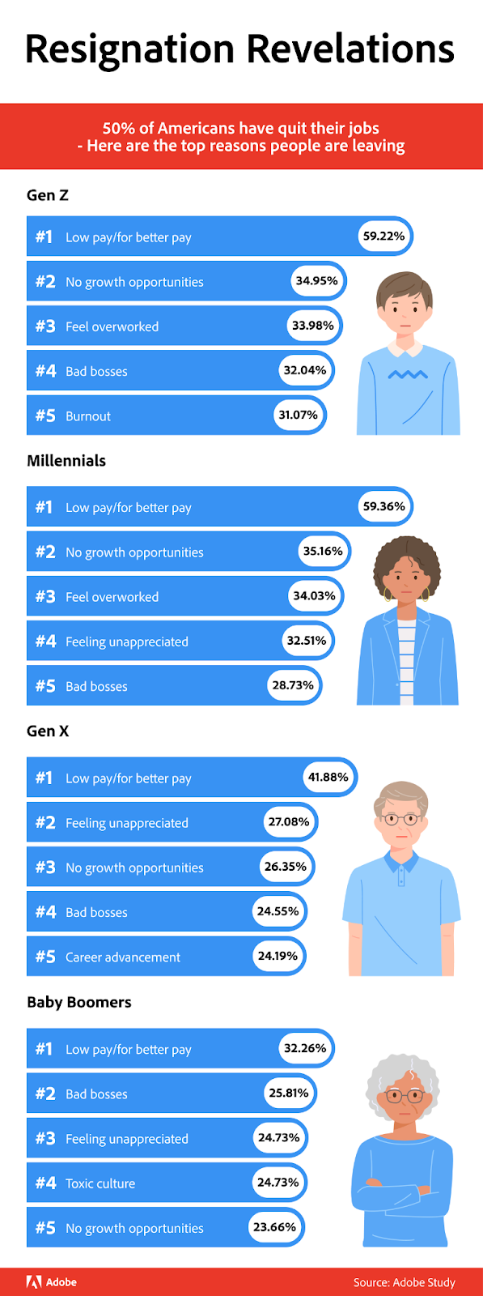
The reasons behind employee resignations can vary across generations. Low pay and the pursuit of better compensation emerged as the primary driving forces for quitting among Millennials and Gen Z.
Interestingly, among Gen X and Baby Boomers, low pay was still a significant concern, with 41.88% and 32.26% citing it as a primary motivator for quitting. This shows employers must consider the unique needs of each generation to create an inclusive and satisfying work environment to retain their talent.
Knowing the top things employers can do to retain their employees is vital. By addressing these concerns, employers can create a work environment that fosters motivation, growth, and work-life balance. This can help reduce the number of employees writing resignation letters.
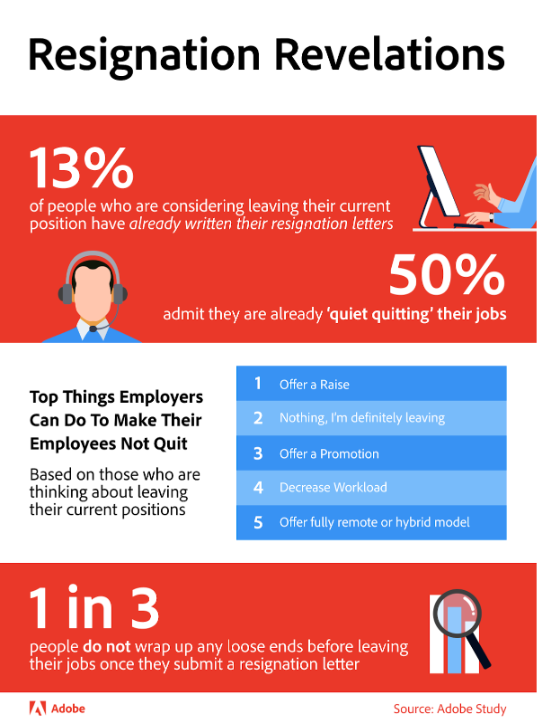
We also found that half of the people studied considering leaving their jobs are already ‘quiet quitting’ – a term used to describe employees doing the bare minimum. Of those, 2 in 5 say being offered a raise would make them stay. Employers need to proactively address and resolve any underlying issues and engage with their employees to prevent resignations.
Even still, knowing how to write a resignation letter is very important if you do find yourself looking for a new opportunity:
A professional resignation letter needs to state when and why you are leaving while expressing gratitude for the opportunity to work with the company.
Keep it pleasant and professional, as you may need to include your current employer as a future reference. When creating your letter of resignation, you may type it in a Microsoft Word document, but afterwards, it’s best to convert the Word document to a PDF.
By saving your document as a PDF, you can share it in a way that cannot be easily edited by mistake and will look the same on any device. If you need to add text or make other edits to your PDF, you can use the Acrobat online services Edit PDF tool.
Use these simple steps as a template to start your resignation letter:
You should be clear about your intentions from the start of your letter.
You can begin your employee resignation letter with the following format:
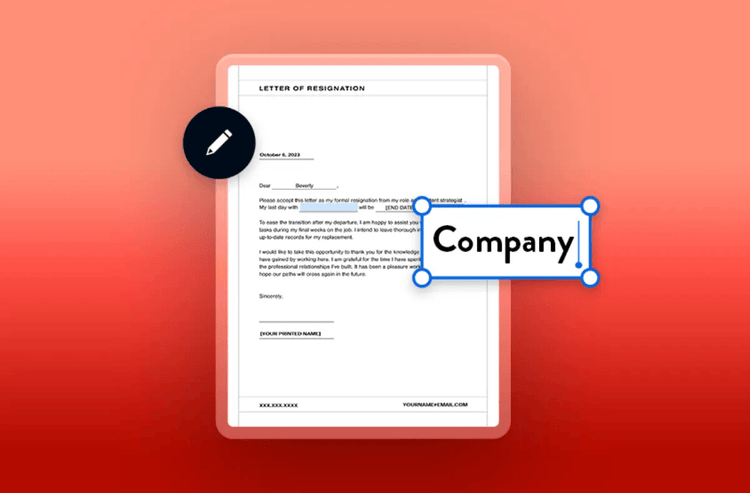
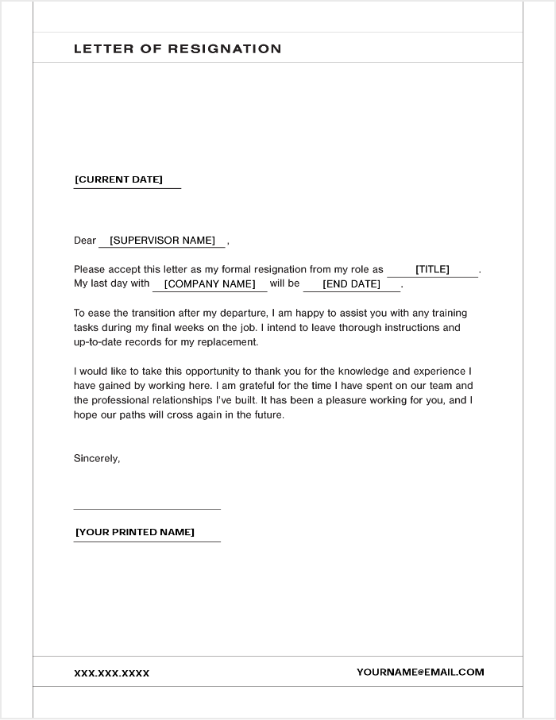
[Current date]
Dear [Supervisor name],
Please accept this letter as my formal resignation from my role as [Title]. My last day with [Company name] will be [End date].
Although you’re leaving your current role, continue as normal for your remaining time.
You’ll probably have a set notice period left with the company following your resignation letter. Maintain good standing with them by offering to help with the transition.
In your job resignation letter, state that you’ll complete any work you can and assist with preparing upcoming tasks for whoever replaces you.
You can say something along the lines of:
To ease the transition after my departure, I am happy to assist you with any training tasks during my final weeks on the job. I wish to leave specific instructions and the latest records for my replacement.
By offering assistance and expressing well wishes for future company success, you avoid any potential awkwardness. And leave the company on a good note.
A small thank you goes a long way. You can touch on the positive relationships and knowledge you’ve gained from working at your current job in your resignation letter. Even if you disliked your role, sharing gratitude for the positive aspects will help you down the road.
Whether you want to use your manager as a reference in the future or not, it’s better to stay on good terms with them than to burn any bridges.
Your expression of gratitude can read something like this:
I would like to thank you for the knowledge and experience I have gained by working here. I am grateful for the time I have spent on our team and the professional relationships I’ve built. It has been a pleasure working for you, and I hope our paths will cross again in the future.
Sincerely,
[Your signature]
[Your printed name]
Many companies check references with previous employers to see if you’re a good fit. A great recommendation can make a huge difference in your job search.
Methods for submitting a resignation letter and the timing of your notice can vary. Be sure to consider your contract terms, workplace norms, and any personal or professional expectations to help ensure a smooth and respectful departure.
You don’t need to start with a blank slate. We’ve provided a few examples of resignation letters to give you some inspiration for your own.
Check out our full general resignation letter template and two resignation letter samples below.
October 6, 2025
Ginny’s Gym
123 Dumbbell Drive
Canterbury, Kent CT2 7XX
Catherine,
This letter is to inform you of my intention to resign from my position as senior content strategist with Ginny’s Gym. This will be effective two months from today on 20th October 2025.
I’m thankful for the time I spent working here as a senior content strategist. I’ve learned many valuable skills throughout my time here, such as how to write and edit engaging content for the fitness community through Instagram campaigns. I enjoyed discovering new ways to be an effective writer throughout my projects.
I know the knowledge and experience I’ve gained here will help me as I progress in my career, and I’m grateful for the opportunity.
I’m happy to help train new team members if necessary. I’ll complete all outstanding tasks to the best of my ability during these last four weeks. If there’s anything else I can do to help with this transition, please don’t hesitate to ask.
I hope to stay in touch and wish all the best for the company moving forward.
Sincerely,
Abby Smith
February 10, 2025
Cosmetics Central
345 Lashes Lane
Newcastle upon Tyne, Newcastle, NE1 5GV
Michael,
I’m writing this letter to inform you that I’m resigning from my position as an associate graphic designer with Cosmetics Central. This will be effective one month from today on 24th February 2025.
I’m grateful for the time I spent working here as an associate graphic designer. I’ve gained valuable skills and developed a better understanding of the design and creative branding process. I know the knowledge and experience I’ve gained here will help me as I progress through my career, and I appreciate the opportunity to work with the Cosmetics Central team.
I’m happy to help with the transition period and will help wrap up my work in these last four weeks.
Thank you for your advice and support over the years – I hope to stay in touch in the future. I wish all the best for you and the company going forward.
Sincerely,
Olivia Rogers
It’s best to keep your resignation letter thoughtful. But there’s no need to go into too much detail about why you’re leaving your role. Keep it short and sweet.
You’ll want to leave out the following details in your letter of resignation:
Focusing on the positive aspects of the role will set you up for future success by maintaining a network of individuals in your line of work.
Yes, you can resign by email, especially if you work remotely or have circumstances preventing an in-person resignation. Keep the email brief, including:
You can also thank the company for your time there. Keep the subject line straightforward and simple — you can use something like “Resignation — [your name]” to note the high importance of the email.

