ACROBAT | 7-MINUTE READ
How long should a thesis statement be?
Master the art of writing clear, concise thesis statements.
ACROBAT | 7-MINUTE READ
Master the art of writing clear, concise thesis statements.

Whether you’re writing an essay for high school English class or composing a groundbreaking PhD dissertation, any paper you write should make a compelling argument. The meat of your paper starts with one powerful line: the thesis statement.
The thesis statement outlines your main argument and tells the reader (who’s often your teacher or professor) what the paper will be about. Writing a thesis statement can be tricky, though. Make it too short, and you risk withholding critical information that primes the reader for your argument. But if it’s too long, what you’re actually trying to argue won’t be clear.
So, how long should a thesis statement be? In this article, you’ll learn everything you need to know about how long a thesis should be and the factors that influence the length of your thesis statement, from your degree level to your field of study. You’ll also learn practical formatting tips to ensure your thesis not only reads well but also looks polished and professional. You’ll know how to write a thesis statement with the proper parameters in no time.
Generally speaking, a thesis statement is typically one to two sentences long. The thesis statement is part of the introduction, so it should be short yet powerful enough to frame everything that follows.
But don’t let the word short fool you. This statement carries the weight of your entire paper. The length can vary based on what you’re studying and the degree level you’re writing for. So if you’re wondering how long a thesis statement should be, the answer is long enough to be clear and specific but concise enough to guide your reader without overwhelming them.
The structure of a thesis statement varies depending on the academic project. In graduate studies, understanding the difference between a dissertation vs. thesis is essential, as each has a different role in presenting scholarly research. Whether you’re exploring how to write a research paper or putting the finishing touches on your PhD dissertation, the length of your thesis statement will vary depending on a lot of factors, including:
Based on the above factors, follow these rules of thumb to write a thesis statement that’s the proper length:
Of course, the thesis statement is just one part of your paper. While it’s an important part of the paper, it should take up little real estate in the overall essay. Lengths vary, but you can follow these approximate percentages to ensure your paper is well-balanced:
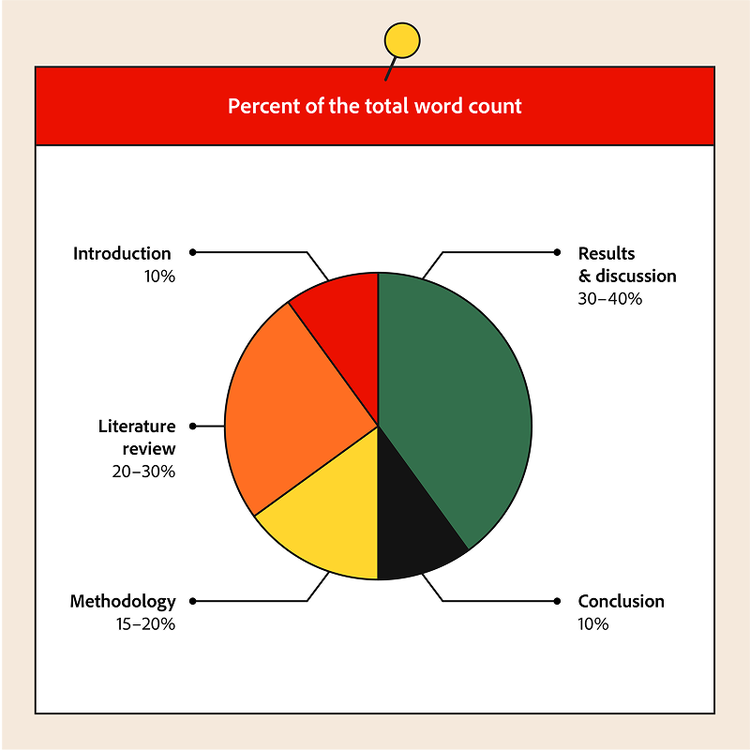
The headers and sections in your paper will differ depending on your subject, academic level, and other factors, but these percentages will help you get started. Most of your writing should be in the middle of the paper, where you explain and defend your ideas.
Still, invest plenty of energy into the quality of the introduction and conclusion of your paper. Writing a strong conclusion that leaves a lasting impression on the reader is incredibly beneficial, helping you score that coveted A.
A strong thesis statement lays the foundation for your academic essay, and ending your essay on a high note is equally important. Understanding how to write a conclusion for a research paper, analytical essay, or any type of academic writing demonstrates time, effort, and professionalism.
Writing a solid thesis statement is just one part of the process — how your thesis looks on the page can be just as important. A well-formatted document helps readers follow your argument, demonstrates attention to detail, and sets the tone for academic credibility. Follow these tips to make your paper more polished and visually appealing.
Since your thesis statement appears in the introduction, format that section so it stands out. Use clean paragraph breaks, avoid clutter, and highlight your thesis statement by placing it at the end of the introduction or in its own paragraph. This makes it easier for your reader to find your main argument quickly.
Breaking your paper into clear, well-labeled sections helps your reader understand the paper’s structure at a glance. Make sure you use language similar to the headings as you do in your thesis statement. Always list your thesis points in order in the paper.
For example, if your thesis statement is, “Social media platforms should be regulated more strictly to combat the spread of misinformation and protect democratic processes,” your headings would need to follow the order “combating misinformation” and “protecting democratic processes.”
Once your draft is ready, convert it using the Adobe Acrobat online PDF converter to view how it looks as a finished document. PDF formatting ensures your layout stays intact when sharing it with peers, professors, or publication reviewers.
Don’t let formatting issues distract the reader from your argument. Format every section consistently, with the same font, size, and spacing. Not only does this improve readability, but it also reflects the professionalism expected at every level, whether you’re writing a college paper or a career-defining dissertation.
Stick with clean, academic fonts like Times New Roman, Arial, or Calibri in 11- or 12-point font size. Double spacing and one-inch margins are standard, but always check your department’s guidelines.
Academic papers can be challenging to read, so make your paper easy on the eyes. Avoid huge blocks of text by breaking longer paragraphs into digestible pieces to avoid overwhelming your reader. Paragraph breaks are especially helpful in the body of the paper because they give the reader a little breathing room, which can improve your argument’s clarity.
Academic and professional papers always include page numbers and, in most cases, a table of contents. These details not only help the reader navigate your paper but also give your paper the polish expected in academic settings. Most word processors can auto-generate these, but you should always double-check the formatting after converting your file to a PDF. Fine-tune your visual presentation with a free online PDF editor for a polished final draft.

