ACROBAT FOR BUSINESS | 8-MINUTE READ
What is an SOW and free statement of work template.
Statement of work (SOW) documents optimize project time and costs.
ACROBAT FOR BUSINESS | 8-MINUTE READ
Statement of work (SOW) documents optimize project time and costs.

No matter what industry you work in, project managers must distribute certain crucial paperwork to vendors coming on to a project. A statement of work (SOW) is a critical document that businesses use to agree on a scope of work with internal and external stakeholders. It sets expectations, prevents miscommunications, and keeps projects on track.
SOWs are straightforward to create, but a standardized SOW template should exist for your organization. Read on for a better understanding of what a statement of work is, why it matters, and how to write one that will protect both your organization and its vendors.
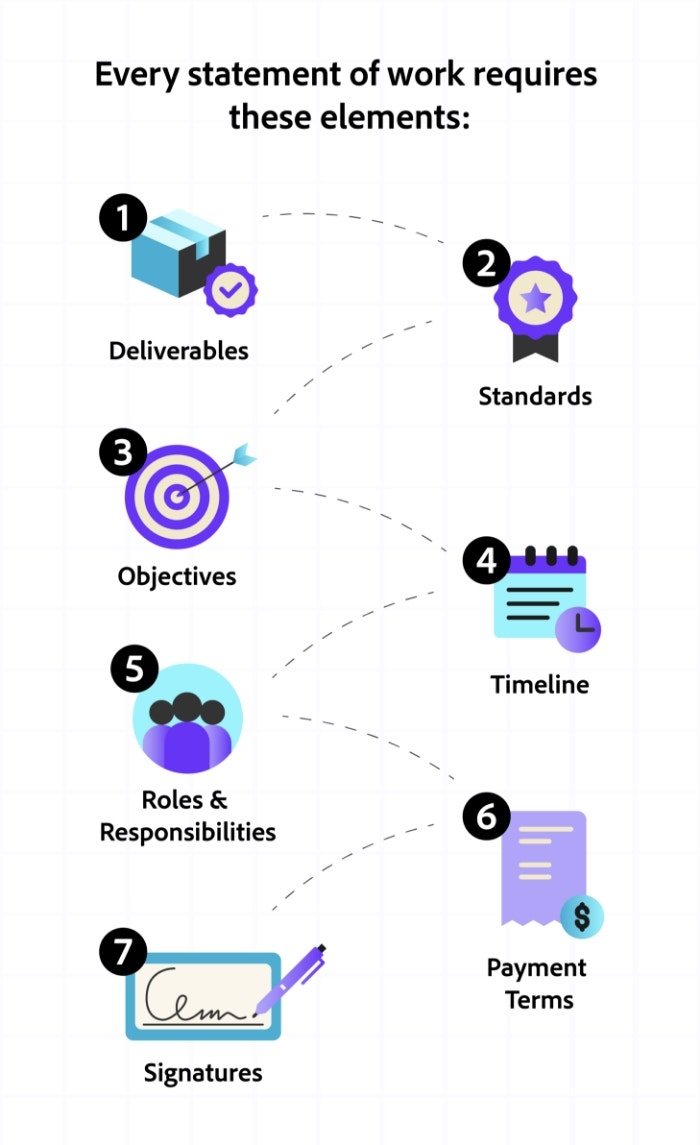
A statement of work is a document that details the scope of a project or task. It spells out the deliverables, timeline, and cost of a project. This legally binding document outlines the scope of work for a vendor or service provider. It usually includes:
A statement of work defines expectations between a client and a contractor, ensuring both parties are on the same page. The vendor and the client sign the SOW before work begins or payment is issued. This process usually requires several back-and-forth emails, but tools like Adobe Acrobat streamline collecting signatures.
Use cases for SOWs include:
Statements of work differ from other documents you may encounter in your business, including:
While you can use one SOW template for all business needs, be sure to understand the different types of statements of work. You may need to adjust template fields to accommodate various situations.
This type of SOW provides detailed specifications and instructions that the vendor must follow to complete work. A design SOW is popular in industries like construction because it includes exact requirements for materials, processes, and methodologies. Blueprints or CAD designs are popular add-ons for design SOWs. Unlike other SOW types, it leaves little room for interpretation by providing exact details, which prevents miscommunications and ensures more accurate pricing and timelines.
A level-of-effort (LoE) SOW is ideal for projects where the work matters, not a specific deliverable. For example, a vendor offering customer service support would create a level-of-effort SOW for clients. This type of statement of work estimates the total time the service provider will spend on the project, lists resources, and provides a general description of what’s within the vendor’s scope of work. A level-of-effort SOW is more flexible in how the vendor performs the tasks as long as they meet the minimum service guidelines.
Performance-based SOWs emphasize outcomes and results over the work process. They list clear, measurable goals the vendor should achieve and usually include assessment criteria. Service providers have more freedom to determine how to accomplish the project goal, but they’re legally obligated to uphold their end of the bargain, so this type of SOW often comes with more pressure to perform.
A time-and-materials statement of work is ideal for situations where the vendor can’t initially estimate the exact scope of work. Instead, the vendor outlines the project based on time spent and materials used. This type of SOW often calculates costs and timelines by hourly rates, reporting requirements, and materials costs. It’s suitable for projects with changing requirements or uncertainty, allowing the vendor to adjust as needed.
This type of statement of work outlines the necessary features or functionality of the deliverables. It details the essential specifications, capabilities, and performance expectations of the service or product being delivered. These are most commonly used in software development projects, where particular system requirements or functionalities must be clearly detailed, and may be accompanied by a service level agreement.
These SOWs integrate aspects from various SOW types to manage specific project requirements. They can include functional project needs, design specifications, performance metrics, and construction information, depending on how complex the project is. Hybrid SOWs are frequently used when numerous aspects of a project must be clearly defined and organized.
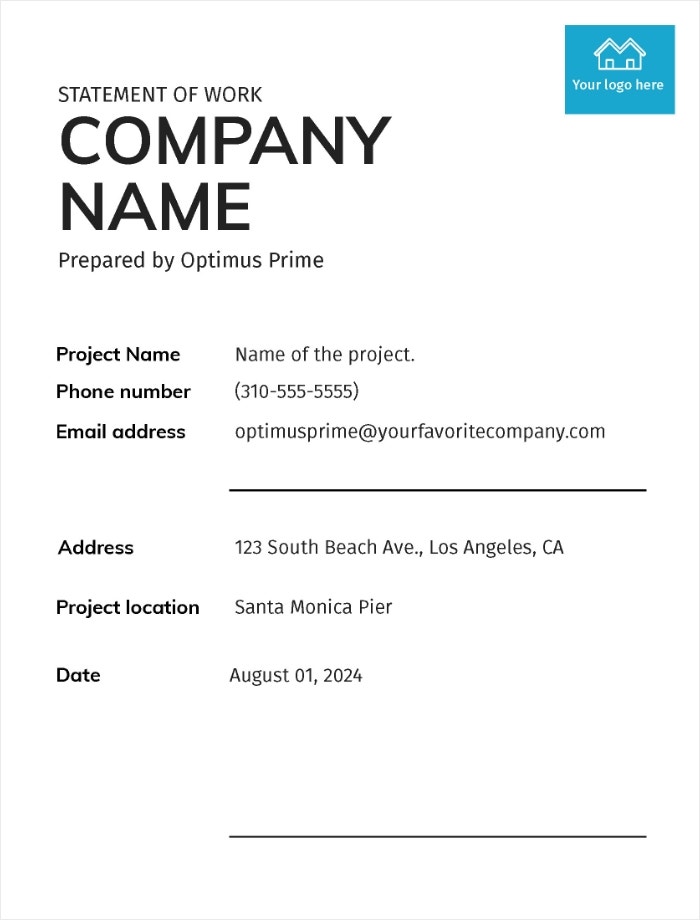
If you work with high-volume projects, you’ll likely need to generate SOWs often. Don’t start from scratch each time — use a statement of work template to speed up your workflow. Follow this customizable statement of work template to fit any business need.
While a template is helpful in various applications and industries, you may need to customize it to your business, client, or project. Check out this SOW example to see SOW personalization in action.
Project Name: New Employee Training Program Development
Company Name: Tech Solutions Inc.
Phone Number: 123-456-7890
Email Address: example@ABCtrainingservices.com
Company Address: 123 Innovation Drive, Suite 400, Tech City, CA 98765
Project Location: Tech Solutions Inc. Headquarters
Author: Jane Smith
Date: July 15, 2024
This statement of work (SOW) outlines the agreement between Tech Solutions Inc. and ABC Training Services to develop a comprehensive New Employee Training Program. The project aims to enhance onboarding, ensuring new employees are well-prepared and integrated into the company culture.
The SOW details the project’s goals, scope, deliverables, timeline, costs, and payment terms to ensure clear expectations and successful project execution.
The primary goal of this project is to design and implement an effective training program for new hires at Tech Solutions Inc. The objectives include:
Deliverables
Exclusions
Milestones
The total cost of the project is $15,000. Payment is required in the following installments:
The client will not be responsible for covering equipment fees or rent costs.
TOTAL COST
The total cost for the New Employee Training Program Development project is $15,000.
Statements of work are a best practice for both businesses and their vendors. Benefits of SOWs include:
A statement of work template is the easiest way to write a statement of work. One template will fit most situations. Tools like Acrobat for business also streamline the process, allowing you to create polished, personalized PDFs and simplify the review process with e-signing tools.
A statement of work should include:
Create a standardized design that you can reuse for multiple projects. Use tools like Acrobat to summarize SOWs, create a library of ready-to-go PDF templates, or build self-service web portals so employees can quickly generate professional documents.
Every statement of work requires these elements: