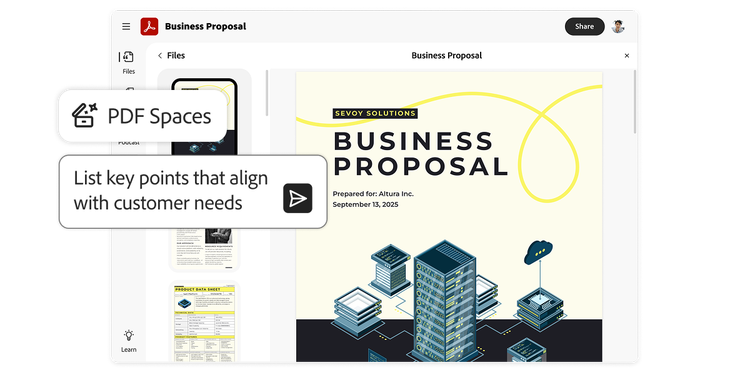
Sales techniques and expert advice from Acrobat PDF Spaces
Master reliable sales techniques that help you close deals fast and build lasting customer relationships.
Sales techniques and tips
Sales techniques are the methods and approaches professionals use to guide prospects through the buying journey. These strategies range from initial outreach and rapport building to objection handling and closing. Mastering the right techniques helps impact your ability to hit targets, grow revenue, and develop long-term customer relationships that fuel repeat business.
The best sales techniques adapt to different buyer personalities and situations. What works for a quick transactional sale differs from complex enterprise deals requiring months of relationship building. Understanding when to apply each approach separates top performers from average sellers.
What are PDF Spaces?
PDF Spaces are AI-powered workspaces that let you interact directly with the source content. Rather than passively reading documents, you can ask questions, explore specific topics, and extract actionable insights tailored to your needs. These AI-powered document tools transform static PDFs into dynamic learning experiences, helping you engage with content on your own terms.
Productivity
Forrester’s Guide to Customer Obsession
Explore insightful Forrester reports that link customer-first thinking to real business results.
Productivity
Sell Anything with Ryan Serhant
Learn from Ryan’s best sales stories and strategies, then use this PDF Space to get tailored advice for your own sales goals.
Productivity
Unlock Your Sales Potential with TED
Use these TED Talk transcripts to see how to apply psychology to improve your sales process and close deals faster.
6 Sales techniques
The best sales techniques combine psychology, preparation, and genuine customer focus. Whether you're new to sales or looking to refine your approach, these six methods help you connect with prospects and confidently close deals.
1. Active listening and needs discovery
Top performers spend more time listening than talking. Ask open-ended questions that uncover your prospect's true challenges, goals, and motivations. Take notes during conversations and reference specific details in follow-ups. When prospects feel genuinely heard, they trust your recommendations. This technique transforms sales conversations from pitches into collaborative problem-solving sessions.
2. Consultative selling approach
Position yourself as an advisor rather than a vendor. Research your prospect's industry, competitors, and recent company news before every call. Share relevant insights and ask thought-provoking questions that demonstrate your expertise. When you help prospects think differently about their challenges, you become a valuable resource they want to work with—not just another salesperson competing on price.
3. Build rapport and trust quickly
People buy from those they like and trust. Find common ground early in conversations, whether through shared interests, mutual connections, or similar experiences. Mirror your prospect's communication style and pace. Be authentic rather than using scripted small talk. Genuine rapport creates comfort that makes prospects more open to discussing their real needs and concerns.
4. Handle objections with empathy
Objections signal engagement, not rejection. When prospects push back, acknowledge their concerns before responding. Use phrases like "I understand why that matters to you" before addressing the issue. Prepare responses for common objections, but deliver them organically. The goal is addressing prospects’ concern while providing information that moves them forward confidently.
5. Create urgency without pressure
Effective urgency focuses on the cost of inaction, not artificial deadlines. Help prospects understand what they lose by waiting—missed opportunities, ongoing inefficiencies, or competitive disadvantages. With a summary of key insights from your discovery conversations, you can remind prospects of their stated priorities and timelines. This approach motivates action through relevance rather than manipulation.
6. Strategic follow-up and relationship nurturing
Most deals require multiple touchpoints. Create a follow-up system that adds value at each interaction—share relevant articles, introduce helpful connections, or provide industry updates. Personalize every message based on previous conversations. Consistent, thoughtful follow-up demonstrates commitment and keeps you top of mind when prospects are ready to move forward.