What is an AI chatbot?

An AI chatbot is an artificial intelligence computer program designed to simulate human conversation with human users. You talk, it replies. AI chatbots are commonly used for Q&A and support tasks. But they can be so much more – from personal work assistants to always-learning customer service bots.

An AI chatbot can generate ideas, provide solutions, search documents, assess material, and more.

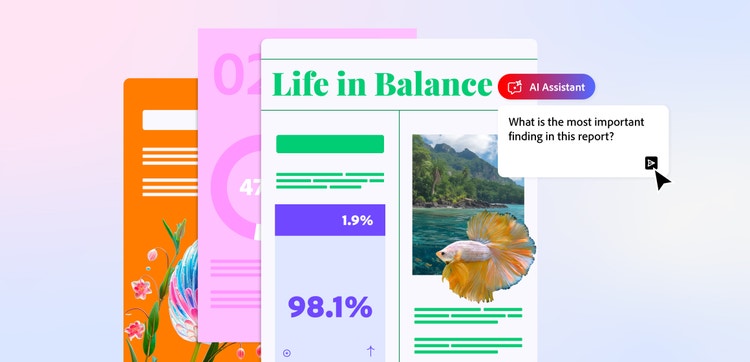
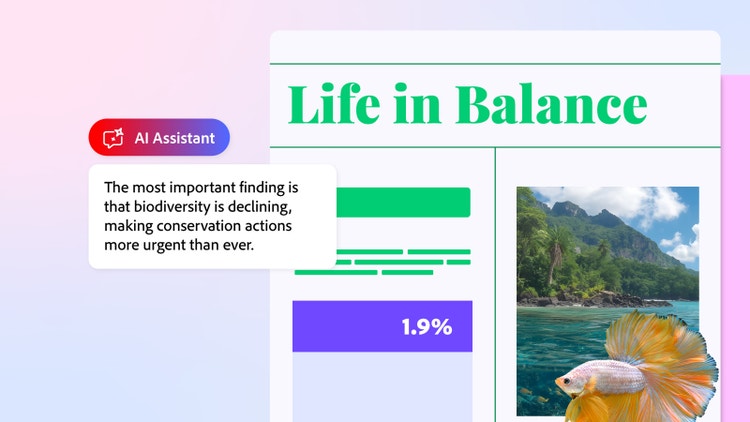
AI assistant highlighting the most important finding in a file

How do AI chatbots work?

AI chatbots work a bit like tennis – prompt, reply, prompt, reply. Your question, request, or command – also known as a “prompt” – generates a response from your AI chatbot. Then, you can continue to refine your prompt to get the information you need.

Step-by-step, it looks something like this:

1. User prompt.

The user composes a prompt to the AI chatbot, asking it relevant questions or setting a task for it. This is as simple as typing out a message.

2. Prompt analysis.

Next, the chatbot will analyse the user’s prompt and then attempt to interpret and translate that request into a desirable output.

3. Intent identification.

This step involves the AI chatbot figuring out the user's “intent” – such as, book a train, or summarise a paragraph. It will also identify the “entity”, such as the date of the journey or the content topic.

4. Reply.

Once the prompt information has been analysed, the AI chatbot will format and send its response.

5. Refine.

If the reply is lacking information, or you decide you need more, you can refine your prompt, either by asking it again with more detail, or by prompting the AI chatbot to expand on the answer.

What are the main types of AI chatbots?

There are several types of AI chatbots, ranging from simple to complex, categorised by their understanding and ability to generate language. The two most common types are:

  • Rule-based chatbots. Think of rule-based chatbots like adventure books – they have a finite number of answers based on your questions. Rule-based chatbots are predictable, which means a business can control what experience customers might have. These can be great for pointing consumers to FAQs or answering basic service questions, as well as pointing them to customer service agents. Rule-based chatbots would exist in the “simple” category of chatbots – but that doesn’t make them bad. Rather, they have their place.
  • Conversational AI chatbots. AI chatbots are a bit more advanced, with their ability to understand intent and craft personalised responses based on unique situations or requests. They’re more free form, rather than following strict scripts. This means that they can handle unique, advanced queries, with the ability to adapt to a range of unique scenarios. This can make them excellent assistants and fantastic customer support agents. These AI chatbots also learn from previous interactions, gradually becoming more advanced.

Acrobat’s AI Assistant could be an example of a conversational AI chatbot.

What are the advantages of AI chatbots?

AI chatbots come with a range of advantages that set them apart from simple scripts, such as:

  1. Improving customer service. One of the benefits of AI chatbots is that they’re always online, ready to answer your customers' queries 24/7, whether they’re an early bird or a night owl. If the AI chatbot can’t resolve a query, it can easily push the issue to an agent. This ensures quality support, timely resolutions, and the filtering of simple queries.
  2. Reducing costs. By automating routine tasks or basic queries, AI chatbots can reduce costs and strain on human agents. They can also manage multiple simultaneous conversations, allowing you to scale your support at peak times without needlessly expanding your team to do so.
  3. Boosting customer experience. AI chatbots ensure consistency in responses across channels, and personalise interactions by leaning on customer history, preferences, and query context.
  4. Providing data insights and analytics. AI chatbots don’t just answer queries, they gather data. By collating information such as customer preferences, problems, sentiment, and requests, they equip your business with key insights to make data-driven decisions. These insights could improve your services and products.
  5. Increasing efficiency and productivity. Because of an AI chatbot's ability to automate repetitive tasks, it can free up your human workers to solve more complex queries.

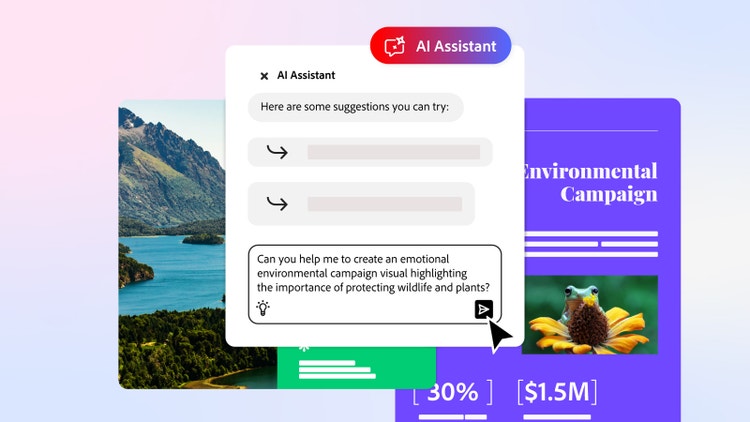
  AI chatbot assistant providing suggestions

Examples of AI chatbot uses.

AI is everywhere, and able to do so much to assist us. While AI chatbots were once a niche thing on the web, they’re now widely used in a range of fields and for a variety of purposes.

AI chatbots can be used for:

  • Customer service, to answer queries, FAQs, track orders, and personalise experiences.
  • Sales, to deliver product recommendations and generate leads.
  • Marketing, to boost engagement, personalise outreach, and empower campaigns.
  • Healthcare, to schedule appointments and check symptoms.
  • Internal operations, as an IT help desk, personal assistant, or HR helper.

Additionally, AI chatbots can automate tasks, summarise documents, book holidays, check the weather, and even suggest a vacation itinerary. The power of AI is only limited by our imagination, and its ability to integrate into common tasks can provide a lot of value, both to customers and businesses alike.

Make the most of your PDFs with the Acrobat AI Assistant chatbot.

Use the Adobe AI Assistant to analyse PDFs, generate content, and unlock insights to reach your goals. Summarise your PDF, set key action items, research quoted experts and outline contract terms in seconds.

FAQs.

What is the difference between a chatbot and an AI chatbot?

A “chatbot” is a rigid, pre-programmed simulation that runs on “if-then” logic. Essentially, it uses simple rules to converse or provide an answer. If you ask it for FAQs, it may point you to the page. AI chatbots use machine learning and natural language processes for a more fluid, human-like experience that understands context.

What is an example of an AI chatbot?

A common example of an AI chatbot would be something like ChatGPT, Siri, and Alexa. Though there are many more examples than that, these are some of the most popular or recognised forms of AI chatbot.

How do I write a good AI chatbot prompt?

To write a strong prompt for any form of generative AI, try to be specific with your query, describe the desired output of your goal, define how you want that output to be presented, and use dos and don’ts. You can correct its mistakes to iterate on your requests and try to consider tone and audience. Examples can also help guide your AI chatbot.

More useful resources.

Harness the power of AI in your PDFs with Adobe Acrobat – the inventors of the PDF format.