ACROBAT | 6-MINUTE READ
How to make a chore list for kids.
Learn how to customize the perfect chore list for kids.
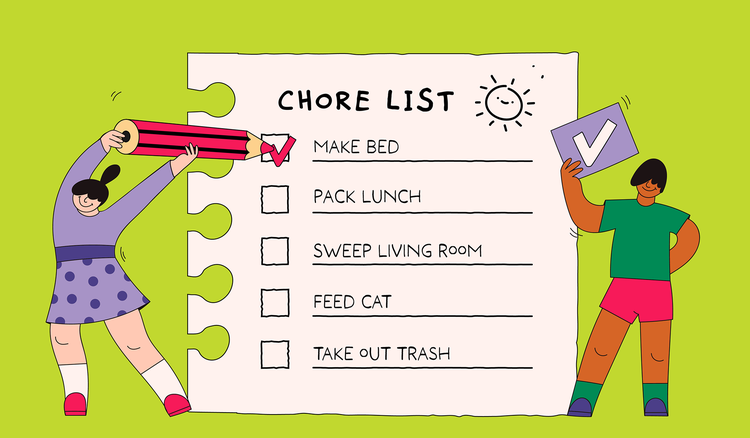
Getting kids to help around the house doesn’t have to be a chore. Sometimes, you only need a little accountability, which is where a chore list for kids can come in handy. Chore lists teach responsibility, build good habits, maintain harmony in the home, and set routines that grow with your child.
Learn how to create an effective chore list for kids by age, keep tasks engaging, and use Adobe Acrobat tools like Edit PDF to customize your printable chore list for kids easily.
You can’t give preschoolers tasks like taking out the trash. Create an organized, age-appropriate kids chore list to set clear expectations and encourage follow-through.
Visual reminders, like a printable chore chart for kids, help younger kids stay on task and give older ones the structure they need to manage responsibilities. Best of all, tools like Acrobat can help you create updated, personalized lists tailored to each child’s age, schedule, and strengths — so everyone stays on the same page.
In this guide, you’ll get chore lists tailored to younger kids, preteens, and teens. You’ll also get practical tips to make the most of this list for kids so your family can stay happy and organized.
Chore list for younger kids.
The earlier kids start contributing to the household, the more likely they will follow through on chores as they grow up. Starting early is key, but you have to keep things simple.
Kids aged three to six benefit from chores that build healthy habits and encourage following directions. Still, little kids want to feel like they’re helpful to the family, so these chores should serve a purpose. Think of tasks that are short, achievable, and — even better — fun.
A sample kids chore list for this age group might include simple tasks:
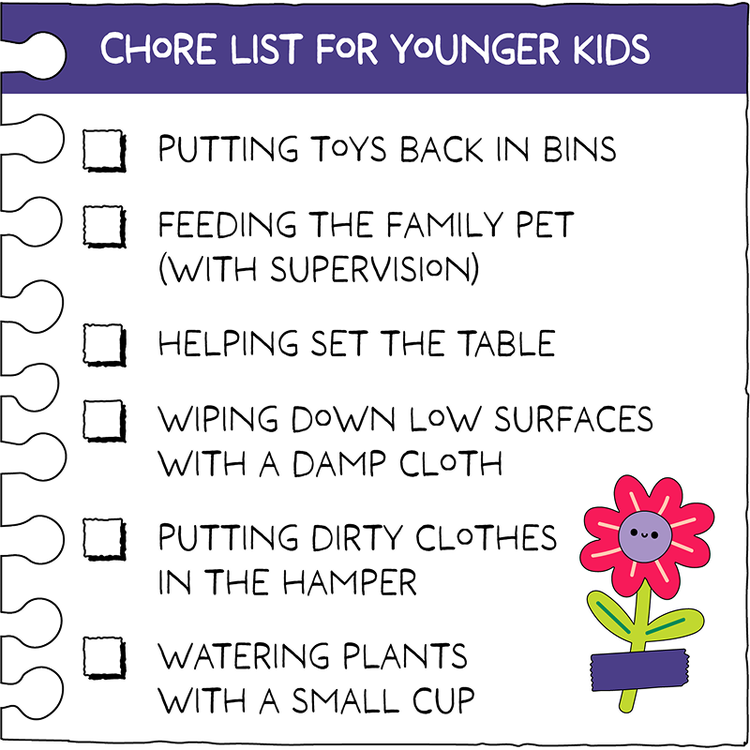
Younger kids are often eager to help, but that doesn’t mean convincing them to use a chore chart will be easy. It takes consistency, but you can encourage young kids to stick with a chore chart by:
- Using a visual chore chart for kids. Adding images or stickers makes the process more engaging for young children who may not be able to read. It also provides instant positive reinforcement, encouraging consistency and pride in their work.
- Making it fun by turning chores into games. Set a timer and see if they can “beat the clock,” or play their favorite music while they clean up.
- Giving clear instructions. Keep it simple and break tasks down into manageable steps. Instead of “clean your room,” try “put your blocks in the bin.”
- Offering lots of praise. Focus on effort over results. Positive reinforcement builds confidence and encourages repeat behavior.
- Giving kids a choice. Give kids a say by offering two chore options, which builds autonomy while still getting things done.
Your chore chart also doesn’t have to stay stagnant. You can update it to reflect everything from your kid’s new responsibilities to personalizing it with their name or favorite animal. Use a free online PDF editor to add new tasks, checkboxes, or fun icons without starting from scratch.
Chore list for older kids.
As kids grow up, they become better at assuming more responsibility. A well-structured chore list for kids ages 7 to 12 should include tasks that promote independence, build life skills, and contribute meaningfully to the household. At this stage, chores require more coordination or planning, but they’re incredible confidence-builders.
A typical kids chore list for this age range might include more self-guidance:
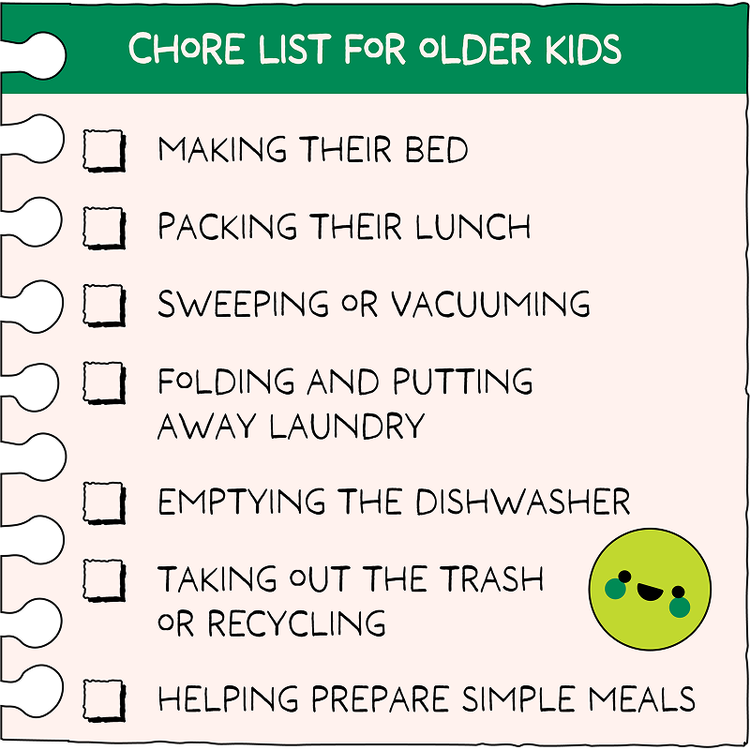
You might encounter more resistance when introducing a chore list for kids this age. You can encourage kids in this age range to stick with their chores by:
- Tying chores to privileges. Connect completing tasks on their chore list with access to screen time, outings, or allowance.
- Setting a chore schedule. Older kids benefit from consistency. A weekly chore chart for kids that shows what’s expected each day helps them manage their time. Using a to-do list template can give you a head start with tracking each child’s daily to-dos.
- Involving kids in the planning. Autonomy and control matter to kids, so let them create the chore list. When they have a say in their actions, they’re more likely to own them.
- Rotating responsibilities. Chores can get stale after a while. Consider rotating responsibilities between kids or family members so chores aren’t tedious.
- Expressing gratitude. A simple “thanks for doing the dishes” goes a long way at this age. Public praise, like a shout-out at dinner, is also motivating.
If your child’s schedule changes often, or if you want a reusable solution, a digital, printable chore list for kids is a smart way to go. Acrobat online tools let you edit the chart in real time, and with the Edit PDF feature, you can add, remove, or reorder chores any time.
If you saved the chore list in Word, convert it into a more shareable format using a Word to PDF tool before printing or sharing it with your child. This flexibility is beneficial if your family juggles school, sports, and other after-school commitments.
Chore list for teens.
The teen years can be challenging, but this is a crucial time when your kids learn to be independent and take responsibility. At this stage, a solid chore list for kids can help prepare your teen for real-world independence. The key is to frame chores not as punishments, but as life skills they’ll carry into adulthood.
Here are examples of what a kids chore list might look like for teens:
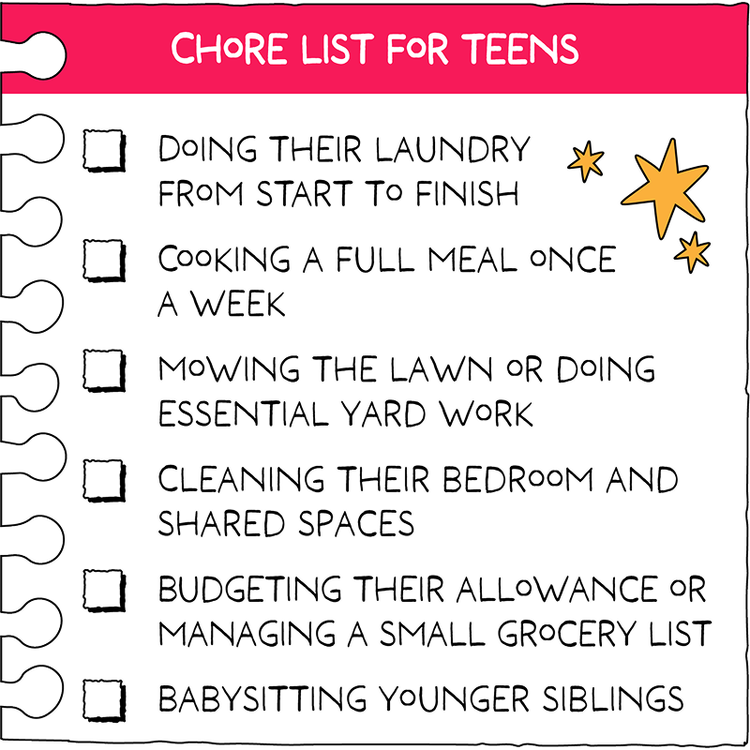
At this stage, let teens take part in setting up their chore chart. You can also encourage teens to follow through on their chore list through:
- Framing chores as life skills. Remind your teen that the tasks on their chore list for kids aren’t just busywork — they’re real-world prep. Cooking, budgeting, laundry, and yard work all contribute to building independence.
- Respecting their time. Teens are busy — acknowledge school, activities, and social commitments. Use a printable chore list for kids to map out realistic expectations they can stick to without feeling overwhelmed. If their schedules change or they want more control over the layout, use the PDF editor tool to make updates that reflect their evolving responsibilities.
- Providing clarity over control. Set expectations at the start of the week, but let your child handle things from there. Teens respond better to structure and trust than to micromanagement.
- Using the right technology. Updating a chore schedule with the Edit PDF tool makes it easy to modify and share the list digitally with your teen. If you need to make additional edits (or hand over the reins to your soon-to-be adult), use a PDF to Word tool to give your child a fully editable file they can manage themselves.
Whether you’re wrangling toddlers or motivating teens, a thoughtful chore list for kids can bring more structure, responsibility, and even harmony to your home. By tailoring tasks to your child’s age and using a clear chore chart for kids, you’re giving them the tools to build independence and making your daily routine run more smoothly.
Chore list for kids FAQs.
Is a digital chore chart for kids better than a paper one?
What should I do if my child refuses to do chores?
What chore is worth 10 dollars?
How much should a 7-year-old get for chores?
Keep exploring