Extraire une page d'un PDF, 100% gratuit sur Acrobat.com
Faites glisser un PDF, puis extrayez-en des pages gratuitement en ligne avec Adobe Acrobat.
Comment extraire les pages d’un PDF en ligne ?
Pour extraire des pages d’un PDF, suivez ces étapes simples :
Cliquez sur le bouton Sélectionner un fichier ci-dessus ou faites glisser un fichier PDF dans la zone de dépôt.
Sélectionnez le document dont vous voulez extraire des pages.
Une fois qu’Acrobat a chargé votre fichier, connectez-vous.
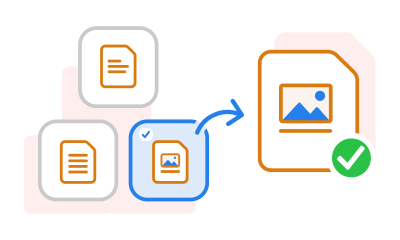
Sélectionnez les pages que vous voulez ajouter dans un nouveau PDF.
Ensuite, cliquez sur Extraire. Acrobat crée automatiquement un nouveau fichier PDF à partir des pages que vous avez sélectionnées.
Vous pouvez le télécharger, le partager via un lien ou le renommer.
style
background
#fbfbfb
Testez notre outil gratuit pour extraire des pages d’un PDF !
background
white
style
background
white
style
xl spacing, three-up
Extrayez des pages d’un fichier PDF.
Vous n’avez besoin que de certaines pages d’un document PDF ? Créez facilement un nouveau PDF à partir de pages que vous aurez sélectionnées dans le fichier d’origine grâce aux services Adobe Acrobat en ligne.
Agencez les pages de vos PDF.
Avant d’en extraire certaines pages, Adobe Acrobat DC vous aide à organiser le fichier PDF de départ. Déplacez, faites pivoter ou supprimez des vignettes de pages, puis sélectionnez celles à extraire pour créer un nouveau PDF.
Extrayez jusqu’à 500 pages.
Vous pouvez extraire des pages d’un PDF contenant jusqu’à 500 pages et dont la taille ne dépasse pas 100 Mo. Pour réduire la taille d’un fichier, essayez l’outil de compression de PDF d’Acrobat.
Profitez des fonctionnalités en ligne.
Les outils PDF en ligne d’Acrobat fonctionnent dans tous les navigateurs. Aucune application supplémentaire n’est requise. Il vous suffit d’ouvrir l’outil d’extraction de pages PDF dans un navigateur comme Microsoft Edge ou Google Chrome.
Bénéficiez de la protection des fichiers PDF
Conformément à ses principes de confidentialité, Adobe intègre des paramètres de sécurité à chaque fichier PDF créé avec Acrobat. Nous supprimons également votre fichier de nos serveurs, sauf si vous vous connectez pour l’enregistrer sur votre compte.
Accédez aux meilleurs outils PDF en ligne.
Inventeur du format PDF, Adobe propose des outils en ligne d’une grande fiabilité. Testez notre outil d’extraction de pages pour simplifier vos workflows à l’aide d’un nouveau fichier PDF.
Vous avez des questions ? Nous avons des réponses !
Oui, l’outil Acrobat en ligne vous permet d’extraire plusieurs pages en quelques clics. Vous pouvez sélectionner :
une seule page,
plusieurs pages spécifiques,
ou un intervalle de pages consécutives.
Il vous suffit de cocher les pages souhaitées, puis de cliquer sur Extraire pour générer un nouveau fichier PDF contenant uniquement les pages sélectionnées.
Vous pouvez charger un fichier PDF comportant jusqu’à 500 pages et en extraire autant que vous le souhaitez, selon vos besoins.
Non. Lorsque vous extrayez des pages, l’outil crée un nouveau document PDF sans modifier le fichier original. Vous disposerez donc de deux fichiers distincts : le PDF initial et celui contenant uniquement les pages extraites.
Oui, l’outil fonctionne directement depuis un navigateur web sur smartphone, tablette ou ordinateur, sans application à installer. Accédez-y depuis Chrome, Safari ou Edge sur Android, iOS, Windows ou macOS.
style
l spacing, grid width 10
background
#fbfbfb
Utilisez les outils Acrobat gratuitement.
Connectez-vous pour tester plus de 25 outils (conversion PDF, compression, etc.).
Insérez des commentaires, remplissez des formulaires et signez des PDF gratuitement.
Enregistrez vos fichiers en ligne pour y accéder sur tous vos appareils.
You can control how Adobe websites use cookies and similar technologies by making choices below. But note that if you disable cookies and similar technologies entirely, Adobe websites may not function properly.
Cookies are small text files stored by your web browser when you use websites. There are also other technologies that can be used for similar purposes like HTML5 Local Storage and local shared objects, web beacons, and embedded scripts. These technologies help us do things like remembering you and your preferences when you return to our sites, measure how you use the website, conduct market research, and gather information about the ads you see and interact with.
You can make choices in the menu below about what cookies and other technologies you want us to use on Adobe sites when you visit them from this browser. You can always change those choices later by clicking on the Cookie Preferences link at the bottom of the page.
If enabled:
We can improve your experience by tailoring the site and the content to things we think might be of interest
We can better keep track of your preferences — like what language you prefer to use
We will better understand your likely interests so we can provide you more relevant Adobe ads and content on non-Adobe websites and in non-Adobe apps
It will help us improve the performance of our website and those of our partners who use the Adobe Experience Cloud
If disabled:
We won’t be able to remember you from session to session so the experience may not be tailored to your interests
You’ll still have access to the content of the site but certain features that depend on cookies may not function
You’ll still see ads, they just may not be as relevant to you
General information
You can control how Adobe websites use cookies and similar technologies by making choices below. But note that if you disable cookies and similar technologies entirely, Adobe websites may not function properly.
Cookies are small text files stored by your web browser when you use websites. There are also other technologies that can be used for similar purposes like HTML5 Local Storage, web beacons, and embedded scripts. These technologies help us do things like remembering you and your preferences when you return to our sites, measure how you use the website, conduct market research, and gather information about the ads you see and interact with.
You can make choices in the menu below about what cookies and other technologies you want us to use on Adobe sites when you visit them from this browser. You can always change those choices later by clicking on the Cookie Preferences link at the bottom of the page.
If enabled:
We can improve your experience by tailoring the site and the content to things we think might be of interest
We can better keep track of your preferences — like what language you prefer to use
We will better understand your likely interests so we can provide you more relevant Adobe ads and content on non-Adobe websites and in non-Adobe apps
It will help us improve the performance of our website and those of our partners who use the Adobe Experience Cloud
If disabled:
We won’t be able to remember you from session to session so the experience may not be tailored to your interests
We’ll still count your use of our site and services
You’ll still have access to the content of the site but certain features that depend on cookies may not function
You’ll still see ads, they just may not be as relevant to you
Operate the site and core servicesOperate site and measure engagement
Always active
These cookies are required, and they are used to enable the site and related services core functionality. Without them the site could not operate, so they cannot be disabled.
These cookies enable the site and related services’ core functionality and collect statistics about user engagement, such as counting active use to help us understand trends. These cookies cannot be disabled.
Measure performance
These cookies are used to analyze site usage to measure and improve performance. Without them Adobe cannot know what content is most valued and how often unique visitors return to the site, making it hard to improve information we offer to you.
These cookies are used to analyze site usage to measure and improve performance. Without them Adobe cannot know what content is most valued, making it hard to improve information we offer to you.
Extend functionality
These cookies are used to enhance the functionality of Adobe sites such as remembering your settings and preferences to deliver a personalized experience; for example, your username, your repeated visits, preferred language, your country, or any other saved preference.
Personalize advertising
These cookies are used to enable Adobe and our partners to serve ads more relevant to your interests. Without them you will still see ads, but they might not be as relevant to you.
Performance Cookies
ConsentLeg.Interest
All Consent Allowed
Adobe Acrobat
Veuillez patienter, nous vous redirigeons vers acrobat.adobe.com.