#1e1e1e

Graphic design portfolio templates.

Discover how graphic design portfolio templates can help you build a professional portfolio for jobs, colleges, or freelance work in India. Explore free downloads, design ideas, and tips to choose the right format for your goals.

Explore Adobe Creative Cloud >

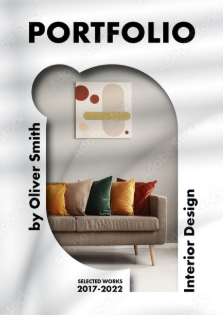
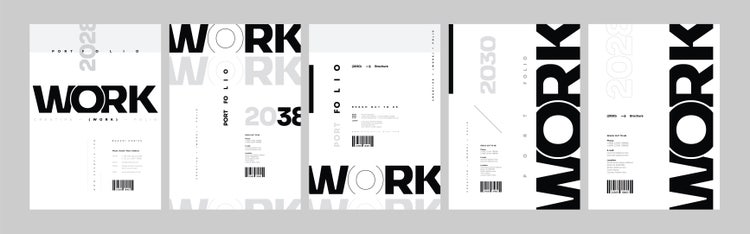
A minimalist, black-and-white graphic design portfolio template designed to feature multiple works across different years.

https://main--da-cc--adobecom.aem.page/in/cc-shared/fragments/merch/creativecloud/sticky-banner/intro-pricing

Whether you’re applying to top Indian design colleges or your first job, a strong graphic design portfolio template can help you stand out. It is basically your entry ticket into the design industry.

The good news? You don’t need to start from scratch. With the right portfolio templates, you can quickly build something polished, even if you’re just starting out or working with limited tools. Rather than spending hours deciding layouts, fonts, and spacing, you can focus on what really matters: your work.

Downloadable graphic design portfolio templates.

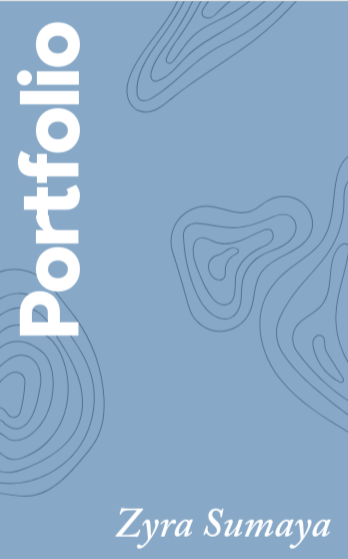
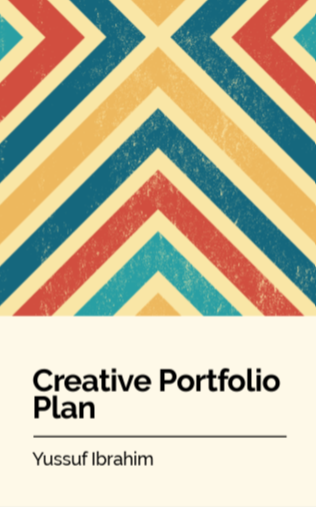
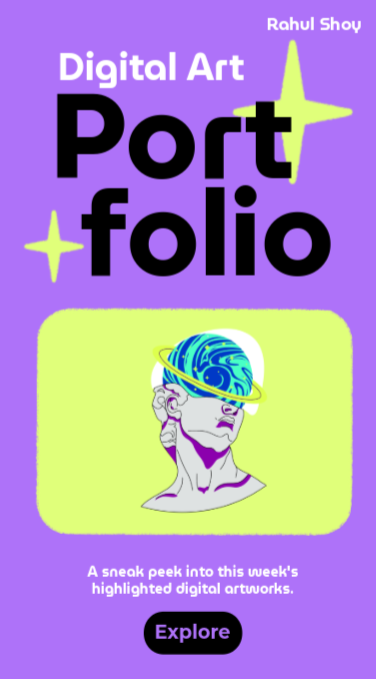
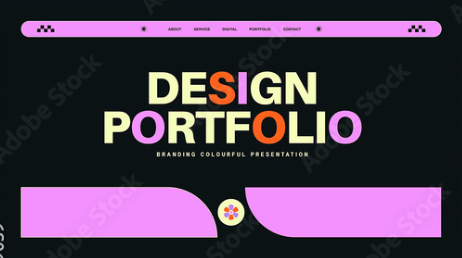
Graphic design portfolio templates that are free to download are the fastest way to build a professional-looking portfolio without designing everything from scratch. Here are some ready-to-use Adobe Express and Adobe Stock templates that students, freelancers, and beginners can use when preparing for college submissions, internships, or freelance work.

What makes a good graphic design portfolio template?

The best graphic design portfolio templates are the ones that don’t just look good, but also help you present your work in the clearest, most effective way possible. There are limitless templates for portfolios available out there. Here’s what to look for when choosing the right one for you:

  1. Clean layout. A good template starts with a clean, distraction-free layout. This means ample spacing in between elements, consistent typography, and clear visual hierarchy (headings, subheadings, body text, etc.).
  2. Project-focused sections. Look for templates that include sections for project title and brief, problem statement or objective, process (sketches, iterations, research), and final output. This is important because colleges and companies don’t only evaluate final designs. They want to see how you think and how you come up with your designs.
  3. Customisation options. Free or paid, a graphic design portfolio should be easy to make your own. This means editable fonts, colours, and layouts, flexible sections you can add and/or remove, and compatibility with tools you already use. This is important because, despite using templates, your final portfolio should still reflect your own style instead of it looking like everybody else’s.
  4. Print and digital compatibility. In India, you may need to submit a PDF for college applications, present your work in person, and upload it online, all using the same base portfolio. This is precisely why your template should work across formats:
    • PDF (for college submissions and job applications)
    • Slides (for presentations or interviews)
    • Online platforms like Behance and Adobe Portfolio
  5. Ideal project count and page length. Because reviewers often spend a few minutes per portfolio, having a well-curated collection can prove to be more effective than including everything you’ve ever made. There’s no hard rule regarding specific numbers, but you can follow this recommended structure to start:
    • Students / freshers: 4 - 6 strong projects
    • Freelancers: 6 - 10 projects (focused on niche or services)
    • Page length: 15 - 30 pages total

Types of graphic design portfolio templates.

Graphic design portfolios are not one-size-fits-all. The right graphic design portfolio template depends on your goal, whether you’re applying to colleges, pitching freelance clients, or building your online presence. Choosing the right format helps you present your work in the most effective way for your audience.

By format

PDF portfolio templates

PDF portfolios are the most widely used format in India, especially for design students. They are also the standard format for entrance portfolios at institutes like the National Institute of Design (NID), the National Institute of Fashion Technology (NIFT), Srishti, and Pearl Academy. Because PDFs are easy to share, print, and submit physical copies of, they are ideal for college applications, internships, and job applications.

Website portfolio templates

Website-based portfolio templates are ideal for building an online presence, making them one of the go-to choices for freelancers, professionals, and job seekers. Through platforms like Behance, many Indian designers are able to showcase scroll-based project pages, clickable case studies, embedded visuals and videos, and various contact and social links.

Presentation-style templates

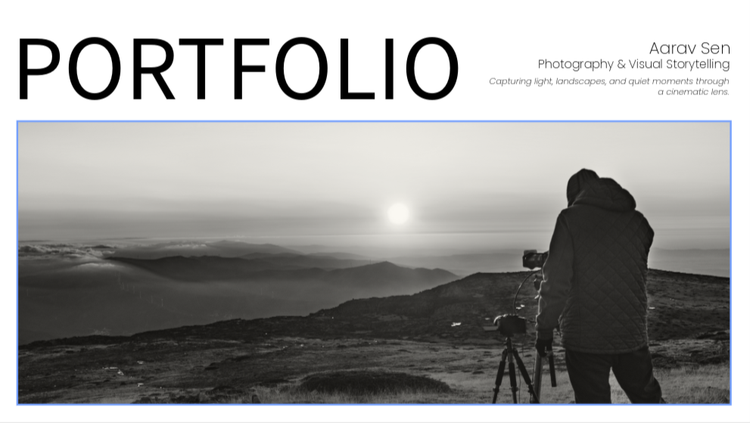
These templates for portfolios are built like slide decks using PowerPoint, Google Slides, or Canva. They typically include slide-based project storytelling with large visuals and text. Because they show clear progression from concept to final design, they are perfect for letting you control the narrative of your work during interviews, client pitches, or classroom presentations.

By specialisation

Branding / identity portfolio templates

A branding-focused portfolio template free download is structured around storytelling and consistency. It usually includes sections for brand strategy, mood boards, logo iterations, and final identity systems.

UI/UX design portfolio templates

UI/UX-focused portfolio templates are structured like case studies. They often include user research, problem statements, wireframes, design systems, and final UI screens featuring app interfaces, websites, wireframes, and prototypes.

Print-focused templates for portfolios are typically grid-based and highly visual. They prioritise layout, typography, and composition. They are an excellent option for featuring brochures, magazines, books, posters, and packaging designs.

Motion graphics portfolio templates

Unlike PDF portfolios, motion design cannot be fully experienced in static format. The template must support movement, timing, and interaction via embedded video previews or GIFs Reel links (YouTube, Vimeo, or Behance). This is the ideal format to display animation, video editing, and interactive media work.

How can I customise a portfolio template?

A female artist in an art studio holding a sketchbook and looking through her designs.

Personalisation is what transforms a generic layout into a compelling portfolio. The goal is simple: make the template reflect your thinking, your style, and your growth as a designer.

  1. Replace placeholder content with real projects. Start by removing all sample text and images. Add your own strongest work first, regardless of whether it includes college assignments, personal experiments, or practice projects. Focus on quality over quantity.
  2. Maintain visual consistency. Keep your design system uniform across all pages to help make it feel cohesive and intentional. Use the same colour palette throughout, stick to 1-2 font families, and maintain consistent image styles, margins, and alignment.
  3. Optimise typography and spacing. Good typography and spacing make even the simplest free download portfolio template look polished and professional.
    • For PDF portfolios: Use print-safe fonts (e.g., Helvetica, Garamond, or other widely supported typefaces). Adjust leading and tracking to improve readability when printed or viewed as a PDF. Avoid overly tight spacing, especially in body text.
    • For website portfolios: Use Adobe Fonts or system fonts for faster loading and better performance. Always test spacing across mobile breakpoints to ensure text doesn’t feel cramped or misaligned on smaller screens.

Customising a PDF template.

  1. Show your best work (even without clients). No professional experience? That’s okay. Focus on personal projects, college assignments, redesign concepts, and practice case studies.
  2. Keep the file lightweight. Your portfolio should be easy to open and share via email, WhatsApp, or uploads. Consider compressing images, avoiding heavy graphics or videos, and exporting as optimised PDF.
  3. Add a clear introduction page. Your intro sets the first impression. Be sure to include your name, specialisation, tools list, contact information, important links related to your work, and a brief statement explaining who you are and what you do.

Customising a website template.

  1. Turn projects into case studies. Don’t just upload images. Structure each project as problem → process → solution. This helps viewers visualise and understand your thinking.
  2. Keep navigation simple. Make it easy to explore your work. This can mean a clear menu (Projects / About / Contact), no-clutter design, and intuitive UI that keeps attention on your work.
  3. Make it mobile-friendly. Most people will view your portfolio on their phone. Be sure to customise with responsive layout, fast-loading images, and readable text sizes in mind.

How to choose a graphic design portfolio template.

Choosing the right graphic design portfolio template is not just about aesthetics. It’s about clarity, purpose, and how well your work is communicated. In general, your template should support your content, not distract from it. Platforms like Behance and Adobe Portfolio are also a great resource for getting portfolio design ideas and inspiration from other designers.

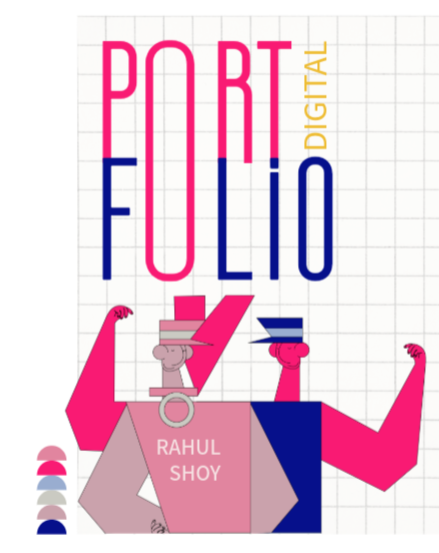
  1. Choosing based on your design style. Start by understanding your own visual style. If your work is clean, minimal, and typography-focused, choose a simple, grid-based layout with strong spacing and subtle design elements. If your work is expressive or experimental, look for templates that allow dynamic layouts and bold visuals.
  2. Matching templates to your target role. Different design roles require different storytelling approaches, so your template should reflect that. For instance, if you’re aiming to land a print/editorial design gig, opt for templates that emphasise typography, layout, and composition. If you specialise in UI/UX design, use structured layouts that highlight wireframes, user journeys, and problem-solving processes.
  3. Considering format (PDF vs website vs presentation). Your portfolio format determines how your work is experienced. PDFs are a desirable choice for in-person applications, website portfolios for freelancing visibility, and presentation portfolios for live reviews. Each format serves a different purpose, so choose based on where your portfolio will be used most often.
  4. Balancing creativity and usability. The best portfolio design ideas strike a balance between visual appeal and usability. Over-designed layouts can distract from your actual work, while overly simple layouts may fail to create impact. When choosing a template, prioritise clear hierarchy, consistent spacing, readable typography, and easy navigation between projects.

Transitioning from free solutions to professional software.

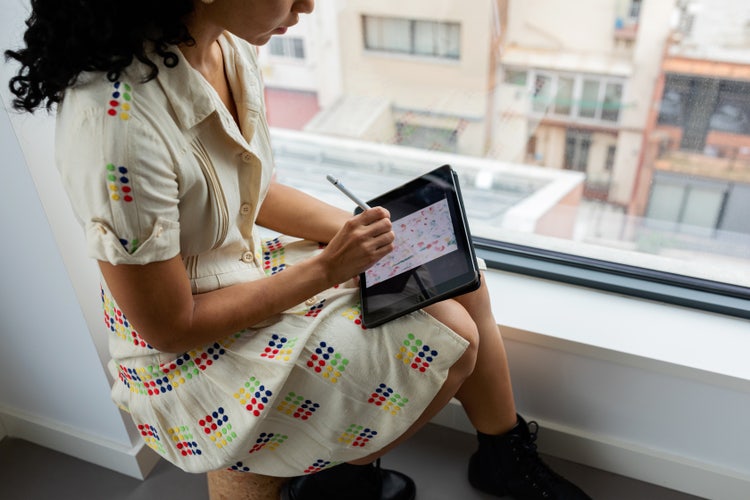
A female designer drawing on a digital sketchbook.

Many Indian design students begin their journey using free templates and tools. That’s completely normal. Early on, tools like Canva, Google Slides, and mobile editing apps are often used to build a simple student portfolio template. This allows students and freshers to focus on structure, storytelling, and presentation without technical or financial barriers.

As skills develop, upgrading to professional tools becomes a natural next step rather than a sudden switch. Solutions like Adobe Creative Cloud, which includes Adobe Photoshop, Adobe Illustrator, Adobe InDesign, and more, gives designers deeper control over layout systems, typography, and overall polish. This leads to a more refined and professional graphic design portfolio template structure. Students in India can also enjoy Adobe Creative Cloud at a discounted price.

Developing your portfolio further.

Once you’ve built your foundation, take the next step: actively explore graphic designer portfolio examples to understand how other designers structure their work, present case studies, and tell visual stories. Use platforms like Behance to study real portfolios, collect ideas, and identify what makes certain projects stand out.

Take note of how designers organise content, simplify complex projects, and create flow between pages. Then apply those insights to your own portfolio design ideas to refine your structure and elevate your presentation. The more you study strong examples, the faster you’ll improve your own portfolio.

Frequently asked questions.

How do I make a portfolio template look unique?

Start by customising the basics to match your personal style: colours, typography, and layout spacing. Replace all placeholder content with your own projects and focus on strong storytelling. Even simple portfolio design ideas, like consistent image styles or a unique case study format, can make a template feel original.

Are free portfolio template downloads safe to use?

Most portfolio template free download options are safe if sourced from trusted platforms like Behance or Adobe Express. Avoid unknown websites that require unnecessary permissions or downloads. Always review and customise the template to remove generic elements.

Can I use the same portfolio template for print and digital?

Yes, but you may need to adjust it. PDF portfolios should be optimised for print (proper margins, readable fonts), while digital versions should focus on screen readability and file size. A flexible graphic design portfolio template can be adapted for both.

What size should a graphic design portfolio be?

There is no hard rule for this. For PDF portfolios, you can aim for 15–30 pages with 4 - 8 strong projects. Keep the file size under 10-15 MB for easy sharing via email or WhatsApp. You can use Adobe Acrobat’s Compress PDF to reduce file size without significantly affecting image quality. The goal is to keep your portfolio templates concise, focused, and easy to review.

Do employers care if you use a portfolio template?

Not really. Employers care more about your work, thinking, and presentation. A well-customised portfolio template (free or paid) can look just as professional as a fully custom design if used correctly.

Is a portfolio template enough for beginners?

Yes. A student portfolio template is often the best starting point for beginners. It gives you structure and helps you focus on showcasing your projects clearly, even if you don’t have client work yet.

Which format is best: PDF or website portfolio template?

It depends on your goal. A PDF is best for job applications and college submissions, while a website is a better option for visibility and long-term use. Many designers use both: a PDF for direct applications and a website for ongoing exposure.

How do I get a student discount on Adobe Creative Cloud?

Provide a school-issued email address during purchase, so you can be instantly verified. Anyone who is at least 18 years old and enrolled in a university, college, primary school, secondary school or home school are qualified for the student discount. Learn more here.
https://main--da-cc--adobecom.aem.page/in/cc-shared/fragments/creativity-for-all/default

More resources

Content as a Service v3 - file-type design collection - Tuesday, 21 July 2026 at 22:15