#1e1e1e

PHOTOGRAPHY

How to take professional-looking photos with your smartphone.

Learn how to elevate your smartphone photography with expert techniques that help you capture sharp, well-composed, and visually striking images.

Explore Lightroom

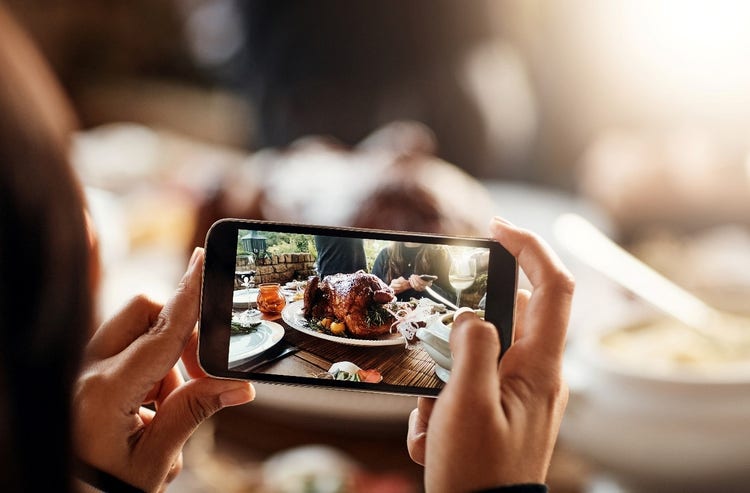
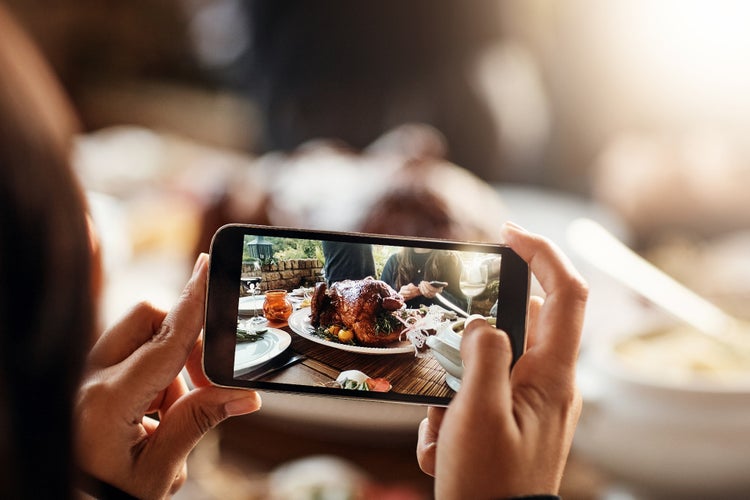
Close-up of a person using an iPhone to take a professional-grade photo of a cooked turkey, presented on a table.

Elevate your mobile photography skills

Smartphone photography has revolutionised the way we capture and share our lives. With increasingly advanced cameras built into mobile devices, anyone can take high-quality photos without needing expensive equipment. However, taking professional-looking photos with your smartphone requires more than just pointing and shooting. It involves understanding how to maximise your phone's camera features, mastering composition, and learning simple editing techniques. This guide will walk you through practical tips and creative approaches to improve your phone photography skills and achieve stunning results. Discover more about different types of photography to expand your skills across various styles.

Master your smartphone camera settings.

Most smartphones offer advanced camera settings that can significantly enhance your mobile photography when used correctly.

  • Adjust exposure manually by tapping on the screen and sliding the brightness scale up or down.
  • Use focus locking to ensure your subject remains sharp, especially in tricky lighting conditions.
  • Experiment with HDR mode to balance highlights and shadows in high-contrast scenes.
  • Enable gridlines to apply the rule of thirds and improve composition.
  • Explore your phone's pro or manual mode for greater control over ISO, shutter speed, and white balance.
Learn how to adjust ISO settings for greater control over lighting in your smartphone photos.

Optimise natural lighting.

Lighting is the foundation of great smartphone photography. Good lighting can turn a simple snapshot into a professional-looking image.

  • Take advantage of soft, natural light during golden hour (shortly after sunrise and before sunset) for warm tones and minimal shadows.
  • Avoid harsh midday sunlight, which can create overexposed areas and unflattering shadows.
  • Use window light when shooting indoors to achieve diffused, even lighting.
  • Experiment with backlighting for dramatic silhouettes or rim lighting around your subject.
Learn more about using golden hour lighting to capture warm, glowing photos.

Compose your shots like a pro.

Composition is key to creating eye-catching photos that stand out. Applying fundamental photography principles can elevate your smartphone shots.

  • Apply the rule of thirds to balance your subject within the frame.
  • Use leading lines, such as roads, pathways, or fences, to draw the viewer’s eye into the photo.
  • Frame your subject using natural elements like doorways, trees, or windows.
  • Experiment with symmetry and reflections for striking visual effects.
  • Change your perspective by shooting from high above, crouching low, or capturing your subject from unique angles.
Master the rule of thirds in photography to create balanced and visually appealing images.

Enhance details with smartphone macro photography.

Macro photography allows you to capture small details up close, revealing textures and patterns often missed by the naked eye.

  • Use your phone’s macro mode if available, or invest in a clip-on macro lens for enhanced results.
  • Ensure steady hands or use a mini tripod to avoid blur when focusing on small objects.
  • Focus on the subject’s most detailed area, like the centre of a flower or an insect's eye.
Dive into macro photography tips to unlock the beauty of close-up shots.

Master smartphone portrait photography.

Portraits can be transformed with a few simple adjustments to lighting, composition, and camera settings.

  • Use portrait mode to create a blurred background (bokeh effect) that highlights your subject.
  • Direct your subject towards natural light and avoid overhead lighting that casts shadows on their face.
  • Guide your subject to pose naturally, capturing candid moments for authentic expressions.
  • Experiment with off-centre compositions to create dynamic, storytelling portraits.
Improve your portrait photography with expert techniques.

Capture motion creatively.

Dynamic motion can add excitement and energy to your photos, from action shots to creative blur effects.

  • Use burst mode to capture fast-moving subjects like pets or athletes, ensuring you get the perfect frame.
  • Pan your camera along with a moving subject to create a motion blur background while keeping the subject sharp.
  • Experiment with slow shutter apps to create light trails, water blur, or long exposure effects.
Master panning photography to capture motion creatively.

Make the most of night and low-light photography.

Low-light environments can be challenging, but your smartphone can still capture professional-quality photos with the right techniques.

  • Activate night mode if your phone has it, which improves brightness and reduces noise.
  • Stabilise your phone with a tripod or lean against a surface to prevent camera shake.
  • Lower exposure manually to prevent highlights from overblowing and capture more detail.
  • Utilise available ambient light sources like street lamps, candles, or neon signs to add mood and atmosphere.
Explore night photography techniques to create stunning low-light images.

Experiment with creative smartphone photography techniques.

Thinking outside the box can elevate your smartphone photos and allow you to develop a unique style.

  • Double exposure apps let you blend two images together for artistic effects.
  • Reflections in puddles, windows, or mirrors can add symmetry and dimension.
  • Foreground objects, like leaves or hands, can add depth and frame your subject.
  • Silhouettes work well during sunset, creating contrast between a dark subject and a vibrant background.

Try creating a double exposure effect to merge multiple images into one.

Editing photos on smartphone.

Edit like a pro with smartphone apps.

Editing is the final step to transforming a good photo into a great one. Several powerful editing apps are available to refine your images directly on your phone.

  • Lightroom Mobile offers professional-level adjustments for exposure, colour grading, and detail enhancement.
  • Snapseed provides advanced tools like selective adjustments, healing brush, and curves for precise editing.
  • VSCO allows you to apply film-inspired presets and fine-tune tones to develop a cohesive visual style.
  • Cropping and straightening tools to refine your composition and remove distractions.
Start using Lightroom for mobile to enhance your smartphone photos.

Share and showcase your best work.

Sharing your smartphone photography can connect you with other enthusiasts and help build your personal brand.

  • Curate your best images for social platforms like Instagram, ensuring your feed maintains a consistent visual style.
  • Engage with photography communities online for feedback, inspiration, and networking.
  • Participate in smartphone photography contests or challenges to showcase your skills and push your creativity.

Smartphone photography is more than just convenience — it’s an art form accessible to everyone. By mastering your camera settings, understanding light, and experimenting with composition and editing, you can take professional-looking photos with your mobile device. Whether you’re capturing everyday moments or creating visual masterpieces, your smartphone camera holds the potential to rival traditional photography tools.

Explore Creative Cloud Photography tools to elevate your smartphone and DSLR photography skills.
Frequently asked questions.

What is the best time of day to take photos with a smartphone?

The best time for mobile photography is during the golden hour—shortly after sunrise or before sunset — when natural light is softer and creates warm tones, reducing harsh shadows.

How can I avoid blurry photos when using my smartphone?

To prevent blurry photos, stabilise your phone using both hands or a surface, enable burst mode for action shots, and tap to focus before pressing the shutter.

Are there specific apps for controlling manual settings on a smartphone?

Yes, apps like Adobe Lightroom Mobile, Camera+ 2, and ProCamera allow you to manually adjust exposure, ISO, and focus, giving you DSLR-like control over your phone photography.

How can I improve smartphone photography in low light without using the flash?

Use night mode, increase exposure time with manual settings, stabilise your phone with a tripod, and find external light sources like streetlights or candles for natural illumination.

Can smartphone cameras shoot in different aspect ratios for social media?

Yes, most smartphones allow you to switch aspect ratios (e.g., 1:1 for Instagram, 16:9 for stories), helping you compose images that fit perfectly on different platforms.

https://main--cc--adobecom.aem.page/in/cc-shared/fragments/roc/creativecloud/blog/photography/photo-caas-collection

https://main--cc--adobecom.hlx.page/cc-shared/fragments/seo-articles/do-more-lightroom-color-blade