What is the Scribble study method & how to use it
Transform your study sessions with the Scribble method—a creative, hands-on technique that turns passive reading into active learning through visual notetaking and doodling.
What is the Scribble study method?
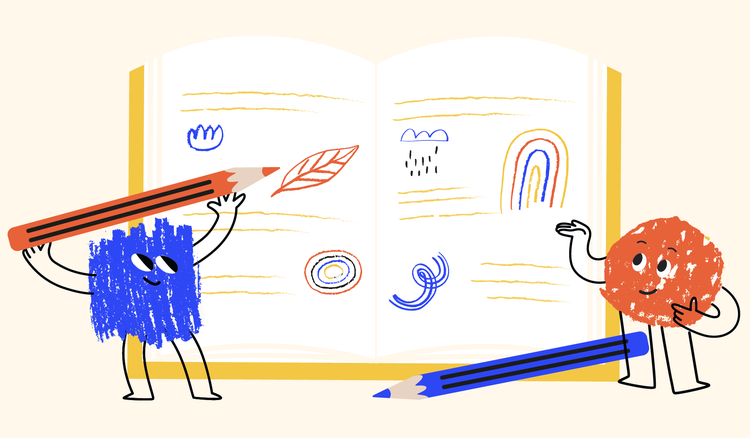
The Scribble study method is a creative approach to learning that involves creating informal visual notes, quick sketches, and spontaneous doodles while studying. Rather than writing out lengthy sentences or copying text word-for-word, you transform information into visual representations that capture the essence of what you are learning. This technique represents a significant departure from traditional linear note-taking methods that often lead to passive transcription rather than genuine understanding.
At its core, scribbling as a study technique is about engaging with material actively rather than passively. When you scribble, you are not just recording information—you are processing it, interpreting it, and creating your own visual language to represent concepts. This might include simple drawings, arrows connecting related ideas, symbols that represent recurring themes, or abstract shapes that help you remember key points.
Key takeaways about the Scribble study method:
- The Scribble method transforms passive reading into active learning through visual note-taking, doodling, and spontaneous sketches that engage multiple cognitive pathways simultaneously.
- This technique works especially well for visual and kinesthetic learners who struggle with traditional text-heavy notes and find creative expression more memorable than linear transcription.
- Scribble studying is highly personalized—there is no single correct approach, and effectiveness increases as you develop your own visual vocabulary and symbol system over time.
The Scribble method works particularly well for certain types of learners and subjects. Visual and kinesthetic learners who struggle with traditional text-heavy notes often find this approach transformative. If you have ever found yourself doodling in the margins during a lecture, you may already have an instinct for this technique. The method is especially effective for subjects that require conceptual understanding, such as sciences, history, and languages, where relationships between ideas matter as much as the facts themselves. Additionally, combining scribble notes with other note-taking approaches creates a comprehensive system that addresses multiple aspects of learning and retention.
The science behind why scribbling works lies in how our brains process and store information. When you create visual notes, you engage multiple cognitive pathways simultaneously. Your visual processing centers activate as you create and view images. Your motor skills engage as your hand moves across the page. And your memory encoding strengthens because you are transforming abstract information into concrete, personal representations. This multi-channel engagement creates stronger neural connections than passive reading or even traditional notetaking.
How does the Scribble method work
The Scribble method works as a flexible, personalized approach that adapts to your individual learning style and the material you are studying. There is no single correct way to implement this technique—what matters is that you engage actively with information and create visual representations that are meaningful to you. The process naturally evolves as you discover what works best for your brain and your subjects. Understanding how the scribble method works helps you implement it effectively from the start.
Choosing your scribble technique
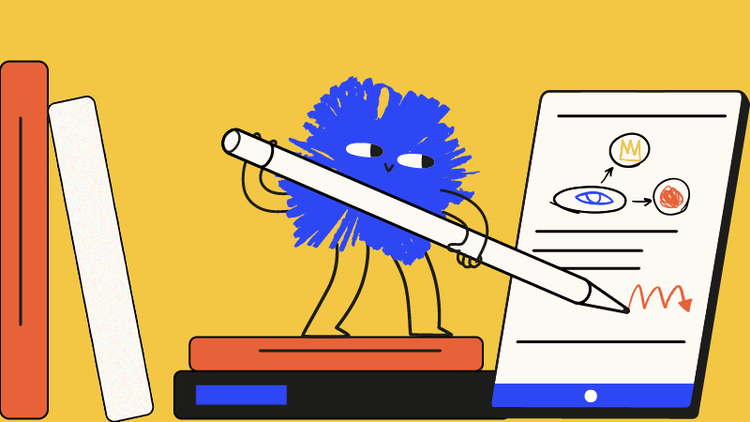
Different scribble techniques serve different purposes, and most students eventually develop a hybrid approach that draws from multiple styles. Mind mapping works well when you need to understand how a central concept connects to various subtopics. You place your main idea in the center of the page and draw branches outward, adding related concepts, examples, and details as you go. This technique excels for subjects like biology, where understanding systems and their components matters, or history, where events connect to causes and consequences.
Concept doodling takes a simpler approach, focusing on creating quick sketches that represent ideas rather than elaborate diagrams. A simple drawing of a cell, a stick figure representing a historical figure, or a basic shape symbolizing an abstract concept can serve as powerful memory anchors. The drawings do not need to be artistic—they just need to be meaningful to you. Many students find that the more personal and even silly their doodles, the better they remember the associated information.
Sketch noting combines the best of both approaches, integrating words, images, and visual hierarchy into comprehensive pages. This technique uses different text sizes, boxes, banners, and dividers to create visual interest and organize information spatially. The result is a page that tells a story and guides your eye through the material in a logical flow.
Creating your own symbol system adds another layer of personalization. You might develop icons for recurring concepts—a lightbulb for key insights, a question mark for areas needing review, or subject-specific symbols that represent important themes. Over time, this personal visual vocabulary becomes second nature and speeds up your note-taking while maintaining meaning.
Engaging with your material
The process of scribble method studying begins with actively engaging your source material, whether you are reading a textbook, listening to a lecture, or reviewing slides. As you encounter information, resist the urge to transcribe everything. Instead, pause and ask yourself what the key concept is and how you might represent it visually.
This active transformation of text into visual elements is where the real learning happens. When you read about photosynthesis, for example, you might sketch a simple plant with arrows showing energy flow rather than writing out the definition. When studying historical events, you might draw a timeline with small illustrations representing key moments. The act of deciding how to visualize information forces you to process it deeply.
Making connections between ideas through visual links strengthens understanding further. Drawing arrows between related concepts, using color coding to group similar ideas, or physically placing related information near each other on the page all help your brain recognize patterns and relationships. This connects directly to active recall principles, where retrieving and connecting information strengthens memory more than passive review.
Color, shape, and spatial arrangement all carry meaning in scribble notes. Using consistent colors for certain types of information, placing more important concepts in larger or more central positions, and creating visual hierarchies all help you organize information in ways that support later recall. Your page becomes a map of the material, and navigating that map reinforces your understanding.
Working with digital tools
While many students prefer the tactile experience of pen and paper for scribbling, digital tools can enhance and extend the benefits of this method. Digitizing handwritten scribble notes preserves your original creative work while adding functionality like searchability and easy sharing. Using a mobile scanning app allows you to quickly capture your paper notes and convert them into digital files you can access anywhere.
Working directly with digital documents opens additional possibilities. You can draw on your documents to add scribble notes directly to lecture slides, textbook pages, or study guides. This keeps your visual notes connected to their source material and creates comprehensive study resources that combine original content with your personal annotations.
Converting physical notes to digital formats also enables better organization. You can create folders by subject, tag notes with key terms, and build a searchable archive of your study materials. This proves especially valuable during exam preparation when you need to review material from an entire semester quickly.
AI-powered tools can transform your raw scribble notes into more polished study materials. After capturing your handwritten sketches and doodles, AI assistance can help you identify key themes, generate summaries, and create study questions based on your visual notes. This bridges the gap between creative note-taking and structured review, giving you the best of both worlds.
Benefits of the Scribble method
The Scribble method offers numerous advantages for students seeking improved retention, deeper engagement, and more effective study sessions. Understanding these benefits helps you appreciate why this technique works and motivates consistent practice.
The Scribble method supports learning through multiple mechanisms that work together to strengthen memory and understanding:
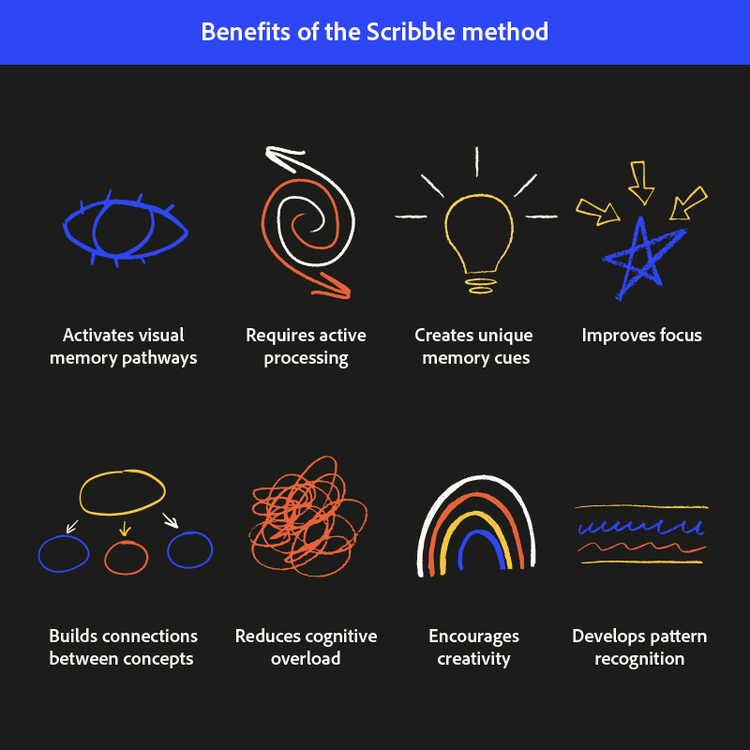
- Activates visual memory pathways for stronger encoding, creating mental images that persist longer than text alone
- Requires active processing rather than passive highlighting, forcing genuine engagement with material
- Creates unique, personalized memory cues that connect to your individual experiences and associations
- Improves focus by engaging hands during study sessions, reducing mind-wandering and distraction
- Builds connections between concepts through spatial relationships, helping you see the bigger picture
- Reduces cognitive overload by simplifying complex information visually, making difficult material more approachable
- Encourages creativity and makes studying more enjoyable, increasing motivation to review material regularly
- Develops pattern recognition skills that transfer to test-taking and problem-solving situations
These benefits compound over time as you develop your personal scribble style and build a library of visual notes. Students who practice this method consistently often report that studying becomes more enjoyable because it feels creative rather than tedious.
The connection between scribbling and memory runs deep. Visual associations create multiple retrieval pathways in your brain, meaning you can access information through different mental routes. When you need to memorize information quickly, having visual anchors gives you an advantage over students relying solely on text-based notes. The act of creating images also engages emotional and creative brain regions, adding another dimension to memory encoding.
The 1/3-5/7 rule and scribble method combination
The 1/3-5/7 rule is a spaced repetition strategy that optimizes review timing for long-term retention. The rule suggests reviewing material at specific intervals: one day after initial learning, then three days later, then five days later, and finally seven days later. This pattern takes advantage of how memory consolidation works, reinforcing information just as it begins to fade.
Combining scribble notes with the 1/3-5/7 review schedule creates a powerful learning system. Your visual notes serve as efficient review material because you can quickly scan images and recall associated information. During each review session, the distinctive visual elements of your scribble notes trigger memories more effectively than plain text would. The combination leverages both the encoding benefits of visual note-taking and the retention benefits of strategically timed review.
Practical application involves creating your scribble notes during initial study, then scheduling brief review sessions at the specified intervals. During reviews, spend a few minutes looking over your visual notes, testing yourself on what each image represents, and adding any new connections or insights. This combination of visual encoding and spaced repetition maximizes both initial learning and long-term retention.
Digital tools enhance the effectiveness of both the Scribble method and spaced repetition strategies. Using AI-powered chat features allows you to interact with your study materials in new ways, asking questions and getting explanations that deepen understanding. Creating organized workspaces helps you compile and manage scribble notes by subject, making review sessions more efficient and ensuring you never lose track of important materials.
An online PDF editor allows you to annotate digital materials directly, adding scribble notes to lecture slides, articles, and textbook chapters. This integration keeps your visual notes connected to their source material and creates comprehensive study resources. You can also combine notes from multiple sources into master study guides that cover entire units or courses.
Building these comprehensive study guides from collected scribble notes transforms scattered notes into cohesive review materials. By bringing together visual notes from different study sessions, you create a complete picture of the material that supports both detailed review and big-picture understanding. This systematic approach to organizing your creative notes ensures that your scribble method of studying yields maximum results when exam time arrives.
Frequently asked questions
Does the scribble method really work?
What does scribble mean in studying?
What is the 1/3-5/7 rule in studying?
Can I use the Scribble method for any subject?
How do I organize my scribble notes for exam review?
You may also like