How to create a study schedule that works
A well-designed study schedule transforms chaotic cramming into structured learning that actually sticks. Whether you’re preparing for finals or managing a full course load, the right approach helps you retain more information while reducing stress and avoiding burnout.

Creating a study schedule helps you learn more effectively by organizing your time around your natural energy patterns and learning preferences. A strategic approach to scheduling prevents last-minute cramming and reduces academic anxiety.
- Identify your peak focus times and learning style before building your schedule
- Space out study sessions using proven techniques for better long-term retention
- Build in breaks and buffer time to prevent burnout and maintain consistency
Why create a study schedule?
The difference between students who thrive academically and those who struggle often comes down to one factor: preparation. A study schedule isn’t just about managing your time—it’s about creating a sustainable system that supports your learning goals throughout the semester.
When you create a study schedule, you minimize the stress and anxiety that comes with approaching exams unprepared. Instead of facing a mountain of material the night before a test, you’ve already broken it down into manageable chunks spread across weeks. This approach not only feels less overwhelming but actually helps your brain process and retain information more effectively.
Consistent preparation through scheduled study sessions directly boosts academic performance. Research consistently shows that distributed practice—studying material over multiple sessions rather than in one marathon session—leads to significantly better recall. By committing to regular study blocks, you’re working with your brain’s natural learning processes rather than against them.
A structured schedule also reduces your risk of burnout. Many students push themselves too hard during exam periods, sacrificing sleep, exercise, and social connections. This approach backfires, leading to diminished focus and poorer retention. A thoughtful schedule builds in the rest and recovery time you need to perform at your best.
Beyond immediate academic benefits, creating a study schedule develops time management skills that serve you well beyond college. Learning to prioritize tasks, estimate how long activities take, and balance competing demands prepares you for professional success. These goal-setting strategies become second nature when you practice them consistently.
Finally, a written schedule creates accountability. When you can see exactly what you planned to accomplish each day, you're more likely to follow through. Tracking your progress also helps you identify patterns—maybe you consistently skip Friday afternoon sessions, or perhaps you underestimate how long math problems take. This self-awareness allows you to refine your approach over time.
How to create a study schedule
Building an effective study schedule requires more than just blocking off time in your calendar. The most successful schedules account for how you learn best, when you’re most alert, and how to space your sessions for maximum retention. The following steps walk you through creating a personalized schedule that fits your life and learning needs.
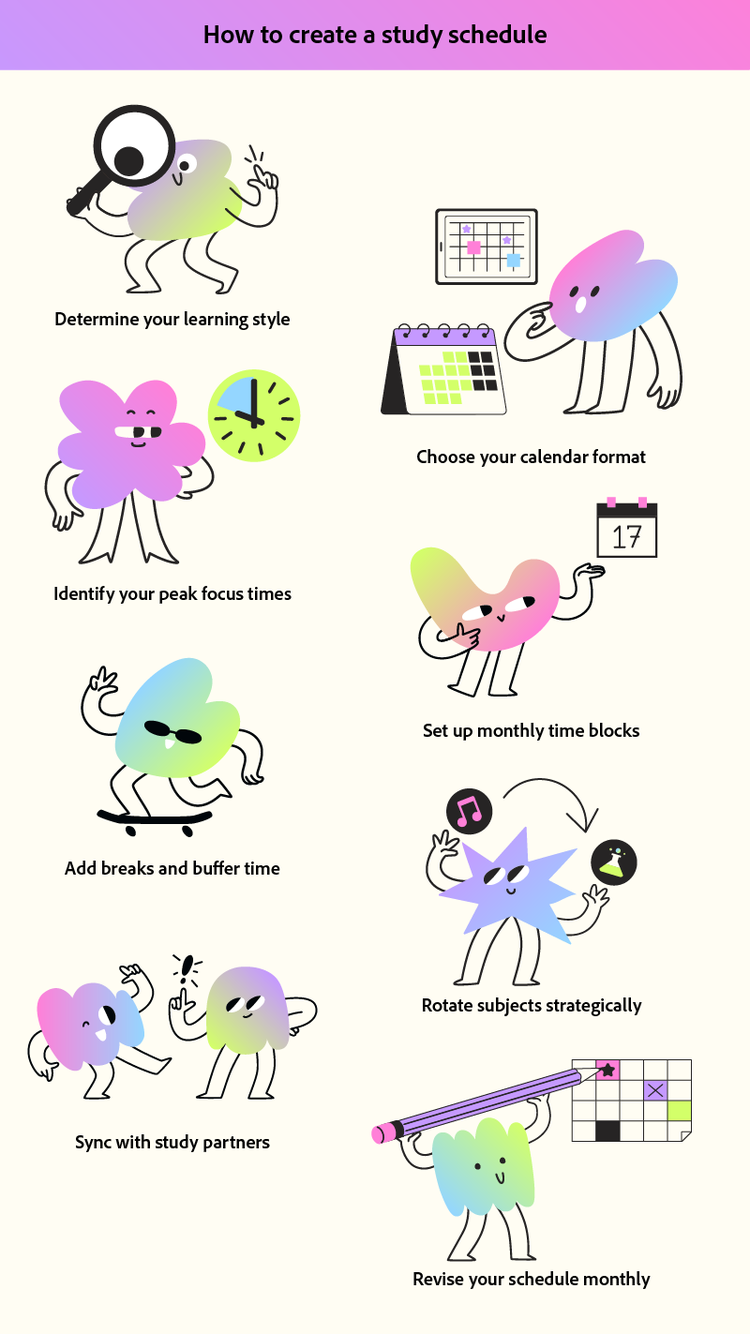
1. Determine your learning style
Before you start filling in time slots, take a moment to understand how you absorb information most effectively. Different learning styles require different study approaches, and your schedule should accommodate the methods that work best for you.
Consider these common learning preferences:
- Visual learning: You understand concepts better through diagrams, charts, color-coding, and spatial organization
- Auditory learning: You retain information by listening to lectures, discussing topics aloud, or recording yourself explaining concepts
- Reading/writing preference: You learn best by taking detailed notes, reading textbooks, and writing summaries
- Kinesthetic (hands-on) learning: You need to practice, build, or physically engage with material to understand it
Most people use a combination of these approaches, but one or two typically dominate. Pay attention to which effective study methods have worked for you in the past, and design your schedule to include activities that match your strengths.
2. Choose your calendar format
Your schedule only works if you actually use it, so selecting the right format matters. Consider whether you prefer the tactile satisfaction of a paper planner or the convenience of a digital calendar.
Digital calendars offer significant advantages for students managing complex schedules. They sync across your phone, laptop, and tablet, ensuring you always have access to your plan. You can set reminders, easily move blocks around, and share your schedule with study partners.
Spreadsheet-based schedules work well for students who want more customization. You can create detailed weekly templates with color-coded subjects and time tracking. When you need to share your schedule or keep a permanent record, you can convert spreadsheets to PDF format for easy distribution and archiving.
3. Identify your peak focus times
Not all hours are created equal when it comes to mental performance. Some students think most clearly in early morning hours, while others hit their stride late at night. Understanding your natural rhythms helps you schedule demanding work when you’re best equipped to handle it.
Spend a week tracking your energy and focus levels at different times of day. Note when you feel sharp and engaged versus when you struggle to concentrate. Look for patterns—maybe you’re consistently alert mid-morning but sluggish after lunch.
Once you’ve identified your peak hours, reserve them for your most challenging subjects. If organic chemistry requires your full mental capacity, schedule it during your high-energy window. Save easier tasks like reviewing flashcards or organizing notes for lower-energy periods.
4. Set up monthly time blocks
With your learning style, calendar format, and peak times established, you’re ready to map out your month. Start by marking all fixed commitments: classes, work shifts, extracurricular activities, and social obligations you won’t skip.
Next, add major deadlines and exam dates. Work backward from these dates to determine when you need to begin preparing. A comprehensive exam might require three weeks of review, while a quiz might need just a few days.
The spaced repetition technique suggests reviewing material at increasing intervals—one day after learning, then three days, then a week, and so on. Build these review sessions into your monthly plan to strengthen long-term retention.
Leave flexibility in your schedule for unexpected events. Life happens—you might get sick, face a family emergency, or receive an unexpected assignment. Building buffer time into your plan prevents a single disruption from derailing your entire month.
5. Add breaks and buffer time
Continuous studying without breaks actually decreases your productivity and retention. Your brain needs rest periods to consolidate information and recover from focused work. Strategic breaks make your study sessions more effective, not less.
The Pomodoro technique offers a proven framework: study for 25 minutes, then take a 5-minute break. After four cycles, take a longer 15-30 minute break. This rhythm maintains focus while preventing mental fatigue.
Schedule buffer time between subjects as well. Switching directly from calculus to Spanish literature without a mental reset can lead to interference between the topics. A brief walk, snack, or stretching session helps your brain transition and prepares you to absorb new material.
Don’t forget to schedule longer rest periods too. Plan at least one full day per week with minimal or no studying. This recovery time prevents burnout and actually improves your performance during active study sessions.
6. Rotate subjects strategically
Studying the same subject for hours on end leads to diminishing returns. Your attention wanes, and you start going through the motions rather than actively learning. Strategic rotation keeps your mind engaged and improves retention.
Alternate between difficult and easier subjects within each study session. After tackling a challenging chapter of physics, switch to reviewing vocabulary for a language class. This variation prevents mental fatigue and maintains your motivation.
Consider interleaving practice—mixing different types of problems or topics within a single session. While this approach feels harder in the moment, research shows it leads to better long-term retention and transfer of skills. Instead of practicing 20 similar math problems in a row, mix in problems from different chapters.
7. Sync with study partners
Studying doesn’t have to be a solitary activity. Coordinating with classmates creates accountability, allows you to learn from different perspectives, and makes the process more enjoyable.
Share your schedule with trusted study partners so you can plan group sessions. These collaborative meetings work well for reviewing material, quizzing each other, and discussing confusing concepts. Teaching a topic to someone else is one of the most effective ways to solidify your own understanding.
Digital tools make coordination easier than ever. Virtual study groups allow you to connect with classmates even when you can’t meet in person. You can share screens, work through problems together, and maintain social connection during intensive study periods.
8. Revise your schedule monthly
A study schedule shouldn’t be static. Your course load shifts throughout the semester, exam dates approach and pass, and you learn more about what works for you. Building in regular review sessions for your schedule itself keeps it relevant and effective.
At the end of each month, assess what’s working and what isn’t. Did you consistently skip certain time blocks? Were some subjects allocated too little time? Use these insights to adjust your approach for the coming weeks.
As you refine your schedule, consider how your tools are supporting your goals. AI-powered study assistance can help you analyze your notes, identify knowledge gaps, and generate practice questions tailored to areas where you need more work.
Tips for sticking to your schedule
Creating a study schedule is only half the battle—following through consistently is where the real challenge lies. These strategies help you build the habits and systems that turn your plan into action.

- Keep the same study place to build routine. Your brain forms associations between environments and activities. When you consistently study in the same location, simply sitting down there triggers a focused mindset. Choose a spot with minimal distractions and good lighting.
- Use available tools to stay organized. AI tools for students can help you summarize readings, generate practice questions, and organize your materials. These technologies save time on administrative tasks so you can focus on actual learning.
- Review notes soon after taking them. The sooner you revisit material after class, the more you’ll retain. Try to review your notes within 24 hours of taking them. You can even chat with your PDF notes to clarify confusing points or generate study questions.
- Set reminders and notifications. Use your phone or calendar app to alert you when it’s time to start studying. These prompts help you transition from other activities and stick to your planned schedule.
- Track your progress weekly. At the end of each week, review what you accomplished versus what you planned. Celebrate wins and identify obstacles. This reflection helps you continuously improve your approach.
- Reward yourself for consistency. Build small rewards into your schedule for completing study sessions or hitting weekly goals. These positive reinforcements strengthen the habit loop and make studying feel less like a chore.
Frequently asked questions
What is the best schedule for studying?
What is the 3/2:1 rule in studying?
What is the 9 8 7 rule for studying?
What is the 1 3 5 7 rule in studying?
How many hours a day should I study?
How do I stick to a study schedule when I feel unmotivated?
You may also like