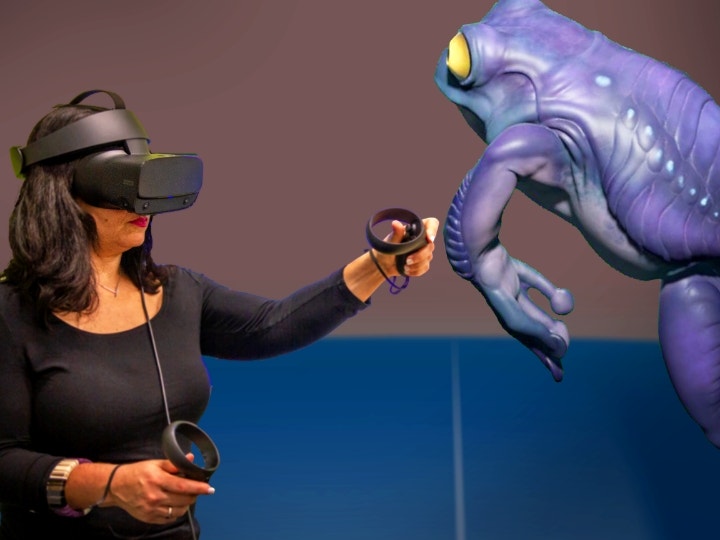
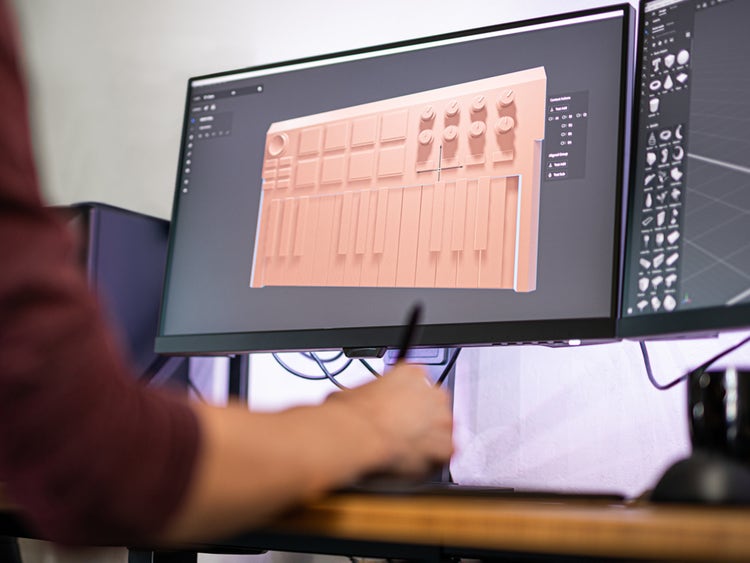
Sculpting in 3D can take a lot to see an idea come to life. Here’s a basic outline:
1. A great model often starts with some brainstorming, sketching, or mental planning. Gathering references is also a great way to prepare yourself.
2. The 3D sculpting tools you choose will depend on several factors including personal preferences, skill level, and budget constraints. Set up the scene and import references if you are using them.
3. Sculpting starts with a basic shape of digital clay, so blocking out basic shapes is the best place to start.
4. Gradually refine the basic shapes to add more precise details. How you approach this step will change depending on the software you are using, as well as the type of model you’re sculpting. Hardedge modeling or organic modeling have unique approaches.
5. If necessary, UV unwrap the model for texturing. If you’re using Substance 3D Modeler, this is done for you automatically when you export the model. Import it into Substance 3D Painter to apply materials or paint directly onto its surface.
6. Depending on how you intend to use your sculpt, the last thing to do is either export it for further use elsewhere, or stage and render the final images or animations.
Remember, this workflow can vary based on individual preferences and specific project requirements. That said, it’s a great place to start if you are learning 3D sculpting for the first time.