Nov. 04, 2021, by Priskah Khazaei and Benjamin Galinier
Back to the ’90s: Creating a Retro OnePlus Smartphone
Priskah and Benjamin take us back to the '90s with a nostalgic design of a modern-day smartphone.
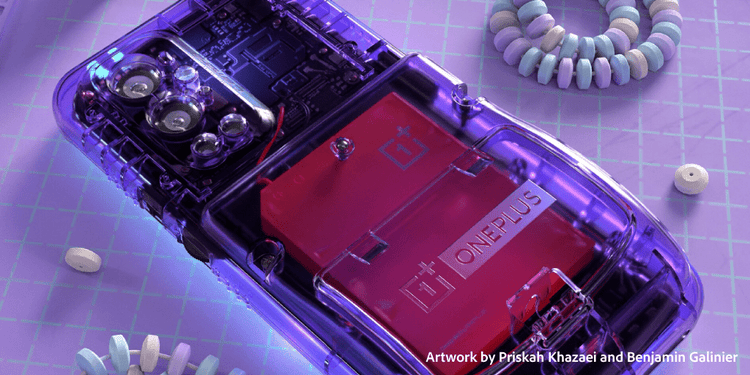
Artwork by Priskah Khazaei and Benjamin Galinier
Benjamin Galinier: Hi! And thank you for having us. I began to teach myself 3D at the age of 16, as a hobby. Then I went to a specialized school where I learned the job of environment artist.
Priskah Khazaei: I wasn’t really aware of the 3D world until I started to study it at school, but I started drawing on an old Wacom tablet at the age of 14, even if at this time the tablet wasn’t really precise and Photoshop 7 was hard to learn at first. I carried on because I was really passionate about digital art creation. At school, I was lucky enough to learn 3D and really loved the fact that we could appreciate digital artwork from any point of view.
This is what we do today, at the Ubisoft Cinematics team in Montpellier, France.
style
grid width 8, L spacing
background
#e8e8e8
This is what we do today, at the Ubisoft Cinematics team in Montpellier, France.
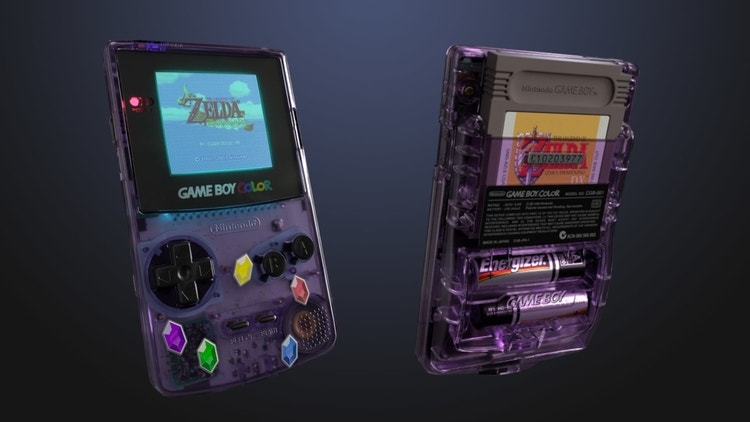
From the Nintendo Gameboy Color artwork…
The idea behind the Nintendo Gameboy Color was just to get better at modeling with Blender, really. In production, we used software like Maya or 3ds Max, and we wanted to keep up with the new trends, and doing a full-blown asset from start to finish is usually a good way to cover all the areas of the software that we need.
So we were looking for ideas on what to model, and the Gameboy sort of came up naturally. It’s an iconic piece of our childhoods that also makes up for a very interesting challenge; shape-wise it’s pretty complex and would definitely require advanced knowledge of Blender – so, for that reason, it was perfect!
We decided to do it together so we could motivate one another, and share when we learned something new (which happened every 10 minutes or so).
The Gameboy Color project was a bit in the spotlight at some point, with so many people getting nostalgic about the units they had during their childhood, and I guess that’s how it caught the eye of the OnePlus marketing team, who likes to commission artists to give their phones a bit of a makeover, presenting them in a fun or unexpected way.
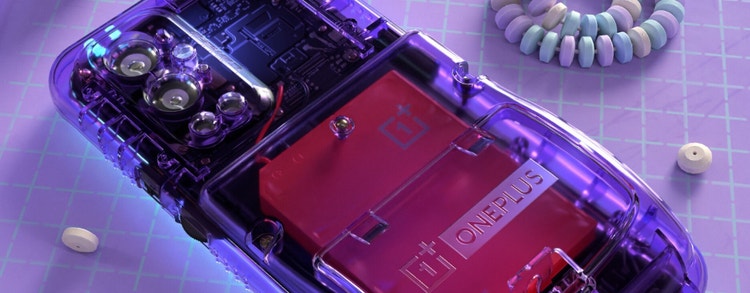
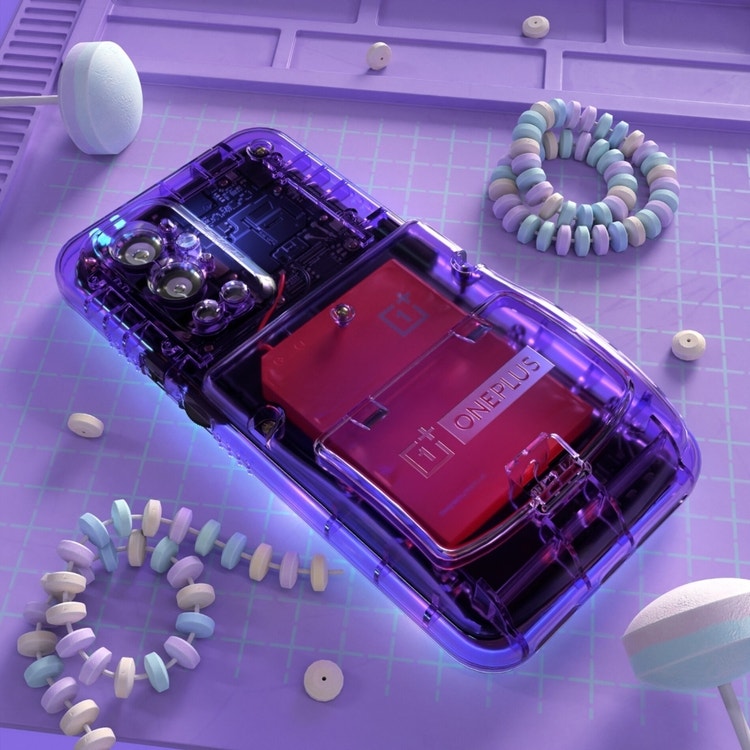
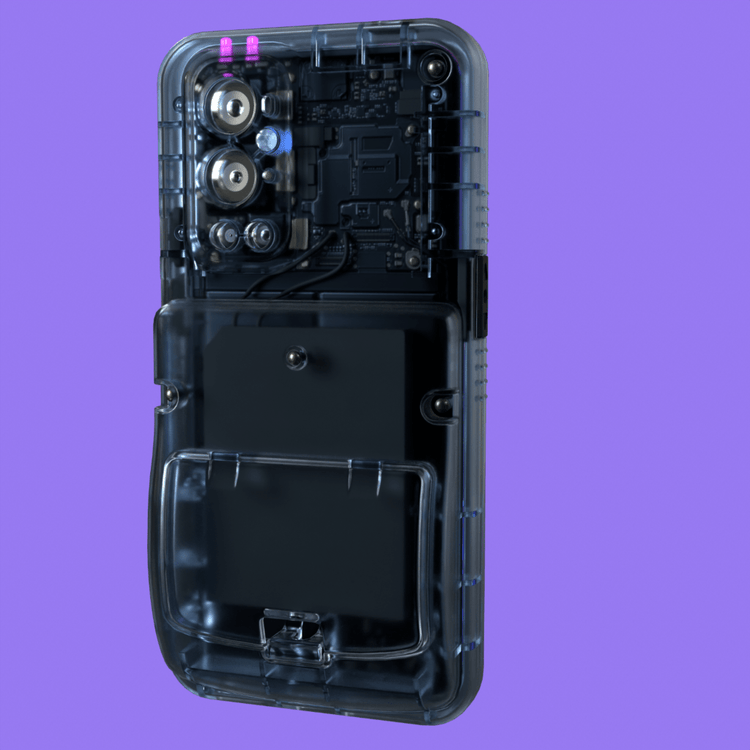
The creative brief was very open: they wanted to give the smartphone this sort of mid-90s translucent aesthetic, and that’s literally it. They wanted suggestions from us (stickers, background, animation, lighting, environment) and they gave us a lot freedom to experiment on the renders.
style
Two up, s spacing
Inspiration
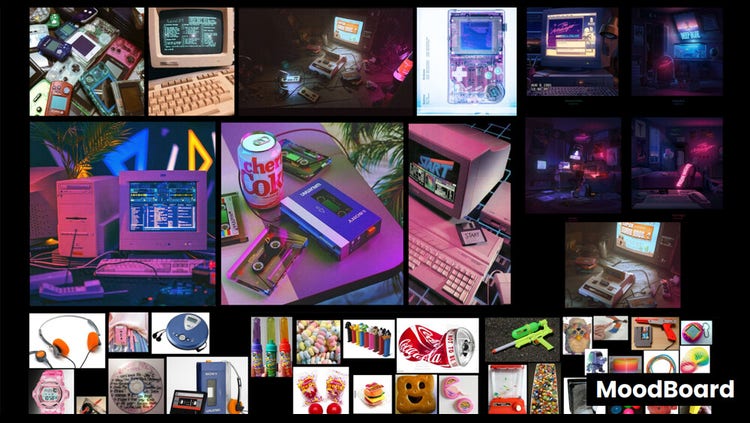
Priskah: I did some research in terms of color scheme/texturing and scene mood. On Pinterest, you can find inspiration from the early ’90s kids’ rooms to the ’90s tech designs we had: plastic-made, chunky models, pastel colors, and so on.
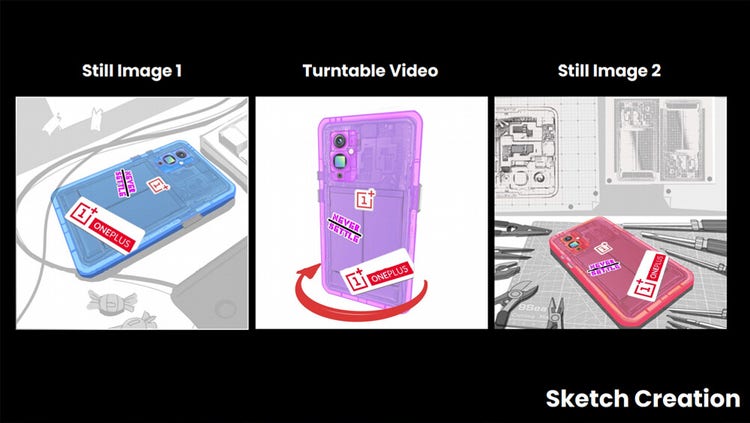
With all these images in my head, I did several sketches to help visualize the final idea: how chunky the shell would be, if it would be translucent everywhere, what the colors would be, the mood, and the context of each scene.
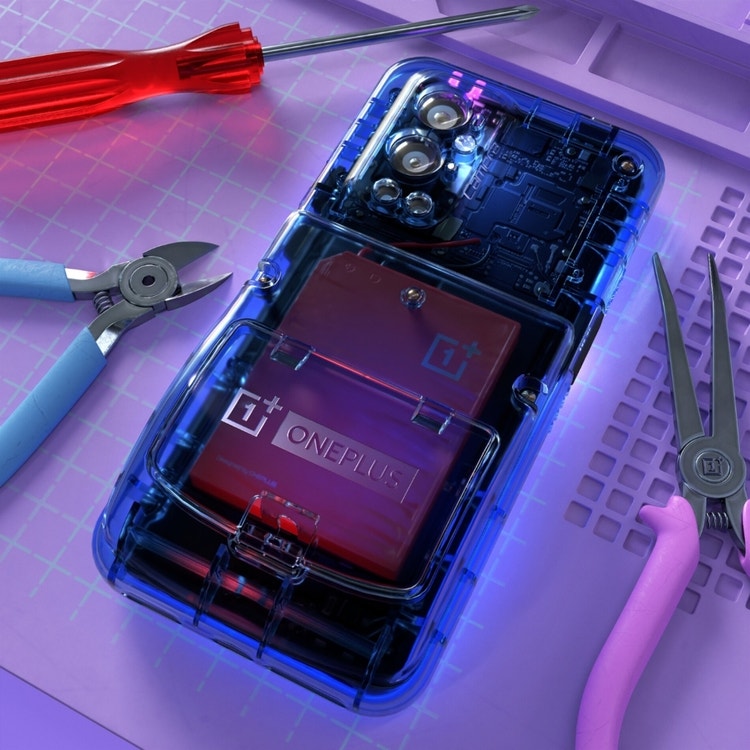
The idea of having the smartphone being part of a kid’s room or a handyman’s workshop made us think this could come out great; with several secondary objects we could create some context and get an interesting render out of it!
Benjamin: My main inspiration for the model was definitely the Gameboy Color, but I also took some design ideas from the other translucent tech, such as N64 controllers and the iMac G3.
The key to translating the design was to think in terms of ergonomy and usability; I really wanted every button and slider of the smartphone to be ‘usable’ in the retro design, and I wanted to give the impression that the whole thing was its own product, not just some kind of fancy case slapped onto a modern smartphone.
So I had to correlate the functionalities of the smartphone to a design choice on the ’90s aesthetic: for instance, the volume buttons became a volume wheel, and I borrowed the design of the famous D-pad for the ‘modes’ button. The mic on the top was ideally positioned to be an IR sensor, and at the back of the smartphone it felt right to add a battery cover, even though it’s not meant to be swappable on a smartphone.
I also gave the smartphone a bit of a bulge, because it was way too thin to pass as retro-tech.
Pipeline
In short, Priskah was in charge of the Artsy and Benjamin was in charge of the Techy.
In detail, the pipeline was as follows:
Priskah and Benjamin look for references with Pinterest and Pureref.
Priskah realizes sketches that will serve as a moodboard for the lighting and staging in Procreate.
Benjamin models and unwraps the 3D models in Blender and prepares them for texturing.
Priskah textures the models in Substance 3D Painter.
Benjamin rigs the model and animates it in Autodesk Maya.
Priskah sets up the 3D scene and lighting in Marmoset Toolbag.
Priskah renders the still images and Benjamin the animations, in Marmoset Toolbag.
Substance 3D Painter breakdown
Priskah: When it comes to texturing I always tend to separate my different materials by texture sets. This helps me organize and not forget tiny elements which could end up without any materials. Painter is really a great tool for this kind of task.
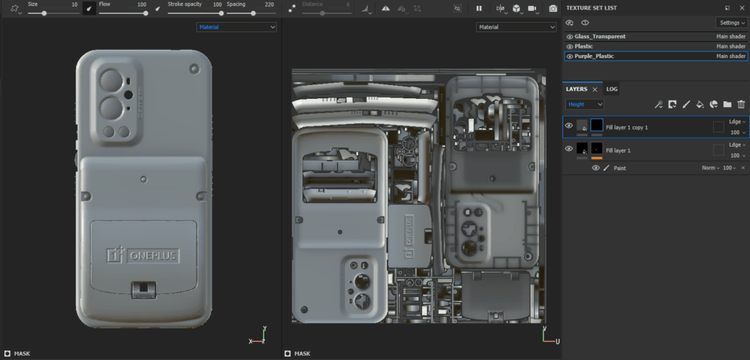
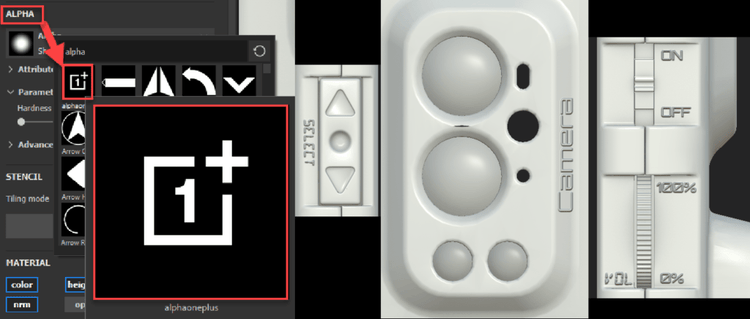
After baking my high-poly to low-poly, I played with some customized brushes to get the different details where I wanted them to be on my UVs shell.
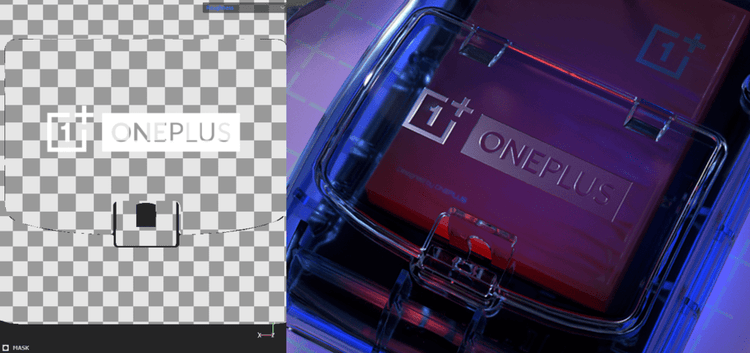
I wanted the OnePlus logo to be made of rough plastic, not translucent like the rest of the phone’s shell.
With a specific spotlight on it, it made it pop out of the rest of the shell with a nice effect.
There are other tiny alpha details I added near the phone’s controllers.
Painter makes the task of adding details really user-friendly; alphas can be used on a mask of a layer that will only tweak your normal map, for example, so that you can tweak its height even at the very end of the texturing phase.
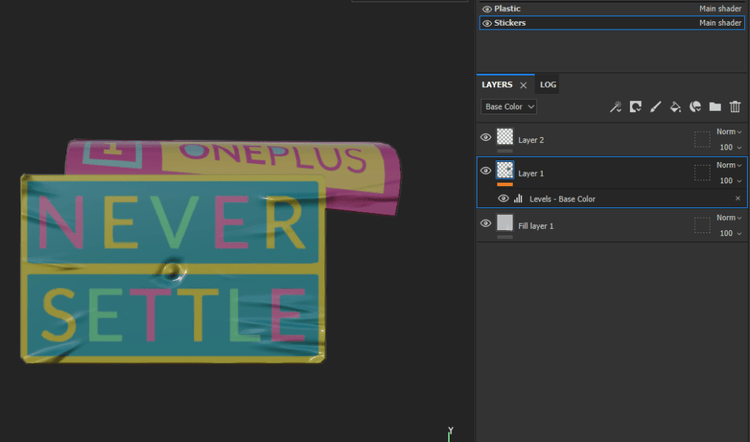
At some point, we wanted to try adding some stickers on the shell of the phone.
For this I could totally use Painter to add these kinds of details without any modeling: I just had to duplicate some planes on top of the phone to play with opacity. I hand-painted the fold on a layer dedicated to the height of my stickers to make it more realistic.
A technique that is pretty cool is to blur the hard edges of your painted folds a bit with the smudge tool to get it smooth where you want it to be.
As a Photoshop user, it was pretty handy to find this tool in Painter too.
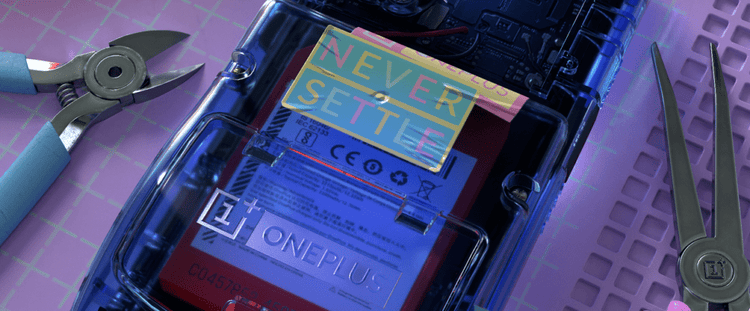
This is the same technique I used to create the phone battery to get nice, smooth plastic folds.
I even exaggerated it a bit so that we could see better through the translucent plastic for the turntable render.
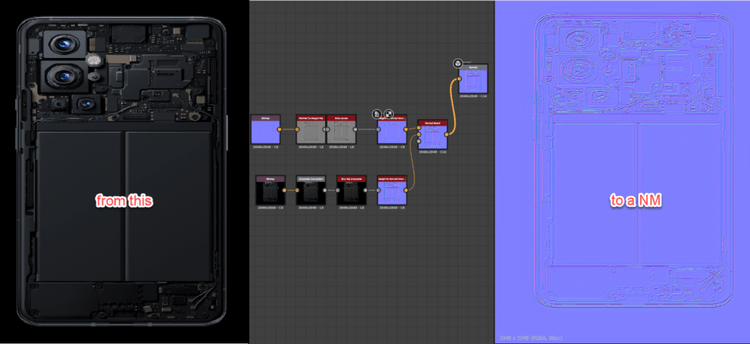
The motherboard was made from a 4K PNG that the OnePlus team gave us.
In Substance 3D Designer I could easily tweak some values, and with some nodes convert it to a normal map: I just had to tweak some values in Photoshop to create a metallic map, and the trick was done.
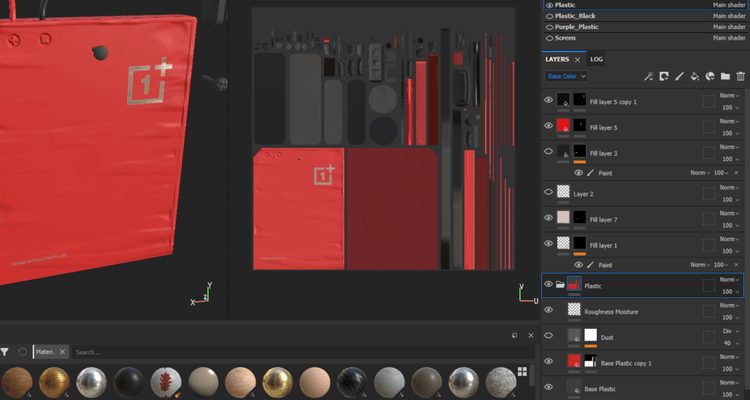
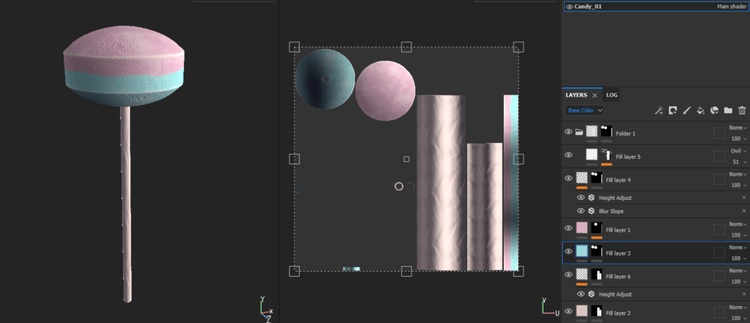
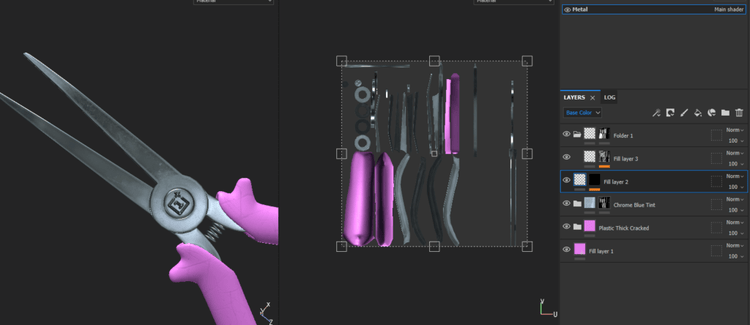
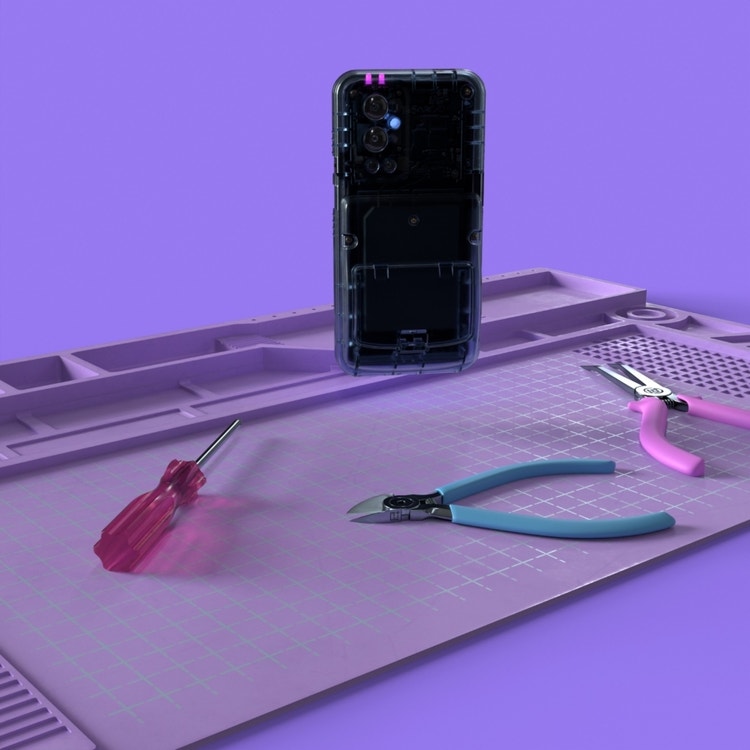
Then I had to texture all the secondary objects to assemble the final scene:
Some OnePlus tools
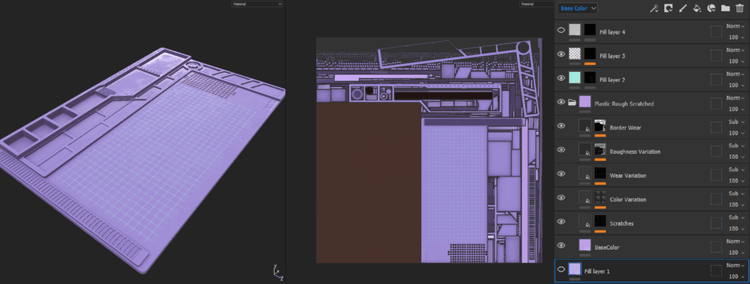
I even made a OnePlus workbench mat
(this was the only object I modeled because I wanted to try a new hardsurface workflow with Blender):
And I always tweaked the composition during the texturing process...
...to ensure I kept the general harmony between values, colors, saturation, roughness values, and so on.
Reception
The project was well received by OnePlus. The team was very enthusiastic to see our progress and even gave us some cool suggestions, such as making the battery red to reference their old smartphone models. Here’s the reaction from Charles Cullen from the OnePlus social media team:
“At OnePlus social media, we’re always looking into different creative directions and styles for social media assets that can help us connect with our current audience and reach a new one – and that’s what happened with this project.
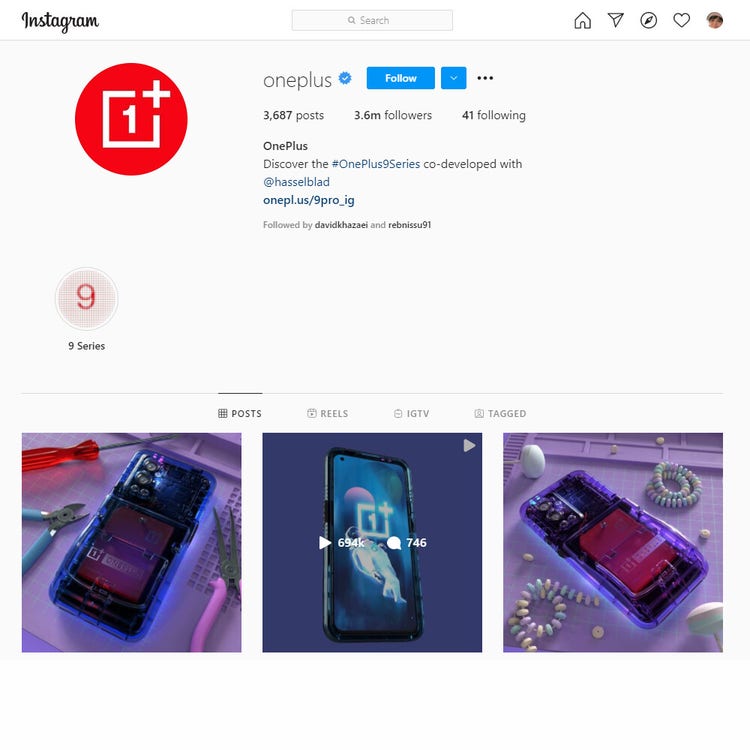
I follow a few 3D and motion design channels on Instagram that reshare artists’ work. It was there I saw work from Priskah and Benjamin. I was a big fan of the aesthetic of their 3D pieces, especially the connection to mid-90s, early-2000-era gaming. That got us on the OnePlus social media team thinking: What would one of our just launched 9 Series devices look like with that kind of translucent aesthetic?
Indeed, this was something we had previously discussed with product teams, and the conversation tended to end in ‘no’ due to the very limited quantities we were proposing. Thanks to the magic of the Adobe tools and David’s expertise, we were able to make our vision come true in a highly convincing manner.
Priskah and Benjamin really grasped what we were after and really enhanced our initial idea in a detailed proposal, and broke down expertly how the device would come to life. From the modeling, textures, animation to the general creative vision, the quality of the work speaks for itself.
The results were truly outstanding with a combined 7.56M organic impressions and 639.97K organic engagements, as well as organic engagement with tech influencers. Testament to the creative quality and photorealistic quality, many comments believed it to be a real, upcoming device.
Overall, the project was quickly executed, incredibly fun, and had a huge impact on our social channels!”
It was the first time that we had to translate an established design to another aesthetic; it was challenging but very rewarding and instructive! We’d say this is the most important thing we learned throughout this project. Our tip to the community: try to infuse what makes you happy into your art, don’t be shy to ask others for their opinions, and try to stand out from the rest by doing something unexpected, but that you feel comfortable with, because it speaks to you first 🙂
style
grid width 8, M spacing
ContentType
Article
CardImage
CardImageAltText
90s Retro OnePlus Smartphone
Details
Nov. 04 2021, by Priskah Khazaei and Benjamin Galinier
Title
90s Retro OnePlus Smartphone
Description
Relive the '90s with OnePlus! Learn how to create a retro OnePlus smartphone with this step-by-step guide.