Dream Bigger with Adobe Firefly.
Imagine, experiment and create with generative AI in the Firefly web app. New to Creative Cloud, now available for commercial use.


CREATIVE GENERATIVE AI
Generative AI is quickly becoming a vital tool for artists. Read on to learn about what generative AI art is, how to create it and how you can use it in your practice.
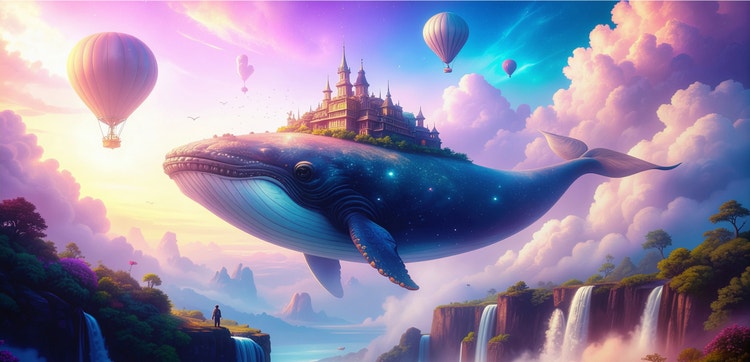
AI art uses generative technology to turn simple text prompts into original images, styles and visual concepts. It works by learning patterns from large datasets and using that knowledge to create new artwork guided by your ideas. This guide explains what AI art is, how it works and how you can start creating with Adobe Firefly.
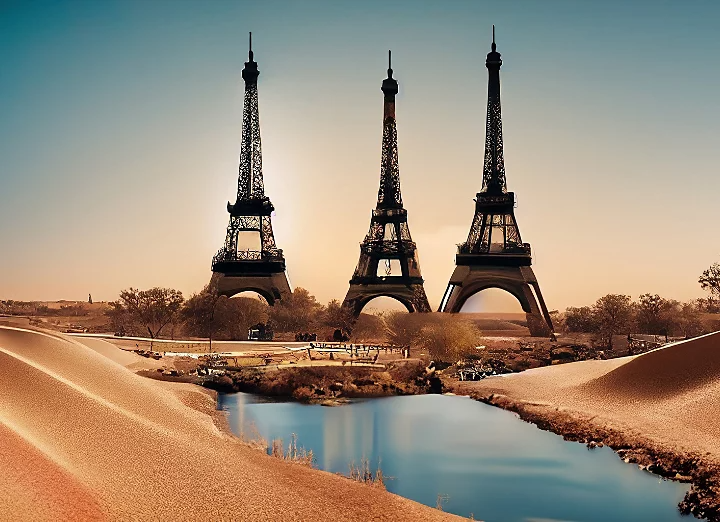
Prompt: Three eiffel towers in desert with river; photorealism
There is more than one kind of generative artificial intelligence.
For writing anything from poetry to an email, there are large language models, which are trained on text and help people generate copy. To create illustrations, painterly creations, logos and more, diffusion models trained on images help people make artwork of all kinds. Many of the popular generative AI tools use one of these models. These systems continue to evolve, improving output quality and giving artists more control over their ideas.
Artists use generative AI to make a variety of different artwork, from poems and stories to creations that look like analogue paintings or photographs and more. The speed and flexibility of generative AI enables creators to jumpstart and finish projects more quickly and opens up all kinds of exciting new avenues for creative expression. It also allows artists to explore styles and techniques that might be difficult or time consuming with traditional tools, making AI in art a powerful creative partner.
People create art from the things that surround them — trees in the forest, cityscapes, their own reflection in a mirror. Generative artificial intelligence also takes in lots of information in the form of words and images and uses those to create artwork from a prompt. This is the foundation of how AI artwork works and why it can produce such detailed results.
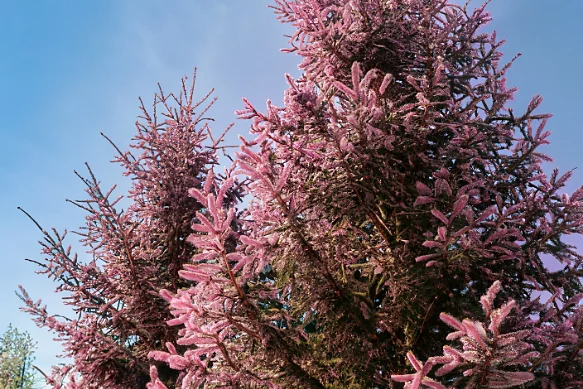
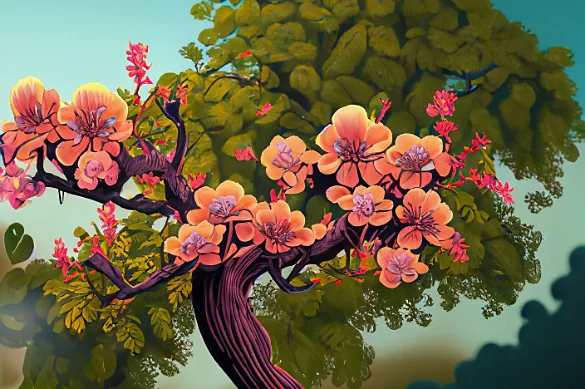
The technology that powers this ability is called a neural network. A neural network is a mathematical system — an algorithm — that finds patterns in big sets of data. When you prompt an AI generator to depict a tree, it’s using the information it has learnt about what trees look like to create a new image. And it’s your guidance as the artist that refines those images even further - telling it to generate a pink fir tree, for instance or a tree blooming with tropical flowers. These tools are packed with information, but it takes the imagination of the user to create artificial intelligence art. This combination of user intent and AI pattern recognition is what drives generative AI art and makes it so versatile.
Artists have been experimenting with forms of artificial intelligence in their work for decades, pondering the implications and applications of such technology long before the general public was. These early explorations laid the groundwork for what we now recognise as modern generative AI art.
Artist Vera Molnár began experimenting with early programming languages to produce randomly generated artwork in 1968. Considered a pioneer in generative art, her geometric creations are included in major museum collections.
Flash forward a few decades and you can find AI generated art within the Museum of Modern Art in New York. In 2023, the museum displayed the exuberant, ever-changing artwork of Refik Anadol on an enormous screen. The abstract creation was made with artificial intelligence trained on artworks held within the museum’s collection. This kind of installation shows how AI in art has become part of mainstream cultural spaces.
AI artworks have been auctioned by Sotheby’s and exhibited at the Venice Biennale. Artificial intelligence has been folded into arts course curriculum at institutions like Columbia University and the Rhode Island School of Design. Many art schools now include modules on how generative AI can be used in the field of art, helping students understand its creative potential.
These are just a few examples of how artificial intelligence has affected creative work. Like other technological advances, AI has inspired artists to explore both how art is created and what is defined as art. As generative AI art continues to grow, more artists are embracing it to experiment with new forms, styles and concepts.
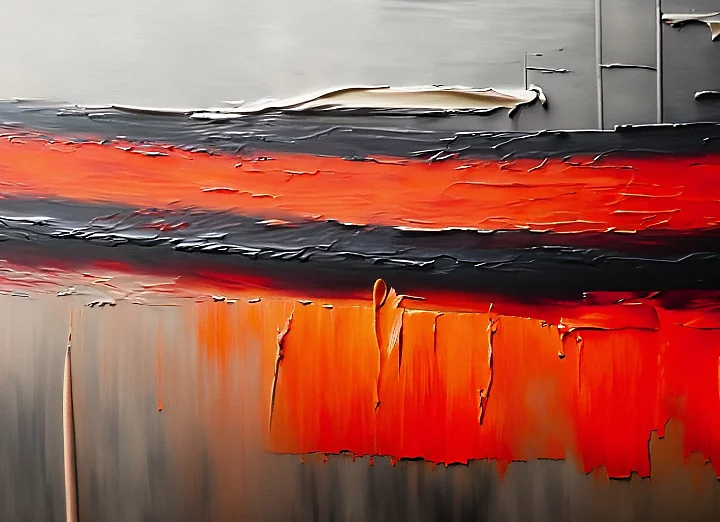
Prompt: a beautiful gallery oil painting, red, jade, orange and grey, sharp lines and blended tones
Get inspired by a few examples that showcase what you can create with generative AI art in Firefly.
Generative adversarial networks (GANs): GANs are a set of two neural networks, trained on the same data, that work together. One generates a photorealistic image and the other tries to figure out if that image is real or created. For instance, the first may generate an image of a horse and the second would try to determine if the image was a photograph or digitally created. This helps the system make more realistic images. GANs are often used in experiments where highly realistic AI generated artwork is required.
Variational autoencoders (VAEs): A variational autoencoder is made up of two neural networks working in tandem, each with a different job. One is an encoder, which takes in information and the other is a decoder, which is able to reinterpret that information into all new content. Like GANs, they produce photorealistic images. VAEs are useful for tasks that involve reconstructing or transforming images in creative ways.
Image synthesis: Image synthesis describes the act of creating new images from large datasets of other images. This technique is central to how generative AI art is produced, allowing systems to blend patterns, styles and features into new visual results.
Creative coding: Artists who create the programmes that generate their artwork are described as creative coders. The intent of creative coding is not to produce a functional result, but an expressive one. This approach shows another side of AI in art where human programming choices drive creative outcomes.
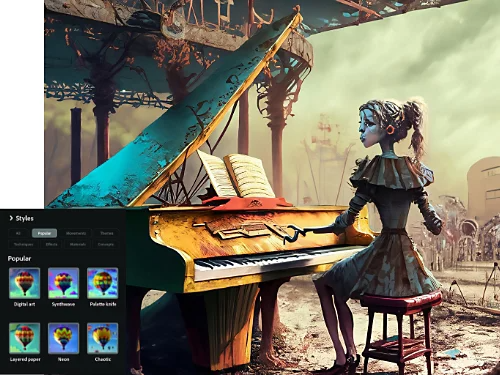
With generative AI it’s easy to get outside your artistic comfort zone. Explore new looks with Firefly’s AI image generator by choosing options from the Style menu like Steampunk, Layered paper or Stippling. Trying different styles is one of the simplest ways to discover new AI art examples and learn how to do AI art more effectively.
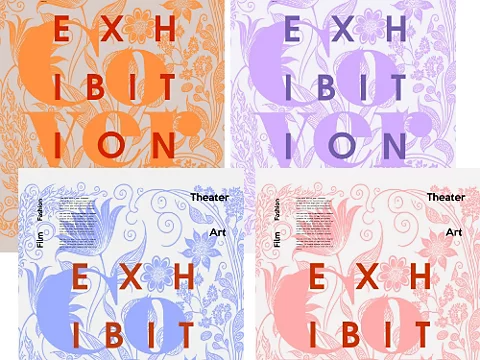
Use generative AI to quickly create mockups for clients or reference images for your artwork. Use Firefly powered tools like Generative Recolor and Text to Pattern (beta) within Illustrator to quickly iterate on your art and create stylish motifs.
Invite a friend to edit one of your artworks using Generative Fill in Photoshop, a Firefly powered tool that lets you select any part of an image and replace it using a simple text prompt. With generative AI, you can create with others like never before.
Generative AI gives you access to more types of artistic expression. A skilled graphic designer using AI can try their hand at making dramatic edits to a photograph or a total beginner can experiment with multiple kinds of artmaking using Text to Image. This accessibility is a key part of what makes AI art such an exciting and inclusive creative movement.
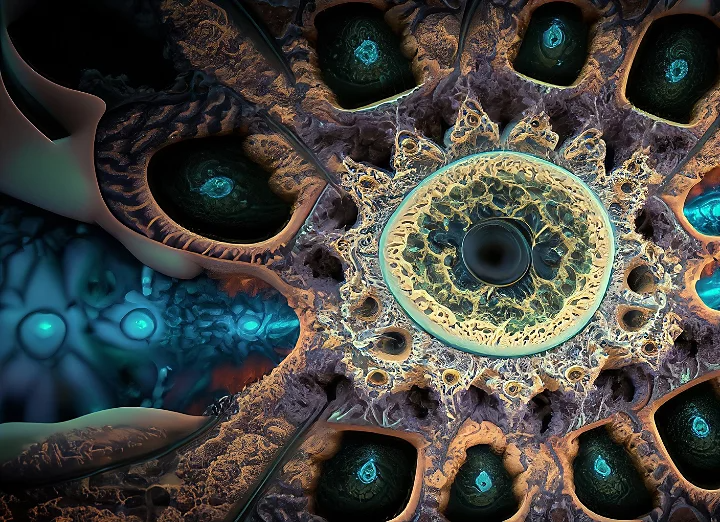
Prompt: infinite intricacy fractal pattern, hyper-realistic, science_fiction, 4k

Based on your location, we think you may prefer the United States website, where you'll get regional content, offerings, and pricing.


