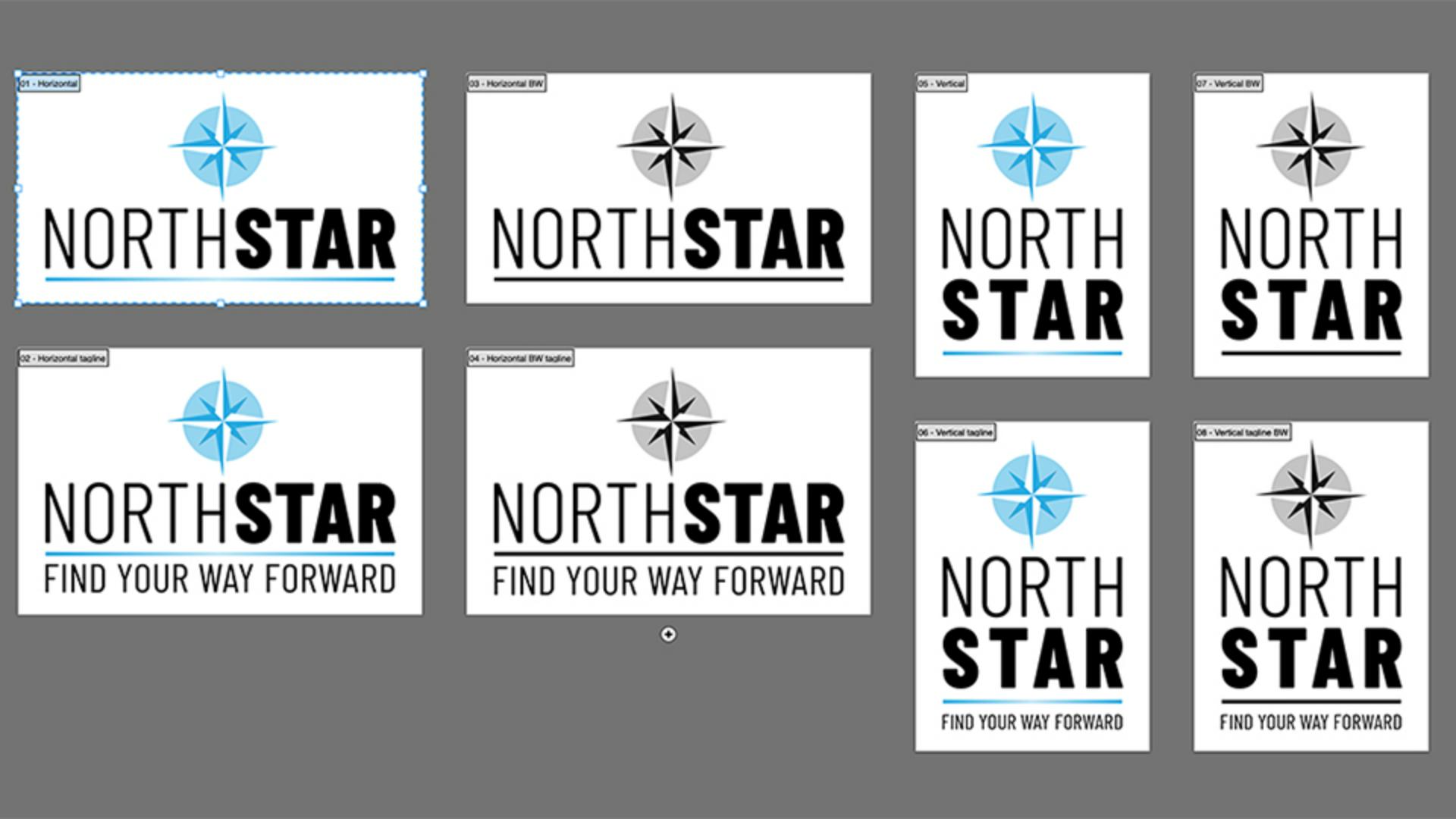
In this short tutorial, I'll walk you through how to use artboards in Adobe Illustrator, what they are, how to manage them, and how to export your designs efficiently.
Understanding what artboards are and why they matter
Artboards are like pages.
They let you design multiple layouts, like variations of a logo or different sizes of a graphic, all within a single Illustrator document.
For this document, I'm using the Essentials Classic Workspace.
Artboards determine the area that can be printed.
They can be of different sizes and orientations.
Viewing and navigating between artboards
To view the active artboard, choose Fit Artboard in Window or Fit All in Window to see all artboards.
You navigate artboards using the Properties panel or with the buttons at bottom-left.
If you're in the Artboard Tool, pressing Option or Alt and the down or up arrow activates the next or previous artboard.
You can create multiple artboards when starting a new document,
Creating, resizing, and duplicating artboards
or add them later with the Artboard Tool.
Resize by dragging the handles, choose a predefined size or enter exact dimensions on the Control panel.
If your artwork and artboards are of different sizes, you might want to choose Object, Artboards, Fit to Selected Artwork.
To duplicate an artboard, hold Option or Alt and drag or hold Option or Alt and click the + symbol.
To copy the artwork along with the artboard, make sure the Move artwork button is selected.
Note that hidden or locked items will not be copied.
That is, unless you change this preference.
Check Scale artwork to scale artboard and artwork together.
Hold Shift to scale proportionally.
Press Command or Control D to repeat the transformation.
Organizing artwork across multiple artboards
The Artboards panel helps you stay organized.
Name artboards, reorder them by dragging, double-click to the right of the name to center the artboard in your workspace or choose Rearrange.
You can design across artboards easily.
Copy and paste in place, to paste content to the active artboard.
Or choose the Artboard Tool, then Shift-click to paste to multiple artboards.
You can also paste on all artboards, which could be useful if your artboards are the same size.
Exporting artboards efficiently for different outputs
When it's time to export your work, choose File, Export, Export for Screens...
Here you can export selected or all artboards, choose file formats, and set different sizes.
If you've renamed your artboards, Illustrator uses those names for the file names.
In the Prefix dropdown, you can also add a prefix to make it easier to organize your files.
Artboards make it easier to experiment with multiple iterations and to keep the different parts of a project together in a single document, allowing a clean and efficient Illustrator workflow.
The Illustrator team would love to hear what you think about this and other core workflows.
You can give feedback on the Illustrator UserVoice page.
I'm Nigel French.
Thanks for watching.
What you’ll learn
Get comfortable with artboards
Discover how artboards function like pages, helping you design multiple layouts in a single document.
Customize, copy, and organize
Resize artboards, duplicate with or without artwork, and rename or rearrange them for better organization.
Export like a pro
Use Export for Screens to output selected or all artboards, with custom formats, sizes, and filenames.
You can control how Adobe websites use cookies and similar technologies by making choices below. But note that if you disable cookies and similar technologies entirely, Adobe websites may not function properly.
Cookies are small text files stored by your web browser when you use websites. There are also other technologies that can be used for similar purposes like HTML5 Local Storage and local shared objects, web beacons, and embedded scripts. These technologies help us do things like remembering you and your preferences when you return to our sites, measure how you use the website, conduct market research, and gather information about the ads you see and interact with.
You can make choices in the menu below about what cookies and other technologies you want us to use on Adobe sites when you visit them from this browser. You can always change those choices later by clicking on the Cookie Preferences link at the bottom of the page.
If enabled:
We can improve your experience by tailoring the site and the content to things we think might be of interest
We can better keep track of your preferences — like what language you prefer to use
We will better understand your likely interests so we can provide you more relevant Adobe ads and content on non-Adobe websites and in non-Adobe apps
It will help us improve the performance of our website and those of our partners who use the Adobe Experience Cloud
If disabled:
We won’t be able to remember you from session to session so the experience may not be tailored to your interests
You’ll still have access to the content of the site but certain features that depend on cookies may not function
You’ll still see ads, they just may not be as relevant to you
General information
You can control how Adobe websites use cookies and similar technologies by making choices below. But note that if you disable cookies and similar technologies entirely, Adobe websites may not function properly.
Cookies are small text files stored by your web browser when you use websites. There are also other technologies that can be used for similar purposes like HTML5 Local Storage, web beacons, and embedded scripts. These technologies help us do things like remembering you and your preferences when you return to our sites, measure how you use the website, conduct market research, and gather information about the ads you see and interact with.
You can make choices in the menu below about what cookies and other technologies you want us to use on Adobe sites when you visit them from this browser. You can always change those choices later by clicking on the Cookie Preferences link at the bottom of the page.
If enabled:
We can improve your experience by tailoring the site and the content to things we think might be of interest
We can better keep track of your preferences — like what language you prefer to use
We will better understand your likely interests so we can provide you more relevant Adobe ads and content on non-Adobe websites and in non-Adobe apps
It will help us improve the performance of our website and those of our partners who use the Adobe Experience Cloud
If disabled:
We won’t be able to remember you from session to session so the experience may not be tailored to your interests
We’ll still count your use of our site and services
You’ll still have access to the content of the site but certain features that depend on cookies may not function
You’ll still see ads, they just may not be as relevant to you
Operate the site and core servicesOperate site and measure engagement
Always active
These cookies are required, and they are used to enable the site and related services core functionality. Without them the site could not operate, so they cannot be disabled.
These cookies enable the site and related services’ core functionality and collect statistics about user engagement, such as counting active use to help us understand trends. These cookies cannot be disabled.
Measure performance
These cookies are used to analyze site usage to measure and improve performance. Without them Adobe cannot know what content is most valued and how often unique visitors return to the site, making it hard to improve information we offer to you.
These cookies are used to analyze site usage to measure and improve performance. Without them Adobe cannot know what content is most valued, making it hard to improve information we offer to you.
Extend functionality
These cookies are used to enhance the functionality of Adobe sites such as remembering your settings and preferences to deliver a personalized experience; for example, your username, your repeated visits, preferred language, your country, or any other saved preference.
Personalize advertising
These cookies are used to enable Adobe and our partners to serve ads more relevant to your interests. Without them you will still see ads, but they might not be as relevant to you.
Personalize advertising
These cookies are used to enable Adobe and our partners to serve ads more relevant to your interests. Without them you will still see ads, but they might not be as relevant to you.