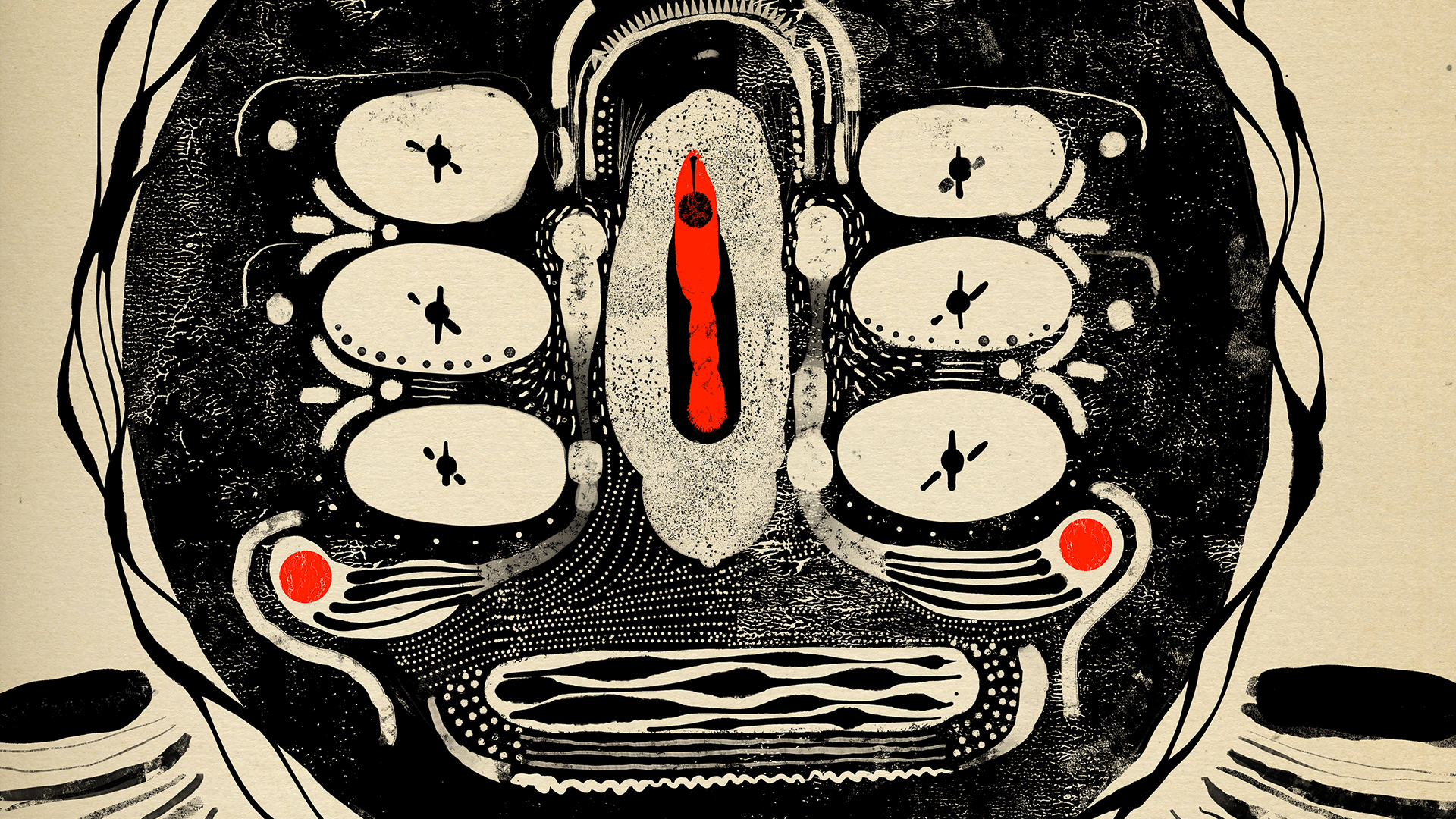
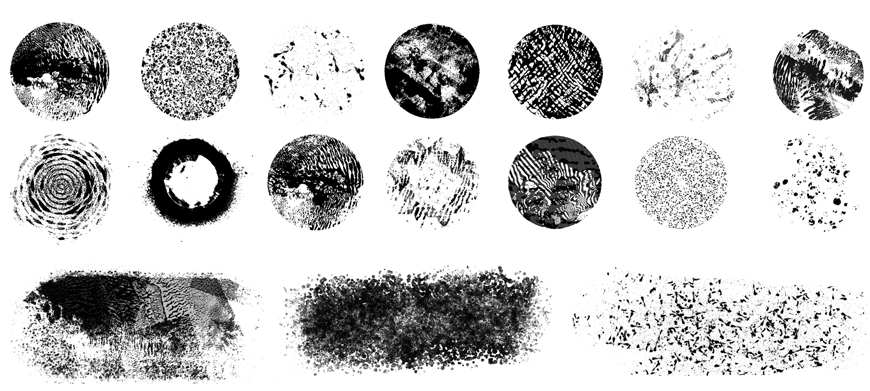
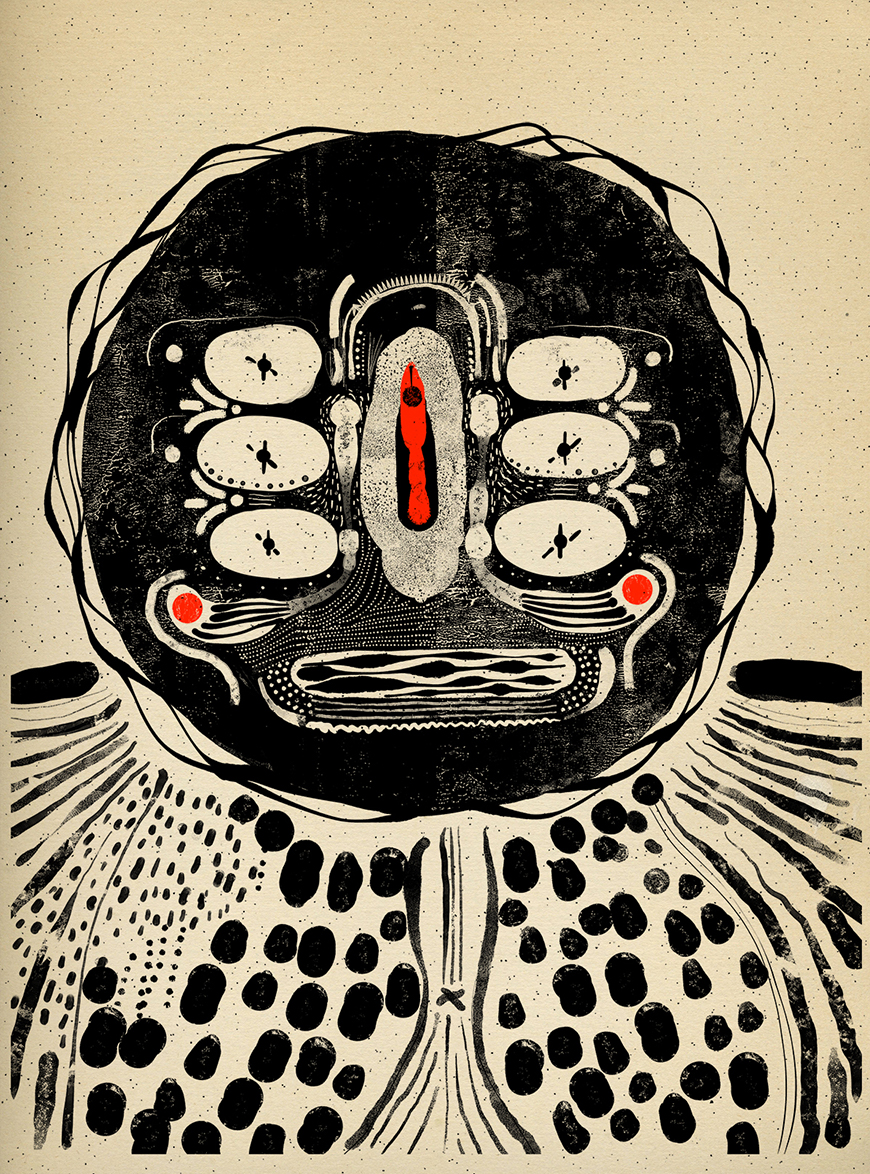
Bring texture to your artwork with brushes from Alejandro Chavetta.
Note: Project files included with this tutorial are for practice purposes only.
If you’d like to experiment with the brushes Alejandro provided, add the library to your work. This series focuses on his Epic brushes, which will be available from the Libraries panel (Window > Libraries) in Adobe Photoshop and in the Libraries section of the Pixel brushes in Adobe Fresco.
To practice with his textured collage, copy the art to the Your Work section of Photoshop or Fresco.
Create brushes from textures.
I have created collages for the past 25 years on almost a daily basis. Over the years, my artistic practice has evolved, but it has always had a digital component to it since I started using Adobe Photoshop in the 1990s. When Adobe Fresco came out, I was a bit apprehensive since I had gotten used to my Adobe Sketch + Photoshop flow. It took only a couple of weeks of use for me to fully embrace it as my “art machine.” Fresco brought together the best parts of my favorite flows and tools in one very cohesive way. I was now able to add a much more fluid layer of artistic expression to my collages, drawings, and scratchings.
The more gestural and illustrative my work became, I realized I was gravitating towards the same distressed brush styles to work on a new look or series of work. Then it dawned on me that I needed to start making my own brushes to really call this work my own. Making art is incredibly rewarding, but making your own tools to make art adds a bit more fun to the process. All of the work to create my brushes was done in Photoshop. I spent a great deal of time using my phone camera to collect textures and ink stains on my walks around the city or in my studio.
Experiment with brush styles in your work.
The goal for my brushes was always to reflect not only my stylistic preferences but my own way of working. Some of these brushes move slowly, some are choppy, some have a completely different use when maxed out in size or used as a liner, some are made from the pitted surface of crosswalk paint, and some are textured from a 30-year-old brayer. Perhaps what I want you to take away from this is that experimentation is key to making the most of your creative endeavors, and making your own tools can be part of that process.
So, take these brushes for a spin and show us what you make. Then be sure to see what you can do with my second set of Epic brushes.
You can control how Adobe websites use cookies and similar technologies by making choices below. But note that if you disable cookies and similar technologies entirely, Adobe websites may not function properly.
Cookies are small text files stored by your web browser when you use websites. There are also other technologies that can be used for similar purposes like HTML5 Local Storage and local shared objects, web beacons, and embedded scripts. These technologies help us do things like remembering you and your preferences when you return to our sites, measure how you use the website, conduct market research, and gather information about the ads you see and interact with.
You can make choices in the menu below about what cookies and other technologies you want us to use on Adobe sites when you visit them from this browser. You can always change those choices later by clicking on the Cookie Preferences link at the bottom of the page.
If enabled:
We can improve your experience by tailoring the site and the content to things we think might be of interest
We can better keep track of your preferences — like what language you prefer to use
We will better understand your likely interests so we can provide you more relevant Adobe ads and content on non-Adobe websites and in non-Adobe apps
It will help us improve the performance of our website and those of our partners who use the Adobe Experience Cloud
If disabled:
We won’t be able to remember you from session to session so the experience may not be tailored to your interests
You’ll still have access to the content of the site but certain features that depend on cookies may not function
You’ll still see ads, they just may not be as relevant to you
General information
You can control how Adobe websites use cookies and similar technologies by making choices below. But note that if you disable cookies and similar technologies entirely, Adobe websites may not function properly.
Cookies are small text files stored by your web browser when you use websites. There are also other technologies that can be used for similar purposes like HTML5 Local Storage, web beacons, and embedded scripts. These technologies help us do things like remembering you and your preferences when you return to our sites, measure how you use the website, conduct market research, and gather information about the ads you see and interact with.
You can make choices in the menu below about what cookies and other technologies you want us to use on Adobe sites when you visit them from this browser. You can always change those choices later by clicking on the Cookie Preferences link at the bottom of the page.
If enabled:
We can improve your experience by tailoring the site and the content to things we think might be of interest
We can better keep track of your preferences — like what language you prefer to use
We will better understand your likely interests so we can provide you more relevant Adobe ads and content on non-Adobe websites and in non-Adobe apps
It will help us improve the performance of our website and those of our partners who use the Adobe Experience Cloud
If disabled:
We won’t be able to remember you from session to session so the experience may not be tailored to your interests
We’ll still count your use of our site and services
You’ll still have access to the content of the site but certain features that depend on cookies may not function
You’ll still see ads, they just may not be as relevant to you
Operate the site and core servicesOperate site and measure engagement
Always active
These cookies are required, and they are used to enable the site and related services core functionality. Without them the site could not operate, so they cannot be disabled.
These cookies enable the site and related services’ core functionality and collect statistics about user engagement, such as counting active use to help us understand trends. These cookies cannot be disabled.
Measure performance
These cookies are used to analyze site usage to measure and improve performance. Without them Adobe cannot know what content is most valued and how often unique visitors return to the site, making it hard to improve information we offer to you.
These cookies are used to analyze site usage to measure and improve performance. Without them Adobe cannot know what content is most valued, making it hard to improve information we offer to you.
Extend functionality
These cookies are used to enhance the functionality of Adobe sites such as remembering your settings and preferences to deliver a personalized experience; for example, your username, your repeated visits, preferred language, your country, or any other saved preference.
Personalize advertising
These cookies are used to enable Adobe and our partners to serve ads more relevant to your interests. Without them you will still see ads, but they might not be as relevant to you.
Personalize advertising
These cookies are used to enable Adobe and our partners to serve ads more relevant to your interests. Without them you will still see ads, but they might not be as relevant to you.