I'm Rob Williamson and I'm a photographer in the San Francisco Bay area.
If you sketch something, then it becomes a little bit more real, and it just brings you one step closer to a final image.
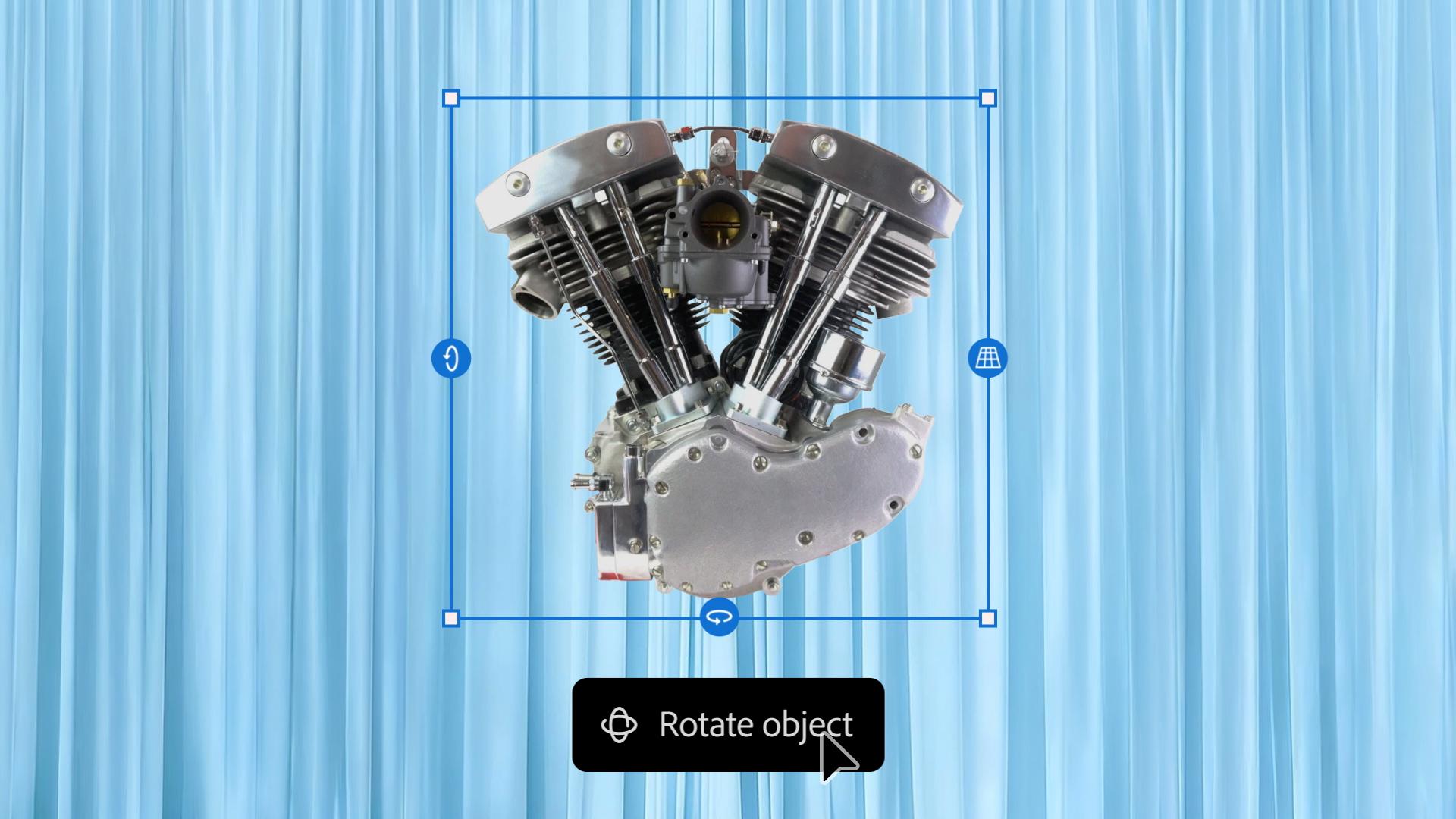
I use Rotate Object in Adobe Photoshop to help me preplan my shoots, like a shoot of a very heavy, cumbersome 160 pound motorcycle engine, and I was able to rotate it and check out the height and get the angle that I wanted locked in just right.
When I first saw Rotate Object, I think I audibly gasped.
It was like being able to see the dark side of the moon.
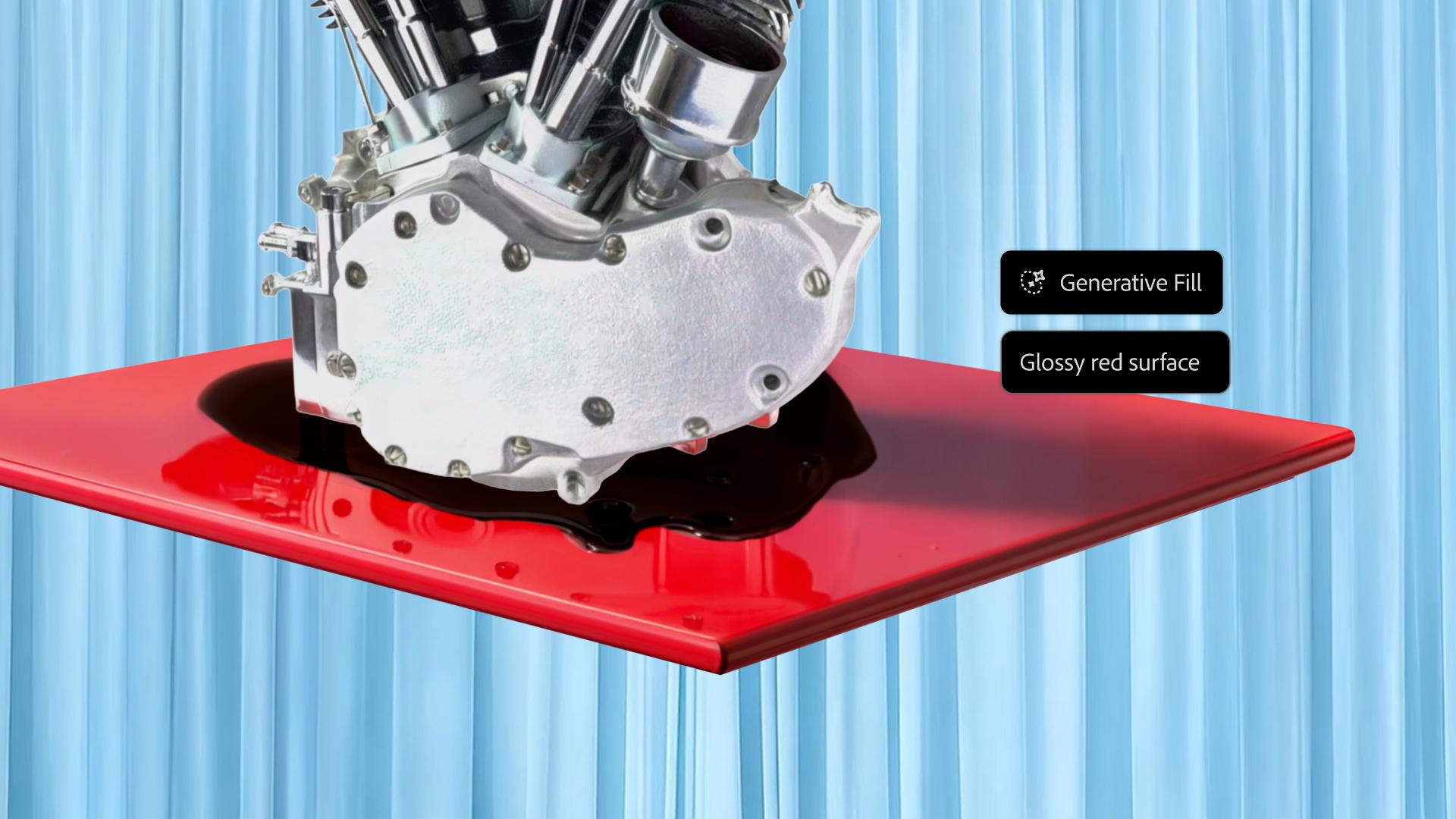
I was able to use another Photoshop feature called Generative Fill, where I put a prompt in to put a puddle of oil.
These new features have just been able to give me so much more speed in the way that I can get through the pre-planning process.
It has also given me a lot of opportunity to try new things that I wouldn't be able to do in the moment.
Adobe Photoshop helps me complete my visions.
"When I first saw Rotate Object, I audibly gasped. It’s like being able to see the dark side of the moon."
Step 1: Play around with perspective.
To start, Rob quickly mocked up a composition he had in mind, featuring a motorcycle engine on a table. Then he used Rotate Object to tilt and shift the motor into new angles, until the composition felt just right.
Transcript not available
Step 2: Build out the scene.
Next, Rob added details to the composition. He masked out the legs of the table, then used prompts in Generative Fill to add a puddle of oil and a glossy, reflective finish to the tabletop.
Transcript not available
Step 3: Bring it to life.
“If you sketch something, then it becomes a little more real, and it brings you one step closer to the final image,” says Rob. With the plan in place, he realized his vision. He shot each element, edited the images in Lightroom, and brought everything into Photoshop to composite the final image.
You can control how Adobe websites use cookies and similar technologies by making choices below. But note that if you disable cookies and similar technologies entirely, Adobe websites may not function properly.
Cookies are small text files stored by your web browser when you use websites. There are also other technologies that can be used for similar purposes like HTML5 Local Storage and local shared objects, web beacons, and embedded scripts. These technologies help us do things like remembering you and your preferences when you return to our sites, measure how you use the website, conduct market research, and gather information about the ads you see and interact with.
You can make choices in the menu below about what cookies and other technologies you want us to use on Adobe sites when you visit them from this browser. You can always change those choices later by clicking on the Cookie Preferences link at the bottom of the page.
If enabled:
We can improve your experience by tailoring the site and the content to things we think might be of interest
We can better keep track of your preferences — like what language you prefer to use
We will better understand your likely interests so we can provide you more relevant Adobe ads and content on non-Adobe websites and in non-Adobe apps
It will help us improve the performance of our website and those of our partners who use the Adobe Experience Cloud
If disabled:
We won’t be able to remember you from session to session so the experience may not be tailored to your interests
You’ll still have access to the content of the site but certain features that depend on cookies may not function
You’ll still see ads, they just may not be as relevant to you
General information
You can control how Adobe websites use cookies and similar technologies by making choices below. But note that if you disable cookies and similar technologies entirely, Adobe websites may not function properly.
Cookies are small text files stored by your web browser when you use websites. There are also other technologies that can be used for similar purposes like HTML5 Local Storage, web beacons, and embedded scripts. These technologies help us do things like remembering you and your preferences when you return to our sites, measure how you use the website, conduct market research, and gather information about the ads you see and interact with.
You can make choices in the menu below about what cookies and other technologies you want us to use on Adobe sites when you visit them from this browser. You can always change those choices later by clicking on the Cookie Preferences link at the bottom of the page.
If enabled:
We can improve your experience by tailoring the site and the content to things we think might be of interest
We can better keep track of your preferences — like what language you prefer to use
We will better understand your likely interests so we can provide you more relevant Adobe ads and content on non-Adobe websites and in non-Adobe apps
It will help us improve the performance of our website and those of our partners who use the Adobe Experience Cloud
If disabled:
We won’t be able to remember you from session to session so the experience may not be tailored to your interests
We’ll still count your use of our site and services
You’ll still have access to the content of the site but certain features that depend on cookies may not function
You’ll still see ads, they just may not be as relevant to you
Operate the site and core servicesOperate site and measure engagement
Always active
These cookies are required, and they are used to enable the site and related services core functionality. Without them the site could not operate, so they cannot be disabled.
These cookies enable the site and related services’ core functionality and collect statistics about user engagement, such as counting active use to help us understand trends. These cookies cannot be disabled.
Measure performance
These cookies are used to analyze site usage to measure and improve performance. Without them Adobe cannot know what content is most valued and how often unique visitors return to the site, making it hard to improve information we offer to you.
These cookies are used to analyze site usage to measure and improve performance. Without them Adobe cannot know what content is most valued, making it hard to improve information we offer to you.
Extend functionality
These cookies are used to enhance the functionality of Adobe sites such as remembering your settings and preferences to deliver a personalized experience; for example, your username, your repeated visits, preferred language, your country, or any other saved preference.
Personalize advertising
These cookies are used to enable Adobe and our partners to serve ads more relevant to your interests. Without them you will still see ads, but they might not be as relevant to you.
Personalize advertising
These cookies are used to enable Adobe and our partners to serve ads more relevant to your interests. Without them you will still see ads, but they might not be as relevant to you.