Dina Chang and Tim Saccenti of Setta Studio break the tools and the rules to create videos that conjure strange new worlds.
Note: This file is made for desktop use. Share link to access later.
Transcript not available
“We treat the software almost like a darkroom. The Adobe tools also become an extension of your process.”
Assemble rough cuts, finish with style.
Shape your story in Adobe Premiere with Text-Based Editing, and then apply instant color grading with a Lookup Table (LUT).
Transcript not available
Set up your project.
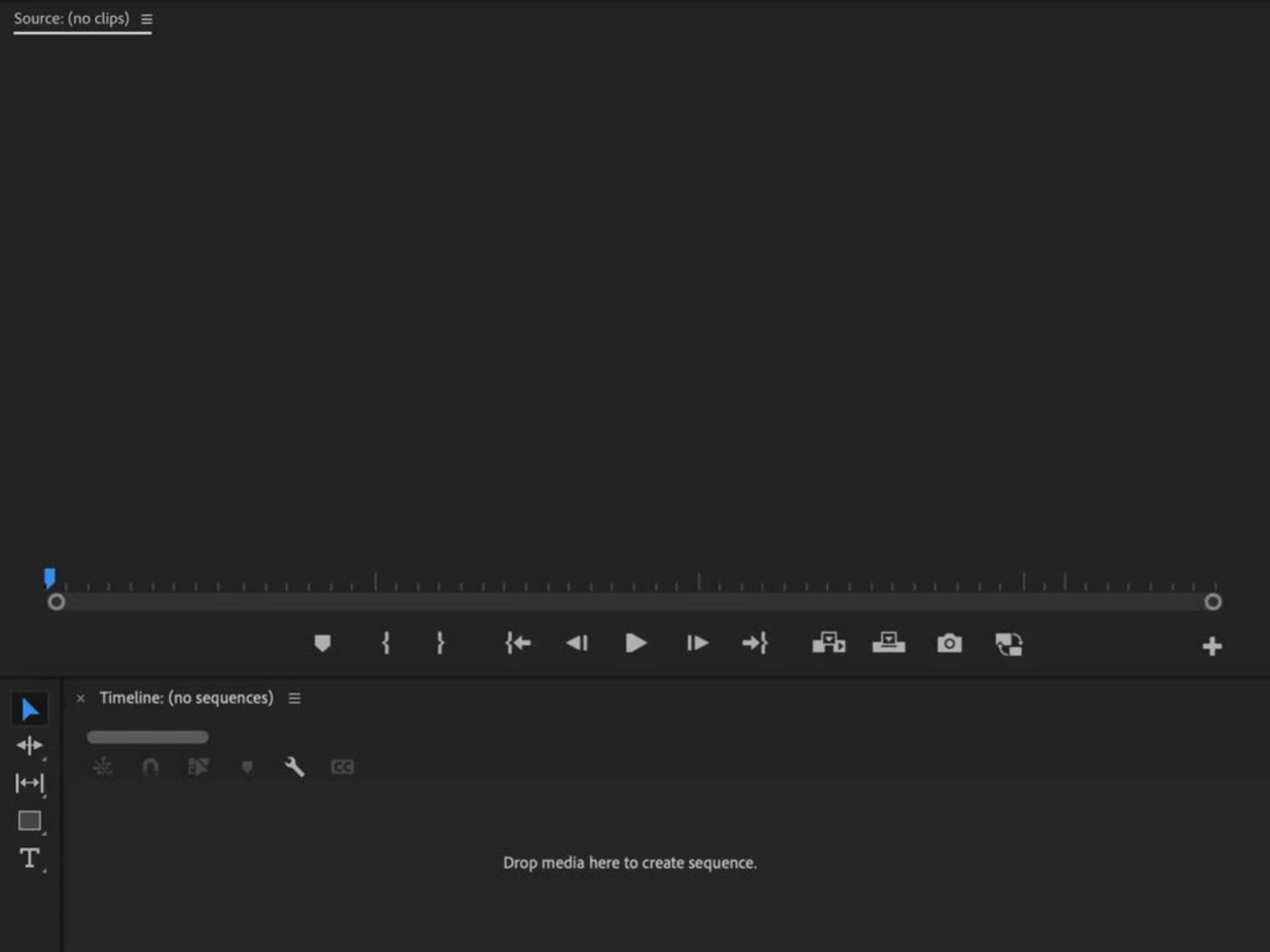
In Premiere, start a new project and choose Premiere > Settings > Transcription. Check “Automatically transcribe clips’ and select “Auto-transcribe all imported clips’ from the Transcription preferences. Set Speaker Labeling to “No, don’t separate speakers’ and click OK.
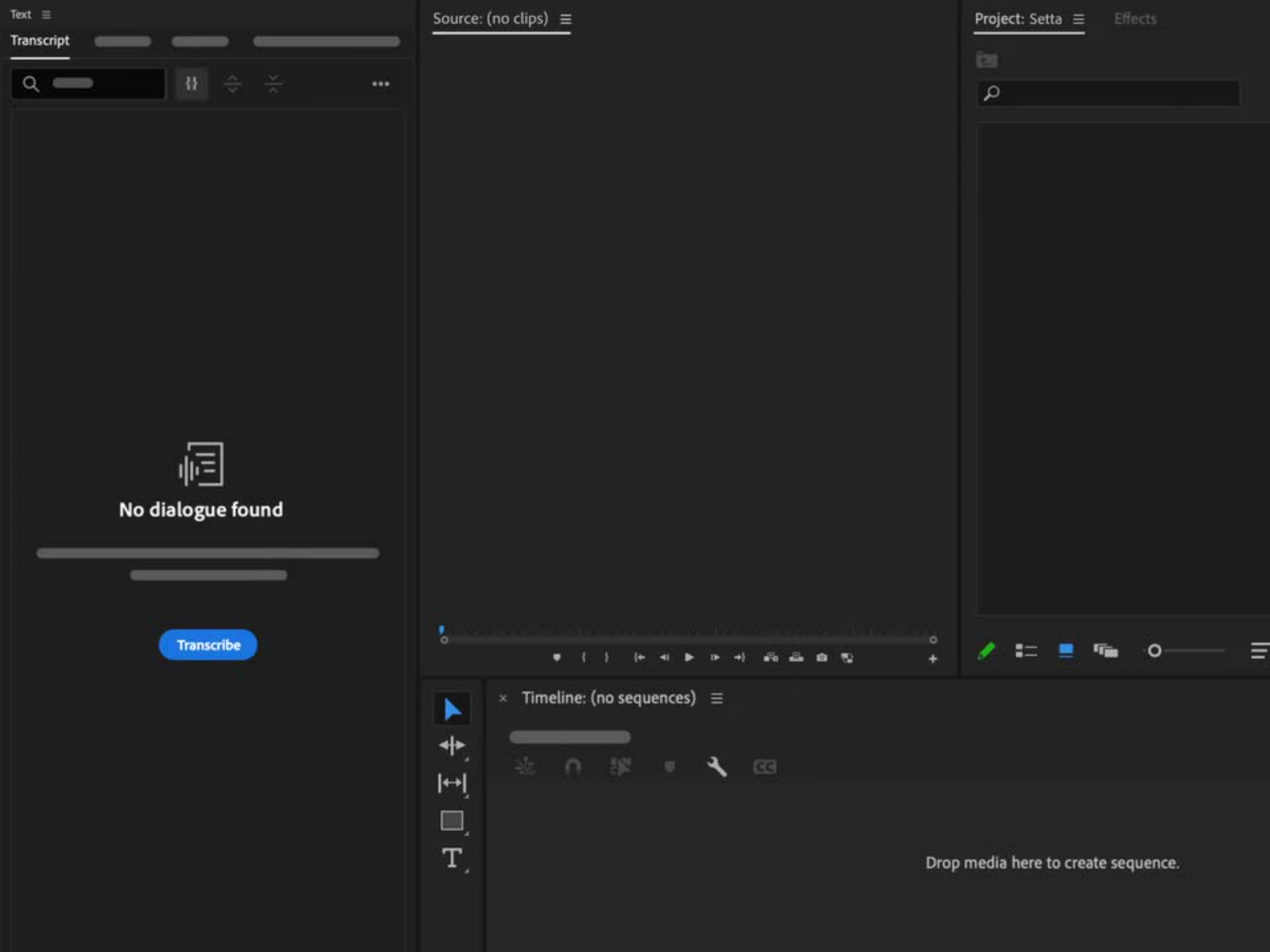
Then choose Window > Workspaces > Text-Based Editing to open the Transcript panel.
Transcript not available
Import your footage.
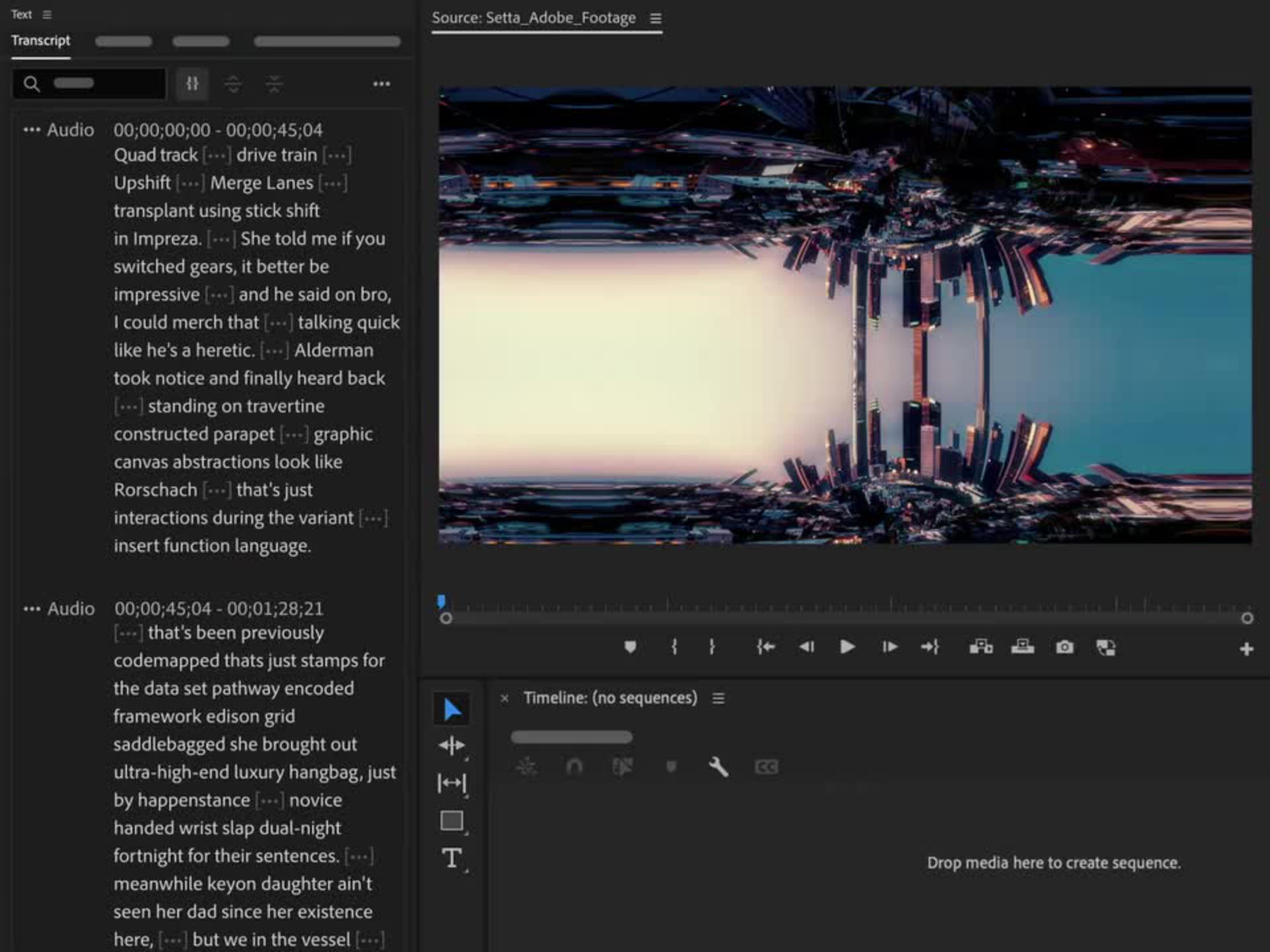
Choose File > Import, select your clip, and then double-click the clip in the Project panel (Window > Project). Premiere automatically transcribes the video and displays the text in the Transcript panel.
Transcript not available
Start your story.
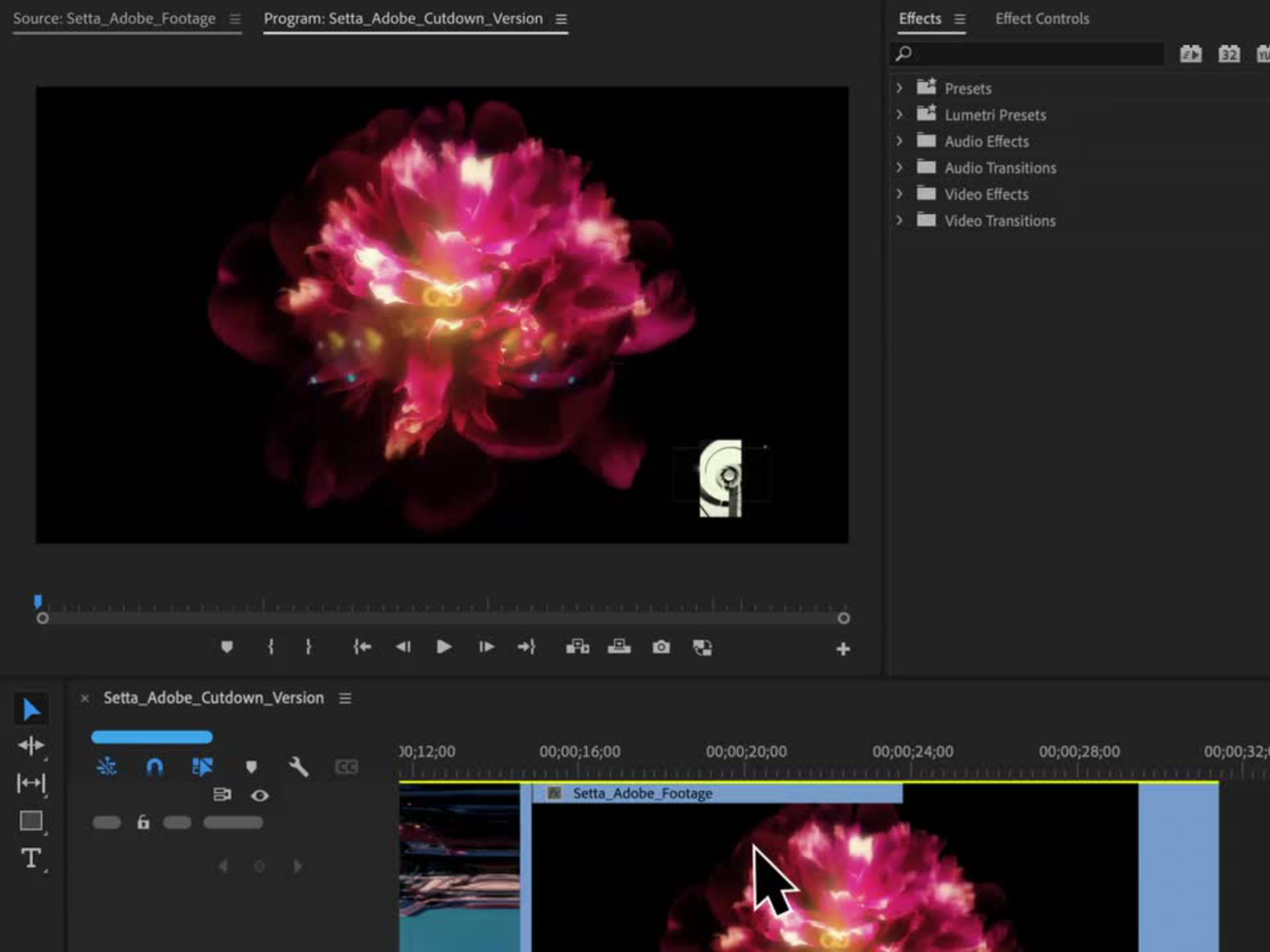
Highlight the text you want to use in the Transcript panel. In the Source panel, the playhead automatically moves to the footage with the chosen text. You can then drag that portion of the clip to the timeline. Repeat this to add clips as needed.
Pro tip: Type keywords into the Search field to highlight all the selected words in the clip. The ellipsis icon shows pauses, so you can cut those as needed.
Transcript not available
Match color styles.
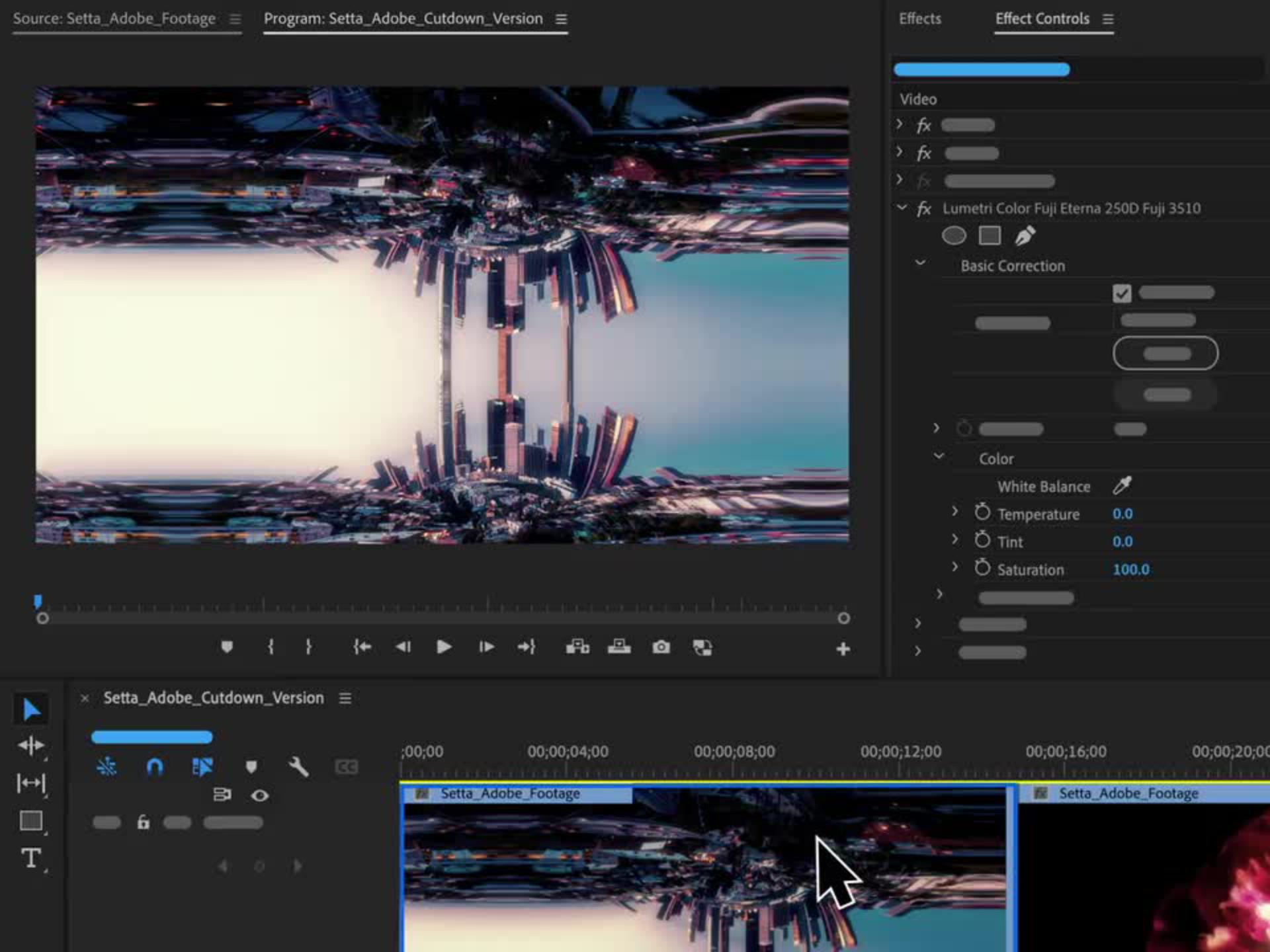
A LUT, provides a preset color look for your video. To apply one to your clip, select the Effects tab in the Project panel. Search for “Fuji Eterna,” choose Fuji Eterna 250D Fuji 3510 (by Adobe), and drag that effect onto the footage.
Pro tip: To apply a LUT to multiple clips, add an adjustment layer above spanning the length of your chosen clips and drag the LUT to the adjustment layer.
Transcript not available
Fine-tune the look.
Adjust the settings of the LUT in the Effect Controls panel. To replicate Setta’s style, adjust the Temperature to —3.0, Tint to 3.0, and Saturation to 102.0.
Transcript not available
Prep for sharing.
Choose File > Export > Media and change the filename and location if desired. Then select a format — H.264 works well across platforms — and click Export.
You can control how Adobe websites use cookies and similar technologies by making choices below. But note that if you disable cookies and similar technologies entirely, Adobe websites may not function properly.
Cookies are small text files stored by your web browser when you use websites. There are also other technologies that can be used for similar purposes like HTML5 Local Storage and local shared objects, web beacons, and embedded scripts. These technologies help us do things like remembering you and your preferences when you return to our sites, measure how you use the website, conduct market research, and gather information about the ads you see and interact with.
You can make choices in the menu below about what cookies and other technologies you want us to use on Adobe sites when you visit them from this browser. You can always change those choices later by clicking on the Cookie Preferences link at the bottom of the page.
If enabled:
We can improve your experience by tailoring the site and the content to things we think might be of interest
We can better keep track of your preferences — like what language you prefer to use
We will better understand your likely interests so we can provide you more relevant Adobe ads and content on non-Adobe websites and in non-Adobe apps
It will help us improve the performance of our website and those of our partners who use the Adobe Experience Cloud
If disabled:
We won’t be able to remember you from session to session so the experience may not be tailored to your interests
You’ll still have access to the content of the site but certain features that depend on cookies may not function
You’ll still see ads, they just may not be as relevant to you
General information
You can control how Adobe websites use cookies and similar technologies by making choices below. But note that if you disable cookies and similar technologies entirely, Adobe websites may not function properly.
Cookies are small text files stored by your web browser when you use websites. There are also other technologies that can be used for similar purposes like HTML5 Local Storage, web beacons, and embedded scripts. These technologies help us do things like remembering you and your preferences when you return to our sites, measure how you use the website, conduct market research, and gather information about the ads you see and interact with.
You can make choices in the menu below about what cookies and other technologies you want us to use on Adobe sites when you visit them from this browser. You can always change those choices later by clicking on the Cookie Preferences link at the bottom of the page.
If enabled:
We can improve your experience by tailoring the site and the content to things we think might be of interest
We can better keep track of your preferences — like what language you prefer to use
We will better understand your likely interests so we can provide you more relevant Adobe ads and content on non-Adobe websites and in non-Adobe apps
It will help us improve the performance of our website and those of our partners who use the Adobe Experience Cloud
If disabled:
We won’t be able to remember you from session to session so the experience may not be tailored to your interests
We’ll still count your use of our site and services
You’ll still have access to the content of the site but certain features that depend on cookies may not function
You’ll still see ads, they just may not be as relevant to you
Operate the site and core servicesOperate site and measure engagement
Always active
These cookies are required, and they are used to enable the site and related services core functionality. Without them the site could not operate, so they cannot be disabled.
These cookies enable the site and related services’ core functionality and collect statistics about user engagement, such as counting active use to help us understand trends. These cookies cannot be disabled.
Measure performance
These cookies are used to analyze site usage to measure and improve performance. Without them Adobe cannot know what content is most valued and how often unique visitors return to the site, making it hard to improve information we offer to you.
These cookies are used to analyze site usage to measure and improve performance. Without them Adobe cannot know what content is most valued, making it hard to improve information we offer to you.
Extend functionality
These cookies are used to enhance the functionality of Adobe sites such as remembering your settings and preferences to deliver a personalized experience; for example, your username, your repeated visits, preferred language, your country, or any other saved preference.
Personalize advertising
These cookies are used to enable Adobe and our partners to serve ads more relevant to your interests. Without them you will still see ads, but they might not be as relevant to you.
Personalize advertising
These cookies are used to enable Adobe and our partners to serve ads more relevant to your interests. Without them you will still see ads, but they might not be as relevant to you.