So, now that you know how to edit and share videos with Rush, now I want to show you how you can open and take your projects further using Premiere Pro CC.
So that way, you can harness the power of pro editing functionality.
So, how does this work?
Preparing a Rush project for Premiere Pro
Well, first, you need to create your project in Rush whether on mobile, tablet or desktop, and once you have started a project, just make sure that your project sync remains on for that project.
And so, by default, your project sync is always turned on, but if you turn it off, you will not see the project available to open up in Premiere Pro CC.
Opening a Premiere Rush project in Premiere Pro
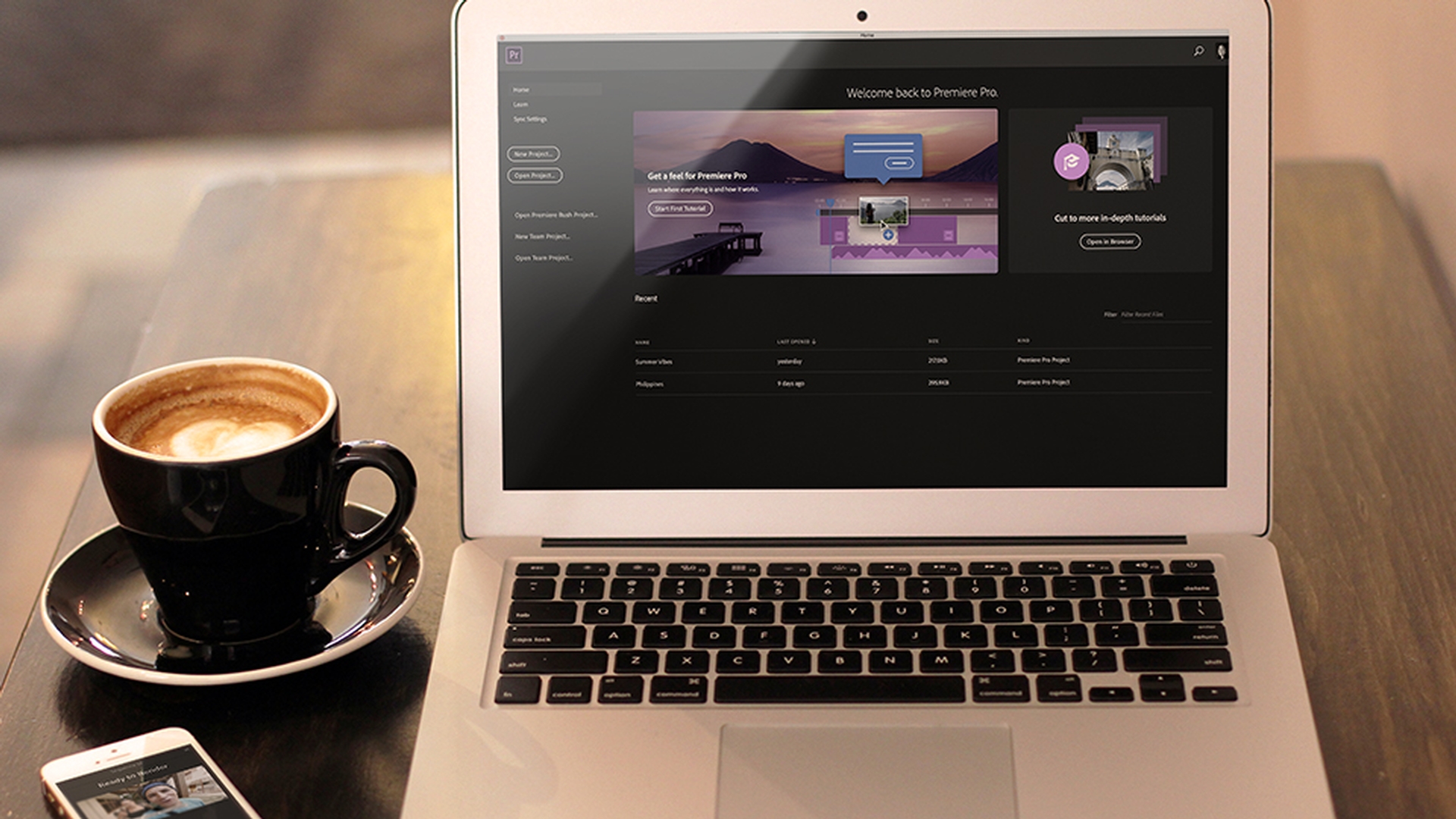
So, now let's go ahead and open up Premiere Pro CC, and here from the Start screen, you need to click on Open Premiere Rush Project...
Then you'll see all of your current and synced Rush projects in this screen.
And if for some reason you aren't seeing the projects that you expect to see, just make sure that your computer is connected to the internet and also triple check to make sure that your project has syncing turned on.
So then, just identify the Rush project that you want to open and just click on it to open it up.
So, this new project will automatically be saved in your Documents folder and all of the media files connected with the original Rush project will remain in the original location.
So, now that we're inside of Premiere Pro CC,
Enhancing edits with advanced Premiere Pro tools
you can begin editing your project further.
So, for example, here in Premiere Pro CC, you can easily create speed ramps to your videos, so if you ever watched videos that have really cool slow-motion, you use time remapping to do that.
To do this, let's just right click on the clip to enable Time Remapping keyframes, and then what we can do is we can use the Pen tool to draw a ramp.
And what we can do is we can bring the second dot down over time, so we can create a ramp that goes from normal speed to slow speed.
So, let's just play this back, and now you can see it goes from normal speed at 100% and then we dropped it down to go to slow-motion.
Another tool that you can use to really take your edit further in Premiere Pro CC, is using adjustment layers.
So, from the Project panel, you can create an Adjustment Layer,
Using adjustment layers for advanced color correction
and you can drop this on top of all of your video clips, and then you can apply some advanced color correction and filters from the Lumetri Color panel here in Premiere Pro CC, and everything that you apply to this adjustment layer will be applied to all the clips beneath the adjustment layer.
Understanding limitations and workflow between Rush and Premiere Pro
So, opening up the Rush project in Premiere Pro CC is just a one-way path.
Edits will not be synced and reflected across the two applications.
And currently you cannot open up Premiere Pro projects inside of Rush.
So, that's all there is to the workflow between Rush and Premiere Pro CC and it gives you the flexibility to create fast and awesome video projects in Rush on mobile or desktop.
And now you know that you always have the option to open it up and take it further with Premiere Pro CC.
What you learned: Open a Premiere Rush project in Premiere Pro to make complex edits
Create a project in Premiere Rush and keep the Project Sync option enabled. Project Sync is enabled by default. If it’s turned off, the project won’t be available to open in Premiere Pro
Launch Premiere Pro (version 2019 or later—older versions are not compatible)
Click the “Open Premiere Rush Project” button on the Start Screen
You will then see your available Premiere Rush projects. Select the Premiere Rush project you want to open
Note: If you aren’t seeing the projects you expect to see, make sure your computer is connected to the internet and that the particular project has sync turned on
Your new Premiere Pro project will automatically save in your documents folder
You’ll be taken into Premiere Pro to begin editing that project!
You can do more complex edits like time remapping and adjustment layer color grading
You can control how Adobe websites use cookies and similar technologies by making choices below. But note that if you disable cookies and similar technologies entirely, Adobe websites may not function properly.
Cookies are small text files stored by your web browser when you use websites. There are also other technologies that can be used for similar purposes like HTML5 Local Storage and local shared objects, web beacons, and embedded scripts. These technologies help us do things like remembering you and your preferences when you return to our sites, measure how you use the website, conduct market research, and gather information about the ads you see and interact with.
You can make choices in the menu below about what cookies and other technologies you want us to use on Adobe sites when you visit them from this browser. You can always change those choices later by clicking on the Cookie Preferences link at the bottom of the page.
If enabled:
We can improve your experience by tailoring the site and the content to things we think might be of interest
We can better keep track of your preferences — like what language you prefer to use
We will better understand your likely interests so we can provide you more relevant Adobe ads and content on non-Adobe websites and in non-Adobe apps
It will help us improve the performance of our website and those of our partners who use the Adobe Experience Cloud
If disabled:
We won’t be able to remember you from session to session so the experience may not be tailored to your interests
You’ll still have access to the content of the site but certain features that depend on cookies may not function
You’ll still see ads, they just may not be as relevant to you
General information
You can control how Adobe websites use cookies and similar technologies by making choices below. But note that if you disable cookies and similar technologies entirely, Adobe websites may not function properly.
Cookies are small text files stored by your web browser when you use websites. There are also other technologies that can be used for similar purposes like HTML5 Local Storage, web beacons, and embedded scripts. These technologies help us do things like remembering you and your preferences when you return to our sites, measure how you use the website, conduct market research, and gather information about the ads you see and interact with.
You can make choices in the menu below about what cookies and other technologies you want us to use on Adobe sites when you visit them from this browser. You can always change those choices later by clicking on the Cookie Preferences link at the bottom of the page.
If enabled:
We can improve your experience by tailoring the site and the content to things we think might be of interest
We can better keep track of your preferences — like what language you prefer to use
We will better understand your likely interests so we can provide you more relevant Adobe ads and content on non-Adobe websites and in non-Adobe apps
It will help us improve the performance of our website and those of our partners who use the Adobe Experience Cloud
If disabled:
We won’t be able to remember you from session to session so the experience may not be tailored to your interests
We’ll still count your use of our site and services
You’ll still have access to the content of the site but certain features that depend on cookies may not function
You’ll still see ads, they just may not be as relevant to you
Operate the site and core servicesOperate site and measure engagement
Always active
These cookies are required, and they are used to enable the site and related services core functionality. Without them the site could not operate, so they cannot be disabled.
These cookies enable the site and related services’ core functionality and collect statistics about user engagement, such as counting active use to help us understand trends. These cookies cannot be disabled.
Measure performance
These cookies are used to analyze site usage to measure and improve performance. Without them Adobe cannot know what content is most valued and how often unique visitors return to the site, making it hard to improve information we offer to you.
These cookies are used to analyze site usage to measure and improve performance. Without them Adobe cannot know what content is most valued, making it hard to improve information we offer to you.
Extend functionality
These cookies are used to enhance the functionality of Adobe sites such as remembering your settings and preferences to deliver a personalized experience; for example, your username, your repeated visits, preferred language, your country, or any other saved preference.
Personalize advertising
These cookies are used to enable Adobe and our partners to serve ads more relevant to your interests. Without them you will still see ads, but they might not be as relevant to you.
Personalize advertising
These cookies are used to enable Adobe and our partners to serve ads more relevant to your interests. Without them you will still see ads, but they might not be as relevant to you.