
Nov. 26, 2020, by Pauline Boiteux
Traditional Weaves of the World with Pauline Boiteux
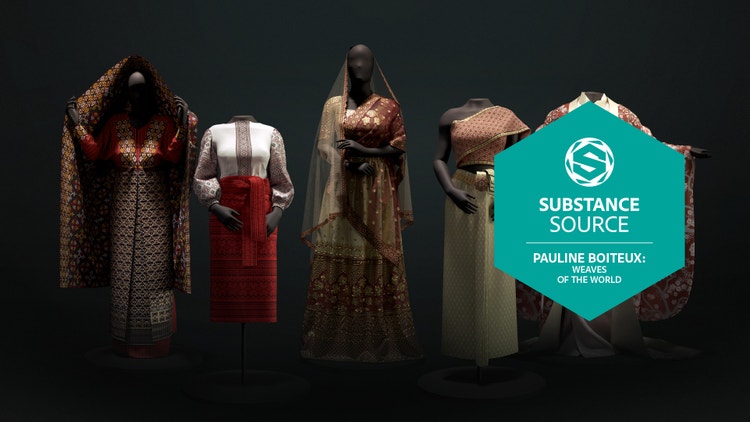
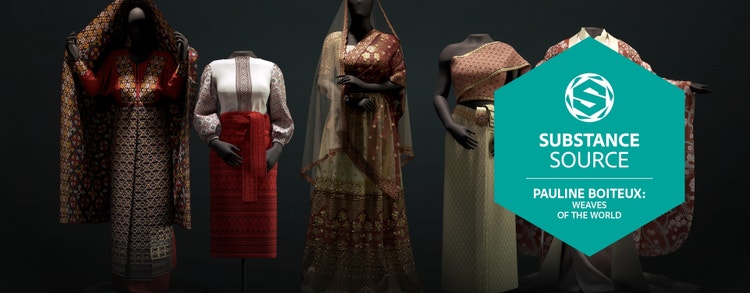
Pauline tells the story of how she created 15 luxurious materials, inspired by traditional textile arts of the world, for Substance 3D Assets.


Nov. 26, 2020, by Pauline Boiteux
Pauline tells the story of how she created 15 luxurious materials, inspired by traditional textile arts of the world, for Substance 3D Assets.
Artwork by Pauline Boiteux
Creation has always been a big part of my life. When I’m not behind my computer, I like to work with thread and fabric. Sewing, stitching, crochet: I like the relaxation that crafting brings.
When I began to learn Substance Designer, I was most interested in the pattern creation process. Most tutorials available were focusing on environment materials (stone, wood, metal, etc.), so while I started following them, I still added patterns as my own twist.
One day, I bought a really pretty coat in a boutique in Vincennes. It’s still today one of the staples of my wardrobe! I was looking for an idea to create in SD and I saw my coat hanging on the back of a chair. Obviously, I decided to reproduce it in Designer. I had no idea what I was stepping into at the time, but that bird coat material caught the eyes of the Substance team and became an article in the Magazine!
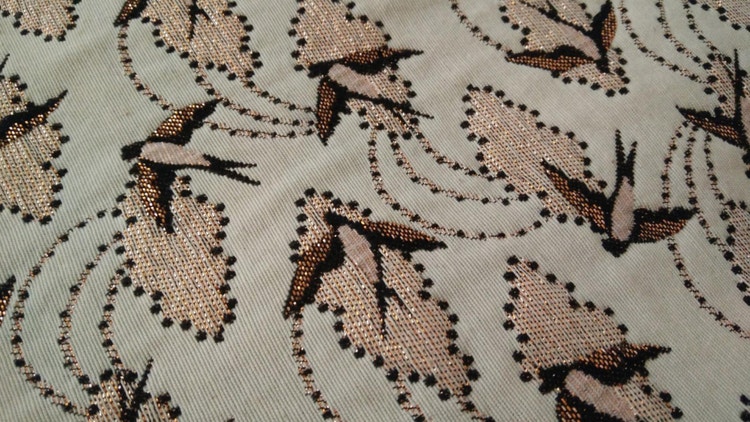
The coat
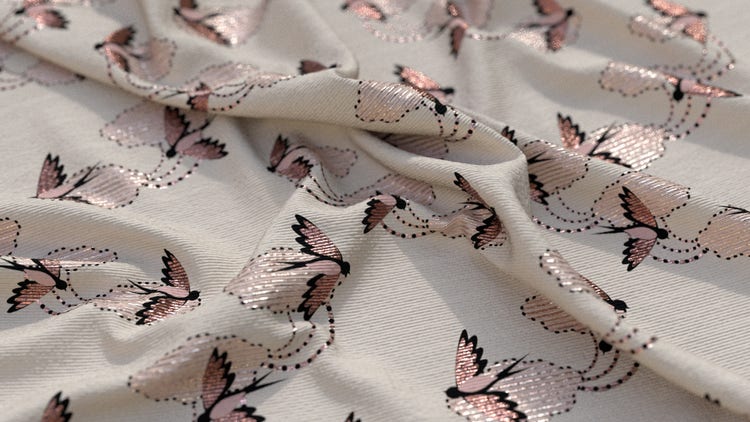
The material
At the time though, I was in a rough patch: I’d just finished school, I couldn’t land a job, and was struggling with very bad anxiety. I was really doubting myself. The world of video games was like a ‘foster family’; it all felt like I didn’t belong.
I continued working on patterns, and using Substance Designer gave me tools to create intricate and good-looking results without much effort. At first, I didn’t really get the point of parameters. I just genuinely liked the software and loved that you could do pretty much anything with it, and it felt easy.
As time went by, that bird coat material gained in popularity. I realized that cloth materials were kind of a niche — not a lot of people were making those. I decided to specialize in fabrics. Turns out, it was a good call, and it gave me the incredible opportunity to meet the Substance team who got me in touch with big names in the fashion industry. It felt like I’d found my calling. From then on, not only was I having fun, but I also was able to make a living from it. I also learned a lot about the industry, the creation pipeline, and the making of great looking materials.
Still, my skills were bumbling and I still didn’t know much about the magic of procedural creation. So when I got the opportunity to work alongside the Substance Source team, I jumped at it. It was like going back to school again, to keep on learning for ever.
The Fashion fabrics release was intense. I knew what I had to do, I knew how to create it, but this was a real discovery of the world of QA! I was so impressed. You know, at home, I don’t have a great computer to work on. I don’t even view most materials in 4K before I render them. So QA taught me how to optimize, and also how to fit the pipeline. Things have to be done in a specific order, they have to match the objectives, and so on. It really taught me how to use the best nodes for the best scenario!
The other new thing was the quantity of assets within the time frame. There are many ways to optimize what you do. You have to consider things like what parameters users will use, and what parameters aren’t actually very useful. So it’s all about building the toughest, best user-proof material, which will look good no matter what the user does with the parameters.
Fabrics come with their own challenge, especially concerning scale. Most materials came out at 25cmx25cm, when the basic SD material is more of a 1mx1m. I would have zoomed even more, but at some point you also want something that looks pretty from far away. It was overall a great warm up for that special project I was working on: creating the 15 best-looking materials I could to illustrate my new passion for procedural textile creation.
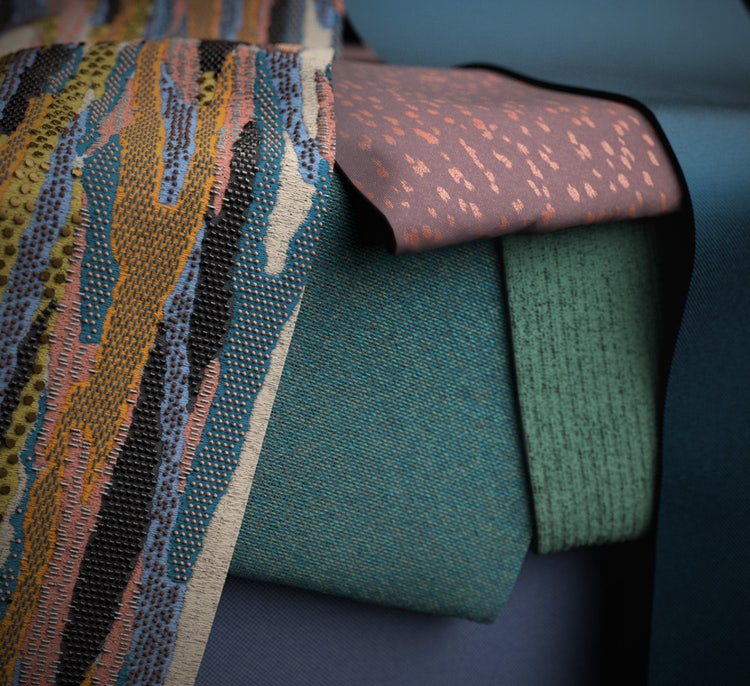
Artwork by Pauline Boiteux
And you wouldn’t believe the little corners of the internet I ended up visiting! From one lady’s blog about hand-sewing kimonos, to an association for panama fabrics, and from making to shipping.
In the end, this research taught me the traditional cloth-making techniques: weaving, embroidery, tapestry. There’s a fair bit of reverse engineering that went on there; I worked from pictures of the traditional fabrics, and then worked to reproduce the weave and material in Substance Designer.
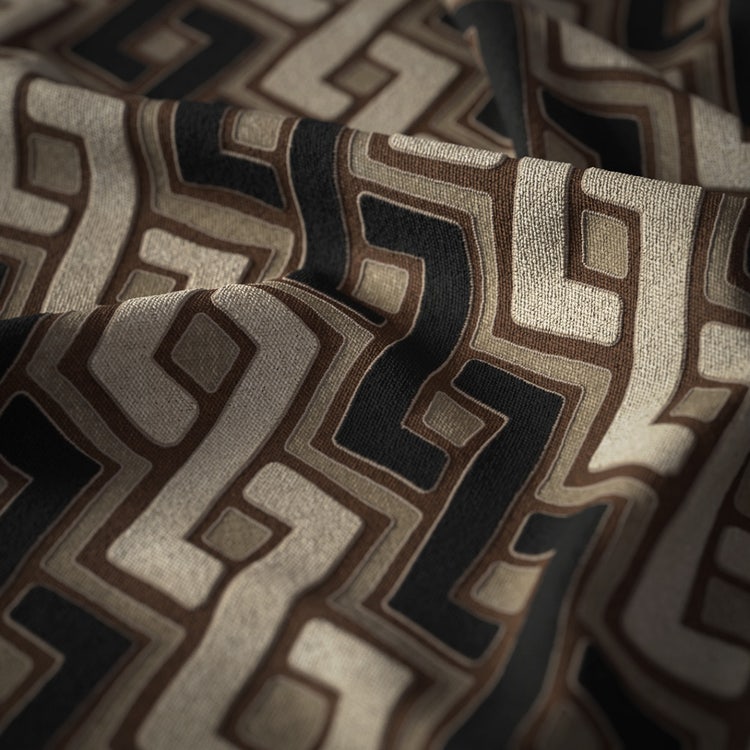
This cloth is made out of a very specific material. It’s raffia fiber!
Artwork by Pauline Boiteux
Making these pieces of cloth is a team effort in the Kuba tribe: men cultivate the raffia palm and weave the thinly-cut plant into a very stiff drape. Then, women pound it in a mortar, which softens the fiber and makes it ready for the application of surface decoration. After cutting all the needed pieces, they combine them all to create intricate mazes and geometric patterns.
In the end, it creates a patchwork of different shapes and colors: 4 patterns, 3 to 4 colors. This technique is one of the two commonly used, the other one is a bunch of raffia fibers stacked together and attached to a base thread. It creates the same kind of result as a shaggy carpet, and makes very fluffy geometric patterns.
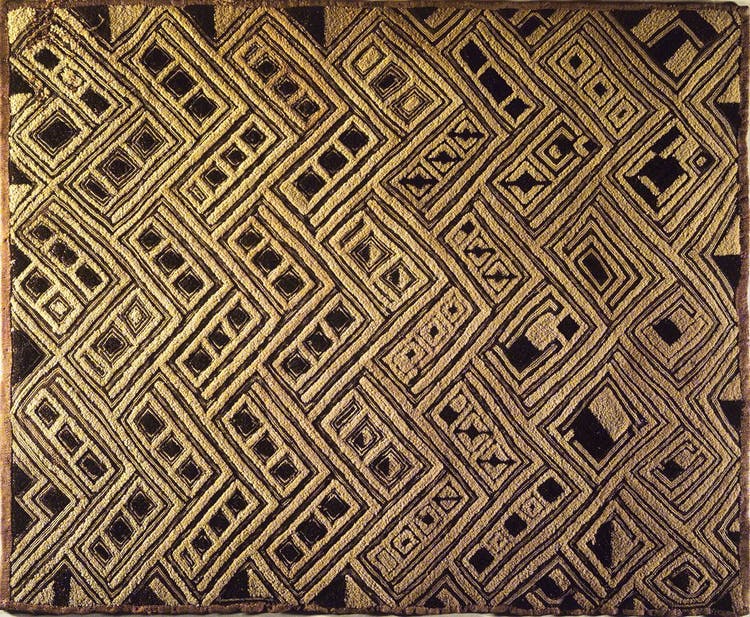
Raffia Cloth Panel Marked D43, Brooklyn Museum
Raffia doesn’t age like classic cloth, so I reproduced its specific qualities in the material’s parameters: you can change the roughness to make it dustier. Raffia cloth also loses some of its colors with time and exposure to the sun. Deep black colors take on an ashy blue tone, oranges become a bright yellow, and the natural beige fibers turn almost white. You can also reproduce this effect in the material.
Artwork by Pauline Boiteux
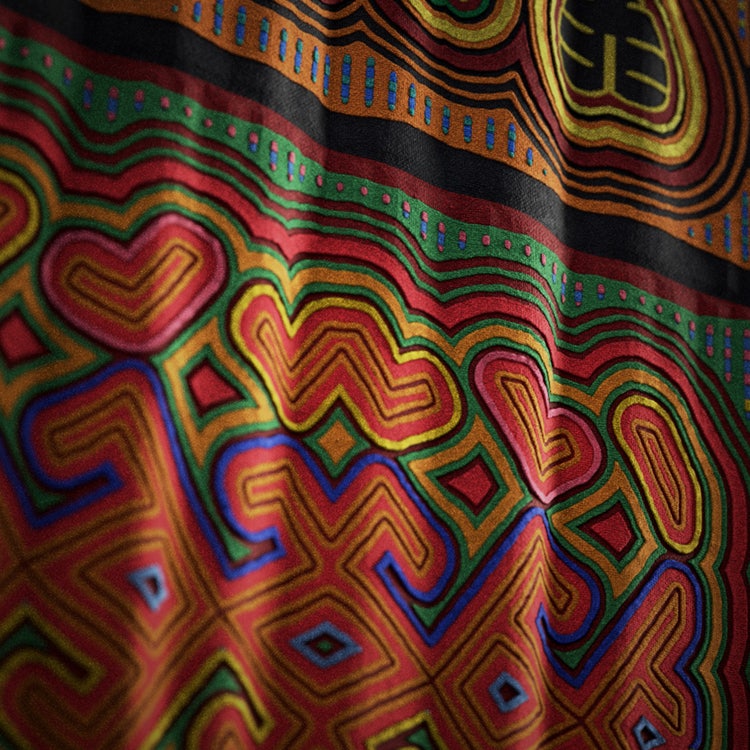
The Kuna people make beautiful colored pieces of cloth called molas. The most traditional are geometric patterns and were first inspired by body painting designs. Creating outstanding molas is so complicated that it is actually a statute among Kuna women.
Today, and since the access to materials has become easier, molas have changed. Inspired by the modern world, they have become more and more figurative. But the technique has remained the same. These incredibly resistant materials can be used as a piece of their traditional clothing, as well as framed as art, made into pillows, or used as wall decoration.
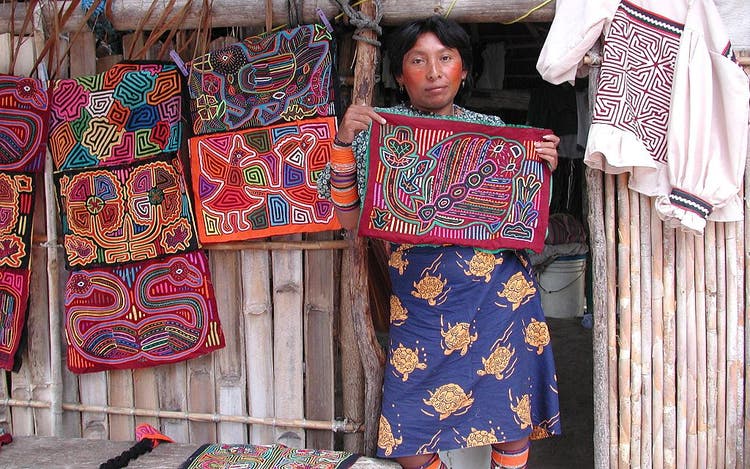
A Kuna woman in Panama, artwork by Johantheghost
Over background fabric, the craftswomen sew layers of other fabrics using the reverse appliqué technique, to create geometric or figurative designs. They sometimes put an extra layer of embroidery to add the final touches and details.
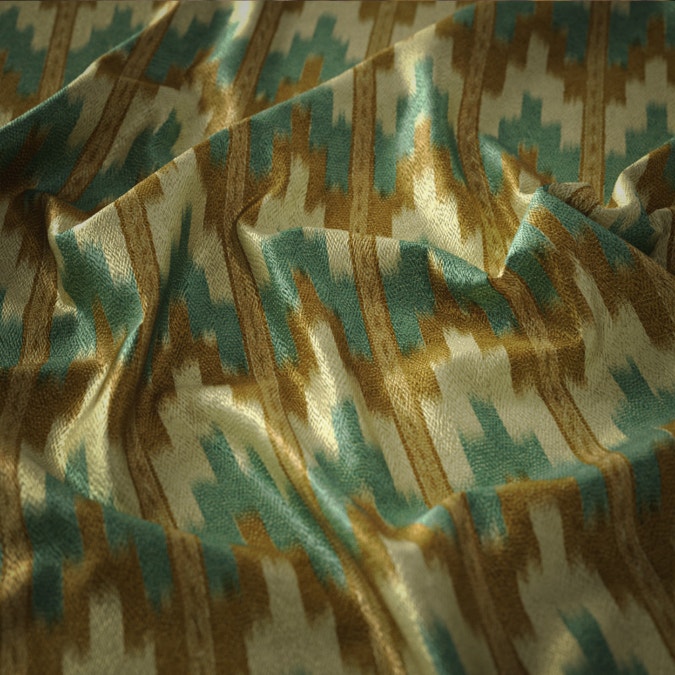
Ikat is an ancestral silk weaving technique commonly used in the center of Asia. The term “ikat” has Malay origin but as the material has not endured well through history, we aren’t really able to pinpoint its origin. The difference between Malay and Uzbek ikat is mainly visible in patterns and colors, and their specific meanings. There are a few ikat techniques: warp ikat, weft ikat, double ikat and pasapalli ikat.
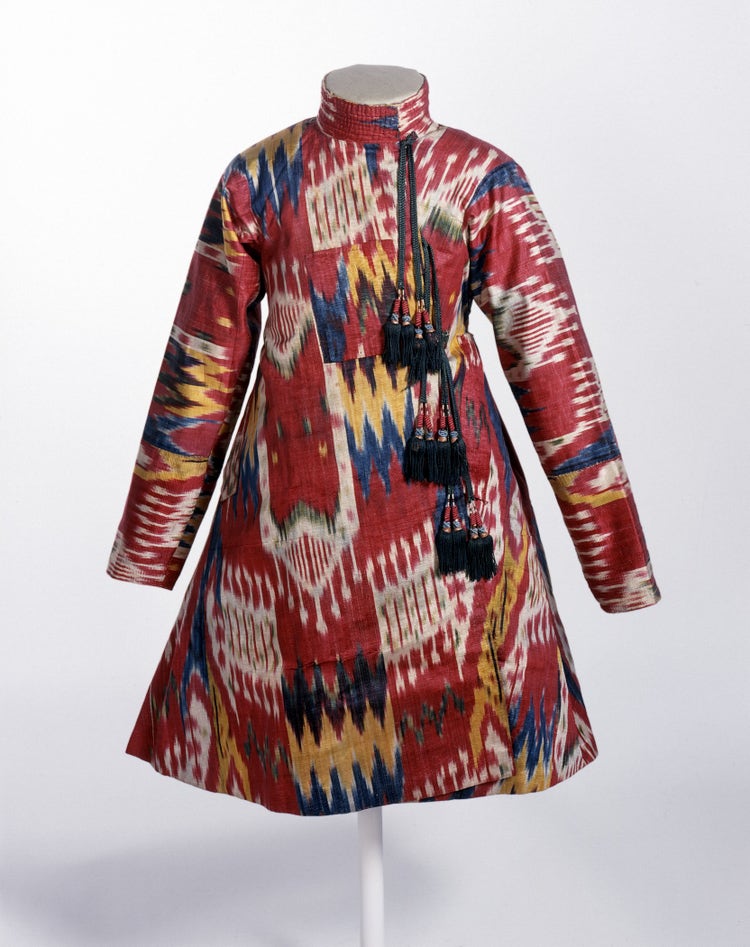
To create these characteristic patterns, the threads are pulled over their full length, and then color is applied to it. Weaving comes after dying, and that’s what creates the blurred edges of the colored patterns.
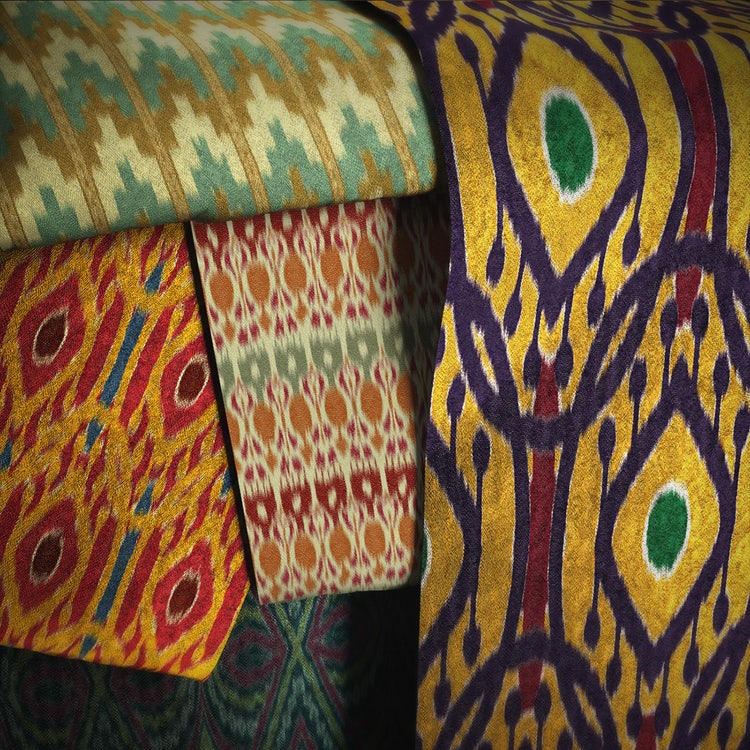
Artwork by Pauline Boiteux
So, in the end that means the pattern stretches over every single thread. This meant I had to work thread by thread in Substance Designer.
As the material itself is fairly simple, I created lots of variations in the patterns and colors to make it interesting. You can choose between 4 patterns, and the 4 colors are customizable; so is the diffusion of the dye! As in every Substance Designer file, you can of course add your own pattern to create even more variations.
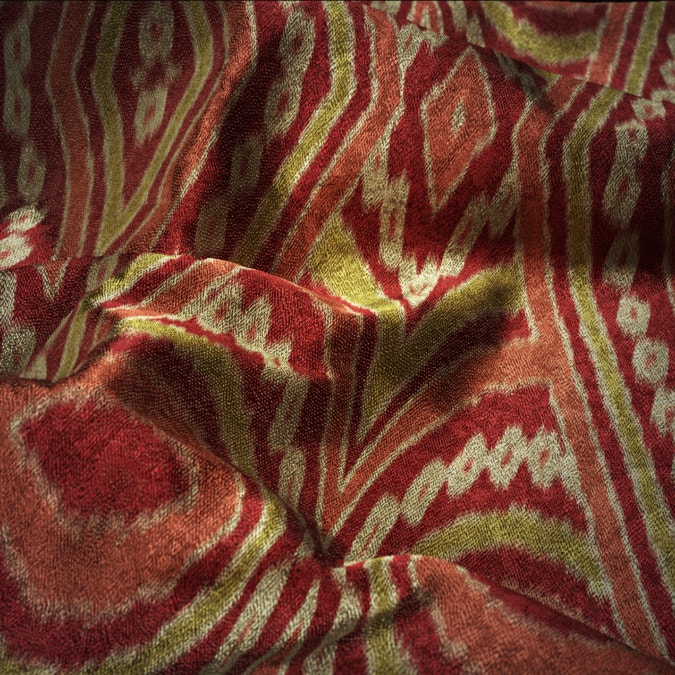
Artwork by Pauline Boiteux
Artwork by Pauline Boiteux
Ukrainian folk dress has its root in ancient history.
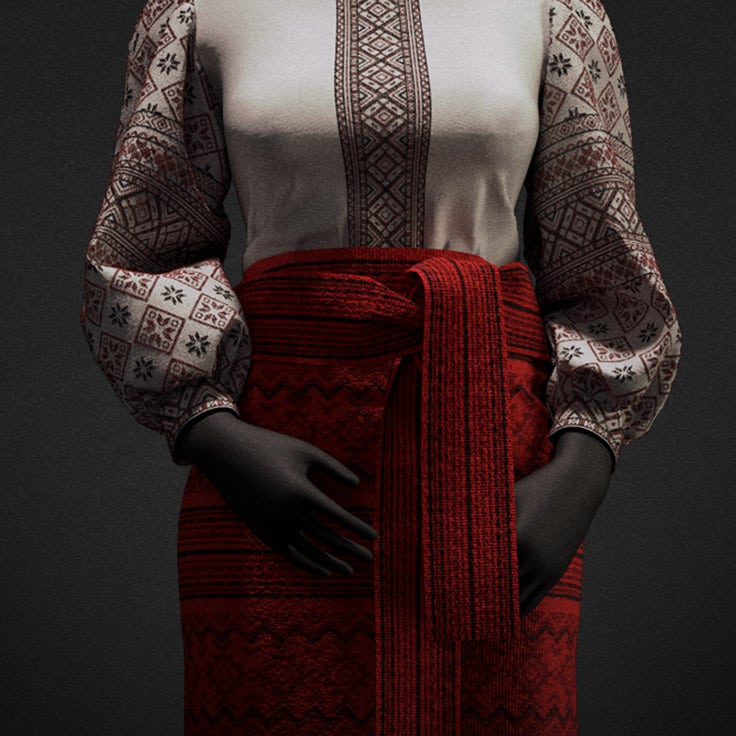
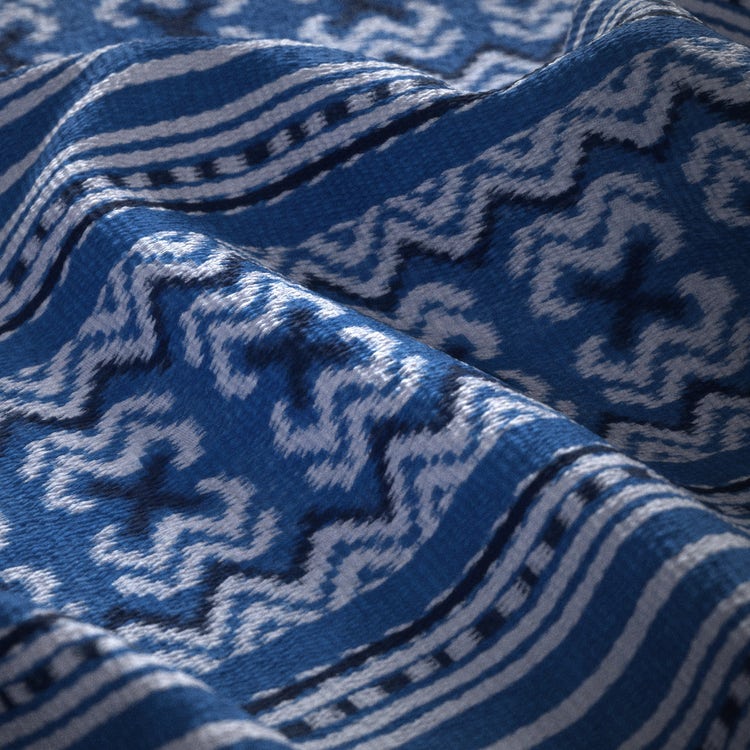
The fabric used for the skirts or aprons is usually wool. This is one of the oldest weaving techniques in the world: you can consider that, for wool, this is a time-tested classic. The way the fabric is woven creates a specific geometric pattern, and the difficulty lies in the fact that you have to imagine what the pattern is going to look like at the end, and count every thread to create that pattern. It takes a mind-blowing amount of time.
Artwork by Pauline Boiteux
Wool is actually fairly annoying to create in Substance Designer. There are so many tiny fibers all over the place! I had to find strategies to create the illusion of these fibers.
I’ve found a few different techniques, but the most efficient way is to apply a gradient linear to a pattern in a tile generator. When you use a high enough amount of gradients, it creates a very dense, noisy texture, and you can easily change the position, orientation and shape of the fibers using the node options.
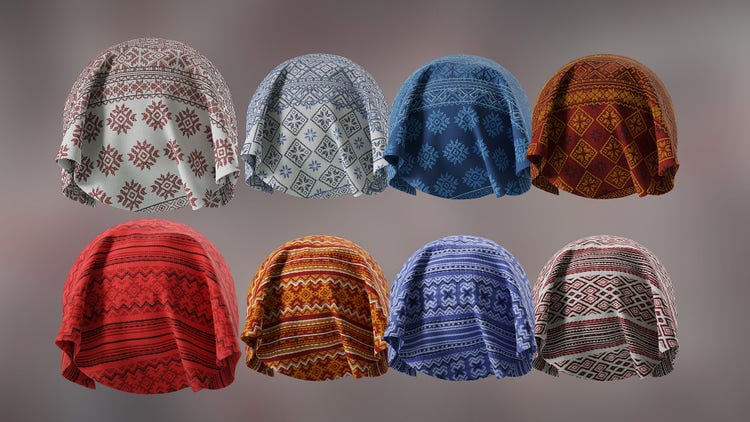
Playing with the color variation creates depth, and to add a bit more randomness I usually pair it with a multi-directional warp node; that way, some fibers are split, just like threads on a used piece of fabric.
For the blouse, I reproduced a type of embroidery called cross-stitch. It is an ancestral type of embroidery that has had variations all over the world. In Ukraine, it became a part of traditional clothing. It might look simple, but it’s also long and arduous. I like to do cross-stitch on my off time: it calms my soul!
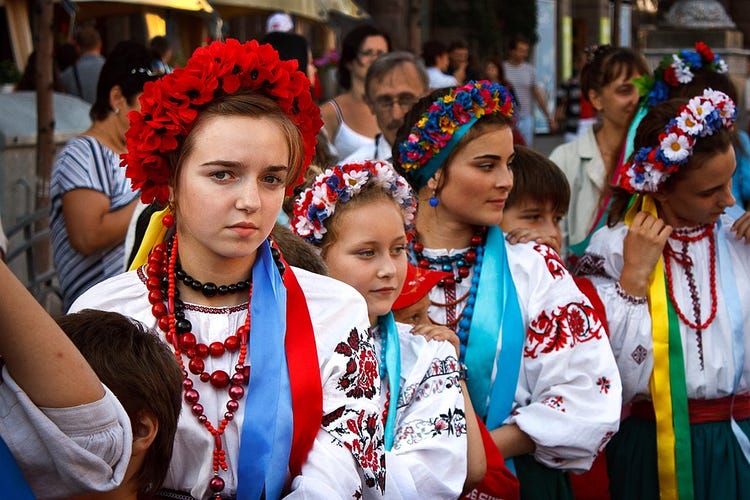
Creative Commons, Ghenady – Украинка
The best way I found to replicate those low-definition floral patterns was by looking at pixel art. After all, the point is the same: to translate the intention with very little information, and pixel art does this just perfectly. Using very low-resolution nodes helped me get those sharp-looking patterns.
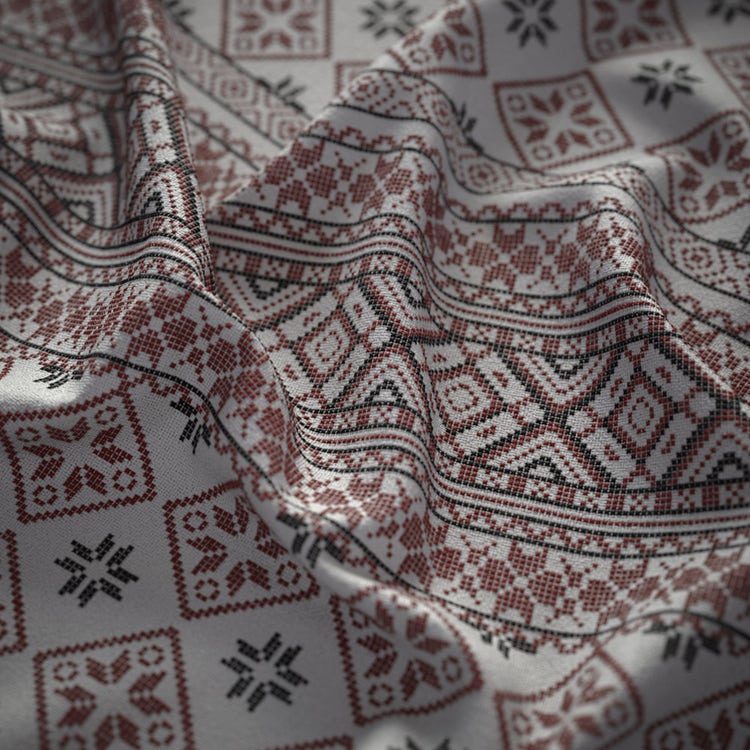
Artwork by Pauline Boiteux
That outfit is inspired by traditional Turkmen brides’ dresses.
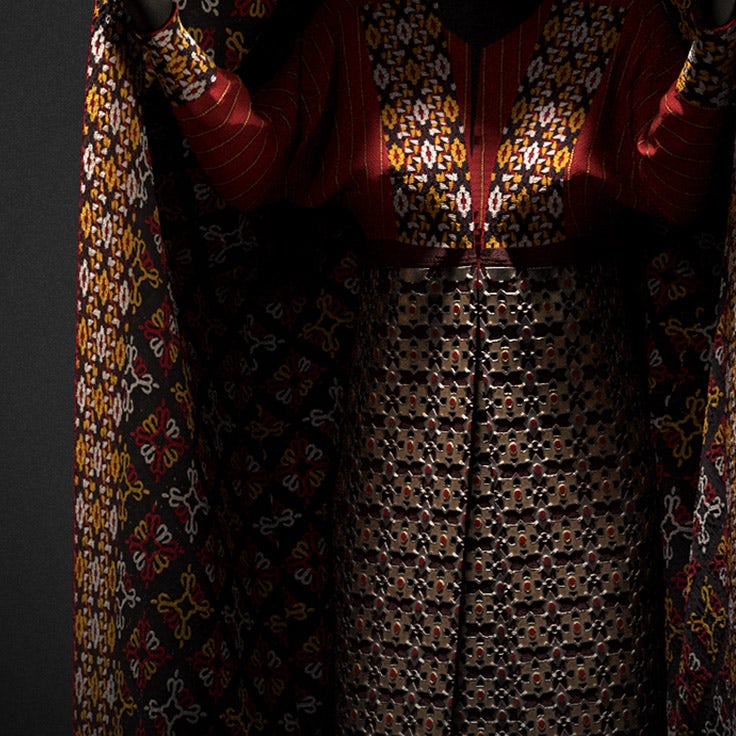
At first, when looking for references I was struck by the amount of details, in both fabrics and jewels. One of the most intricate parts of the outfit is a jacket called a chapan; lots of variations of this can be found in Central and South Asia. Usually worn by men, they are used in this particular case as a veil. Those complex patterns are made with braided threads that are then sewn on a larger piece of fabric. Lots of patterns and colors are displayed on these cloths, but I’ve found that black, red, orange and white are the most common.
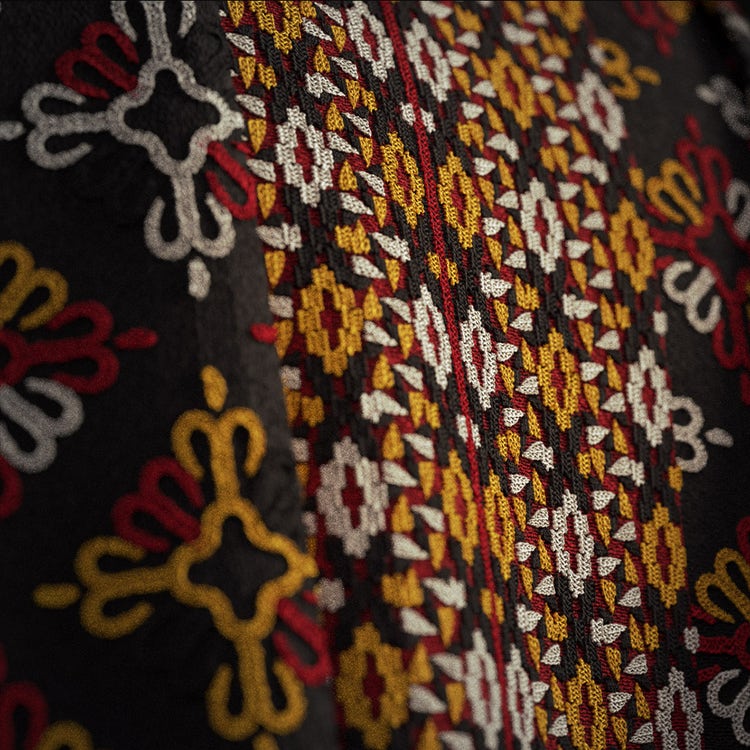
Artwork by Pauline Boiteux
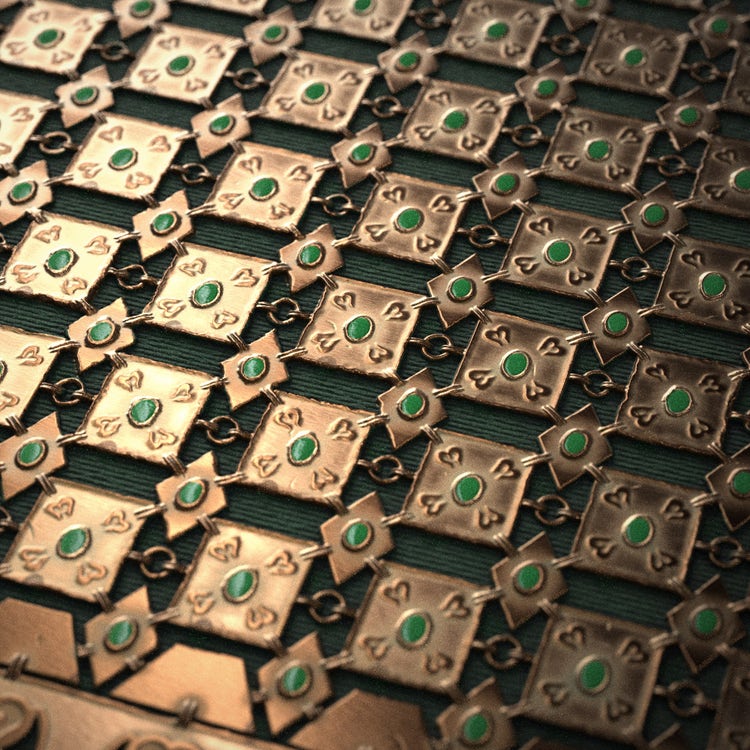
Artwork by Pauline Boiteux
Turkmen wedding dresses are made out of a lot of other pieces too. Check them out! They are spectacular.
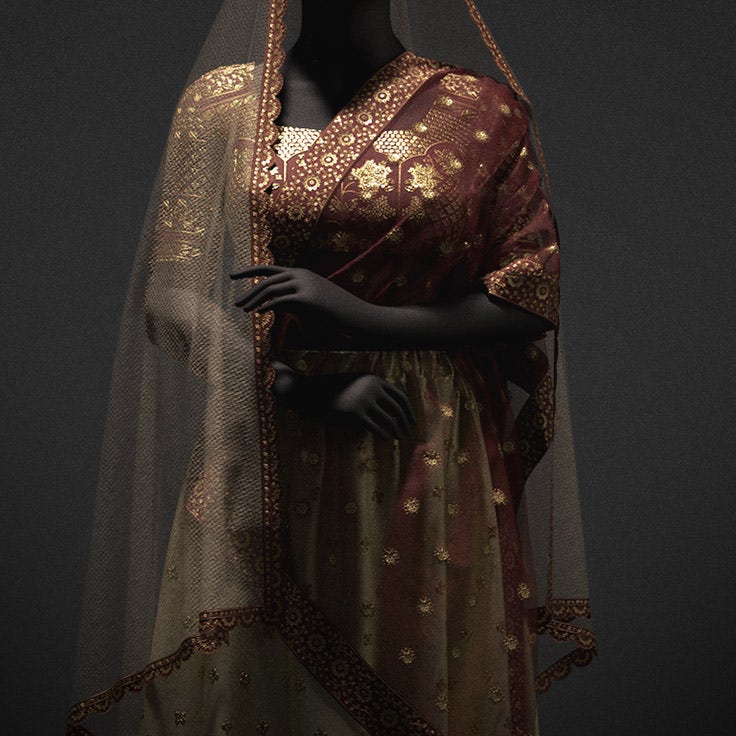
Artwork by Pauline Boiteux
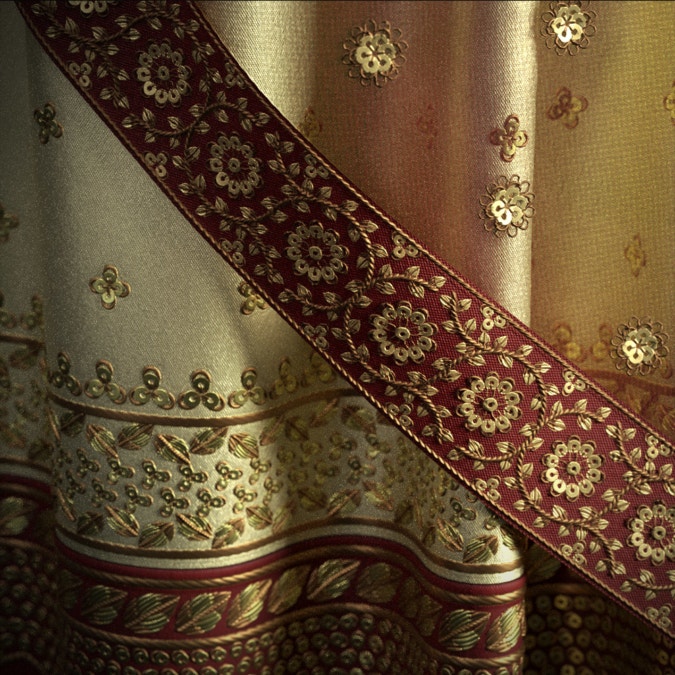
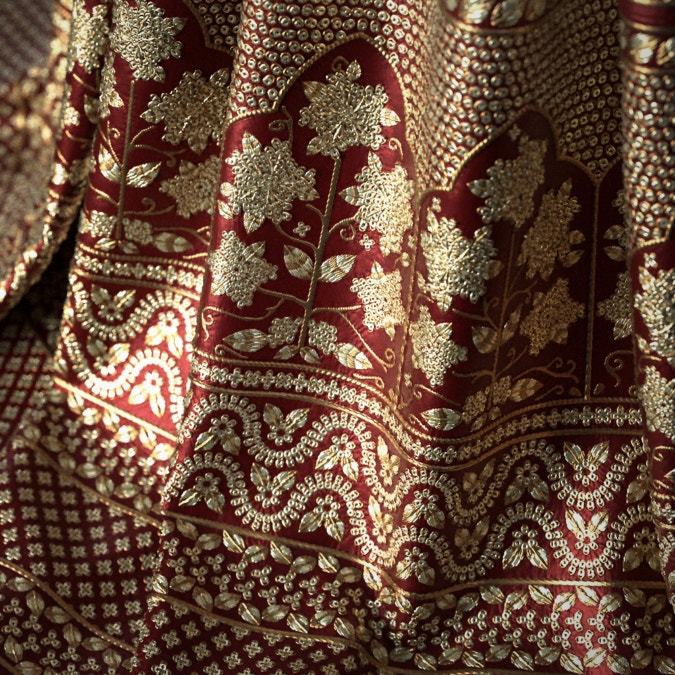
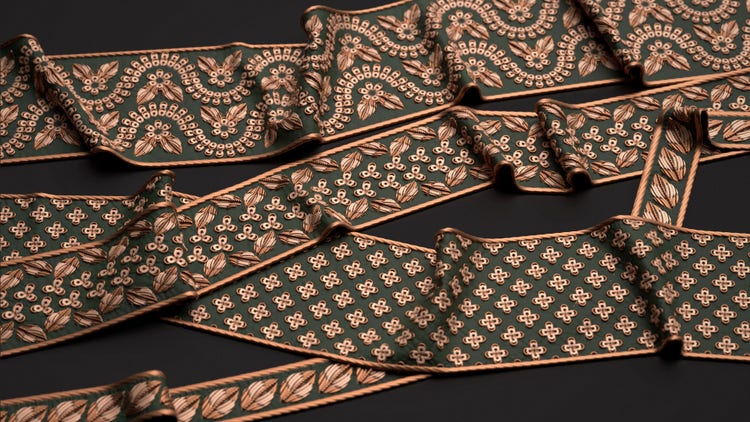
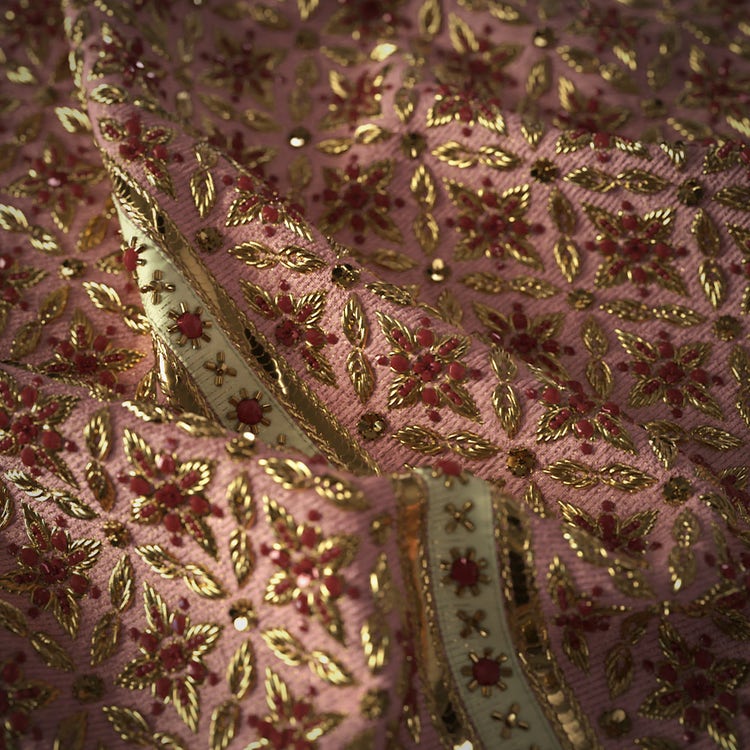
I have a deep love for Indian outfits. As I’ve created two saris already, I knew I wanted to add one to this collection. Researching for references, I discovered a variety of other gowns, including lehenga that inspired these materials. I fell in love with the complexity of the beading and figured out a kind of pattern.
With all that in mind, and having already worked on embroideries in the past, I really wanted to create a multitask material. It works well by itself, but you could also use it as a trim sheet, for colors, pearls, patterns. In the center, there are framed flowers, which you could use by themselves, for instance.
Artwork by Pauline Boiteux
Download the Lehenga material for free
My motivation to create the Cambodia beaded fabric was super-simple: I liked it, it was shiny, and I just wanted to make it.
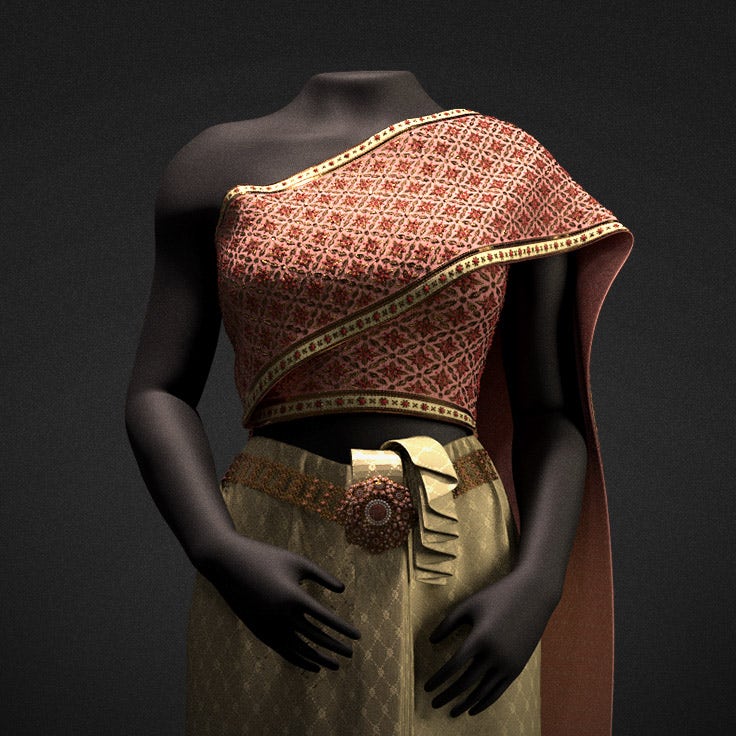
After quite a bit of digging, I’ve found out that one of the things I also do in the early stages of research is to try to make something work as a texture in my head. How will it tile? What kind of details will I be able to show? Do I know some of the nodes that will help me create that pattern, of should I try out some new ones? In these cases, both the skirt and the top were fairly simple to translate into a texture.
Artwork by Pauline Boiteux
Japanese embroidery is fascinating, because of the sheer amount of patience it involves, its discreet attention to details, and the elegance of its fabrics. The technique is very simple, because the artist is just pulling a simple thread in a basic loop, but the attention to detail is pushed so far that he or she can create an immense tableau.
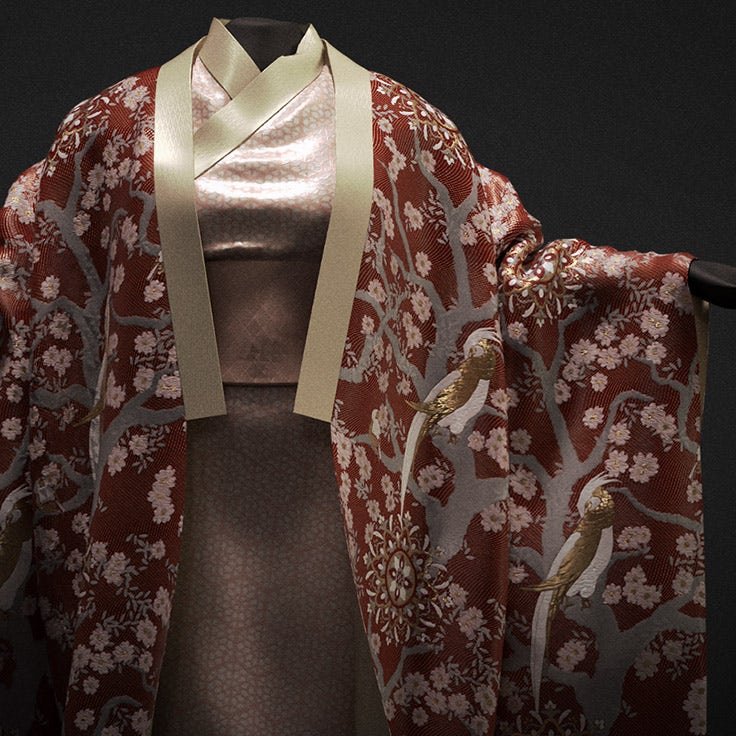
A kimono is beautiful from far away, but you can go really close to the details and see more and more stuff come out, because it’s extremely fine work.
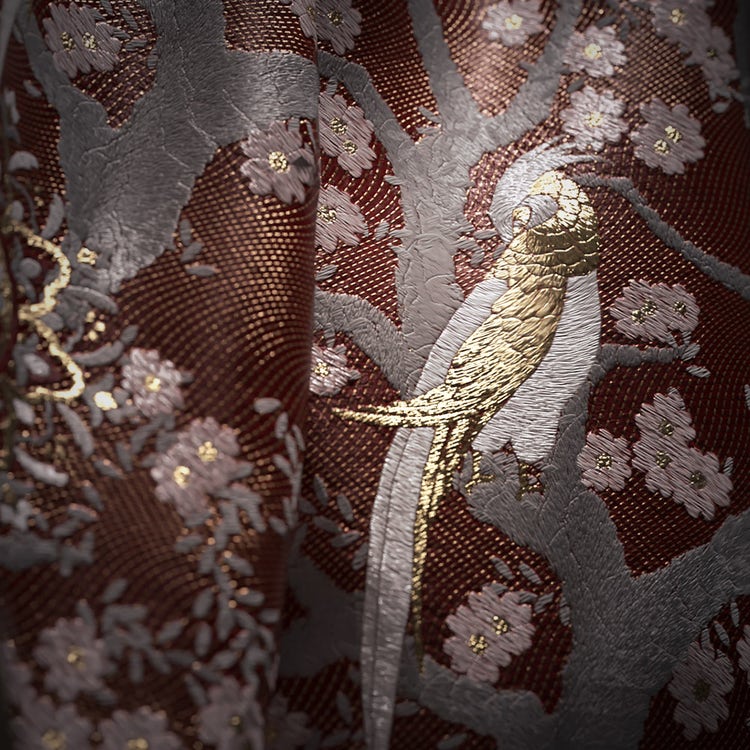
The designs are very symbolic and can have a lot of meanings, such as new beginnings, longevity, and good fortune.
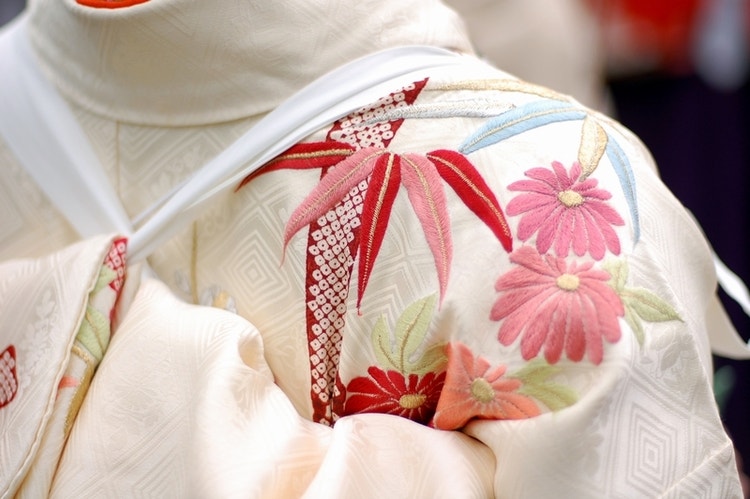
Creative Commons, musume miyuki
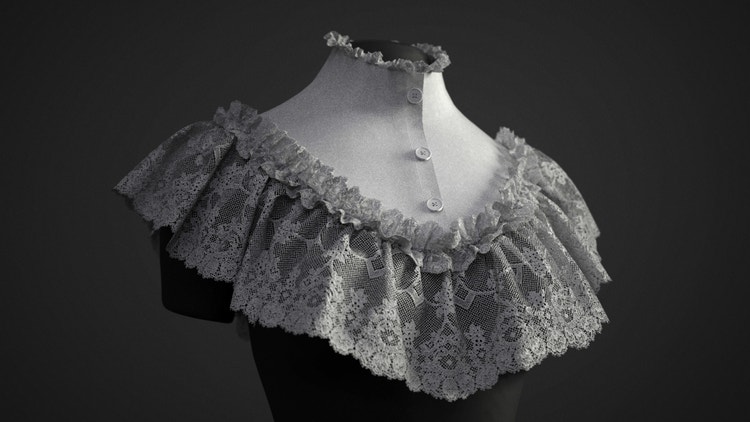
Artwork by Pauline Boiteux
I actually didn’t create this one because I wanted to: it was a request. So many people wanted it! And you know, it’s not because I didn’t like it, but it’s just… so… difficult. The fabric is so fine, and the knots are so complex to reverse engineer, and the pattern is so complex that reproducing it in Substance Designer was hell.
Ultimately, it works well and I like it. And now, you have the base, and you could input your Photoshop-made pattern to customize it.
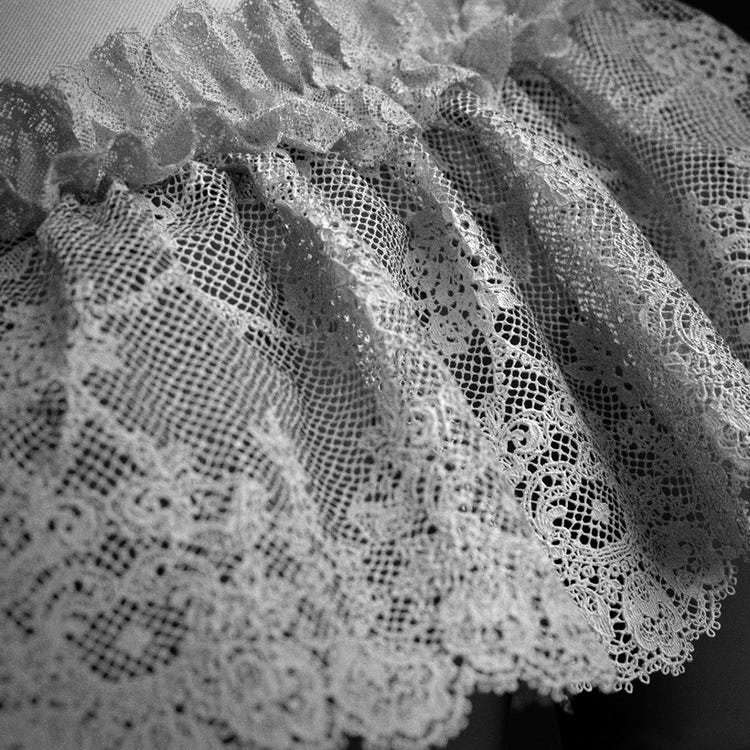
Artwork by Pauline Boiteux
I wanted this customization option because there was no way I was suffering through another lace material ever again! So now you can avoid suffering like I did, and enjoy the lace.
Download the French Lace material for free
That collection is more an invitation to be curious than anything else.
Each of those materials is my humble attempt to provide new perspectives, to open a discussion about the art of making precious pieces of fabric requiring patience, dedication and skill. All over the world people from all horizons are crafting these pieces of art; by themselves, these artists are a huge inspiration. From the most renowned creators to those hidden away, they all matter, and all bring something to the table. The techniques they teach are shared between generations, and tell the story of an art form that will never die.
As for the procedural aspect of this collection, it is meant for you to use as a toolbox. You’ll have access to a variety of techniques, materials, patterns and finishes. All I’m doing is providing an example of what you can do with it. I invite you to keep the parts you like and change everything else! Release your creativity, use these materials and techniques as tools, and make this art your own. Keep an open mind, never stop trying, be kind to yourself, and never be ashamed to ask for help.
Thank you all for your support and interest, it means so much. Be safe and I’ll see you around 🙂
Pauline wias live on December 3, 2020 to talk about the creation of her signature materials.