The Whole Brain: Uniting Creativity and Business Strategy

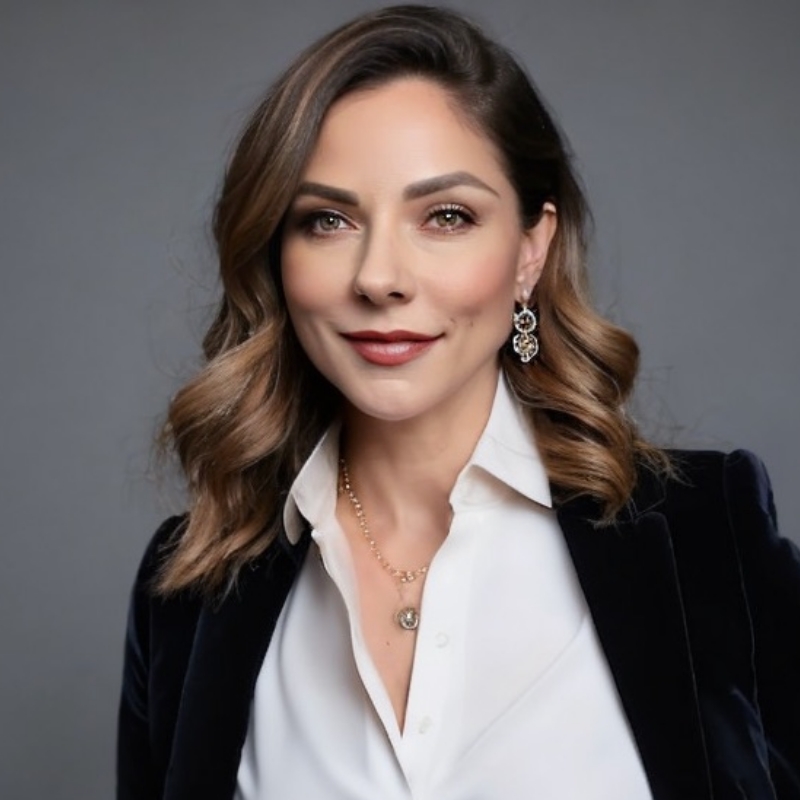
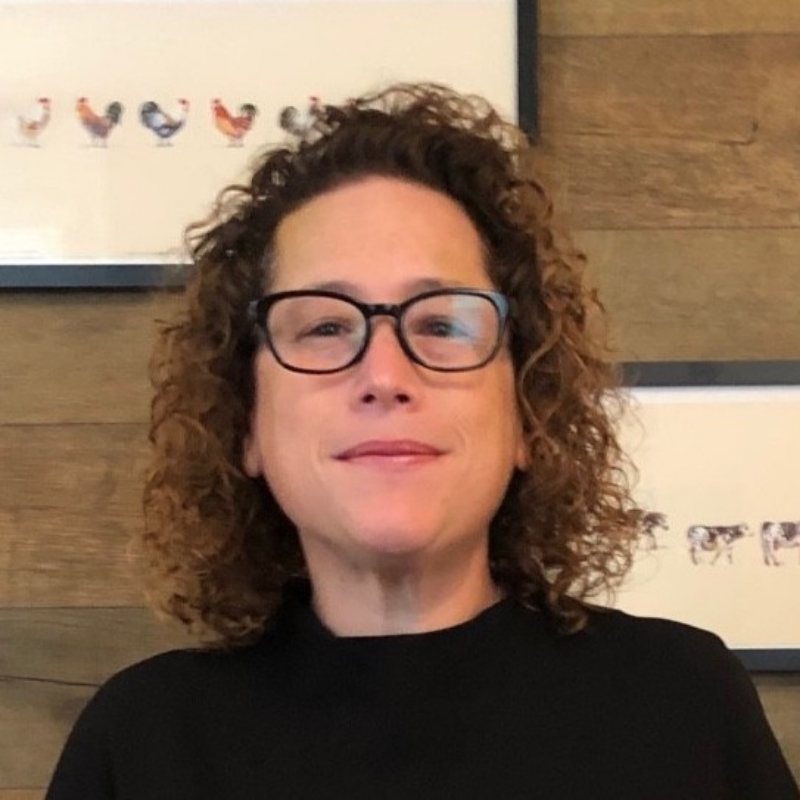
[Music] [Larissa Meek] Well, we're super excited to talk about this topic, The Whole Brain, Uniting Creativity and Business Strategy. So we're bringing really two different perspectives together. But that said, we believe that really anybody can be creative, anybody can be strategic, right? [Andrea Fishman] I don't think I can be creative. I think I was born to not talk to the creatives. Depends on what your taste level is and quality, right? But we're really here to talk about how these things are both important and how we sort of bring these things together. Before we go into the content, maybe share a little bit, this is intended to be a bit of a fireside discussion. - So-- - Got rid of the table. - There's not a lot of slides. - We have lots of water. We're going to see how this goes. So what we'd like to ask too, I know we want to make this a discussion. Right, Andrea? So what we'd like to ask everybody, rather than waiting till the end with questions, if something comes to mind, we'd love to try to have a bit of a discussion. - So if there's a question that comes up-- - Come on up. There's a microwave-- microwave? Microphone. There's probably a microwave in the back. There's a microphone. And here's the deal. If you guys don't ask questions, we have some PwC colleagues peppered in here, and their questions might be really boring. They might be about tax. They might not be about Photoshop. So we don't want that. We want you guys to jump in, challenge what we're thinking, push what we're thinking, maybe tie it to something you saw this morning. And if anyone can see this light that continues to flash, it's like the Northern Lights coming in. You're not imagining it. Every 30 seconds, it's pretty cool. - Yeah. - So shall we get into it? Yeah. And I'd love to figure out a little bit about our audience. So if you raise your hand, who here is with an agency or maybe consulting? Okay. All right. Does that make the rest of you in-house? - Okay. - Oh. - In house. - Nice. Do we have anybody that's like freelancing? Okay. - Little-- - Double timing. Yeah. And then anybody that's a student? Okay, I got a couple of students. And I guess the last bucket would either just be other or maybe you're in between gigs. - Is there any-- - Or maybe you're like a business person. - Or maybe you're-- Yeah. Yes. - There are others. - Are we considered other? - Yes. Others. - So we've got a few of those. - In this conference, we're other. All right. So we've got a few of those. And then just to sort of consider the different skill sets you all have, how many people here dabble in, like, UX, UI design, digital? Okay. So got it. Wow. A lot of you. What about if you consider yourself a graphic designer print, more maybe traditional design? Okay. And you can do both. You could do more than one thing. How many of you work in video or multimedia? So After Effects, right, Premiere? Okay. What about VR, AR, XR, immersive experiences? Got a few of you. Okay. And then what about 3D? Has anybody-- Got a few 3D, some Substance fans. Awesome. Could we already ask about Gen AI? Is anyone a GenAIer? - Yeah. Got a few. - One. All right. - I think that's going to come in. - Yeah. And then I guess just with that, is there anybody that considers themself a developer? Okay. Got a few. All right. Any other-- - Others? - Other topics? Any-- We have a few business people, of course. I know some folks here, maybe if you're like a product owner, maybe-- How many people don't consider themself a creative? Okay. We've got a couple. There's a mix. Interesting. All right. So this should be a good discussion. And like we said, please come up and ask questions. We'll see you-- When you walk up to the microphone right there in the middle-- If everybody wants to turn their head, it's right there. But we'd love to make this a discussion. So kicking off, just to give you a little bit about who we are. So my name is Larissa Meek. I actually happen to be local to South Florida, become a professional Hurricane dodger lately. So there's actually a couple more storms out there, so we'll have to keep our eye on that. But I'm originally from Saint Louis. I've lived in Chicago, lived in Los Angeles. I've been working in digital and creative for about 20 years. Really interesting journey. Candidly, I actually don't have a college degree, which is kind of crazy, but I have a lot of experience in terms of self-learning and working in the creative space, and I'm a big believer in constantly trying new things.

And so I'm really passionate about that intersection of creativity and business and really proud of the value that creativity can bring to the business. So, Andrea, if you want to give yourself a little intro or anything. Sure. Actually, it's really fun for me to be back here. I started out in DC after college, I live in Chicago. But in 02 and 03, after the big dotcom blow up, actually co-founded some of my friends, a digital agency right here in the design district. And for those of you that know Miami, 03 and the design district looks nothing like it does now. Maybe a little more sketchy, if you would. Our agency grew and evolved and all of a sudden, our little 5-person group became 200 creatives. And we entered the world of consulting and we spun it off. And so, as I moved out of Miami, just too hot. Yeah. Too many things like fog up when I left the car. - Too many bugs. - Too many bugs. - A lot of hair issues. - Yes. I went back to Chicago and we grew. And we were always proud to, like, not be a New York design agency, right? Our creatives stood on the strategy of what we were trying to do. It stood on the rationale versus just the next shiny object. And so a lot of what we're going to talk about today is that intersect. And I have, like, the same, like, proudness, right? It's about understanding the opposite and then working together to really continue to be distinctive and push the impact of creative and the impact of creative tech in new ways. - Yeah. - Awesome. - And a fun fact-- - Oh, yeah. Andrea and I both have twins. - Boy, girl. - Boy, girl. Almost about the same age. I'm just curious too, is anybody here a twin? - Got one. - All right. And does anyone have kids that are now taller than them? And isn't that weird? Yeah. It's weird for me. They're all like little people. That awkward middle school age is always a fun time. - It is. - Yeah. Oh, I love it. I love it. Wow, 6'4'' and son's taller that is... That's a very tall person.

So getting into it-- By the way, if you want to connect with us on LinkedIn, we're happy to continue the conversation and connect if you want to throw any additional questions after. So if you want to take a snap of those QR codes, we'd be happy to chat. Yeah. Absolutely. Okay. So like they say, my favorite podcast, let's get into it! Yeah. All right. So let's talk about what the whole brain is. And we actually were having an interesting conversation around kind of this misconception, right, that a lot of people think that somebody's left brain or right brain. And so we actually specifically wanted to talk about the whole brain and how you bring these things together. And I think on that note, Andrea, you said that you don't feel like you're a creative. Do you really feel like you're not able to be creative in this sense, or, like, how do you define creativity? Yeah. I think it's really hard when you have great creatives to find a way to express a feeling or an insight that they haven't already covered. And so I think for me the challenge coming from more of the business side is, I might understand how something resonates or may not resonate with our clients. Yeah. But expressing it in a way that's impactful to the creative team, I think, has always been challenging. But I do think that as we think about left brain, right brain, and I really believe it's about activating all the different parts. And I think the more that we can kind of come together and figure out where those activation points are is where, like, we can push the bar. Yeah. And I feel like creatives, like, sometimes we get in our own way and have a really hard time articulating the value of our work or even measuring the impact. And so I think it's-- We tend to gravitate towards the things that feel like a safe space and make us feel comfortable. And for creatives, it's about doing amazing work. So what we're hoping to shed a little bit of light on is, like how do you bring that part to the creative conversation. So when you think about what the whole brain is, what an awesome example. I know we have some Disney fans here, some people that I know. But if you're-- How many people here are Disney fans? - Everybody. - Not everybody. - Not everybody. - Oh, we are in Florida. Yeah. So really interesting to think about how these two parts come together, right? Walt was known for being a huge advocate of quality and always being curious and always trying new things. He made the multiplane camera, right, that was used for Snow White, which was just groundbreaking at the time and it cost an astronomical amount of money to put together. And then, of course, Andrea, your thoughts on Roy from that perspective. Yeah. I mean, for Roy it wasn't just about pinching the pennies to create creative, right? It's about finding a way to elevate the experience in a way that people are willing to pay actually more for, right? And if you think about the premium that Disney obtains in the market, it's because they place the value on the creative, but they find a way to do it in a way that actually drives business and innovation in business. Yeah. And I think to that point, like, what a great couple of quotes when you sort of think about this virtuous cycle that this creates. And there's so many examples between Walt and Roy that just get to that point of quality is that even when you think about the franchising and the licensing rather, the licensing of the product, right? Like, that created the ability to do more creative things, to be more innovative. And so it became this sort of fuel for creativity when you have the right business mindset. Right. It's like the heart and the soul and kind of bringing them both together. And I think the key here was, it was never just about the economy, right? It was always about the values and using the values as your sensor to kind of guide the decisions, and you guide that North Star if you would. Yeah. And what I love about the Walt and Roy story too is when you think about-- When you think about Disney, a lot of people think of Disney World. But it's like, if you look back at that journey and all the steps and the success building upon success, Snow White was groundbreaking at the time. If there was no Snow White, there probably would be no Disneyland. And if there was no Disneyland, there would be no Disney World. And at the time, animation was really not very popular. And it was not necessarily beloved like it is today in this art form. So when you really think about how incredible it was from an innovation and creativity standpoint, you really had to have both sides of this working well together. And there were so many times they were on the brink of failure and really risking everything to take the next step and the next step. One of the things that I love about this story is the evolution of Donald Duck into this. Oh, yes. So we were talking earlier about safe spaces and maybe new channels-- Yeah. As a place that you have to protect, right? And I think more and more protecting creative spaces is kind of integral to innovation. - Yeah. - So share a little about Donald Duck. So the Donald Duck story is really interesting. So, again, with Walt really being protective of Mickey's character and Mickey's aura, at the time Donald Duck was introduced, the cartoon, sort of characters were changing at the time. You had characters like Popeye, like Betty Boop, right? A little bit Risque. Popeye is like punching people on the face. And this was the kind of animation that people were going to see. And so Walt was really adamant on protecting Mickey Mouse and his character, and this is why Donald Duck was introduced as the sidekick, which he could kind of be the angry character, and he could kind of play to the audience taste levels and what they were interested in that time without changing Mickey Mouse. - And sacrificing that brand. - Yeah. Exactly. But when you think about too the additional value that that added from a brand perspective and gave them additional characters to play with, they were able kind of expand on that. So I think that's a really fascinating example of-- It is a little bit of like business model reinvention, which we'll talk about-- Which is Safe Space that actually grew their addressable market. And I think that's just the precursor. Absolutely.

So what does it mean, Larissa? What does it mean to be creative? So when we talk about creativity, and I think this is true for all of us. And there's actually this other quote that I really love which is, "Creativity is about leaving room to make mistakes and design is knowing which ones to keep." So when you think about creativity, it is a process. It's a process of exploration. It's a process of experimenting, but it's also a process of what's the objective that you're going for. What are you trying to accomplish? It's not just creativity or design for the sake of it, but, really, I know as creatives, like, it's actually good to work inside a box, right? Like, if you have no box you're working in, it's almost like you get the blank canvas syndrome, and you're sort of not sure where to start. But, ultimately, it's also about an outcome and it's really about thinking what is that that craft or what is that output or that final vision that you're creating. And so it's really having a balance to both. And I'd love to ask you too, Andrea, if, like, how do you make sure that creatives have the time they need? And I'm thinking too. And the audience, I know we face this and a lot of marketers are facing this too is, you have to do more with less, or you have to work faster or there's always a deadline. But you also got to build it in, right? I think one of the things that we've learned is, building in the free space to do exploration, to do concepting. It's not just full time production. And I think we learned our lessons over the years that if we didn't build in that safe space to not be buildable, to not do creative exploration, A, you're going to burn out. And, B, the quality is going to go down because everything is production, right? And everything is towards the goal and everything is about delivery, and none of it's about the free inspiration that you need to get there. So I think building it in and budgeting for non-buildable is something that you have to do on the business side to protect that innovation space. Yeah. And I think it's so important for creatives to get that, like, sometimes creatives just need time to do nothing. Like, even if you're going for a walk and you're not-- - I think we all do. - Yeah. I think that's actually true for everybody. But it's like that magic of getting in the flow and when you're actually able to focus and not context switch. - Yeah. - Really, really important. - So, Andrea-- - All right. Let's talk about it. What are the big elephants in the room? We'll just go through these. Hopefully this will generate some discussion here, but let's start on the left, the democratization of design. Right? As tools become easier, as access becomes easier, as it becomes cheaper to use these tools, what does that mean for the bar? What does that mean when, like, the dangerous non-creatives like myself start dabbling in Firefly? We start actually to see some degree of the sameness factor creeping in, right? As there is more tech-enabled creative. Is there a risk of sameness? I see a lot of that in terms of some of the commercial work that we see when they're oddly similar-- - Yeah. - For a variety of reasons. Like, do you feel brands are being as creative as they could be or they used to be? Like, do you feel like-- I'm just certainly not a judger of design, but I think there's a lot more hesitation as audiences grow and agency consolidation continues, that is a challenge. And then building on this, I think there's a challenge around commercialization that there isn't the free space, right, to experiment. And so I think there is a big elephant in the room is, like, how do you protect in a commercial setting, the ability to do the breakthrough? Because frankly if you don't do the breakthrough, you eventually going to lose that market share that got you there. - Yep. - And so how do you find that space? And I don't think enough people talk about that.

Yeah, and I'll add to that as well is, when I think about, when I was in art school, a lot of creatives don't necessarily get taught some of the basic business skills or basic business foundations, right? But it's so critical when you think about-- And I'll take UX, UI design, right? Like, it's not really a new thing anymore, but relative to other careers, it's pretty new. But it feels like, as we've gotten more tools to measure things, as we've gotten more insights about how things perform, the business is all-- Businesses are looking at that and saying, oh, there's an opportunity here. - There's-- There's another lever to push. - Exactly. And so it does influence creativity and creatives. And again going back to driving that goal. But it's definitely-- I think something that creatives, like, you need it, right? Like, Walt wouldn't be successful without Roy, without this sort of commercialization hat. But I know for creatives, it can be really frustrating because-- - Stressful. - Yeah. We're like, "Oh, I'm not thinking about that. I just want to make great work or I want it to be high quality. I want people to feel something." And like, how do you measure emotions, right? But it really is important to get to that virtuous cycle is, is knowing as a creative, the more that you're impacting the business, the more opportunities you will have to do more creative work. That's right. We think about the other elephants in the room, and by no means are these the six, but it's the economy steepened, right? It's that phrase that goes on and on and on. - It's the economy. It's the economy. - Yeah. And when it's growing, there's pressures. And when it's shrinking, there's pressure. And when we have an uncertain economy, which some would argue we do now, there's a lot of pressure on all the levers. And I think from the organization that's already compressed, their supply chain and has compressed their ways of working and their real estate, there's this untapped pool of compression that I think they don't really know what to do with. Mm-hmm. And it becomes risky when someone who doesn't really understand the business of creative or the business of marketing starts to use that lever because it's the last one out there. And I was going to say on that point, when the economy gets a little bumpy, sometimes it seems like creatives are often the first ones impacted because the business may not always understand the value of it. But I think that also comes back to as creatives, we need to be better about talking about our value and about articulating our value. And so I think, again, that goes back to, it's not something that's necessarily native that creatives are taught or that they think about. But always being able to articulate your value is really, really important as an individual on your own career path, and it connecting back to being able to basically get through uncertain economic times as it sort of future protects yourself from your career when you're able to talk about your value that you're contributing. All right. I think the last two kind of mashed together, whether it's the change or the AI driven change. And it might not even be the elephant in room. It might, like, be the elephant, right? Where do you fit this in? Is it the anxiety of AI? Is it the opportunity of AI? Are we just sick of talking about AI? But it's an evolution and who knows what the next one's going to be? But this isn't like there's one evolution that stops. And so whether it was the first generation of Photoshop versus some of these computer animated videos, it's just going to continue to evolve. And so I think there has to be reconciliation and recognition that this is just the latest bump in the road. Yeah. And there will be more, and we don't even know what they are. Yeah. And you and I have been working together for a really long time. I can think of several times when you just look to the past to see change. I'm sure there's a lot of-- Well, maybe not a lot. I'm sure there's some people here that, like, knew Adobe Flash, and that was, like, I know for me, the agency I was at was like our bread and butter. Or like design thinking. - Or just like our bread and butter. - Yeah. Design thinking was like the big buzz, right? Had to do it. And so there's always these cycles and always these changes, but it's really about being adaptable and continuing to explore the new technologies. So while there is a lot of excitement, but there's also anxiety around, like, what does this mean? Is this going to impact-- If everybody can be creative, what does that mean for creative? So it creates a lot of questions, right, and uncertainty. Is it time for our first quiz? - Oh, yeah. - I think it is. All right.

So-- Tata-dada. We have a patent pending technology that was designed by our innovation center.

So we call this the Arm-O-Meter. What I want to ask you guys is, how are you guys feeling about GenAI? And you put your arm up. This way is anxious. Actually, am I pointing the right way? Sorry. If you're excited, point this way towards the green. Anxious, point this way. We see like 10 people raising their hand. - Yeah. Raise your hands. - Come on. If you're in the middle, that's okay too. So we got a pretty good mix. We got a lot of people in the middle. We've got some people-- - Far left. - Far left. - This could be our election. - Yeah. Maybe.

A little bit of everything.

Yeah. So there's people on different sides of it, right? Like some of us are really excited about it. I saw some really cool demo before this that was showing Substance and After Effects and, like, some of the incredible AI features in that with texturing. And the amount of time it saves is just amazing. And I also have to wonder, like, what does this mean for creatives in terms of, maybe as a creative you tend to do one thing and now you can do video. And maybe you can explore different mediums. And so when I think about creative craft, it can open up a lot of possibilities. But, of course, there's the fear too of what non-creatives coming in and maybe we don't need you guys anymore. So there's always that fear, right? But I do believe that taste levels and that quality, like, AI can't do that. You can't just-- You can't replace the human factor. - Yeah. - Right? We're going to get into the human factor and how you measure that. But I think that, I don't know, in many ways, it almost creates a bigger opportunity around the creative storytelling and the voice-- Yeah. Versus just the production element of it. Yeah. And we're pretty-- AI has been around for a while, but in terms of where we're at with the technology, like, who knows where things are going to be quality wise from years from now. All right. So now we're going to switch gears a little bit, have some questions that we're going to ask each other in the meeting of the minds. So we put together a couple key questions that we'd like to cover. - Just five. - Yeah, just five. And if you guys have any questions that you want to pile on. So, Andrea, what predictions do you have for the future of creativity in business and the role of emerging technologies? - That's a long question. - It is a mouthful. - It's a good thing I have my note card. - Yeah. This is very rare for me. So where do we start? I think better collaboration. At the heart of it all, I think, is the acknowledgment that there's a greater interlock between creatives, technology, and the business. It's not just creative in the business, it's the creative technologists who enable a lot of that. Right? And, again, like, I think this isn't new, but I think more than ever, the ability together tell your value story, the value equation becomes bigger and bigger.

I think business will have to get, like, better insights into knowing what's possible. We are facing a ton of questions actually from our clients, which is like, "Hey, we just spent all this money. Could be on Adobe, could be on whatever. And how do we get value out of this huge investment that we just did?" And so knowing from the business side what's possible in terms of knowing your audiences, targeting your audiences, rethinking the capability around content, there's I think a bigger responsibility on the business to know what's possible and to bring that opportunity to the table. And I think in the past maybe that wasn't the case. On the flipside, I think it's important that the creatives also have that knowledge of, like, knowing the problems they're solving, understanding that if there's an issue around segments that they have maybe new ways to creatively solve those problems and understanding kind of how their work solve problems in new ways. Yeah. And I also think a lot about just in the change we've seen since the pandemic, right? Like, there's been a huge rise in the creator economy. I went to Cannes Lion this year. This is the first year that they had a specific track for creators. So when you think about too about the democratization of design and democratization of creativity, you've got this unlock of so many people creating massive amounts of content. Something I think that's also really interesting that, as creators, we should be really excited about is there's the creative economy report from the UN Trade and Development Council. So just some interesting stats to know is that creative services exports have surged to 1.4 trillion in 2022, making a 29% increase since 2017. Creative goods exported reached 713 billion, which is a 19% increase. And over the past decade, creative services share, all of creative services export rose from 12% to 19%. So interestingly, developing countries significantly have increased their share of this from 10% in 2010 to 20% in 2022. And developing countries primarily export creative goods, while developed countries dominate creative services exports. So a lot of big numbers there. But when you talk about quantifying it-- And, like, I get goosebumps when I think about how these creative services and creative goods can, like, really rise, build these massive economies. But it really is having huge growth. So I think it's something we should be really excited about. And I'll close with a more like simple data. Nine out of ten from this morning, creative teams are growing in size, right? And so with all the fear of Chatbots taking over everything we do, maybe we'll have, like, holograms next year. Teams are growing because there's a greater appetite. Yeah. Definitely.

All right. Next question. So this is probably a good one for me. Yep. So what essential next-gen skills should creatives focus on to cultivate a resilient, forward-thinking mindset, especially in times of rapid change and uncertainty? So up-skilling, modern marketer, like when you look into not only your team but in the people you're hiring for your team. Yeah, what I really like, of course, high quality talent. But when you think about, again, your value that you're providing back to the business, when I think about where technology is heading, and when I think about creatives, I think about craft, I think about mediums. Like, you might be an artist that maybe you use clay, maybe you use paint. What I'm really excited about is the unlock of being able to be almost more of a generalist creative in a way or giving yourself more ability to create sort of different types of-- - Content. - Multiple mediums. Multiple mediums. Exactly. And I think that, that is, really exciting. But I think it's being open to exploring new tools. And with GenAI and some of the chat interfaces, we may not need to know these, like, really complex UIs anymore, and it might enable you to unlock creative thinking in other mediums.

And so, I think, when you think about the impact that that's going to have, it's easy to sort of fall on this, not having a resilient mindset and being fearful about what's next. But do think about all of the opportunities that it could potentially unlock. Yeah. I think some other skills, right, that I would love to see evolve. And I think the first one is storytelling. And I think that it's an art to be able to tell the narrative in a way that the business understands what you're trying to do. And that actually gets you the metrics. - Yeah. - Right? Because a lot of your initial discussion was like, well, how do we measure the value, right? How do we quantify the narrative story that we're crafting? And so I think the better a creative or a team could be on telling the narrative, whether it's of the customer, of their journey, of their creative, and taking it all the way to the end, where we can say, and this is the payoff, right? This is the payoff around loyalty. This is the payoff around adoption. This is the payoff around entering new markets. It really comes the full circle. And then I think the last or the second tool that I think skills wise is I really think creative analytics is more important than ever. And it's part of that storytelling, but it's also understanding so that you can stand up and advocate for, well, here's why it's working. Here's what the data tells us about how our work is impacting the journey. And then using that data to refine the creative work that you're doing and refine as you think about new audiences or new messages, understanding in close to real time what that data means. So telling that brand story and using the data to back it up, I think that allows you a bigger voice in the room. And maybe stepping outside of your traditional creative role. Like-- And I've said this a lot. Like, good work by itself isn't enough, right? Like, you have to be able to advocate for yourself. You have to be able to tell your story. So something that I do is I put together a career blueprint every year, and I will literally write down every couple of weeks what's the impact I had. I'll look to quantify it. I look for the numbers. How much was the budget of the project that I'm working on? What's the impact that that project had at the end? So as much as you take that time every couple weeks is depending on when your career reviews are on or happen. But I think that's also a really important exercise. Just the act of writing something down is inherently makes it different than if you just sit and think about it. If you commit to it, write it on paper, write your goals down, but it really gets back to this, like, forward thinking mindset and also being able to tell your own story in terms of the value that you're adding.

Love it. Okay. Next question. Oh, let me get it. - This is me. - So this is for you. This is for you.

So, Andrea, how are business models evolving? And what will be the impact on marketers? Sure. Well, let's start broadly. I think you want to talk about SaaS models and everything on demand. I think when you think about everything on demand, I actually think Adobe was one of the first to kind of move into this always on economy. And whether you're talking about licenses, or you're talking about goods, or you're talking about just massive amounts of content, the shift to this sort of metered always on economy, I think, has really changed the role that creators and marketers play. It used to be, my kids don't really understand it, they were commercials, and they were in the middle of these things called TV shows, right? And these things called newspapers. And you worked towards, like, the Thursday night mega commercial. But you worked towards a schedule that was very predictable. And so you could schedule creative, you could schedule essentially a year's worth of brand at the beginning of the year. That's totally changed. The whole concept of Thursday night watching Friends and there's an ad in between that that doesn't exist anymore, right? So being always on, I think, has totally changed the way that marketers need to think about how they produce content, how they measure content, and what are the distribution channels, right? There's so many more channels and so many more mediums that, as these models evolve and the distribution models evolve, there's all kinds of new partnerships that were created. And I think understanding the model and understanding always-on economy for so many of our clients, it just shifts the way that we think about the creative experience. Yeah. That's interesting. And I think about how much we've all seen things change. We know the Blockbuster video story, right? Like, it's always an example. But just curiously, even outside of marketing potentially, like, what business models do you think are at risk? Is there anything in particular that you're seeing trends towards or perhaps new business models that are emerging that might not really exist? It's the disintermediation of everyone, right? It's whoever can get closest to that end customer in the fastest way possible. And it's rethinking, I think, a lot of with data how you know your customer. And so organizations that are great at knowing your customer or knowing your customer's customer are starting to go around the traditional supply chain. And whether that's streamlining commerce, right, the Amazon-ing of everything, but they're now facing challenges from other commerce organizations, especially internationally that are getting even closer at a lower financial kind of bar than they are, right? So knowing your markets, using data to get around them and offering direct service, right? And I think a lot of our clients are getting into this model where they're serving clients directly. They're using things like GenAI to predict better conversations, to change the role that call centers play from being a cost center into a revenue center. And so understanding-- And I think this is an opportunity for creative experiences, right? You might not think of a call center agent per se as someone that that's going to deliver great experience, but they can, right? Yeah. And I look to, like, Zappos, for example. They innovated this with their customer service years ago. I think now we're seeing the role of AI and creative to deliver a NextGen experience that someone might not be expecting from someone in the call center. I think if you could provide these tools and creative channels to deliver customer experiences, you're going to be relevant. Yeah. It's interesting. And I know there's some pharma companies too that, for example, are going direct to consumer, which is pretty crazy. Like, that's a perfect example of, like, a new business model to your point is rather than going through the middle person or the middle man, I guess. They're just going straight to consumer. And so there's a lot of examples of that in different businesses where things are certainly changing. Right, if you think of-- Not that I'm so into fashion, but if you think of like the fast production fashion houses, right? They fast fashion, right? Again, you're not planning for two years out. You find a trend somewhere in the world and less than 30 days later, it's on Michigan Avenue. And you can do that because your supply chain changed, but you can really do it because you're listening. And you're really understanding consumer sentiment. And I think those are the models that are going to continue to thrive. - The more you know about your customer-- - Yeah. The more you can respond. To that point, years and years ago, you would plan your fashion line, like, six months in advance, and now they're doing things, like, in real time. So things change so fast. It's pretty crazy. Yep. All right. Next question.

How can businesses evaluate and measure creative innovation? - Where are we going to start here? - Oh. - You want to start with this one? - Yeah. Where I'll take this one is-- But, personally, what I'm really excited about that Adobe's doing is not only-- We talk about design democratization, but I get really excited when I think about democratization of insights and data. Imagine being a creative in Photoshop or in your favorite design tool, and you have data at your fingertips to help better inform you. In a lot of organizations sometimes the data and analytics is, maybe siloed or you don't have direct access to it. But I think that we're sort of moving in that direction, which is getting better information when you're at that stage of designing. And as you were saying also, this push towards personalization or meeting your customer where they are is going to be happening more and more, and creatives are going to playing more of a role in that. As far as it-- We'll also take this back to sort of, as you and as an individual is finding access to those metrics. Again, you might have to ask people. You might have to get the information, but making that a part of your career story so that they are able to talk about your value. But I think it's about the right metrics, right? Yes. And I think there's an obligation of pretty much everyone in here to influence what the right metrics are. - Yeah. - Right? Because if you don't advocate for what you think are the right metrics, if you don't advocate for how you're looking at performance, you're going to get stuck with metrics that people like me come up with who don't understand the business. - Yeah. - Right? And so I think it's a real problem though, right? Because we look at things like production, time to value, cost per asset, Channel 8 sideways. But I think there's a lot more that we can think about in terms of how we spark and measure innovation, how we enter new markets, how we drive actually brand sentiment. So I think there's an obligation to shift the metrics that you're using because the metrics are clear in here. And, like, I go back to the sports analogy. We know we're in like the Moneyball era, right? Where there's data scientists sitting back there telling you what pitch to throw and what defense to stand up. And there's eight million allegories for that. But there is something to it. And so I think there's two types performing teams. Ones that look at the data they measured in the past, and then there's ones that are saying, here's what we're going to need to measure in the future. And the more you influence, and I think that's the better off you're going to be. And I love what you said about it being the right metrics too because we know if you're just doing things like view time or just a certain click, right, like, it needs to be the right thing that you're measuring so that you're actually driving that behavior when you're creating experiences. And so having the right points-- The other thing I'll add too is, I kind of sometimes feel like, and this goes back to what we talked about earlier is, like, you have to leave some space for creativity and some space for uncertainty. - Yep. - You have to allow room for exploration. And I feel in some cases that we've got into a point where we're so data driven that we've lost room-- - I agree. - To explore. And I almost think you build in the fast fail into anything that you're trying to prototype, right? And acknowledge that we want fast failure, right? We want to test and fail and test and learn and keep testing and innovating. And so I really think that, like, the better you can be at sort of building a model that intentionally creates a safe space and box it off from traditional measurement and box it off in some sort of environment where it isn't going to be a revenue generator, it isn't going to be a cost saver, it's part of the process. I think the better off you're going to be. And so however you want to create that safe space, whether it's through time or an investment pool or sort of a black ops team that isn't being tracked, I think you have to do that. And I think without that, I think you stifle innovation. Yeah. And I think in creatives too, there's also the saying where you have, like, "One for the meal, one for the real," right? And so, like, you do have to take on projects that are going to pay the bills. But then also there's these passion projects, right? Any famous award ceremony, a lot of these creative ceremonies, you have teams just sort of focused on pushing the envelope. And so I think that's another way of-- There's some projects that are just going to be what you need to do to pay the bills and leaving room for the stuff that you're really, really passionate about. So-- - I think that's fair. - Yeah. Yeah. - You got to pay the bills. - Got to pay the bills.

All right. So this is our last question here. So really-- And we've kind of touched on this a little bit, right? But how are empathy and storytelling vital in delivering successful customer experiences? All right. I think this is where we go back to the beginning, right? - Yeah. - And we talk about bringing the voice in. And so I think for many of the folks in here, there's again an opportunity and a responsibility to maybe find your voice now more than ever. And we talked about earlier on the models changing and the hot topics changing. And we were joking about design thinking and human centered design is like the big thing five years ago. And we have badges in it, and everyone knows how to do it. But it led to finding new voices and new advocates throughout the journey and knowing your customers better. And I think now, and I'd love to get your thoughts on this, that, as the technologies change and the capacities change, I think it creates a bigger opportunity to create voice and to become a better storyteller through the process because you might free up some capacity. So maybe think about-- Could you like-- - Yeah. - Think about that? Absolutely.

We don't have to look back that far to see how much has changed in terms of the volume of content. We both have middle schoolers. My kids, like, don't even watch TV. They just, like, watch everything on YouTube or Snap or it's just everything, it's changed so much. - The socials? - Yeah, the socials. - So-- - Is that the word anymore? - It might not be. - The socials. But I think the thing that is the thread through everything is the power of storytelling. And creatives are really good at this. Some business people, not so great at it. But it is really the thing that never gets old. And there's also, does art imitate life or does life imitate art? And there's plenty of examples when you think about the flip phone, and that came from Star Trek. When you think about the Jetsons and having a robot in your home. And there's all these examples of storytelling and creativity that have also influenced new technologies, which I think is incredible. I know Elon Musk was just sharing a bunch of new examples this week-- Of his new vehicle. Of his new vehicle of, like, and it's funny because it kind of plays a little bit into, like, this mental model of what people sort of maybe thought about the future and bringing people along in that way. But I think that storytelling is the thing regardless of how the tools change and how the tools evolve is really the thread that is always going to be constant. And the more content we have accessible to us, that's not going away. - And there's so many channels-- - It's getting bigger. - Yeah. - What was this-- Personalization. There was a statistic which I don't recall the number of, the amount of new content that was generated around the Olympics this past summer. Oh, yeah. Because if you think about it, this Olympics broke a lot of barriers, both physically and tech wise and content wise. They didn't have it in a stadium, right? They had people floating down a dirty river.

But it was new and it was different. It created new types of content and new types of display and new types of experiences before the Olympics even started. And then you start thinking about, "Well, they're not just on one channel at night, right, where they've saved up for it," right? They're streaming in real time. They're streaming in multiple languages and on multiple types of platforms, right? Whether I'm getting a snippet on-- Well, not on my watch, but you can get a snippet on your watch, right? Or you're looking at it in a smart device or you're looking at it, like, in an integrated experience room. The amount of content generated on this Olympics was something like 18 fold in any prior Olympics. And I think that's just the start, right? And so managing that-- To me, that's all goes to managing the message. And so when you have so much more content around so many more channels, how do you get control of your brand? How do you get control of your story? And so, like, that's how I tie it back to storytelling because it creates a lot of risk-- - Yeah. - For a brand and for an enterprise. And so I think there's an opportunity to hit that risk. And I think what you said really sparks a thought for me, which is like, it used to be brands were very, protected and you have your brand guidelines and they're very rigid. And we're entering a time where I think brands want consumers and people to be part of their brand, to take that brand and put it out in the world. So as we think about evolving brand standards and as we think about, like, what does GenAI mean and tools like Adobe Express, right? Like, you want to be able to put some rules and frameworks around your brand. But I think we're seeing more where they're going to be released into the world, and you're allowing people to interact with that brand, whether they're your employees or whether they're advocates of your brand. So it's sort of this change in this idea that branding and how your brand has to be super rigid and go through all these checks, but seeing things released out into the world and across many different channels is definitely a change that we're going to continue to see. So let me ask you kind of down that path of controlling the brand. One of the things that I heard this morning was the, I guess, innovation around some of the new products around creating and managing and authoring content in much more regulated environments. Some of the conversations around, I call it GenStudio for marketers or I don't know the brand name. But we heard some really interesting stuff around that. We saw some interesting stuff around how you manage even now creation of video. So how do you think that brands who are a little more regulated or managed or even just organizations that have a command and control structure are going to start responding to some of these new tools? Is it a fear or is it an opportunity? I think it depends. I definitely know with the regulated space you have to approach it a bit differently as a creative. For example, in pharma, you can't be too sales-y with your products, right? There's a lot of rules in terms of when you're talking about the product. What you say-- What you say, how you say it, what you promise. But where I think there's an opportunity in terms of how we think about these things is, as a brand, things like what does GenAI mean for your brand, you might need to update your brand guidelines to have like a prompt library and be able to provide people guidance on like what are the right styles. I know with Firefly, you can apply structures, different styling to it. So I think we're going to see a lot of that evolve is-- When you think about your brand guidelines and even your design systems, right, like, these things are going to have to evolve as you put them in the hands of more people, and you have to incorporate that into your brand guidelines. And I think there's a number of different ways that could take. I know in Firefly, you can do things like Style Kits and you can create these repeatable styles. So even if you don't necessarily have that specific prompt, you can get consistency. And I think consistency is what is going to be the key. But how do you tell the GenAI outputs to be consistent? - And I think that's-- - It helped you make better PowerPoints? - Was there help from there? - Yeah. Well, maybe. - Maybe. Maybe. - Maybe. Maybe not.

So yeah. So I think it's storytelling at the end of the day, it's about your story as a creative and how you tell your story for your own career with the business. If there's anything that you take away from that today is being a creative is don't just let your own story fall flat. Use data. Think like from a business lens and use that to your power and advantage as you talk about the impact that your work is having on the business. - Be your advocate. - Yeah. And on the business side, we need to learn how to embrace that. Yeah. And if you don't tell anybody, nobody's going to know. So I know and we talked a little bit too about creatives sometimes having impostor syndrome and sometimes it can feel weird to talk about your work. You might feel like you're bragging about yourself, but I like to sort of flip that on its head. And it's like flip it to what you're passionate about. Flip and have that conversation about what excites you, and go talk to your leaders about what your passions are. So when you talk about the impact that you've had, if you just sort of reframe that as like, "Here's what I'm passionate about, here's what I'm excited about, let me tell you about that." If you don't take the time to tell your own story, nobody else will tell it for you. Thank you for joining this experiment with headphones and we're grateful for you.

[Music]

In-Person On-Demand Session

The Whole Brain: Uniting Creativity and Business Strategy - S6704

Sign in
ON DEMAND

Closed captions in English can be accessed in the video player.

Share this page

Speakers

Session Resources

Sign in to download session resources

About the Session

As existential threats converge, many companies are taking steps to reinvent themselves with creative thinking as a critical skill. Conversely, creatives must enhance their business acumen to remain relevant. Join PwC Partner Andrea Fishman and PwC Creative Leader Larissa Meek in a “battle of the brains” to explore how generative AI, next-gen skills, and evolving models reshape creative and business landscapes.

In this discussion, PwC will debate both sides of:

  • How generative AI like Adobe Firefly is transforming creativity and business
  • Essential next-gen skills for creatives like Substance 3D
  • New business models and their impact on marketers
  • How businesses evaluate creative innovation
  • Seizing emerging opportunities in the creative industry
  • The importance of storytelling in driving effective customer experiences

Technical Level: General Audience, Beginner

Category: Collaborating with Your Team

Track: Creativity and Design in Business

Audience: Art/Creative Director, Business Strategist/Owner, IT, Social Media Content Creator, Executive, Marketer

This content is copyrighted by Adobe Inc. Any recording and posting of this content is strictly prohibited.


By accessing resources linked on this page ("Session Resources"), you agree that 1. Resources are Sample Files per our Terms of Use and 2. you will use Session Resources solely as directed by the applicable speaker.

Not sure which apps are best for you?

Take a minute. We’ll help you figure it out.