
Convert your files
Visit our free PDF converter, select a file and convert it in two ticks. Convert everyday Word docs and Excel sheets, as well as PowerPoints, JPEGs, and more.


Whether you’re working on your next video project or looking for ways to refresh your illustrations, a storyboard template can help you tell your story. They’re perfect to get that creative spark going, or for pitching your next big idea – the sky’s the limit.
Learn more about what a storyboard is, why they’re important, and how to create your own.
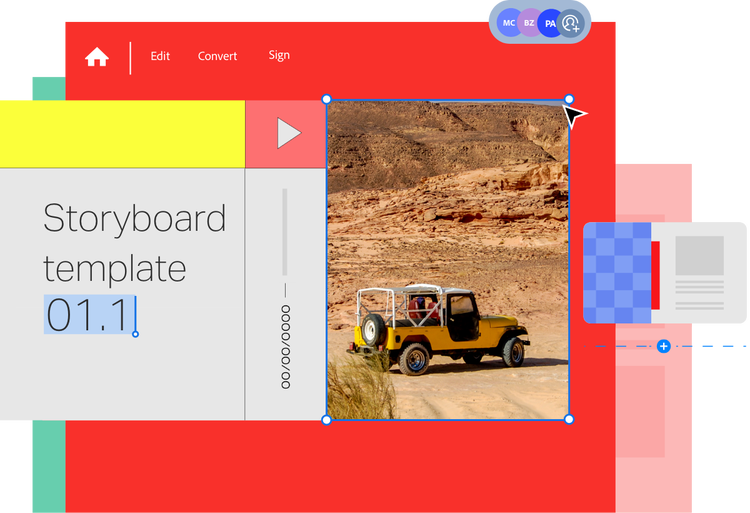
Download your free printable storyboard plan template below. From comics to animation reels, short films and commercials, create a storyboard and begin your next exciting project.
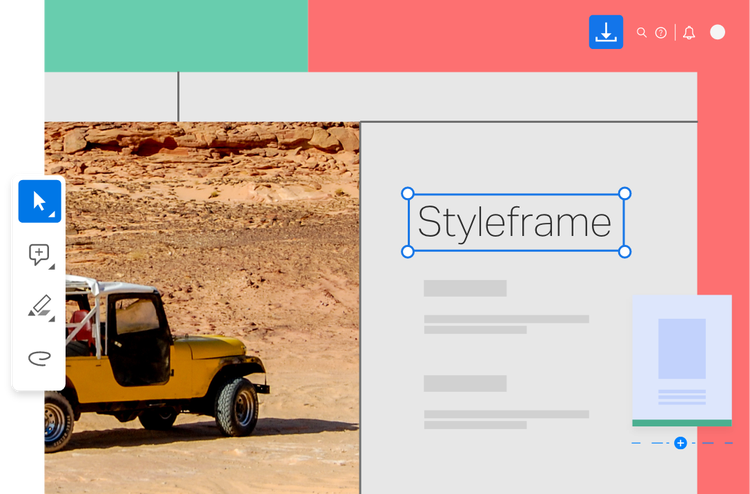
A storyboard is a visual planning tool that maps out a story scene by scene. It usually includes a sequence of boxes (or frames) that contain illustrations or images that represent key moments.
Storyboards are commonly used in film, TV, animation, marketing, and education. Each frame is explained with details like dialogue, direction, camera angles, or special effects notes. But they’re just as helpful for digital projects like UX design or product journeys. Whether you’re working solo or across teams, using a storyboard template helps you visualise and communicate your ideas clearly.
You can create a storyboard using tools like Adobe Acrobat online, or download a story board template PDF to start plotting out your project. If you need to create a digital storyboard, explore options like editable storyboard templates or merge PDFs to keep everything organised in one place.
A storyboard should cover the most important moments that need to be captured – not every detail, but enough to show how the narrative unfolds visually. Whether you're using a video storyboard template or a storyboard PDF, here are the essential elements to include:
Frames or boxes.
These are the foundation of any storyboard – the spaces where you add drawings, stills, or graphics that represent key scenes.
Creating a storyboard helps you turn ideas into something tangible. It’s especially useful when you’re working in collaborative settings. Whether you're producing an animation, pitching an ad concept, or structuring an educational video, a storyboard brings clarity to the project. It’s the epitome of the old creative saying – show don’t tell.
Some key benefits of using a storyboard include:

You can visualise each step of your project with supporting visuals, direction, and narrative.

You can avoid miscommunications in your team by giving everyone a shared visual reference from the start.

If a stakeholder can clearly visualise a project or story, they may be more likely to buy into an idea. A picture tells a thousand words.


Ready to create your storyboard? Follow this simple step-by-step guide to bring your vision to life. Whether you’re using a digital storyboard tool or a printable storyboard template PDF, here are some tips to help you get started.
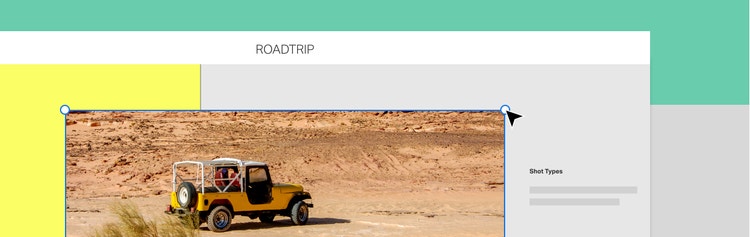
Storyboards have many use cases across various industries and applications. Here are five practical ways you might use a storyboard template across different industries:
A classic use. Storyboards help directors and animators plan scenes, character actions, shot compositions, and transitions before filming or animating begins.
UX designers use digital storyboards to map user journeys across apps or websites. These help visualise how users will interact with a product or service in each stage.
Marketing teams use storyboards to plot customer interactions across channels, from ad impressions to engagement post-purchase.
Teachers use editable storyboard templates to help students structure narratives. They’re also used in education to visualise historical events, scientific processes, or creative writing projects.
Advertisers create storyboards for explainer videos, product demos, or ad pitches to visualise different elements of the advert like script alignment, pacing, and impact.
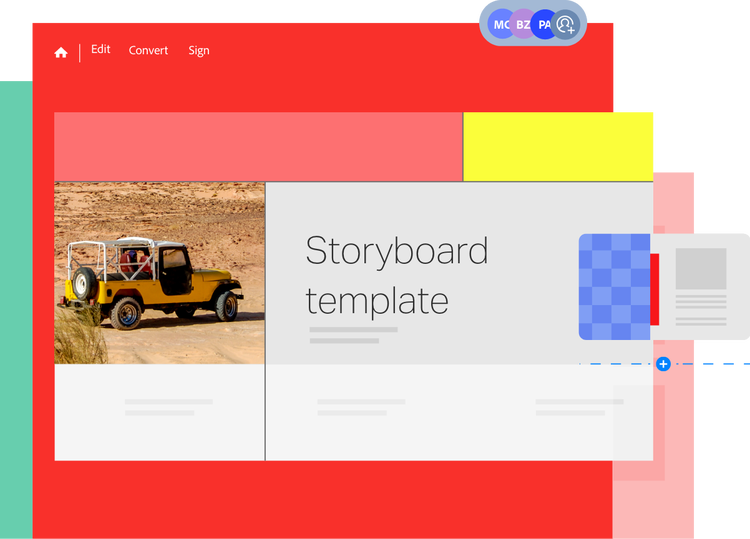
Download your free printable storyboard template to get started. From comics to short films, a storyboard helps bring your concept to life in a structured, visual way.
Use a printable storyboard PDF or a digital PPT storyboard template to map out your project step by step. And if you need to make edits as you go, try Adobe Acrobat online to edit and annotate your storyboard directly in your browser.
To make a storyboard for video, start by writing your script. Then divide the script into scenes and use a video storyboard template to match each scene with a corresponding image. Add your visual notes, dialogue, and technical direction beneath each frame.
Absolutely! Many teams use PowerPoint to create storyboards due to its flexible slide layout. Try a free PPT storyboard template and customise it to your needs with visuals, transitions, and annotations.
One of the most important rules to keep in mind when creating a storyboard is to include every shot – no matter how small. Your finished storyboard should capture each shot in its own frame or panel, to ensure there are no gaps in the narrative. It also helps everyone in your team stay aligned on what the final visual should look like.
Get even more out of your storyboard process with these helpful Acrobat tools and resources.
Explore Adobe’s collection of online tools and easily convert file types and edit PDFs whenever and wherever you need to. Work smart with Adobe.
Visit our free PDF converter, select a file and convert it in two ticks. Convert everyday Word docs and Excel sheets, as well as PowerPoints, JPEGs, and more.

Use Adobe Scan to upload physical documents into a digital format using your phone so you can access them anywhere.

Simply drag your PDF into our free Fill & Sign tool or request e-signatures to get documents signed without needing to send physical copies.

