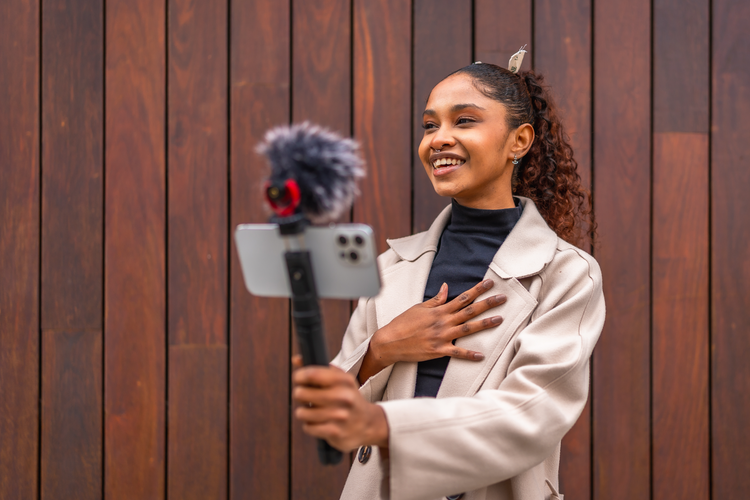
Facebook Live is one of the fastest ways to reach people where they already hang out — on their phones and in their feeds. In fact, Facebook Live videos generate 6x more interactions than recorded videos. The process is simple. All you have to do is: press “Go Live,” and you can talk to your audience in real time, answer questions, and turn casual scrollers into real connections. This guide explains what Facebook Live is and walks you through setup, what to say, and how to get views. You’ll also get Facebook Live tips, best practices, a checklist, and answers to FAQs.
Key takeaways
Start simple: your phone, stable internet, good light, and clear audio beat fancy gear.
Plan a short “run of show” (hook → value → engagement → CTA) and practice once in “Only me” mode.
Use a descriptive title, a helpful thumbnail, and schedule ahead to build reminders.
Talk to viewers by name, repeat key points for late joiners, and save the replay for people who missed it.
Facebook Live lets you broadcast real-time videos to your profile, page, or group. Viewers can react, comment, send questions, and share your stream while you’re on air. Afterward, the video saves as a post so people can watch the replay.
Why use Facebook Live?
Reach: Live video often gets prioritized in feeds and triggers notifications.
Trust: Real-time interaction feels more personal than edited video.
Feedback: Comments tell you what to clarify, launch, or improve.
Repurpose: Trim highlights, make shorts/reels, or embed the replay elsewhere.
Here are six real-world wins that show what’s possible with Facebook Live — from viral moments to steady, repeatable growth. Notice the common threads: simple hooks, real-time interaction, and clear reasons to watch now (not later). Use these as playbooks to spark your own tests.
BuzzFeed:800k+ concurrent viewers with the “exploding watermelon”
Why it worked: A simple, high-tension concept that built suspense in real time, driving massive simultaneous viewership and widespread press. Reported a total of 3.1 million total viewers around the event.
Dunkin’ Donuts: Behind-the-scenes Live tour that drew tens of thousands of views
Why it worked: A brand “open kitchen” moment tied to Valentine’s Day, showing product creation and a donut-wedding-cake build. The Live generated about 31,680 views and 4,000 likes, demonstrating that accessible, BTS content can convert attention for a national brand.
Candace Payne (“Chewbacca Mom”): The most-viewed Facebook Live of its time
Why it worked: Pure authenticity and joy with a low-fi setup; Guinness World Records recorded 159 million views within two months, turning a spontaneous Live into mainstream media appearances and long-tail opportunities.
Entrepreneur Tracie Reeves & “pearl parties:” Live selling as a grassroots QVC
Why it worked: Personality-driven shows that mix community, games, and real-time sales. Wired profiled how Reeves built a large, loyal audience (averaging 25,000 fans per event) and steady commerce using Facebook Live, despite limited native shopping tools at the time.
City-wide nonprofit fundraiser in Louisville: Multimillion-dollar results with Live
Why it worked: A coordinated giving day combined physical events with Facebook Live streams to keep momentum and visibility high throughout the day; the drive reported $4.6M raised for 500+ nonprofits.
The Game Awards (2025): Record-breaking cross-platform livestreams (incl. Facebook Live)
Why it matters: The 2025 show hit an estimated 171 million global livestreams across platforms including Facebook and Instagram Live, up 11% from 2024 — showing that well-promoted live events can scale massively and still grow year over year.
Who should use Facebook Live?
Local businesses and shops: restaurants, salons, gyms — sharing demos, daily specials, and Q&A to turn nearby followers into regulars.
Creators and coaches: artists, musicians, fitness/yoga instructors — teaching mini-lessons, hosting office hours, or performing live sets.
Service pros: real estate agents, photographers, contractors — giving tours, behind-the-scenes looks, and live consultations.
Nonprofits and community groups: streaming town halls, volunteer spotlights, and fundraising updates to rally supporters.
Product brands and small ecommerce teams: launching new items, doing live unboxings, or running how-to sessions that reduce returns.
Event hosts: workshops, meetups, conferences — expanding reach with live keynotes, panels, and backstage interviews.
If your audience asks questions, wants demos, or benefits from a human face behind the message, Facebook Live is a strong fit.
What are the components of a successful Facebook Live?
Topic & promise: A clear headline that tells viewers what they’ll learn or see.
Run of show: A simple outline (intro, 2–3 talking points or demo steps, Q&A, call to action).
Setup: Phone or computer camera, decent mic, steady mount, quiet place, good light.
Discovery:Scheduled post, title/description, thumbnail/cover image, cross-promotion.
Engagement: Questions, shout-outs, on-screen prompts, and friendly moderation.
Replay plan: Save, trim, caption, and reshare (email, groups, Stories).
Metrics: Peak live viewers, 1-minute views, average watch time, comments, link clicks.
How do you go live? Here are 7 essential steps
If you’re wondering how to go live on Facebook, the formula is simple: Pick a focused topic, set up a basic, quiet space, and follow a short run-of-show (hook → value → engagement → CTA). The seven steps below walk you from idea to replay so your first stream feels natural and delivers real value.
Step 1: Pick a focused topic and write your promise
Decide what someone gains in 10–30 minutes. Examples:
“Live Q&A: How to choose your first DSLR under $700”
“3 stretches to fix desk shoulder pain — follow along”
“Behind the scenes: Packing orders and answering your questions”
Write a one-sentence promise you’ll repeat during the stream so late joiners know why to stay.
Step 2: Set up your space and gear (keep it simple)
Camera: Your phone’s rear camera is often sharper than the selfie camera; use it if you can still see comments (second device or helper).
Audio: If possible, use wired earbuds or a small lapel mic. Clear audio beats 4K video.
Light: Face a window or use a ring light at eye level. Avoid strong backlight.
Stability: Prop your phone on a tripod/stand at eye height.
Internet: Aim for strong Wi-Fi or reliable 4G/5G. If your signal is weak, move closer to the router or switch to mobile data.
Do a 30-second private test in the Facebook app, set privacy to Only me and check sound, framing, and comments.
Step 3: Set up your broadcast details
From the Facebook app (or desktop Live Producer):
Destination: Profile, Page, or group (Pages are best for businesses).
Title & description: Lead with the benefit (“Save money on…,” “Fix X in 5 minutes”). Add an agenda and any links you’ll mention.
Thumbnail/cover: Upload a simple image with the title readable on a phone.
Schedule (optional): Schedule your Live 1–7 days ahead so followers get reminders.
Privacy: Set it to Public for Page Lives.
Co-host/guests (optional): Invite a guest or allow requests to join if appropriate.
Pro tip: Make a branded intro/thumbnail using an Adobe Express Facebook video template so every Live has a consistent look. And remember when you’re formatting, most people will watch Facebook Live stream on phones, so square and vertical graphics are preferable.
Step 4: Plan your run of show
Use a sticky note or small doc:
Hook (0:00–0:30): “Today I’ll show you how to ___ in 3 steps.”
Quick intros (0:30–1:30): Who you are and why this matters.
Value (minutes 1–10+): Teach/demo the 2–3 main points.
Engage: Ask a question, take a poll (“Where are you joining from?”), and call people by name.
CTA (final minute): “Grab the checklist at…,” “Follow for the next live on Tuesday,” or “Comment ‘PDF’ and I’ll DM the guide.”
Wrap: Restate the key takeaway for replay viewers.
Plan one visual moment (hold up a product, share your screen on desktop, or demo a step) to keep energy high.
Optional polish: Prepare a quick opening/closing card in Adobe Express (using a video template) to roll before you start talking and right before you end.
Step 5: Go Live and manage the room
Start confidently with your hook; don’t wait for viewers to arrive.
Pin your link/CTA in comments or description.
Greet people by name; repeat your promise every few minutes for late joiners.
If you lose your place, check the run-of-show note and keep going.
Use a helper (if possible) to watch comments, flag questions, and handle trolls (hide, mute, or ban).
Keep energy up with pace, pauses, and short recaps (“Step 2 summary…”).
Step 6: End cleanly and optimize the replay
Thank viewers, repeat the CTA, and say when you’ll be live next. After the stream:
Save and trim the beginning/end if needed.
Add captions (for accessibility and silent viewers).
Update title/description with timestamps or resources.
Create clips (short highlights) to post as reels/stories with a link to the full replay. Adobe Express video templates make it fast to add branded titles/subtitles to these snippets.
Tag guests or collaborators and share in relevant groups.
Step 7: Review your metrics and iterate
In your Page insights or video details, check:
Peak live viewers and average watch time (did people stay?).
Comments & reactions (which moments hit?).
Link clicks/conversions (did your CTA work?).
Audience retention graph (note where drops happen).
Make one improvement next time: clearer hook, better thumbnail, shorter intro, or a stronger CTA.
Facebook Live best practices
Begin with the payoff. Say what viewers will learn in the first sentence.
Talk to the room. Ask questions, use names, and answer live.
Repeat the promise. New people join every minute — reset briefly.
Mind your length. 10–20 minutes is a sweet spot for beginners; longer if you’re doing demos/Q&A and engagement stays strong.
Respect music rights. Use royalty-free audio off-camera; avoid copyrighted tracks in your space.
Have a back-up plan. If the connection drops, restart and post a quick comment with the new link.
Quick launch checklist
✅ Choose a focused topic and write a one-sentence promise. ✅ Prepare a simple run of show (hook → value → Q&A/engagement → CTA). ✅ Do a 30-second “Only me” test for audio, framing, and lighting. ✅ Write a clear title/description; upload a readable thumbnail; schedule if possible. ✅ Go live, greet by name, pin your CTA, and restate the promise for late joiners. ✅ Save the replay; trim, caption, add timestamps; share clips to drive more views. ✅ Review metrics and improve one thing for the next stream.
Going live gets easier the more you do it. Start with one clear topic, a friendly pace, and a strong first sentence. Talk to people like they’re in the room, save the replay, and fix one thing each time. That steady rhythm turns Facebook Live into a reliable engine for reach, trust, and real conversation. Use Adobe Express to spin up your thumbnail, countdown card, and promo posts in minutes, just pick a template, drop in your branding, and you’re ready for your next Live.
FAQs
Do I need special equipment to start?
No. A smartphone, decent light, and a quiet spot are enough. Add a small lapel mic and tripod when you’re ready to level up.
How long should a Facebook Live be?
Start with 10–20 minutes. Only go longer if engagement stays strong or you’re doing a live demo/Q&A. Quality beats length.
What should I do if no one shows up?
Keep going for the replay audience; deliver your value, then repurpose highlights. Next time, schedule ahead, post a teaser, and invite a friend to ask the first question.
What’s the best time to go live?
When your audience is online. Test lunchtime or early evening mid-week, then check your Page insights to refine.
How do I handle negative comments or trolls?
Set your FB Live ground rules up front. Hide or ban if someone is disruptive. If there’s a genuine concern, acknowledge it briefly and offer a path (support email/DM).
Can I bring a guest on?
Yes. You can invite a guest to join your stream. Test beforehand to check audio levels and flow.
Should I script everything?
No. Leave room for natural conversation and questions. Script your opening and CTA; outline your key points. How does Facebook Live work on a phone? Open the Facebook app → tap Live video from your profile/Page/group → set title/description and privacy → check framing/audio → tap Go Live. You’ll see comments and reactions in real time; tap Finish to end and save the replay.
What not to do on Facebook Live?
Don’t stream with poor audio (windy/noisy spaces), wait silently for viewers, use copyrighted music in the background, or ignore comments. Avoid clickbait titles and sharing unverified claims — your replay lives on.
Can anyone see you on Facebook Live?
Only the audience you choose. On Pages, Lives are public by default; on profiles, you can set Public, Friends, or Only me (great for tests); groups follow the group’s visibility. Adjust privacy before you go live.