How to start a print-on-demand business in the UK: Tips, tactics and templates.
Fill in the blanks and learn how to start a print-on-demand business in the UK today with tips, tactics and templates from Adobe Express.
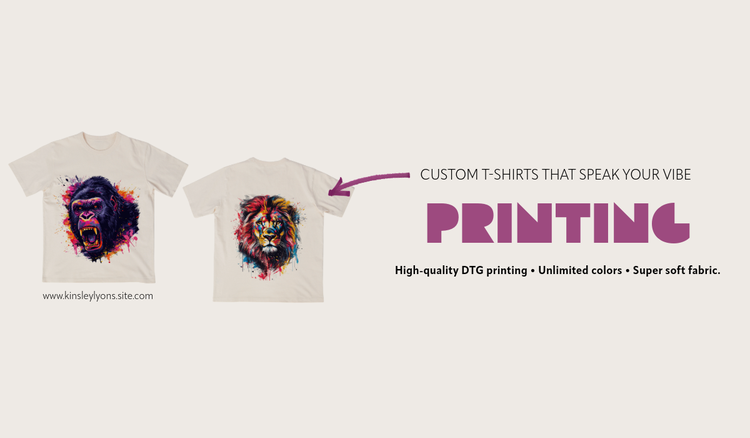




Whether you’re an artist, a graphic designer, or a writer – it’s time to make your mark. Picture your prints on posters, water bottles, and other merch, or your words on the page of a published book. Print-on-demand services offer a fun way to make a little side hustle, with limitless opportunities and an easy start up process.
Turn imagination into action and learn how to start a print-on-demand business with Adobe Express.
What is a print-on-demand business?
A print-on-demand business is a business model where you produce products such as t-shirts, posters, personalised mugs, tote bags after having received an order. They could be a perfect choice for people looking to start a clothing business from home.
Here’s few simple steps to get started.
- Get artsy and create or decide on a design.
- Decide which products that design will go on. Maybe a logo on a mug? A picture on a t-shirt?
- List the product on your online store, so orders can be placed.
- Your customer places and pays for an order from your store.
- Your customer’s order is sent to a third-party print-on-demand company.
- The product is printed, packaged, and shipped from the third-party to the customer.
- Create. Print. Profit. It’s as easy as that.
Why use a print-on-demand business model?
Using a print-on-demand business model brings lots of benefits, especially for smaller merchants or those starting a side-business from home.
- Test out a business idea. With print-on-demand services, items are easy to customise, and they’re only produced once an order is received. That gives you plenty of room to test which designs sell best without accruing excess stock or making expensive gambits.
- Monetise your existing fanbase or audience. Print-on-demand services let you easily tap into your existing audience for merch opportunities, without the giant set-up and storage costs associated with owning your own store. For example, maybe you’re a YouTuber and want to start your own merch line.
- Tap into seasonal trends or events. Because you don’t own any physical stock, tapping into fads, events and seasonal trends is easy – and you won’t have any spooky or festive products collecting dust in a warehouse.
- No stock management. Because you have no physical store and don’t own the stock, you don’t need to worry about damages, storage, or selling off leftover stock.
- Produce in small batches. Got an event coming up? You can print small quantities of stock to promote your brand, sell your products and experiment.
- Quick to market. You can design a product and list it in minutes if you’ve got the designs ready to go.
- Third-party fulfilment. Because print-on-demand services are handled by a third party, they deal with the fulfilment, taking a large quantity of the work off your hands.
- Create niche products. Without the need to buy inventory in advance, you can diversify your range of designs and products. For example, you could create hoodies and custom apparel specifically for people who adore dogs dressed as royalty, or fans of a local band.
With the ease-of-access and low risk, it’s no surprise more people are learning how to start a print-on-demand business.
recipe
How to start a print-on-demand-business in 8 steps.
Want to start a print-on-demand-business, but not sure how? Get your designs online and orders ready to ship with our eight steps on how to start a print-on-demand business.
1. Conduct your market research.
You might not need to worry about unwanted stock, but you still need to create items that sell. Try to conduct some market research for inspiration by checking platforms like eBay and Etsy to see what’s on offer.
2. Work out your target market.
By determining your target market, you can make more informed business decisions and select products or designs that you’re sure will resonate. If you already have an audience, this step shouldn’t be too difficult – just look at your current demographic and target products to them. If you’re starting something new, however, you need to consider who will be buying from you.
3. Find a niche opportunity.
Carving out a niche lets you clearly define your audience, fill gaps on the market, and gives you a unique position to market from. For example, you could provide eco-friendly options compared to competitors, or maybe you produce items in a signature artistic style specifically for fans of your work. Think about what sets you apart and play into that niche.
4. Set up your ecommerce website.
To make online sales, you’re going to need an online store – that means setting up or joining an ecommerce site. This could be something like Etsy, Shopify, or your own website, and you could even link to these sites through your social media or primary platform.
5. Pick your products and curate your designs.
When it comes to print-on-demand, some products work better than others. T-shirts and hoodies are always a great option. But then, there’s totes are phone cases, stickers, art, and socks too. Choosing the appropriate products (and designs) for your audience is important, and don’t forget to test how your print-on-demand products look. Try to order a few, so you know how they look outside of the mock-ups.
6. Choose a print-on-demand service.
Your chosen print-on-demand services will depend more on the products you want to create than anything else. But you also want to pay attention to quality, cost and how easy the print-on-demand service is to deal with.
For example, Adobe Express offers a range of printable products, such as t-shirts, posters, and flyers in the UK. And with our creation tool, you can make designs without needing to be a graphic designer yourself.
7. Set your prices and launch on your site.
Once you’re happy with your designs, it’s time to set your prices and go live. Remember, print-on-demand businesses may not have the same profit margins as some other retailers, so you need to consider this against your target audiences’ potential income when setting prices.
8. Develop a marketing strategy.
As with any business, marketing is key, so you’ll need a sound strategy if you want to make the most out of your print-on-demand business. Social media is likely to be a key part of your business, whether it’s a trending account with lots of content or simply harnessing the power of Facebook ads.
Tips on how to start and run a print business.
Make the most out of your printing business with these top tips on how to start:
- Create mock-ups of your products. Digital mock-ups can be a great way to demonstrate a product on a person or via flat lay. You can use a mock-up generator alongside some compelling snaps of product samples to populate your webpage and provide a sense of what the item looks like.
- Be strategic with shipping. Try to be transparent about shipping – even if you’re not the one handling it. Try to account for printing times when giving customers estimate delivery dates and ensure you’re on-hand to answer customer queries as you will still be the primary point of contact.
- Consider print-on-demand apps. If you run your own ecommerce site, you may be able to utilise print-on-demand apps to import designs directly into your website, which can be a real time saver.
- Order samples. Before you start selling, you should get familiar with your product offerings. Try to order samples first so you can get a sense of any flaws or design quirks you might want to iron out first.
- Be your own customer service. Even if a third-party handles a lot of the heavy lifting, you’ll be in charge of your customer service experience. That’s why it’s important to be familiar with the process and your own products. Just as your products are personalised, so too should your service be.
recipe
How to bring your printing business to life.

How can Adobe Express help you to start a printing business.
There are a lot of ways Adobe Express and help you start a prints business:
1. Create eye-catching t-shirt designs.
You don’t need a degree to design – create fantastic graphics for t-shirts in our editor and print them in the same session with ease. Get design inspiration and easily edit and personalise designs for your customers.
2. Build your brand identity.
Get swag that speaks to your company, with custom prints on products that speak to what you’re all about. Build your brand identity with Adobe Express.
3. Develop a company logo.
Logos are the face of your company, and with Adobe Express you can experiment and design the perfect logo online. Got a company event coming up? Get that logo printed on a range of products, so everyone remembers you.
recipe
4. Turn digital designs into printed products.
Print your digital designs in a couple of clicks with Adobe Express print. Creating, printing and shipping is seamless – try Adobe Express for your print-on-demand needs today.
5. Design your business cards and flyers.
Get ready to market your event with intuitive templates and free-form flyer designs online, then send them right to print. Whether it’s invites, posters or business cards – design, create and print in one place with Adobe Express.
You might also like...