How to create a game design portfolio – with examples.
While there’s no cheat code to making a great game design portfolio, there are some handy tips that’ll give you the boost you need.



Sometimes, making a game can feel easier than making a game design portfolio. But a compelling game dev or design portfolio is what separates you from the competition. Don’t worry – if you can create, then you can demonstrate.
Whether you’re already a creative professional, an ambitious graduate, or a budding maker-of-games, we’ve got something to help you.
Learn more about creating a game design portfolio with Adobe Express in this guide.
What is a game design portfolio?
Think of a game design portfolio as a collection of your work as a game designer. It encompasses everything, from finished games to prototypes or documents, through to videos and other media.
Your game design portfolio is a collection of your skills and creativity, all hosted in one neat place. Your own personal showcase that demos your creativity, problem-solving skills, and your experience in game design.
That means it’s important to highlight some of your most impressive achievements. Forget about saving the best ‘til last, go all in and put your highest quality work first.
You may be wondering where to host your game design portfolio – don’t worry, you can put the briefcase down. You can host your portfolio on dedicated platforms, such as Behance, and others.
What should a game design portfolio have in it?
While your game design portfolio should be tailored to the job you’re applying for, there are things most should include:
Demo gameplay.
Made a game? Great – let prospective employers take your work for a spin, so they can really get a sense of what you’ve created.
Strong explanations.
You’ll need to add text to walk prospective employers through the work and what you’re trying to show or demonstrate, as it’s likely you won’t be there when they review your portfolio.
Relevant project examples.
Try to curate work relevant to the role you’re applying for – if you’re going for a job as an environmental artist, put that work in the foreground.
Check functionality.
Ensure your portfolio works on different screen sizes, devices, and internet browsers.
Clarify contributions.
Game design is often a collaborative effort, be clear about your involvement in the work. What were you responsible for?
recipe
How important is a game design portfolio?
There’s no way around it, the game design industry is like playing something on hard mode. You don’t just need skill, but a bit of luck as well, which means you need to shoot your shot and shoot it well. That makes an appealing game design portfolio essential.
Because game design portfolios visually represent your talents, they can help you stand out in a crowded and competitive environment. There are some other benefits, too:
A practical demonstration of your skill.
Game design portfolios demonstrate your abilities in multiple areas in a tangible (and maybe even interactive) way.
Showcases your best work.
Creative work can come with peaks and troughs, but a portfolio lets you demonstrate the best-of-the best in projects you’ve been involved in.
Enhance job prospects.
The better your portfolio, the better you can communicate your skills and the better your job prospects. Don’t lag, levelling up your game design portfolio can help you get the work you aspire towards.
Helps you stand out.
It’s simple – a good game design portfolio helps you to stand out. But it’s not just about the content, you need to ensure your portfolio is attractive, easy to use and simple to understand.
Create more than a resume.
Your game design portfolio shouldn’t be treated as a resume. Try to be always updating it and use it as a method to communicate your passion, competence and creativity.
How to create a game design portfolio: Step-by-step.
Convinced that a game design portfolio is important? Great, now let’s look at how to create one, step-by-step:
1. Pick your portfolio or website template.
Before anything, you need to think about where you’re posting your portfolio, as this will define how you share your work. If you don’t want to use a hosting site, you could consider using a website template to make your own webpage.
2. Research different layout options.
Consider the layout you choose and why you’re selecting it. One layout may look fantastic on mobile, but less good on PC. Another may be perfect for displaying game demos, but not ideal for sharing documents or showing creative work.
3. Build your portfolio structure.
Experiment with editing tools and different components on portfolio builders or websites to best demonstrate your work. Do you want to separate creative work from playable demos? What about case studies or projects?
4. Upload your work.
It’s all good creating a website, designing a portfolio, or setting up an account but don’t forget to upload your work. Don’t be afraid to include new things as you go either, it’ll help in the long term.
5. Review, review, review.
As any creative will tell you, nothing is ever really finished. Treat your portfolio as a constant work in progress and keep reviewing it. You’ll never know what little mistakes you’ll find, or what additions you might think to make.
6. Decide how to share it.
Do you need an online presence? Maybe social media is a good call for your portfolio, or perhaps a platform like Behance. It’s not just about making your portfolio: it’s about getting it out there.
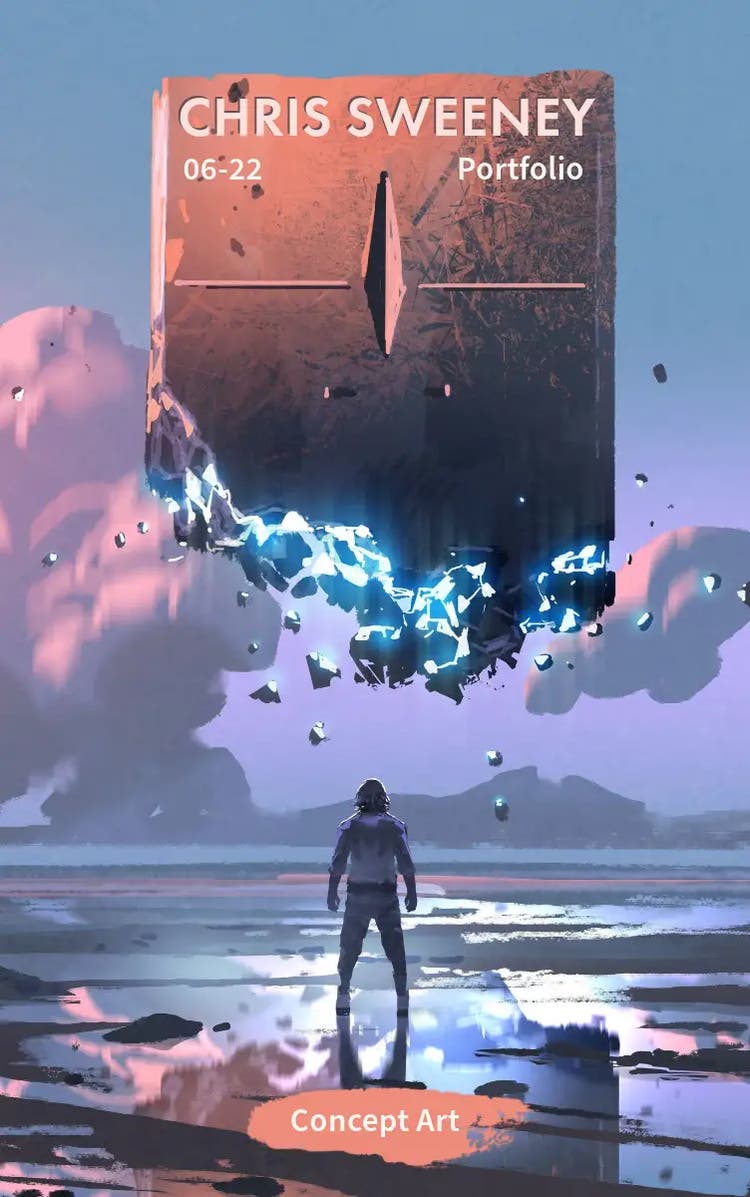
4 game design portfolio examples.
recipe
How can Adobe Express help you create your game design portfolio?

Build your own online game design portfolio.
Make the most of portfolio templates.
Adjust your layout with the image resizing tool.
Add your own gaming-inspired filters and effects.
Turn your portfolio into a presentation.
Build your game design portfolio template in seconds with Adobe Express AI tools.
Unsure where to start with your online game design portfolio? The Adobe AI Template generator could be just what you need to get your ideas off the ground. Turn concepts into reality, then go from there with Adobe Express AI tools.
Try Adobe Express today, and create your game design portfolio your way.
You might also like...