



How to Write a Character Reference Letter.
Find out what to include in a character reference letter for a friend or colleague with this helpful guide.
Received a request to provide a character reference letter for someone you know? Some employers may ask for a character reference from a friend, colleague or acquaintance as part of the job application process – to help them gain a deeper understanding of the individual.
This type of reference letter is a written personal endorsement of someone’s qualities, character and abilities. It highlights their best attributes, such as integrity, reliability, and interpersonal skills. It’s different to a professional reference, which focuses on work performance and experience.
If you’ve been asked to write a character reference letter for a friend, then this is a chance to help them land the job. In this guide, we’ll share some tips and examples to help you do just that.
What is a character reference letter?
A character reference letter lets you vouch for an individual you know on some of their personal qualities. These may include things such as their personality, positive qualities and general capabilities. There’s no alluding to work experience or job competency – it’s a chance to know the person on a deeper human level.
It adds a different perspective for applicants, offering a deeper insight into them as individuals. Soft skills such as teamwork, empathy, or problem-solving go beyond their professional qualifications. It’s a snapshot of the human being, rather than things they have achieved in their education and/or workplace.
You may be asked to write a character reference letter for a friend, colleague, or student. It’s less formal, but more impactful. There may be certain situations, for example, where professional references aren’t possible, or personality traits are important for the job role – this is where a character reference letter can help.
Who can provide a character reference letter?
Anyone can write a character reference letter, so long as they know the person well enough to provide useful insights. Applicants often ask their:
- Teacher or professor
- Coach
- Co-worker
- Friend
- Neighbour
- Mentors
- Volunteers or supervisors in non-work settings (such as charities)
- Family friends, such as parents’ peers.
Each person should have firsthand experience with the applicant to provide a genuine endorsement.
recipe
Why is a character reference letter important?
Character reference letters are a powerful way to support someone’s academic, job or other application. They’re a complement to the other things needed, such as a CV, cover letter or personal statement. And writing a good one could help them land their dream role.
Benefits of a character reference letter also include:
- Highlighting personal traits – Emphasises the positive parts of their personality that may not be evident in professional references, for instance a positive outlook, supportive friend, someone that’s easy to get along with.
- Offering unique insights – Provides a different angle on the applicant’s skills and strengths, especially from non-professional settings such as volunteering.
- Reinforcing claims – Offers evidence to back up statements made in a CV, cover letter, or interview, adding credibility.
- Showing adaptability – Illustrates how the applicant performs in diverse environments, including personal contexts.
- Building trust – A sincere character endorsement can create a favourable impression and instil confidence in the applicant’s suitability.
- Showcasing specific scenarios – Highlights how the applicant’s actions or decisions positively impacted others in real life.
How to write a good character reference – step by step.
Now you know why you’ve been asked to provide a character reference letter, it’s time to actually write it. Don’t worry if you’ve never written one before, we’re going to delve into a general structure you can follow:
Sample character reference letter for a friend.
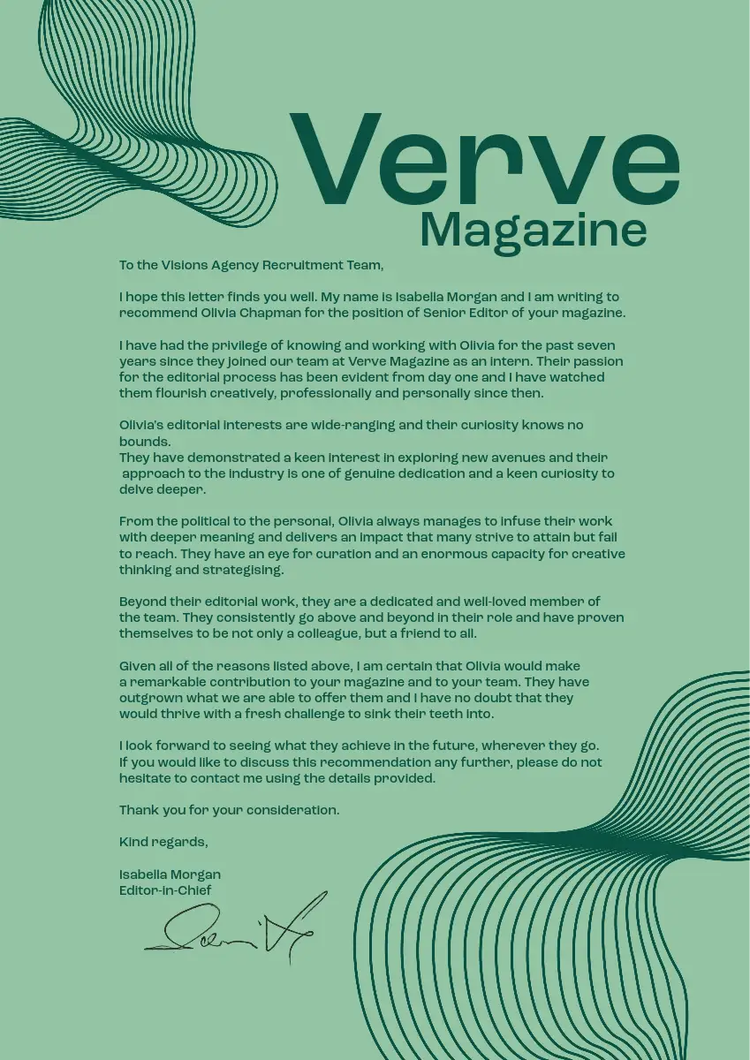
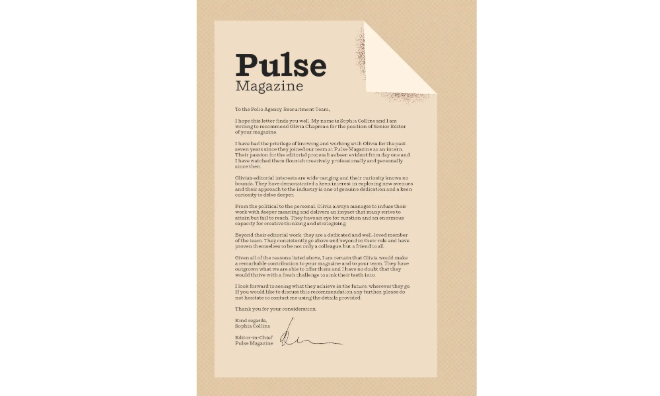
Each character reference letter will be different as each one depends on the relationship you have with the person. But we’ve included a sample template for a friend’s character reference to follow as inspiration:
[Your Name]
[Your Address]
[City, County, Post Code]
[Email Address]
[Phone Number]
[Date]
[Recipient's Name]
[Company/Organization Name]
[Address]
[City, County, Post Code]
Subject: Character Reference for [Individual's Name]
Dear [Recipient's Name],
I am writing to provide a character reference for [Individual’s Name], who I have been close friends with for [duration]. During this time, I have come to know them as a [key trait] individual with [positive attributes, e.g., integrity, strong work ethic, empathy].
One example of [Name]’s character that stands out occurred when [specific instance or story showcasing a positive quality]. This demonstrated their ability to [relevant skill/quality].
[Name] has consistently shown [additional qualities, e.g., reliability, problem-solving skills, or teamwork] that make them an excellent fit for [specific role or opportunity]. I have no doubt that they will bring dedication and positivity to their role at your organisation.
If you require further information or wish to discuss [Individual’s Name] in more detail, please do not hesitate to contact me at [email/phone number].
Sincerely,
[Your Full Name]