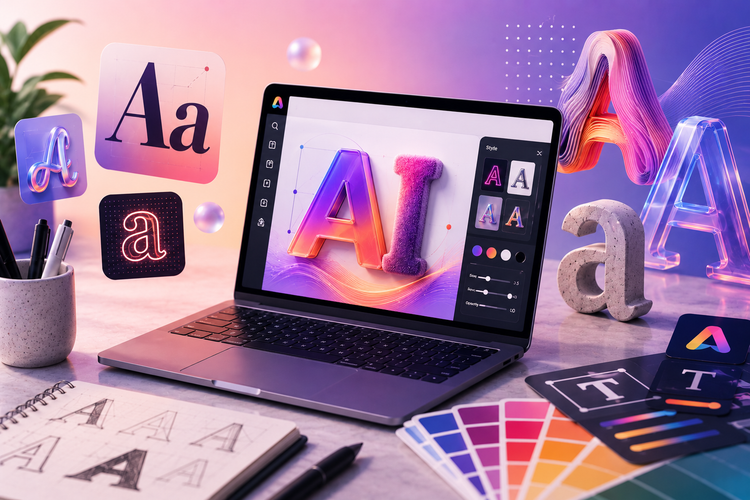
Key typography trends AI is creating in 2026.
There are many different AI font trends that are popular today, some of them are:
Retro-futuristic typography.
AI is redefining font aesthetics. How? By blending vintage-inspired fonts, neon effects, chrome finishes, and futuristic styling to create eye-catching visuals. Brands can use it to stand out on social media, killing two birds with one stone by connecting with younger audiences and tapping into nostalgic marketing trends.
Interactive and immersive text.
Dynamic typography that responds to user behaviour is becoming more engaging thanks to AI. Text adapts to user interactions, which can include motion effects, for example. It can also create immersive visual experiences on many platforms. Designers use this to increase engagement, as well as to foster memorable brand experiences. For more insights, see the ‘Everything you need to know about AI text effects’ guide.
Luxury minimalism.
Luxury minimalism uses clean, sophisticated fonts for high-end brands. It prioritises simplicity, elegance, and readability. Think clean serif and sans-serif combinations, refined spacing, and subtle customisation, which helps create a more ‘sophisticated’ look. AI streamlines the process by pairing premium fonts and layouts that work well with luxury branding. Some examples are Gucci, Chanel and Apple, who intentionally use this trend to show they don’t need to try too hard to stand out – their reputation alone is enough.
Bold cinematic typography.
AI-generated dramatic text for visual storytelling helps to create impactful headlines. Think layered text effects and film poster style visuals created in a flash. It’s useful for marketing campaigns, entertainment, and social media, where standing out is essential. The attention economy is rife with competition; to get people’s attention in the modern age is becoming trickier – bold cinematic typography can help to do that.
Adaptive responsive typography.
AI fonts that adapt based on platform and device help to ensure text is digestible on different screen sizes and formats. This responsiveness and intelligent scaling, along with platform-specific adjustments, can improve readability and consistency across platforms. Designers can use this to create seamless experiences across websites, apps, social media posts, and digital advertising. Explore Adobe Express typography templates and font pairing guides for additional inspiration. Amazon Kindle is an example of adaptive responsive typography in action.
Explore Adobe Express design tools