Retail Revolution

Summary/Overview
From in-person stores offering flash sales to online marketplaces and social commerce, there are more ways to shop in the UK than ever before. But what really motivates Brits to make a purchase on a specific platform? And are retail preferences gradually shifting?
By interviewing 2,000 UK adults, we uncover what drives shoppers to choose and then return to a specific shopping channel. We explore everything from changing preferences, effective marketing strategies, and preferred payment methods, also looking at expectations for how brands should evolve in 2026. Our aim? To help retailers adapt their strategies for a rapidly changing landscape.
Retail revolution: Key findings
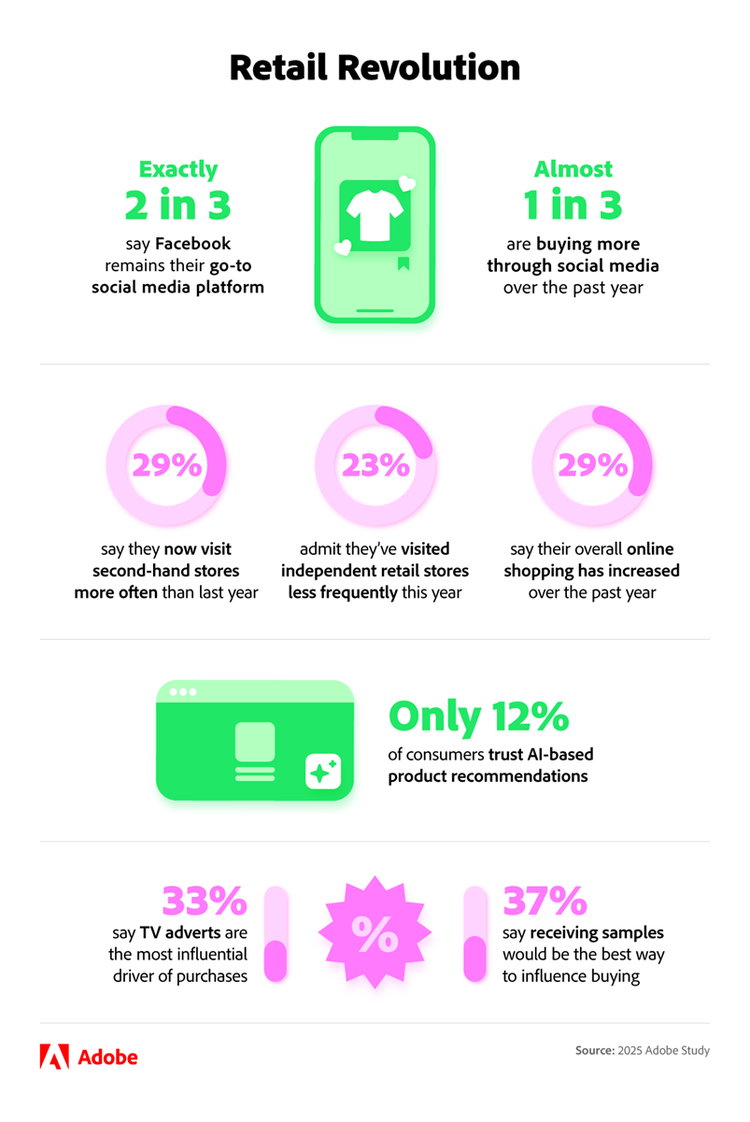
UK shopping habits are shifting. Nearly a quarter of Brits (23%) admit that they’ve visited independent retail stores far less frequently this year, while close to a third of shoppers (29%) now spend more time browsing online second-hand stores.
Social media platforms are also unsurprisingly playing a growing role in discovery, with almost one in three Brits (29%) reporting buying more through social media channels over the past year. A significant 66% also said that Facebook remains their go-to platform.
When it comes to marketing impacts, we found that despite the rise of digital-first shopping, traditional formats do still matter. For instance, a third of consumers (33%) said that TV adverts are influential when it comes to prompting purchases, with 37% saying that receiving samples often influences their buying decisions.
And finally, what about the role of AI? Well, trust remains somewhat limited, with only 12% of consumers having faith in AI-based product reviews.
Does gender influence shopping habits?
We found that shopping motivations and channel preferences vary by gender too. From product discovery to factors that build trust, understanding these differences can help brands tailor their strategies for different audiences.
Over the past twelve months, women have been more likely to return to shopping in-store, with 30% preferring physical retail compared to 17% of men. At the same time, both groups are embracing online second-hand shopping, with women (32%) leading men (25%).
Despite some differences, there’s a clear trend across both genders: a decline in engagement with independent retailers. Nearly a quarter of both men and women said that they’re visiting independent stores far less frequently (23% and 24%), with women in particular more readily turning to social media platforms (33% compared to 25% of men).
When it comes to marketing techniques, men are more influenced by TV advertising (35%), while women prefer to receive free samples (43%). What’s more, women are swayed by social media ads (35%), while men prefer fewer ads overall (34%).
How do retail preferences vary by age?
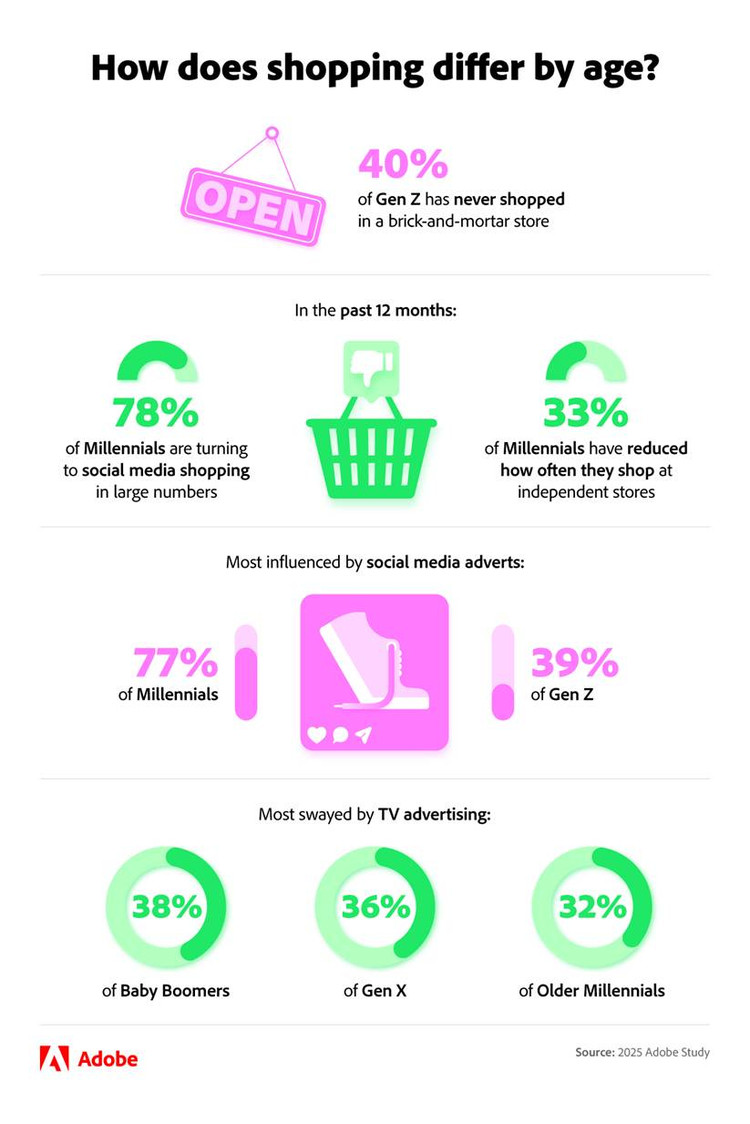
Age, of course, is a major factor in shaping shopping behaviour and channel preferences too. For instance, 40% of Gen Z consumers revealed that they very rarely step foot in a brick-and-mortar store. Millennials are also making the shift towards online shopping, with 78% shopping online more frequently in the past year. A third of millennials (33%) have also reduced how often they shop in independent stores.
When it comes to marketing, Gen Z (39%) and Millennials (77%) are the most influenced by social media adverts, while Gen X and Baby Boomers tend to be more easily influenced by TV advertising.
Understanding these key differences is important for brands looking to target specific audiences and meet customers where they are.
How do people in different regions prefer to shop?
Finally, we found that location has an influence on shopping habits too. London stands out as a digital hub, with more than a quarter of people revealing that they rarely visit brick-and-mortar stores. However, for those in Wales, in-store shopping has actually increased, up 20% over the past year. Those in London also show the most interest in buying through social media platforms (44%), whereas 30% of consumers in Eastern England have never used them.
Shoppers in the Northwest are the most likely to purchase from online second-hand clothing sites (34%), surpassing all other regions. We also found that Northern Ireland residents are the most likely to purchase from an independent retailer (26%), the highest out of all UK regions.
So, it’s clear that what works for the capital’s digital-first environment might not work elsewhere.
How can businesses adapt to changing trends?
With the retail landscape constantly changing, understanding how consumers shop, as well as what drives them to make a purchase, is more important than ever. With this in mind, here are a few tips on how businesses can adapt their strategies to capture attention:
● Know your audience: It’s clear that factors like gender, age, and location influence how people shop, as well as the marketing strategies they best respond to. So, dedicate the time to getting to know your potential customers, and make sure you’re tailoring your strategies to meet shoppers where they’re searching.
● Embrace social commerce: Gen Z leads the way when it comes to social media shopping, and around 78% of Millennials have followed suit over the past twelve months. Given this shift, making shareable, engaging content should be a focus. Whether it’s through refreshed branding like stand-out social media banners and profile pictures, or engaging social media posts, there are various ways to connect with your audience.
● Stay on top of trends: Shopping habits are always changing, so it’s just as important to regularly monitor trends and keep up with what’s new. By reflecting what consumers care most about, you’ll be more likely to stand out in a fast-moving market.
By putting the above insights into practice, you’ll be able to connect with shoppers in meaningful ways, wherever and however they choose to shop. And if you’re looking for more insights, just head over to the Adobe Express blog. There you’ll find everything from marketing tips to branding wisdom and much more.
recipe
Methodology:
Retail Revolution is the result of a comprehensive national survey conducted by 3 Gem on behalf of Adobe Express. The survey polled 2,000 UK adults between 5/11/2025 – 12/11/2025.