How to write a resignation letter: Templates and best practices.
Stand out in your career transition by crafting a professional resignation letter with Adobe Express. Whether you're moving on to a new opportunity or taking a break, a well-structured letter ensures a smooth exit while maintaining good relationships.





A resignation letter is an important part of leaving a role professionally and maintaining positive relationships as you move on to your next opportunity. Whether you're changing careers, accepting a new position, or pursuing a different path, a clear and respectful resignation letter can help ensure a smooth transition and leave a lasting positive impression.
Create professional resignation letters, business correspondence, and career documents with Adobe Express, helping you communicate confidently at every stage of your professional journey.
What is a resignation letter, and why is it essential?
A resignation letter is a formal document that officially notifies your employer of your decision to leave your job. It serves as an important record, setting a professional tone for your departure while providing clarity on your last working day. A well-crafted resignation letter demonstrates professionalism, appreciation, and respect.
With Adobe Express, you can create a polished, customised resignation letter that aligns with your career goals while leaving a positive impact on your employer.
Key points to include in your letter.
A strong resignation formal letter should be clear, professional, and courteous. It’s essential to communicate your departure in a way that maintains goodwill with your employer. Be sure to include these key elements:
- Formal announcement: Clearly state your resignation and mention your last working day.
- Expression of gratitude: Thank your employer for the opportunities and experiences gained.
- Offer to assist with the transition: Show professionalism by offering help during the handover period.
- Positive closing statement: End on a constructive note, wishing the company continued success.
- Professional sign-off: Use a polite and formal closing along with your signature.
recipe
Structuring your resignation letter.
A well-structured business letter ensures clarity and professionalism, making it easier for your employer to process your resignation smoothly. Following a clear format can help you convey your message concisely while maintaining a respectful tone. Stick to this type of structure, and you’ll be winning:
- Header: Include your full name, address, contact details, and the date.
- Salutation: Address your letter formally to your direct manager or HR representative.
- Opening paragraph: Clearly state your intention to resign and provide your last working day.
- Middle paragraph: Express gratitude for your time at the company and highlight positive experiences.
- Transition support: Offer to assist in training a replacement or ensuring a smooth handover.
- Closing paragraph: End on a positive note and express well wishes for the company’s future.
- Signature: Sign off professionally with your name and contact information if needed.
recipe
Common pitfalls to avoid when resigning.
Resigning can be a delicate process and handling it poorly may damage your professional reputation. Being mindful of common mistakes can help you leave on good terms and maintain strong professional relationships. Avoid these common mistakes:
- Being negative: Always keep your tone positive and professional, even if you’re leaving under difficult circumstances.
- Failing to give notice: Ensure you provide the required notice as per your contract.
- Overexplaining: Keep your reasons concise and professional without unnecessary details.
- Leaving ambiguity: Clearly specify your last working day to avoid confusion.
- Neglecting to proofread: Typos and formatting errors can undermine your professionalism.
How to bring your resignation letter to life.

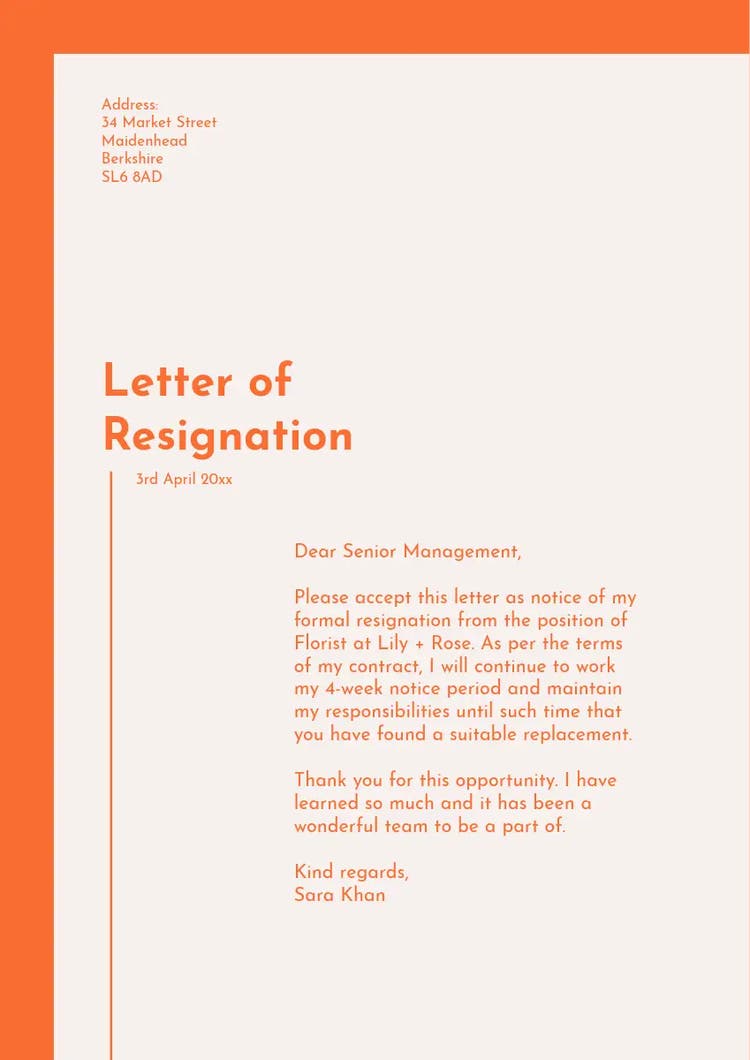
Resignation letter templates for different situations.
Resigning is a significant step, and using Adobe Express to create a well-crafted resignation letter tailored to your situation can make the process smoother. Writing your resignation letter is easier when you decide which template works best for you:
- Standard resignation: Keep it professional, stating your departure date and appreciation for the opportunity.
- Short notice resignation: Acknowledge the short notice, express regret, and offer help with the transition.
- Resignation due to relocation: Mention your move, appreciate the experiences, and thank your employer.
- Career growth resignation: Express excitement for your next step while acknowledging your gratitude for past experiences.
- Personal reasons for resignation: Keep it brief and professional, without going into unnecessary personal details.