




First impressions play a huge part in life, and that goes double for branding. Because our brains process color before words, color influences brand perception, credibility, and emotional connection in major ways, even before a word is uttered (or read). This means that color unconsciously influences trust, which is one of the most valuable brand signals.
A trusted brand is reliable, professional, approachable, innovative, and transparent. That can show up in different ways in your design.
Key takeaways
- Color builds trust before words ever do. The brain processes color faster than language, which means that color shapes first impressions, credibility, and emotional connection before users read a single word.
- Trusted brands balance reliability with approachability. Trust is a blend of reliability, clarity, warmth, and transparency.
- Single colors and color combinations serve different roles. Single colors establish consistency and a clear emotional signal. Combinations add nuance, hierarchy, and personality.
- Consistency matters more than trendiness. A restrained, consistent palette builds long-term trust whereas trendy or overly bright colors can undermine credibility. Use trends as accents.
- Accessibility and real-world testing are non-negotiable. Testing colors across platforms and for accessibility ensures your message is clear, inclusive, and credible.
Here, we’ll give examples of what that means in practice with real-world examples.
What colors and color combinations communicate trust
There’s a difference between single-color trust signals and color combinations, and knowing how to use them appropriately is a strategic advantage. Single colors and color combinations influence users differently. A single color creates consistency and simplicity and carries a recognized emotional significance. On the other hand, color combinations create a more multilayered emotional effect with a dominant color that anchors trust and one or more others that add energy, warmth, or hierarchy.
What’s the most commonly trusted brand color? If you answered blue, good job! Blue represents stability, reliability, and calm. That’s why it’s the logo color of numerous tech, finance, and healthcare brands. Clean design is another trust signal, which explains why white and neutrals are known for transparency, simplicity, and credibility. Just make sure there are contrasting accent colors to avoid being impersonal.
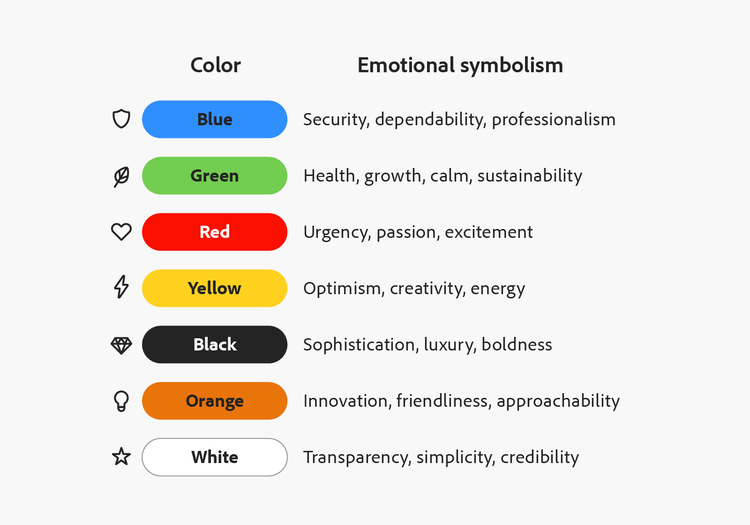
On the other hand, black and charcoal, when used carefully, exude authority and sophistication since darker tones reflect confidence and seriousness. Finally, green signifies growth, health, and balance and is the color of choice for various sustainability and wellness brands. By signaling ethics and long-term thinking
When you combine two or more colors together, you can create a deeper meaning that could strengthen trust. This can differentiate your brand by developing a visual hierarchy that helps integrate emotional nuance.
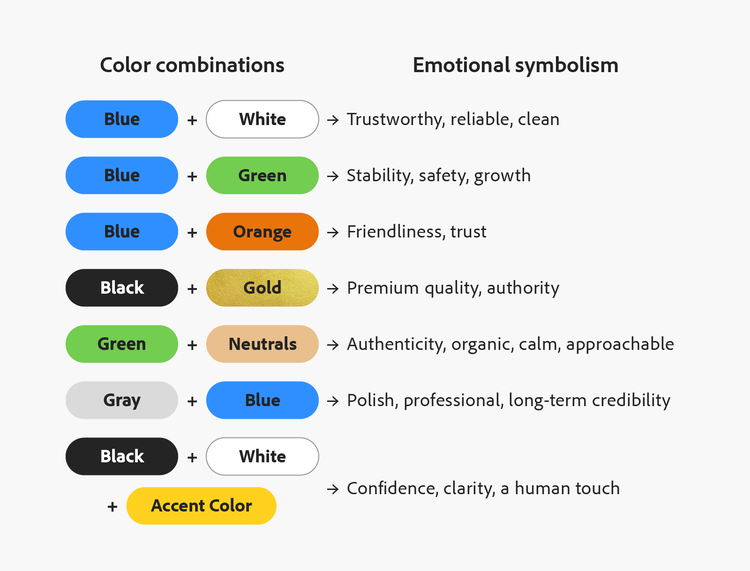
Using a restrained, consistent color palette reinforces trust over time. It’s not about trendiness, because consistency rules. Beware of choosing trendy palettes that don’t represent brand values; instead, use trending colors as accents that may change per campaign.
Similarly, overusing colors, especially bright or aggressive ones, can get your brand stuck. These colors are best as accents that can be swapped in or out, depending on the colors.
No matter the color, test your brand materials in real contexts on various platforms and permutations to avoid any contrast of accessibility issues. If people can’t read your message, nothing else matters. For Diana Walker, visual content designer for Adobe Express, “I believe color can play an important role in accessibility beyond compliance.” She adds, “Color can help people feel seen, evoke cultural familiarity, and make a design resonate more deeply with the audience it’s speaking to.”
Trusted brand color examples
Since blue is widely considered to be the most trusted color, it dominates the tech, finance, and healthcare brands. IBM, PayPal, Meta, Visa, and Blue Shield are all examples of brands relying on blue to signal reliability. When a brand needs its users to feel confident about sharing sensitive information or making long-term commitments, blue is the color to lean on.
Whole Foods, Spotify, Starbucks, and Fidelity are brands that use green to communicate, nature, well-being, ethical business practices, and long-term thinking. In fintech and education, green suggests stability in a way that’s more personable than a cool blue.
White and black, for example, communicate confidence, sophistication, and simplicity. Luxury brands like Chanel and minimalist and futuristic brands like Apple use black and white to signify timeless elegance and innovation.
How to choose the right palette for your brand
Consider what trust means for your audience, then think about industry norms. From there, choose a color that supports that perception and aligns with your industry. Test your choice in various contexts for accessibility, then use it consistently. The best colors and color combinations quietly reassure over time and allow trust to grow.





