



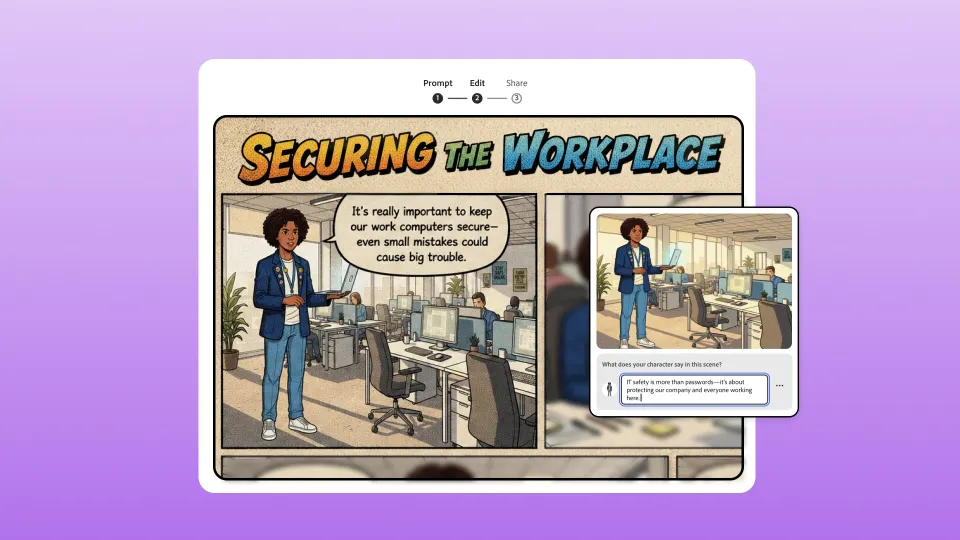
The comic strip maker in Adobe Express isn’t just for kids. From hospital onboarding to compliance training, sequential art gets the message across when text alone falls flat. After all, plenty of adults regularly read the Sunday comics.
There’s a reason why you remember a Calvin and Hobbs strip better than other articles in the paper. Comics are a unique cognitive experience — they combine image, sequence, and text into a format the brain processes quickly, retains longer, and finds less threatening than a dense block of prose.
Adobe Express’ comic strip maker makes this kind of storytelling easy for all users — no design degree, no illustration skill, no agency budget required.
Where text fails, comics step in
Sure, the tool is obviously a hit with students and teachers. But its most surprising fans turn out to be HR teams, hospital communications staff, and corporate learning and development professionals.
People process visuals faster than words — and this is especially important when written communication breaks down, like when the subject matter is dry, jargon-heavy, or anxiety-inducing.
Four use cases for comic strip storytelling
The sky is the limit for communicating through comics. From journaling to storytelling, it’s a useful medium. Here are more use cases:
1. K-12 and higher education: Students can create comics to demonstrate their understanding. It’s a far richer assessment tool than a pop-quiz. Teachers can produce explanatory strips for concepts that don’t translate well to text alone.
2. Compliance and policy training: Harassment prevention modules, IT security awareness, data protection refreshers are all prime candidates for a comic strip to bring it alive.
3. Internal comms and announcements: New benefits, org changes, and office moves told in a three-panel strip will get read (as opposed to a 400-word memo).
4. Healthcare patient education: Discharge instructions, medication schedules, and post-op care become navigable for patients with low health literacy or language barriers when told in a visual sequence.
How Adobe Express comic strip maker works
The comic strip maker isn’t just a template slapped onto a drag-and-drop editor. You pick a layout, choose characters and scenes from an extensive library, write your dialogue, and publish.
It’s not a template or drag-and-drop editor, the result looks designed instead of cobbled together. The structure of the comic (panels, sequence, cause, and effect) does the narrative work for you. You’re answering three questions:
- What's the situation?
- What happens?
- What should the reader do or know?
There’s something ironic about discovering that one of the most effective corporate communication formats is the same one a nine-year-old uses to tell jokes.
But the cognitive science is clear: Sequential visual storytelling is a deeply human way of understanding the world. And now Adobe Express makes it easy to take comic strips seriously.


