Voices of AI: Music, speech, and the new marketing soundscape
Explore how consumers feel about AI-generated voices and music in ads
Adobe Express
02/18/2026
As AI-generated audio becomes more accessible, many brands are using synthetic voices and music in their ads, videos, and customer experiences. But how do consumers feel about this shift? Adobe Express surveyed 850 consumers and 205 marketers to understand how artificial voices and music impact trust, engagement, and purchase decisions.
Our survey results offer a clearer picture of how AI-created voice and music are being received by real audiences, showing what's starting to feel acceptable and where hesitation still exists.
Key takeaways
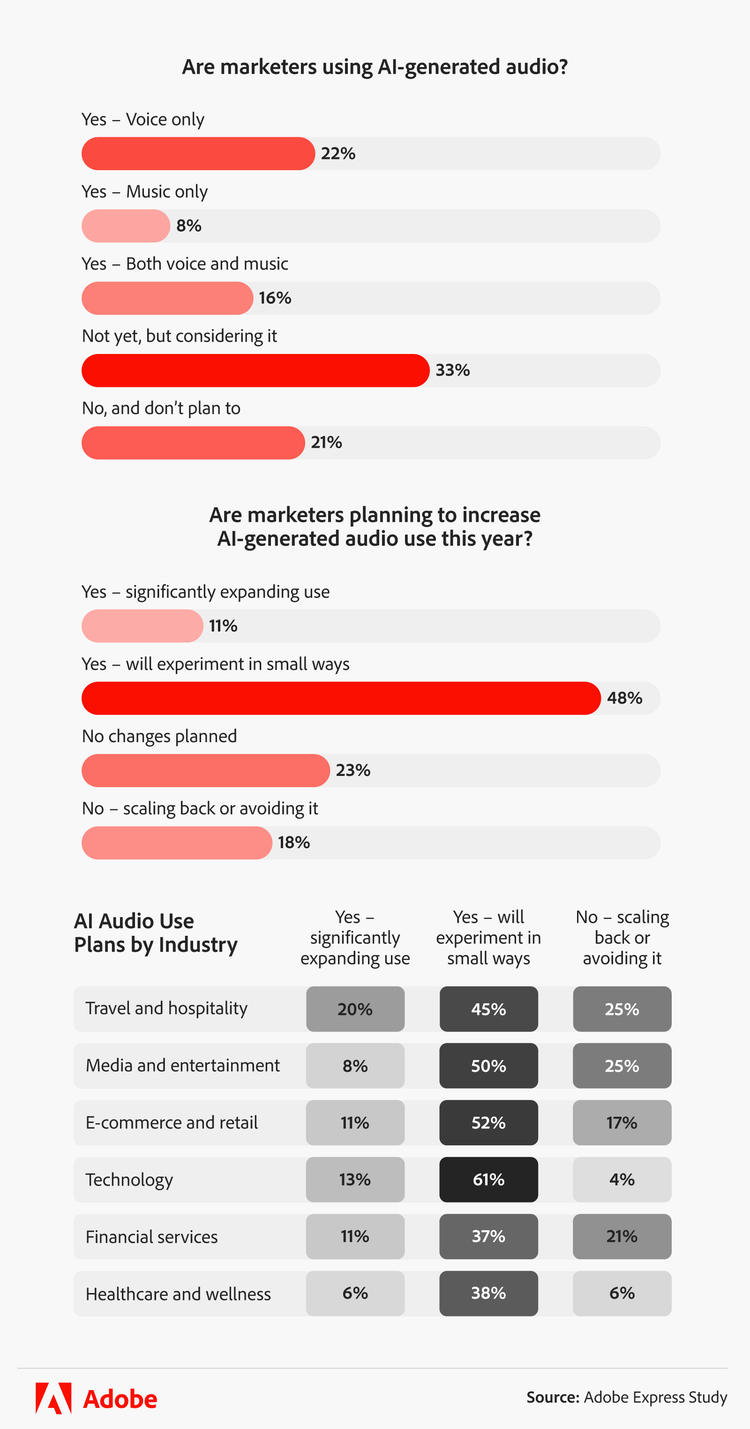
46% of marketers use AI-generated audio, including 22% for voice, 8% for music, and 16% for both voice and music. Another 33% are considering it.
88% of consumers have heard a voice and wondered if it was AI-generated, but 77% still trust human voices the most.
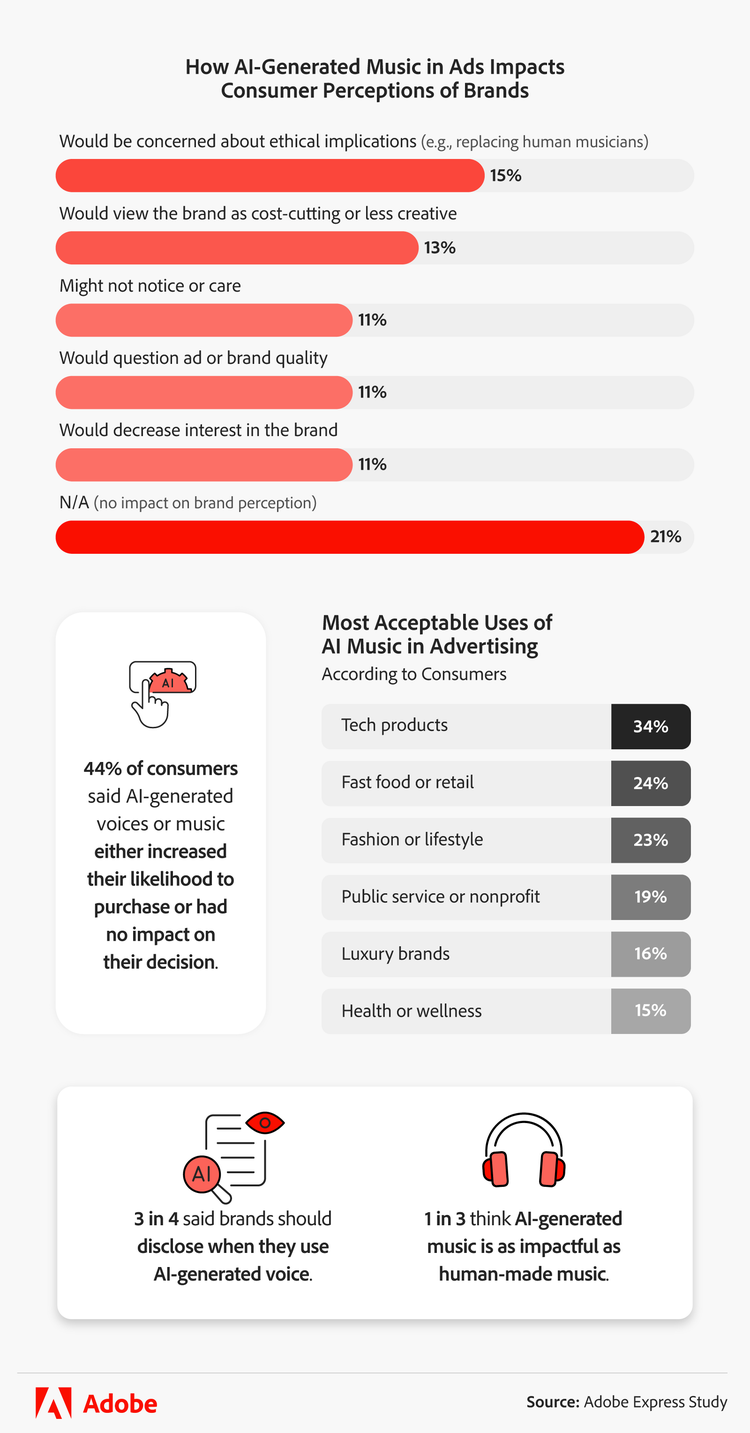
44% of consumers say that AI-generated voice or music either increases their likelihood of making a purchase or has no impact on their decision.
42% of consumers say AI voices either increase their trust in a brand or have no negative impact.
Nearly three in four consumers believe brands should disclose when they use AI-generated voice or music.
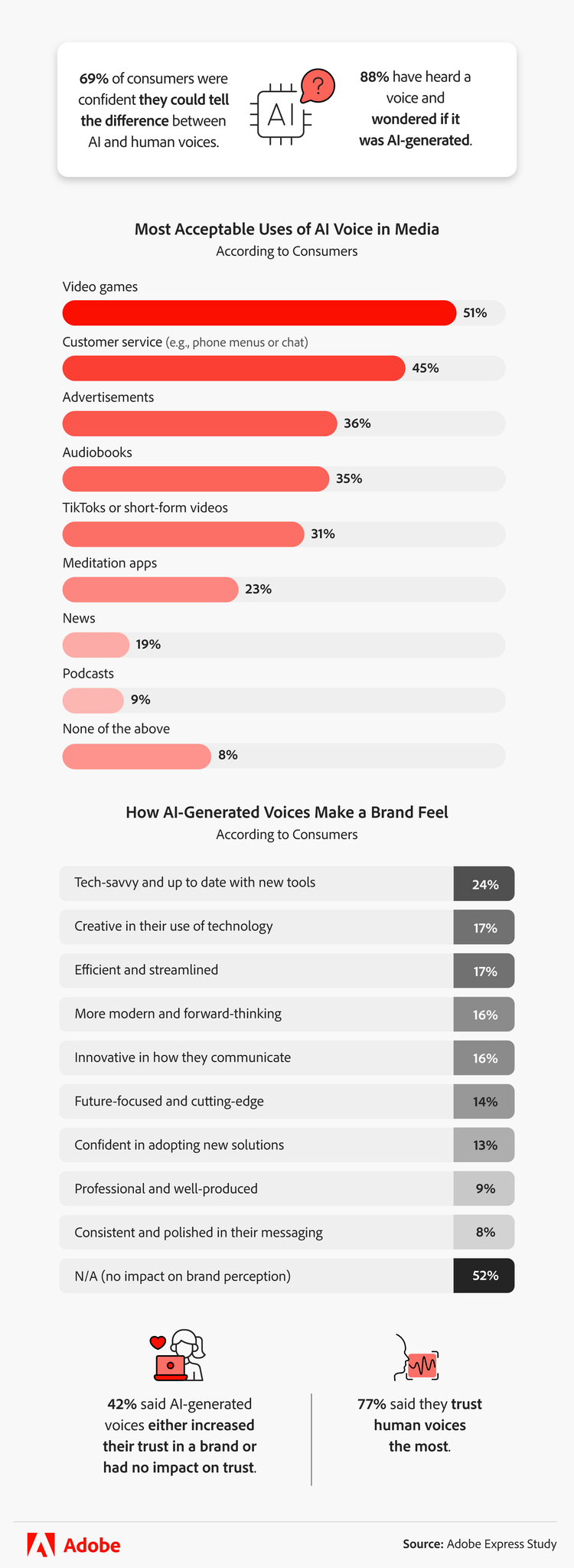
As AI-generated voices become easier to produce and more widely used, many consumers are starting to notice — and question — what they're hearing.
Eighty-eight percent of consumers said they have heard a voice and wondered whether it was AI-generated. At the same time, 77% said they trust human voices the most, while 14% said they don’t trust any voice they believe is AI-generated.
Acceptance of AI voices varied depending on where people encountered them. Just over half of consumers (51%) said they were comfortable with AI voices in video games, and 45% said the same for customer service. Comfort levels were much lower in other contexts, with 9% saying AI voices were acceptable in news and 8% in podcasts.
Views on trust also differed when AI voices were used in advertising. While 42% of consumers said AI-generated voices either increased their trust in a brand or had no impact, 58% said they would trust a brand less if it used AI-generated voices in ads.
Consumer perceptions of AI-generated music in advertising
When it comes to AI-generated music in ads, consumer responses reflected a mix of caution and curiosity..
When asked how AI audio makes them feel in advertising, consumers were more likely to express concerns than positive associations. Ethical concerns were cited by 15% of respondents, while 13% assumed brands were using AI music to cut costs. Far fewer associated AI-generated music with being modern or tech-savvy, at just 3% each.
Preferences still leaned toward human-made music. Half of consumers said they prefer music created by people in ads, though only 7% said AI-generated music made ads feel less emotionally engaging.
Purchase intent also varied. Forty-four percent of consumers said AI-generated music or voices either increased their likelihood of making a purchase or had no effect, while 56% said they were less likely to buy from a brand that used AI audio in ads.
One theme stood out clearly: transparency. Nearly three in four people believe brands should disclose when they're using AI-generated voice or music.
Why marketers are adopting AI-generated audio
Despite mixed feelings from consumers, many marketers see AI audio as a powerful tool to streamline creative production.
Among marketers surveyed, 22% said they already use AI-generated voiceovers, while 8% have used AI-generated music and 16% both. Another 33% said they're not currently using AI audio but are considering it for future projects.
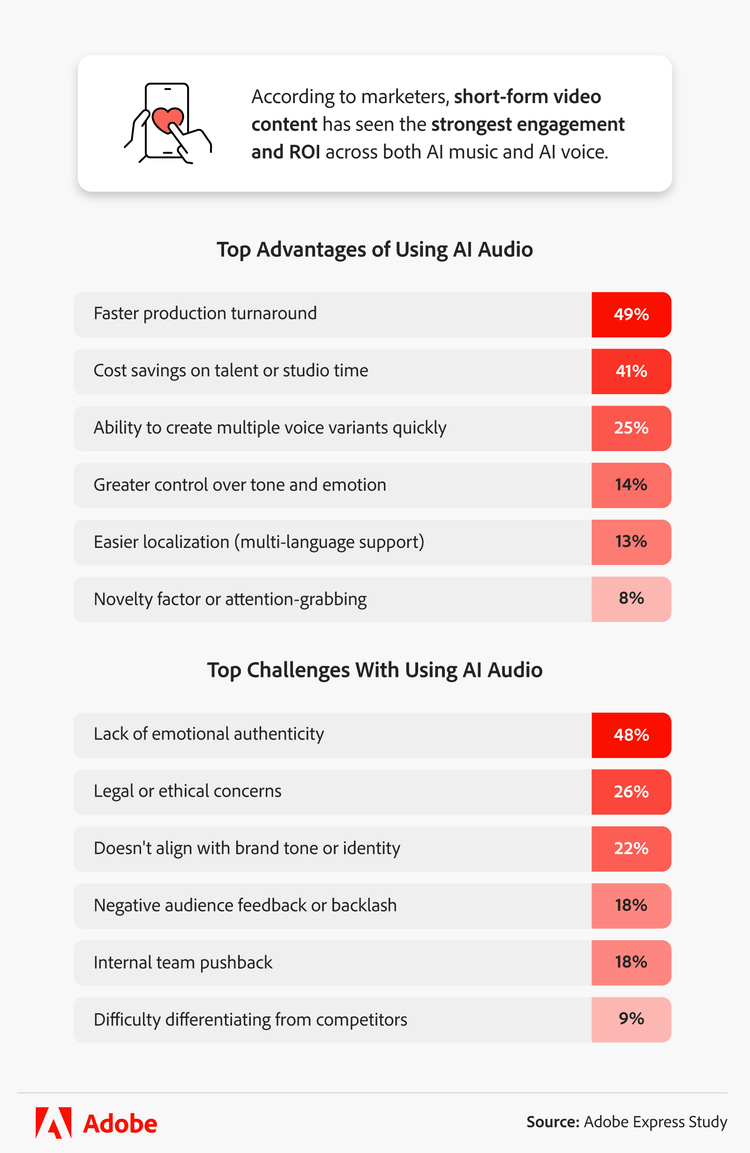
Speed and cost are two of the biggest draws. Nearly half of marketers (49%) pointed to faster production turnaround as a key benefit, while 41% highlighted cost savings as a top advantage. They also shared that short-form videos featuring AI-generated voice or music have seen the best consumer engagement and ROI.
Still, marketers aren't ignoring the risks. The biggest concern wasn't legal issues or brand reputation; it was emotional authenticity. Forty-eight percent of marketers identified the lack of genuine emotion in AI-generated voices as their top challenge.
Final thoughts on the future of AI audio
The line between human and machine is getting blurrier in the world of audio, and consumer trust hasn't fully caught up with the tech. While marketers see clear benefits in using AI voices and music, emotional resonance and transparency remain critical. As brands explore AI-generated content, the real opportunity lies in using it thoughtfully and letting your audience know when it's been used.
AI tools to support your content creation
Having flexible, easy-to-use creation tools can help teams experiment and iterate without overcomplicating the process. Adobe Express offers a range of AI-powered features designed to support everyday content creation across formats.
AI Assistant (beta): Prompt, create, and edit anything. Make quick edits and refine every layer, all while keeping the parts you love intact. Describe what you need and get quick content ideas, templates, and design help all in one place.
AI Clip maker: Quickly turn longer videos into shorter, shareable clips by identifying key moments and trimming content automatically, making it easier to repurpose video for social media and other channels.
Adobe Express AI tools: Explore a growing set of AI features that support image, video, and design creation, helping you generate visuals, enhance content, and adapt assets for different platforms with less manual work.
Methodology
To understand how people feel about AI-generated voice and music in branded content, Adobe Express surveyed 850 consumers and 205 marketers across the United States via SurveyMonkey. The survey included a range of questions about AI usage, trust, emotional impact, and purchase behavior. Findings reflect current attitudes at the time of the survey and may evolve as the technology becomes more widespread.
Fair use statement
We welcome you to share our findings for noncommercial use. If you do, please include a link back to this page and credit Adobe Express for the original research.