
.

Why a “human touch” still matters in AI-written emails

New survey studies what consumers think about AI-generated marketing emails and what it means for marketers

Adobe Express
02/19/2026

Marketing emails are one of the most personal ways brands connect with their audiences, and more of those messages are now created with the help of AI. To understand how people feel about AI-written emails, Adobe Express surveyed 1,007 consumers in the US across four generations.

The findings from the December 2025 survey show that tone, authenticity, and relevance affect how readers build trust with a brand and decide whether to stay engaged. For marketers, the goal is not choosing between AI and human creativity, but learning how to use them together to create emails that feel thoughtful, relevant, and real.

Key takeaways

  • Nearly a third of consumers surveyed (30%) are not confident they can tell whether a brand email was written by AI or a human.
  • 37% said they trust brands more when marketing emails feel human, even if they're less polished.
  • Nearly one in five (18%) have unsubscribed from a marketing email because they suspected it was written by AI.
  • 46% said they would be more likely to unsubscribe from a marketing email if they knew it was clearly written by AI.
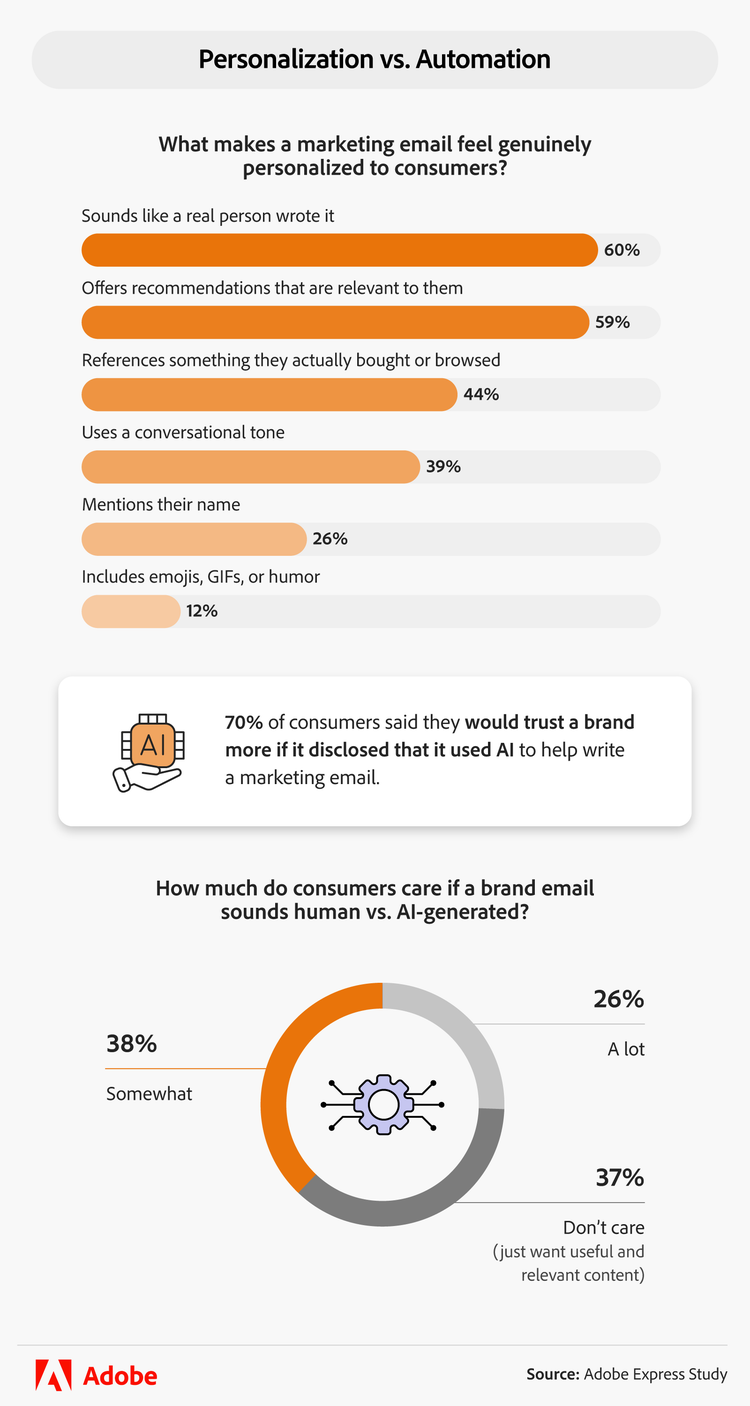
  • 37% don't care whether a marketing email sounds human or AI-generated as long as the content is useful and relevant.
Summary/Overview

AI-written emails and consumer trust

Consumers are paying close attention to the tone and feel of the emails landing in their inbox, and how those messages are written plays a role in shaping trust.

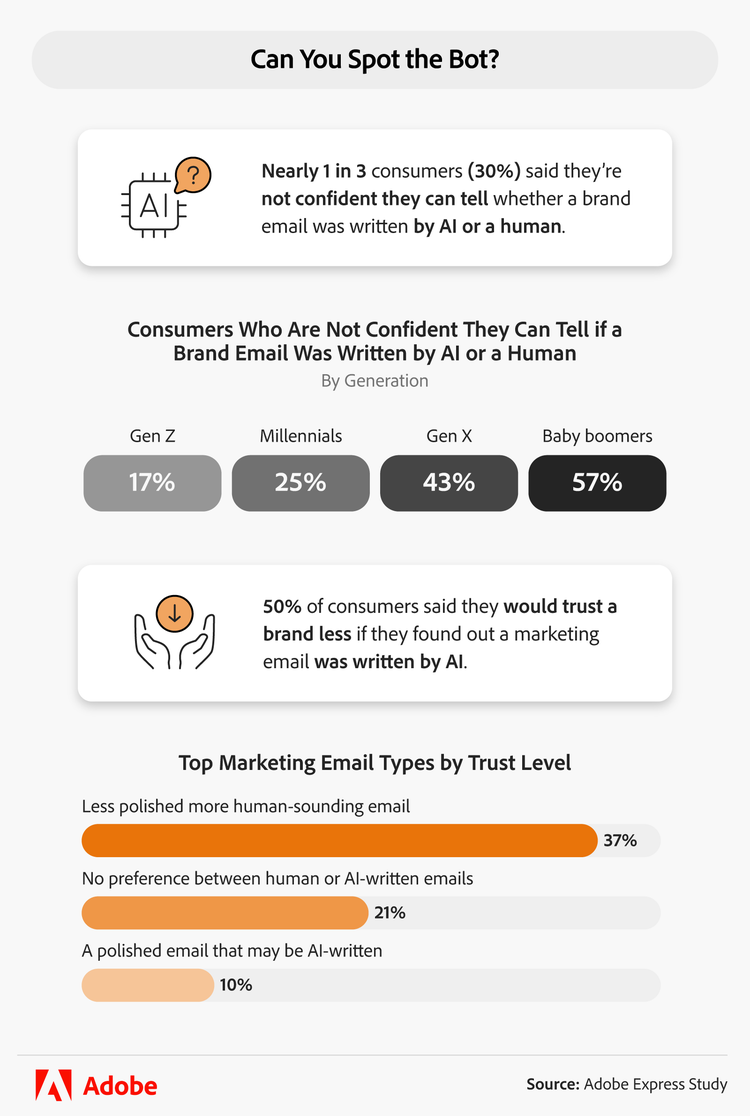
Infographic showing how confident consumers are if a brand email was written by AI or a human

Many consumers surveyed (72%) said they suspected they had received at least one brand email that was written by AI. On average, respondents estimated they received about six AI-generated emails per week. Nearly a third of consumers (30%) were not confident they could tell the difference between an AI-written email and one written by a human.

Confidence varied by age. Gen Z stood out as the most confident generation, with 30% saying they were very or extremely confident in spotting AI-generated emails. At the same time, more than a third of consumers (37%) said they trusted brands more when emails felt human, even if they came across as less polished.

Email unsubscribing behaviors

Subscriber decisions often come down to how emails sound and whether they feel worth reading.

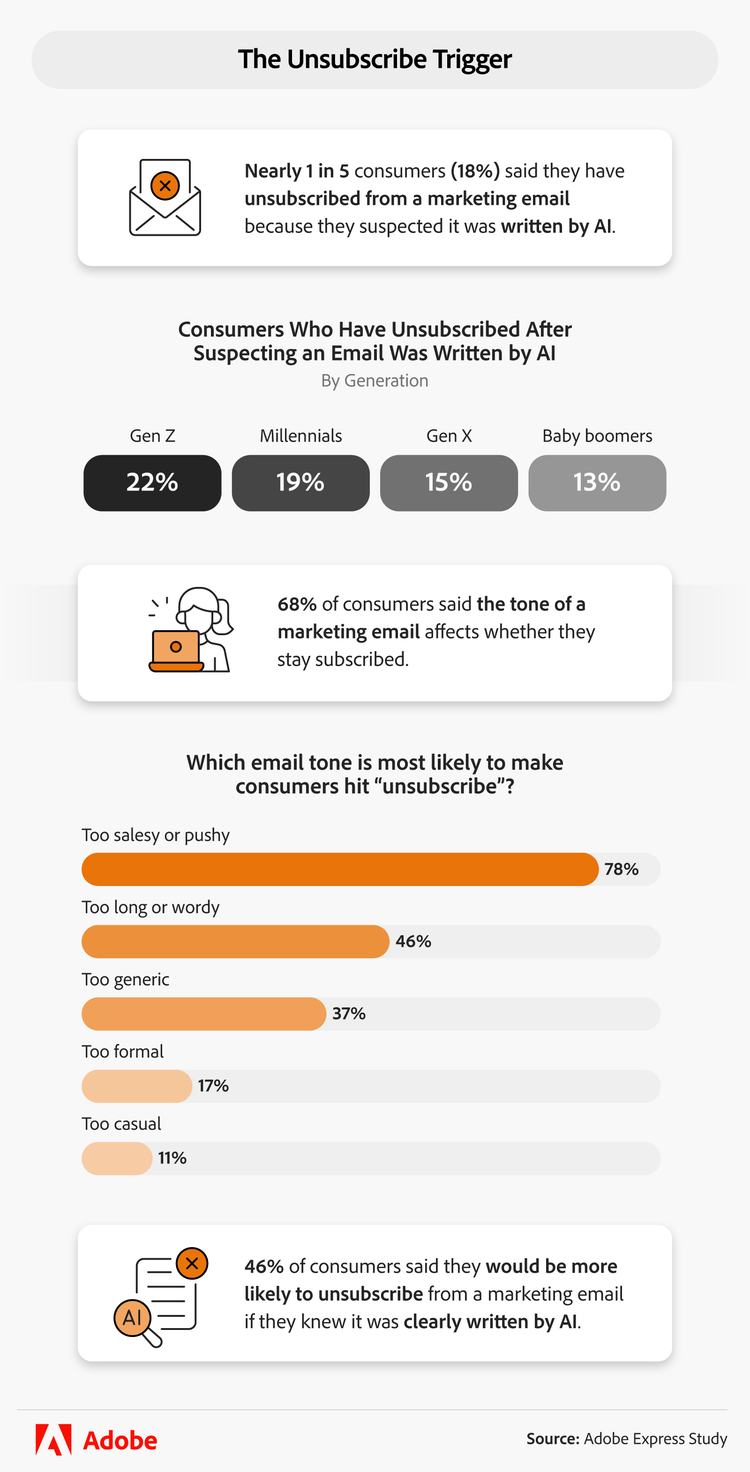
infographic showing consumers reactions after suspecting an email was written by AI

Nearly one in five consumers (18%) said they had unsubscribed from a marketing email because they suspected it was written by AI. In addition, 46% said they would be more likely to unsubscribe if they knew an email was clearly written by AI. These responses highlight how closely consumers associate email tone with trust and intention.

Tone also influenced engagement across generations. Gen Z respondents (72%) were the most likely to say tone affected whether they stayed subscribed to a brand’s emails. That sensitivity gradually decreased with age, with 68% of millennials, 66% of Gen X, and 56% of baby boomers expressing the same view.

When asked what makes emails less appealing, consumers most often pointed to messages that felt too salesy or pushy (78%). Wordy emails followed at 46%, with generic messaging close behind at 37%.

What consumers really want in their inbox

For many consumers, deciding whether to read or ignore an email comes down to whether it feels useful and relevant to them.

infographic showing what makes a marketing email feel genuinely personalized to consumers

Across all age groups, 37% of consumers said they didn’t mind if a marketing email sounded AI-generated, as long as the content was useful and relevant. To these consumers, value often matters more than how the message was created.

The acceptance of AI-sounding emails was not the same across generations. Only 20% of Gen Z said they didn’t care about tone, meaning that this age group is more sensitive to how brand messages sound. For marketers trying to reach younger audiences, getting the tone right could be just as important as sharing the right offer.

Authenticity in the age of automation

AI has become a common part of how marketing emails are created, but this study showed that consumers still care deeply about how those messages feel when they land in their inbox. While some readers were comfortable with AI-generated content, many responded more positively to emails that sounded natural, thoughtful, and personal.

For marketers, the takeaway is not to avoid AI, but to use it with intention. When AI supports human ideas rather than replacing them, emails can stay efficient without losing warmth or trust. As inboxes continue to fill up, the brands that stand out will be the ones that remember there is a real person reading on the other side.

Tools that support thoughtful email creation

Creating marketing emails that feel authentic doesn't mean starting from scratch every time, and Adobe Express offers tools that help you keep your message clear, consistent, and reader-first.

  • Email newsletter templates: Use clean, email-ready layouts to create messages that are easy to scan, feel thoughtful, and focus on what matters most to your readers.
  • Brand kits: Extract your brand’s colors, fonts, and logos for free to keep every email on-brand. With Premium, apply them across your designs in one click so your messages feel familiar and trustworthy every time they land in an inbox.
  • AI text effect generator: Highlight key phrases or headlines with styling that adds emphasis.

Methodology

Adobe Express conducted a survey of 1,007 consumers in the US to explore how they perceive and respond to marketing emails, particularly those written with the help of artificial intelligence (AI). The generational breakdown is as follows: Gen Z (18%), millennials (51%), Gen X (23%), and baby boomers (7%). Data was collected in December 2025. The survey was conducted via SurveyMonkey, and all responses are self-reported.

Fair use statement

If you'd like to share or reference these insights for noncommercial purposes, feel free to do so. Just be sure to include a link back to this page with proper attribution to Adobe Express.